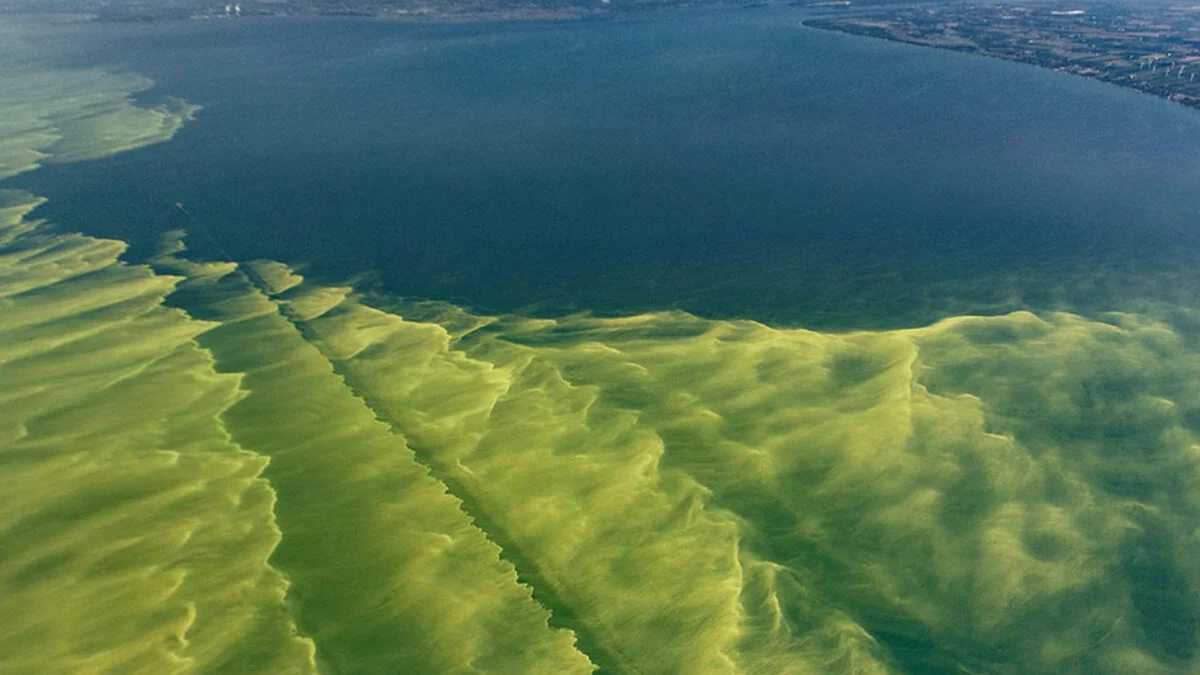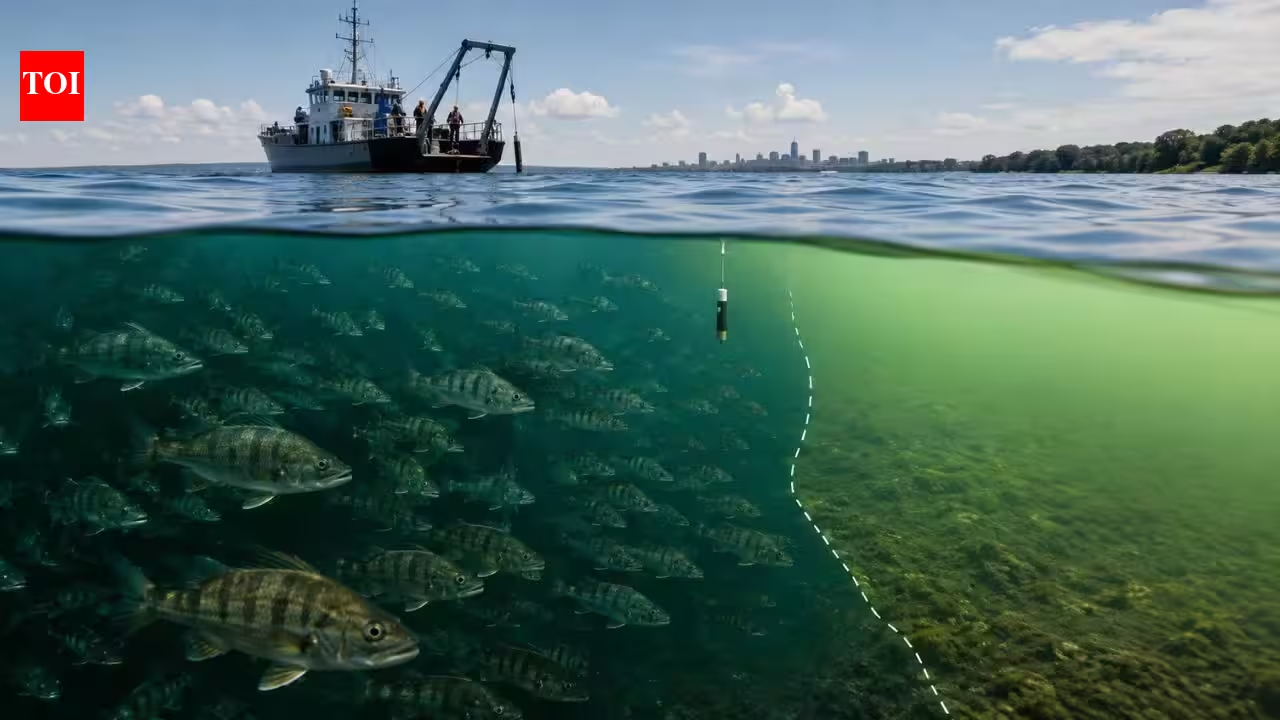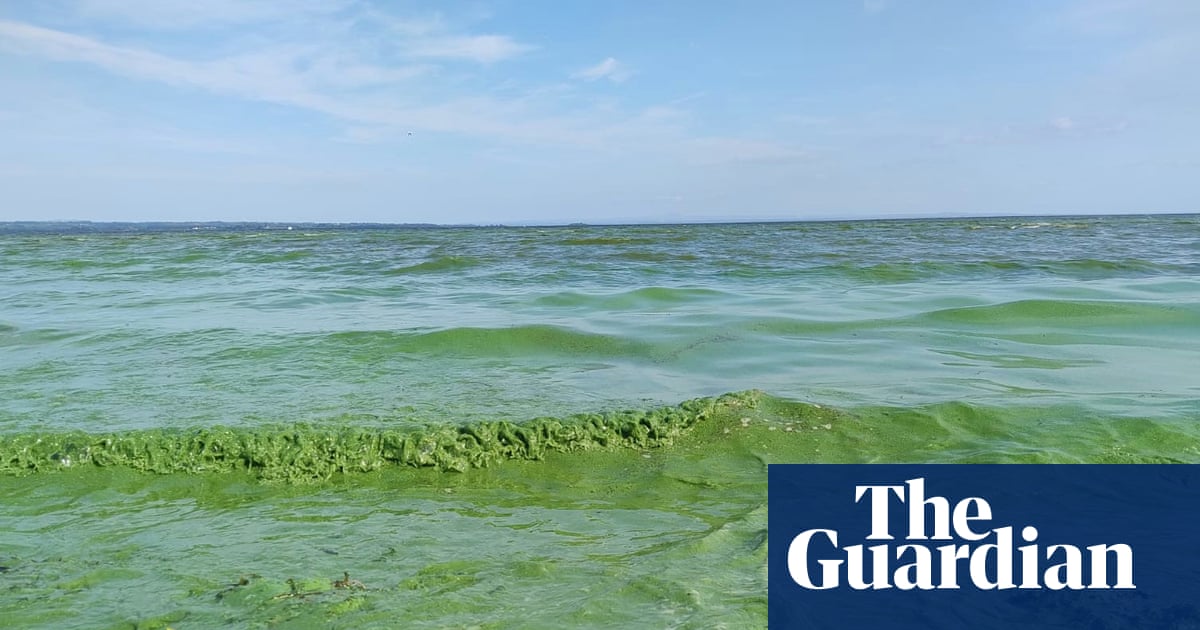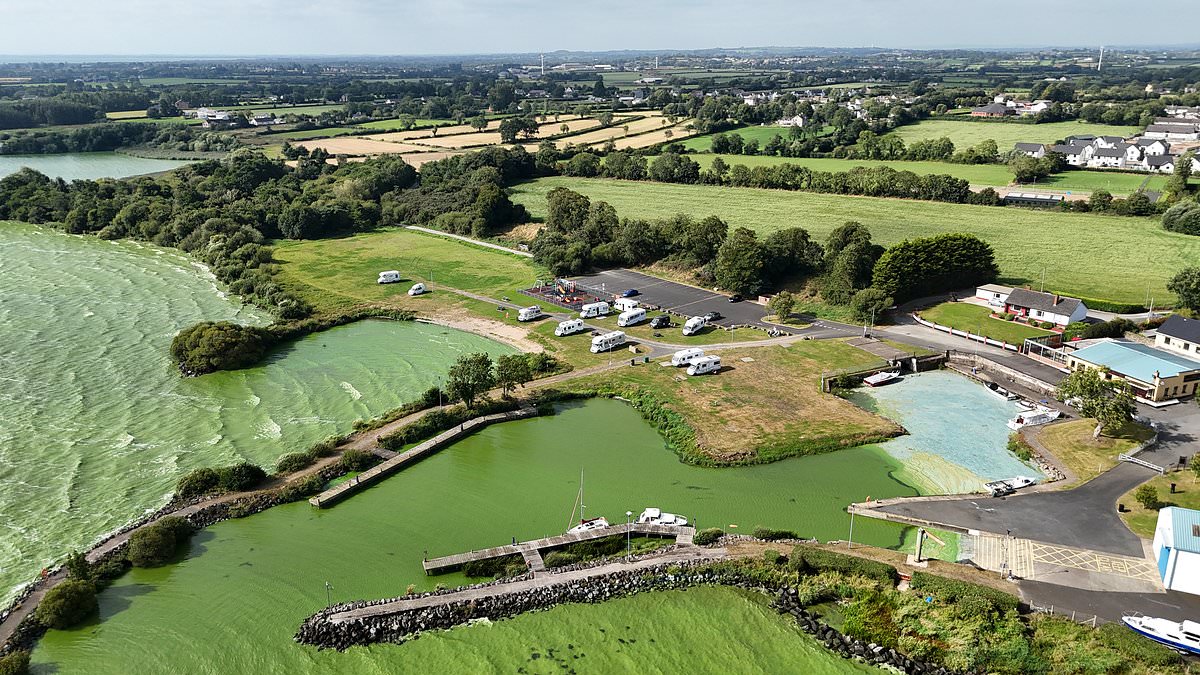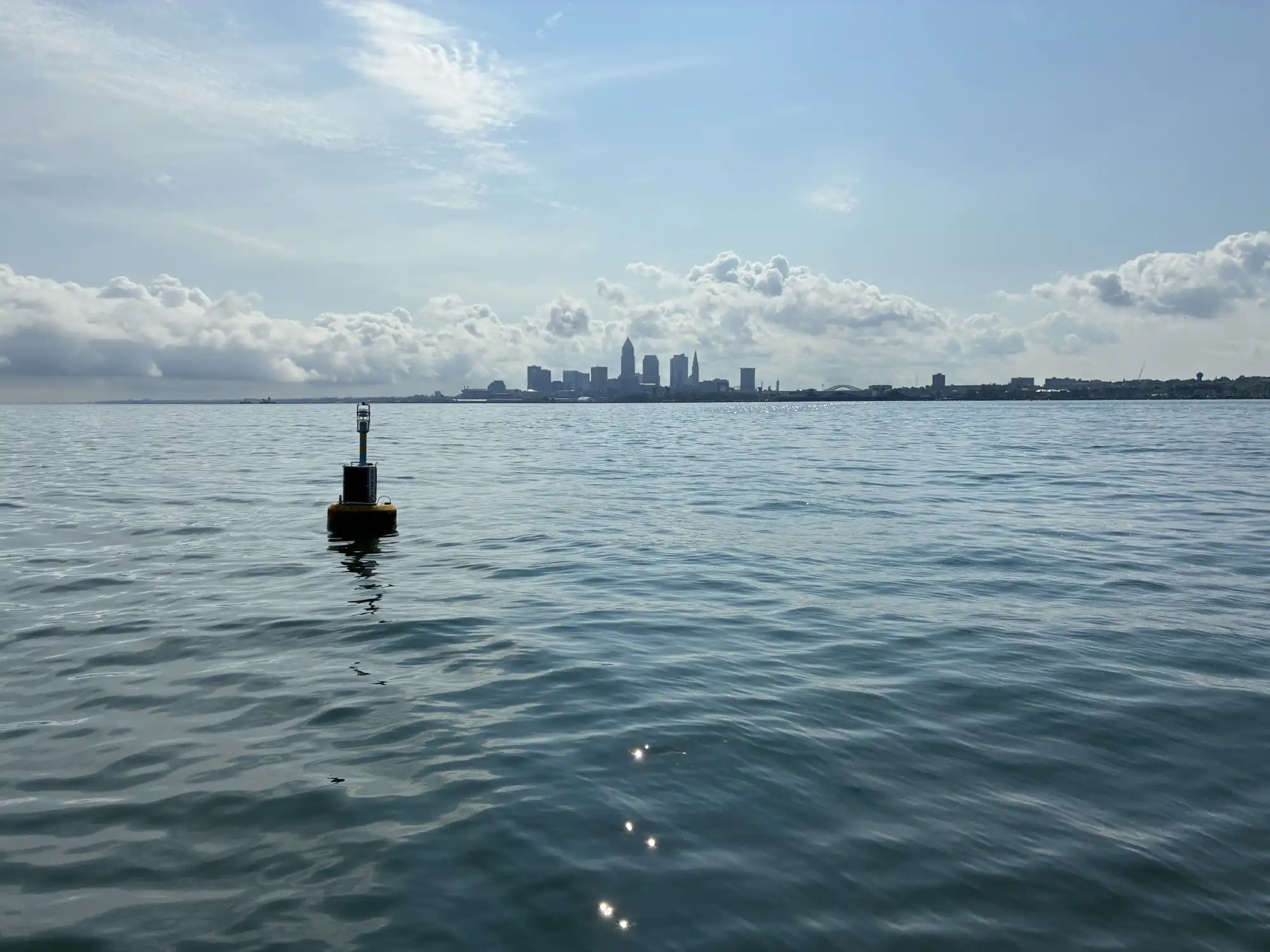
Toxic algal blooms are a big enough threat that Lake Erie is dotted with little buoys, constantly monitoring how much algae is in the water. It takes several minutes in a zippy speedboat to travel far enough offshore to see one of the buoys up close.On the way, one of the scientists in the boat captures a jarful of water and holds it up to the light. It looks clear enough to drink.But then she throws a net with a filter on the end overboard, and drags it through roughly 1,000 gallons of water. The remaining liquid she pulls out of the filter is a murky yellow-green, with lots of tiny zooplankton buzzing around.“It's summer — the water temperatures are near 70,” said Ed Verhamme, the captain of the day’s voyage and a principal and senior engineer at LimnoTech. “We're certainly catching a lot of living stuff in the water. … What we don't want is the harmful algae.”Verhamme says in a really bad year, it's possible to see algae like what's in this jar without needing to use a filter.Caleigh Wells/MarketplaceThat’s the kind of algae that can cause diarrhea, vomiting and rashes. And that’s what his company helps monitor. Verhamme keeps driving until he arrives at a buoy. He pulls up the data it’s capturing on his phone and relays the good news.“Yep, really nothing going on out there right now,” he said. “These are very low readings.”The recipe for high readings includes extremely heavy rainy periods, which pull nutrient-rich agricultural runoff into the lake, followed by extremely dry and sunny periods that help the algae form. This year hasn’t been very extreme, which is why NOAA said it’ll be a moderate year for harmful algae. Verhamme says an especially bad year, like 2014, when the algae contaminated Toledo’s water supply, would show readings 20-25 times higher than this. “That's noticeable scum,” he said. “The water looks like paint, really.”This year’s moderate forecast isn’t just good news for Lake Erie’s ecosystem. It means algae won’t tank whole chunks of the Great Lakes economy this year.“I don't even know where to begin to calculate the economic impact of something like that — if Greater Cleveland had to be under a Do Not Drink Water advisory — what would happen,” said Alex Margevicius, commissioner of Cleveland’s water division.Lake Erie is the main source of drinking water for Northeast Ohio, but the cost of algal blooms is calculated in more than just bottled water and healthcare bills.“In this $6 trillion economy, the Great Lakes Basin is a huge tourism economy,” said Cuyahoga County Executive Chris Ronayne. “Lake Erie is the Walleye Capital of the World. … They come here to fish. There's fishing tournaments and just recreationalists.”When the algae gets bad, it sucks up all the oxygen in the water, which causes mass fish kills. That isn’t a great feature in the Walleye Capital of the World.And a hit to the tourism industry can have ripple effects.“That's not only going to impact the people who are going to recreate, but you have to think about the hotels where people stay,” said Scott Hardy, an earth scientist with the Ohio State University. “You have to think about the gas stations that fill up the cars that people drive to the water.”Hardy said climate change is making that extreme weather — and the algal blooms that follow it — more common. But he also says we’re getting better at mitigating the runoff that causes the blooms in the first place.
How the algae in Lake Erie can make or break the Great Lakes economy
NOAA is predicting blooms of harmful algae will be moderate in Lake Erie this year. Its annual forecast has massive economic implications for nearby communities.
586 words~3 min read