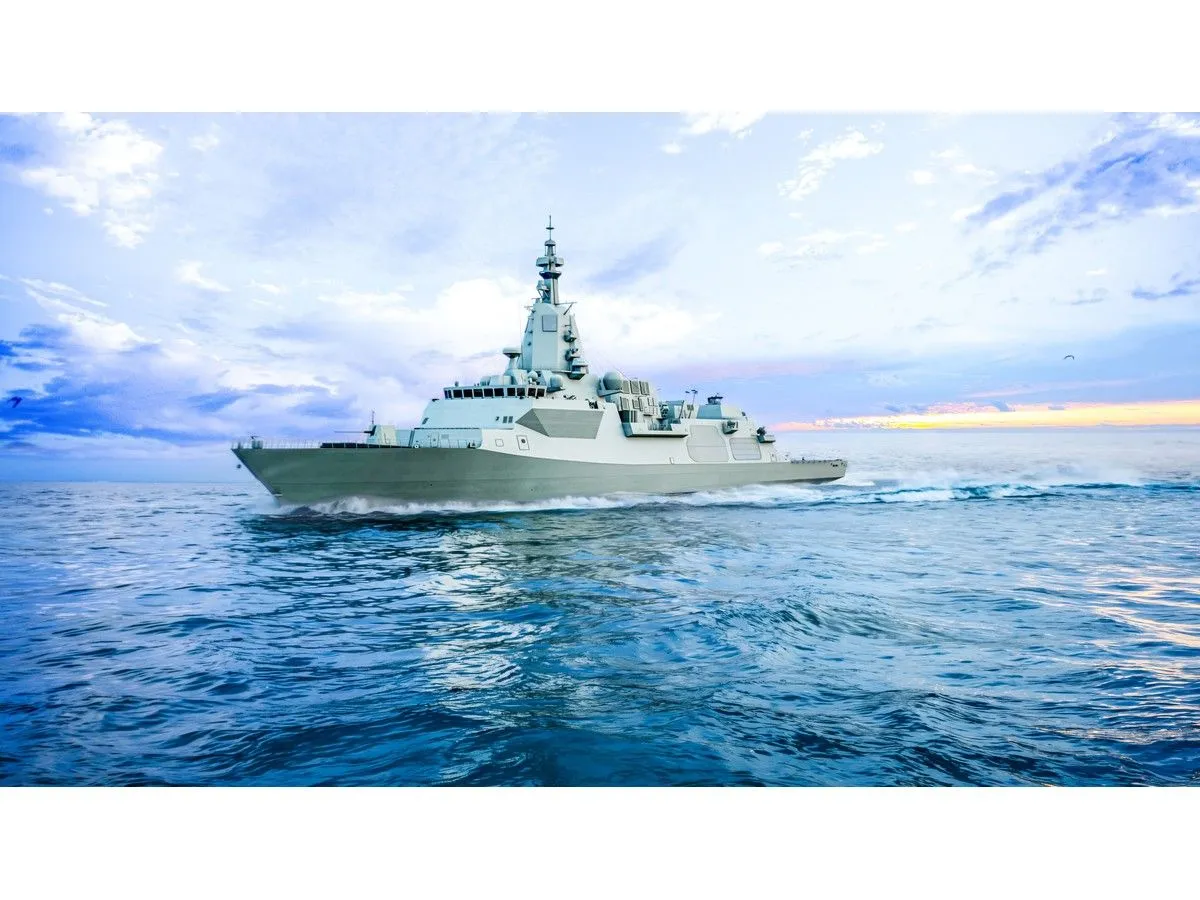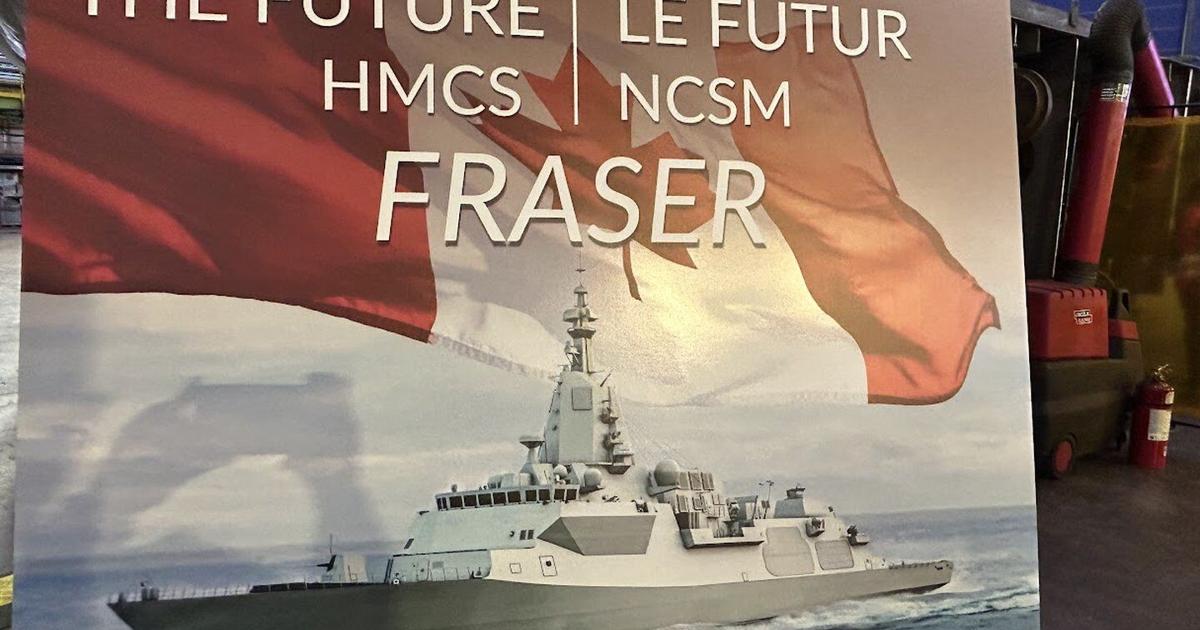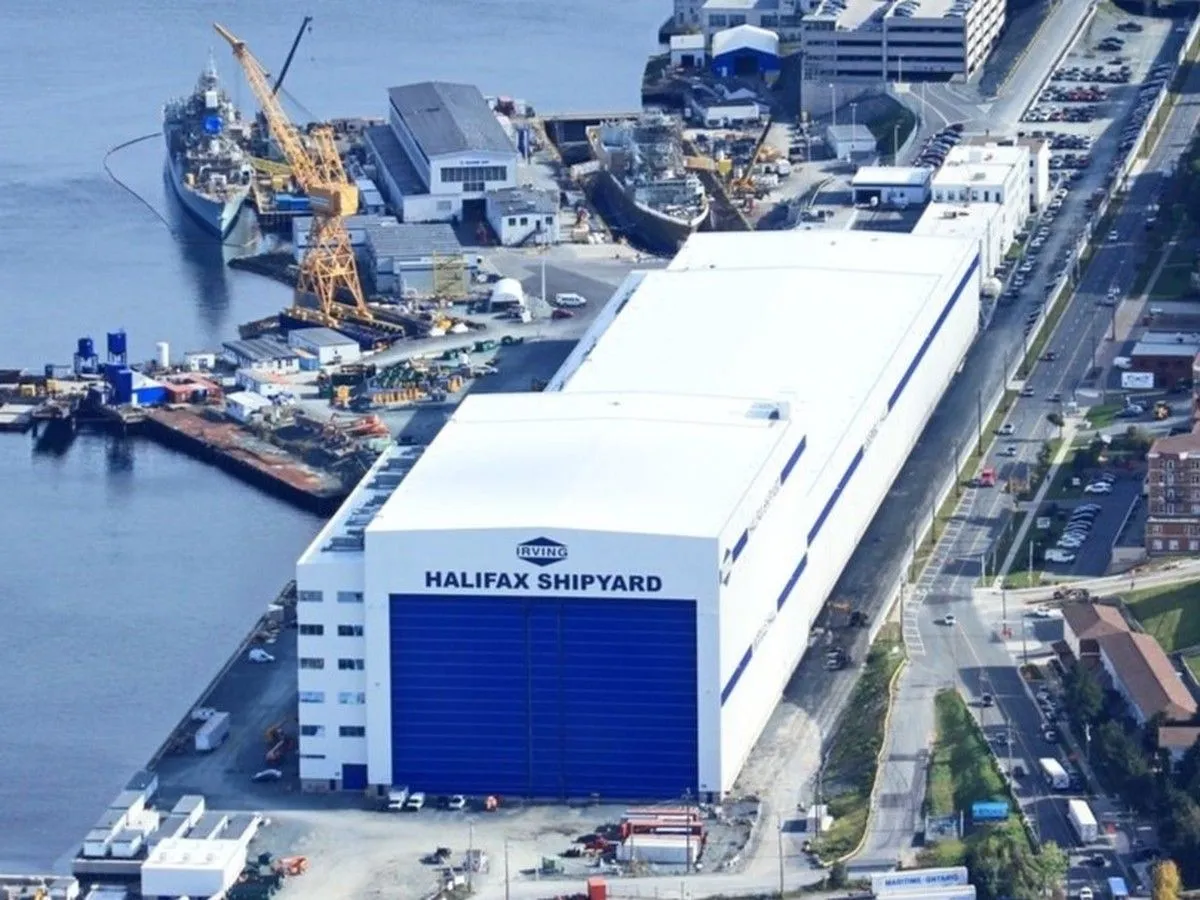
Skip to Content News Archives Economy Energy Oil & Gas Renewables Electric Vehicles Mining Commodities Agriculture Real Estate Mortgages Mortgage Rates Finance Banking Insurance Fintech Cryptocurrency Work Wealth Smart Money Wealth Management Investor Personal Finance Family Finance Retirement Taxes High Net Worth FP Comment Executive Women Puzzmo Newsletters Financial Times Business Essentials More Innovation Information Technology FP500 Podcasts Small Business Lives Told Tails Told Shopping Financial Post Store Obituaries Place a Notice Advertising Advertising With Us Advertising Solutions Postmedia Ad Manager Sponsorship Requests Classifieds Place a Classifieds ad Working Profile Settings My Subscriptions Saved Articles My Offers Newsletters Customer Service FAQ News Economy Energy Mining Real Estate Finance Work Wealth Investor FP Comment Executive Women Puzzmo Newsletters Financial Times Business Essentials HomeNewsInside Canada’s naval megaproject: Halifax’s Irving Shipbuilding builds next-generation destroyersThe River-class destroyers will eventually replace the Navy’s aging frigatesLast updated Jul 09, 2026 You can save this article by registering for free here. Or sign-in if you have an account.Irving Shipbuilding's Assembly and Module Hall, one of the largest modern shipbuilding facilities in North America, is four football fields long and 12 storeys high. Photo by Postmedia FileWhen workers at Irving Shipbuilding Inc. lowered a silver coin into the hull of Canada’s first River-class destroyer last month, they were taking part in a centuries-old maritime tradition.Subscribe now to read the latest news in your city and across Canada.Exclusive articles from Barbara Shecter, Joe O'Connor, Gabriel Friedman, and others.Daily content from Financial Times, the world's leading global business publication.Unlimited online access to read articles from Financial Post, National Post and 15 news sites across Canada with one account.National Post ePaper, an electronic replica of the print edition to view on any device, share and comment on.Daily puzzles, including the New York Times Crossword.Subscribe now to read the latest news in your city and across Canada.Exclusive articles from Barbara Shecter, Joe O'Connor, Gabriel Friedman and others.Daily content from Financial Times, the world's leading global business publication.Unlimited online access to read articles from Financial Post, National Post and 15 news sites across Canada with one account.National Post ePaper, an electronic replica of the print edition to view on any device, share and comment on.Daily puzzles, including the New York Times Crossword.Create an account or sign in to continue with your reading experience.Access articles from across Canada with one account.Share your thoughts and join the conversation in the comments.Enjoy additional articles per month.Get email updates from your favourite authors.Create an account or sign in to continue with your reading experience.Access articles from across Canada with one accountShare your thoughts and join the conversation in the commentsEnjoy additional articles per monthGet email updates from your favourite authorsSign In or Create an AccountorThey were also marking the start of what could become one of the country’s most significant manufacturing programs in a generation.The June 12 keel-laying ceremony for the future HMCS Fraser officially launched construction of the first of the Royal Canadian Navy’s 15 new River-class destroyers, a project expected to employ thousands, generate work for suppliers across Canada and help rebuild a domestic shipbuilding industry that has spent decades trying to recover from years of decline.“We haven’t laid a keel for a destroyer in Canada since the late 1960s,” said Jean-Francois Seguin, Irving Shipbuilding’s vice-president of government relations and communications. Workers at the Irving Shipyard listen to a speech during a keel-laying ceremony for the future HMCS Fraser on June 12 in Halifax. Photo by Irving Shipbuilding Inc.Breaking business news, incisive views, must-reads and market signals. Weekdays by 9 a.m.By signing up you consent to receive the above newsletter from Postmedia Network Inc.A welcome email is on its way. If you don't see it, please check your junk folder.The next issue of Posthaste will soon be in your inbox.We encountered an issue signing you up. Please try againThe milestone ends a 57-year hiatus in Canadian destroyer construction and signals a new phase in the country’s long-term effort to restore its ability to build sophisticated naval vessels at home.For Halifax, it cements the city’s position as the centre of Canada’s combat-ship manufacturing industry. For Irving Shipbuilding, it represents decades of highly specialized work assembling some of the world’s most technologically advanced surface combatants.The River-class destroyers will eventually replace the Navy’s aging frigates with ships designed to perform air defence, anti-submarine warfare and long-range strike missions.They will be equipped with advanced radar systems and missile capabilities that can intercept threats at the edge of Earth’s atmosphere.The keel-laying ceremony underscored the blend of tradition and industrial ambition behind the project. The keel forms the structural backbone of the ship, making its installation the symbolic beginning of construction.“The tradition is to lay a coin at the bottom of the ship, and that coin brings good luck to the crew building the ship and to the crew that’s going to sail and operate the ship,” Seguin said.While ceremonial, the laying of a single keel signals the start of a manufacturing program expected to shape the city’s economy – and Canada’s naval industry – for decades to come.The construction of these destroyers is emerging as one of Canada’s largest industrial investments. Valued at between $56 billion and $60 billion, the River-class destroyer program is the cornerstone of the National Shipbuilding Strategy, launched in 2011 to revive Canada’s marine industrial base after decades of inconsistent federal procurement.In March 2025, the Department of National Defence awarded Irving Shipbuilding the contract to build the Navy’s next generation fleet in Halifax. Defence officials have described the initiative as the largest and most complex shipbuilding effort undertaken in Canada since the Second World War. A silver coin is welded into the hull of Canada’s first River-class destroyer during a keel-laying ceremony June 12 in Halifax. Photo by Irving Shipbuilding Inc.The project is expected to provide a steady pipeline of work through at least 2050, creating long-term certainty for Irving Shipbuilding and hundreds of companies across its Canadian supply chain. The first three vessels – HMCS Fraser, HMCS Saint-Laurent and HMCS Mackenzie – alone carry a price tag of more than $22 billion.The destroyers will replace the Navy’s retired Iroquois-class destroyers and the aging Halifax-class frigates, providing modern air defence, anti-submarine and surface warfare capabilities. Each vessel will carry a crew of about 210 sailors.The first ship is scheduled to launch in the early 2030s, with nine vessels expected to be in service by 2040 and the entire fleet delivered by 2050, making the program one of the country’s longest-running industrial manufacturing projects.“At some point in the mid-2030s, we’ll have up to six River-class destroyers under construction at the same time, all in various stages,” Seguin said.For Irving Shipbuilding, the destroyer program represents more than a defence contract. It provides the production continuity needed to sustain a highly specialized workforce and strengthen Canada’s sovereign shipbuilding capability.“As a nation, Canada spends more hours today repairing a ship that’s 30-odd years old than it would to build a new one,” said Dirk Lesko, president of Irving Shipbuilding. “But the capability of the supply chain wasn’t there. It should be a sovereign capability. And it’s actually economically viable if you have industrial policy that plans for it.”To pave the way for construction of the destroyers, Irving Shipbuilding is entering the final chapter of its Arctic and Offshore Patrol Ship (AOPS) program, with the completion of two vessels for the Canadian Coast Guard.The shipbuilder is finishing the seventh and eighth AOPS built under the National Shipbuilding Strategy, marking the transition from a decade-long patrol ship program to what will become the country’s largest naval procurement project.“Then we’ll be done with AOPS and everything else will be for River class,” Seguin said. Hundreds of workers at the Irving Shipyard attend a keel-laying ceremony for the future HMCS Fraser on June 12 in Halifax. Photo by Irving Shipbuilding Inc.The first coast guard vessel, the future CCGS Donjek, was launched in April. The 104.7-metre ship was transferred from the shipyard’s land-level facility onto a submersible barge and is now alongside the shipyard’s pier, where outfitting continues ahead of sea trials. It’s expected to be delivered this fall.At the launch ceremony, Canadian Coast Guard Commissioner Kevin Brosseau said the vessel would expand the agency’s ability to conduct fisheries patrols, conservation and protection missions, humanitarian assistance, and support coastal and northern communities.Construction is also advancing on the future CCGS Sermilik, the second and final coast guard AOPS, with delivery slated for the fall of 2027.The two coast guard vessels will become the service’s primary offshore platforms, supporting fisheries enforcement on Canada’s East Coast, search and rescue operations icebreaking, and a stronger Canadian presence in the Arctic during the summer navigation season.The coast guard ships follow the delivery of six Harry DeWolf-class Arctic and Offshore Patrol Ships to the Royal Canadian Navy, a program that helped re-establish large-scale naval shipbuilding in Halifax while creating the skilled workforce and industrial capacity needed for the next phase of the National Shipbuilding Strategy.When the federal government launched the strategy more than a decade ago, its goal was to replace aging fleets for the Royal Canadian Navy and the Canadian Coast Guard.But the program has also evolved into one of Canada’s largest industrial development initiatives, creating a continuous pipeline of work that supports a highly skilled workforce, attracts investment and strengthens domestic industrial capacity.“The concept is, once you have built the capability, once you’ve built the skills, that workforce, you really never want to let that go as a nation,” Seguin said.“It provides a long-term agenda, not just one program at a time or five years and you’re done. This is 30 years, 35, 40 years’ worth of work. This is a continuous build, and we will continue building ships. We will never stop.”Irving Shipbuilding employs about 3,000 people across four sites in Halifax Regional Municipality while another 500 subcontractors work alongside the company. Nationally, the program supports roughly 10,600 jobs through a supply chain of about 700 Canadian companies. The cavernous Assembly and Module Hall resembles an advanced manufacturing plant more than a traditional shipyard. Photo by Irving Shipbuilding Inc.More than $12 billion in spending commitments have been made through 2026 under the strategy, with over 678 organizations across Canada participating in the program.Seguin said the current workforce represents more than a decade of investment in recruiting, training and developing specialized trades.“This is 10 to 15 years of learning to become shipbuilders, and you can’t recreate that overnight,” he said.That growing expertise is reflected in the shipyard’s workforce, according to Lesko.“It’s the 3,000 people that come and go from here that have evolved over the last 15 years into something truly unique,” Lesko said. “The performance is something that Canadians would be proud of. They would feel that we are good stewards of their tax dollars, and we recognize they are reluctant investors.”As Canada prepares to increase defence spending, the country is benefiting from a shipbuilding capability that took years to establish, one that supports thousands of jobs while ensuring future naval construction can be sustained for decades.The shipyard’s Assembly and Module Hall is one of the largest modern shipbuilding facilities in North America.The cavernous indoor facility, four football fields long and 12 storeys high, resembles an advanced manufacturing plant more than a traditional shipyard.Roughly 20 heavy-lift and gantry cranes tower over the enclosed hall, moving hundreds of tonnes of steel plates, prefabricated sections and massive ship modules through the production line.“In Canada, there’s no other hall like this, that builds ships,” said Seguin, a former member of the Royal Canadian Navy who has been with J.D. Irving Ltd. for six years and with Irving Shipbuilding the last three-and-a-half years.Every ship built at Irving Shipbuilding begins the same way: as raw steel.The process starts across Halifax Harbour at the Marine Fabricators’ facility in Burnside, where steel is prepared before being loaded onto flatbed trucks and hauled across the bridge to the Halifax shipyard. A welder assembles two steel plates together at Irving Shipyard. Photo by Irving Shipbuilding Inc.Once the steel arrives, overhead gantry cranes lift the plates onto the flat panel line, the automated production system that forms the backbone of the shipyard’s manufacturing operation.“The flat panel line is the heartbeat of a shipyard,” Seguin said.The production line transforms individual steel plates into progressively larger components through a series of precisely controlled fabrication steps.Before assembly begins, the steel is fed through a plate leveller, a series of rollers that removes bends and distortions. The step is especially important for the River-class destroyers, which use steel plates as thin as four millimetres in some parts of the vessel.“What happens when you try to fabricate a ship out of four millimetres of steel?” Seguin asked. “It tends to bend and deform on you.”After levelling, the steel is beveled, cut, marked and trimmed to precise specifications. At the bevelling station, the edges of each plate are machined at an angle so welders can create deep, high-strength joints capable of withstanding the stresses placed on a modern warship.“We’ll start building the ship with these pieces,” Seguin said.Two steel plates are welded together to form an assembly. Assemblies are then combined into larger units, which are stacked and joined into massive “mega blocks.” Those blocks ultimately become the ship itself.“And then we take the mega blocks and stitch them together,” Seguin said. “That makes your ship. It literally is like building blocks.”The AOPS are assembled from 65 individual units that are combined into three mega blocks before the final assembly.“People say it’s like Lego,” Seguin said. “But Lego comes in fabricated blocks. We don’t have that here. We start with raw steel.”Walking the length of the panel line offers a visual demonstration of the process. Small steel plates gradually become larger and more recognizable until they resemble sections of a ship’s hull.“As you walk through the panel line, the small plates become bigger and bigger,” Seguin said. “You’ll start seeing what looks like the side of a ship.”When Irving Shipbuilding began constructing the AOPS, much of the fabrication work was done in-house. Pipe spools, pipe hangers and cable trays were all manufactured at the shipyard because the design was still evolving. Roughly 20 heavy-lift and gantry cranes tower over the enclosed hall, moving hundreds of tonnes of steel plates, prefabricated sections and massive ship modules through the production line. Photo by Irving Shipbuilding Inc.As the company gained experience and the ship design became more stable, that changed. With consistent specifications, Irving was able to outsource the production of many standardized components to suppliers, rather than fabricating and fitting each one on site.“Once the design is stable, we know it’s always the same part going in the same place,” Seguin said. “We can have somebody else manufacture it for us instead of fitting it in place.”That shift has made production significantly more efficient. Prefabricated components arrive ready for installation, reducing labour at the shipyard and helping accelerate construction of the AOPS.The same learning curve lies ahead for the River-class program. As engineers finalize the design and manufacturing processes become standardized, Irving expects to outsource more prefabricated components, including pipe spools cut to precise lengths, allowing workers to install them directly on the ship rather than fabricate them on site.“It’s like IKEA,” Seguin said. “The first time you make your furniture, the dimensions could be off. But by the time they make 10,000 of them, you know exactly where they belong.”Each vessel is built upside down, an approach that makes welding – one of the most labour-intensive parts of ship construction – faster and more efficient.Large sections of the ship, known as units, are assembled upside down. Once the steel structure is complete, two gantry cranes working in tandem rotate each unit upright inside the assembly hall.Only then does the outfitting process begin. Workers install equipment, piping, cable trays and other onboard systems while the unit remains open and easily accessible.The goal is to install as much equipment as possible before additional sections of the ship are stacked on top.“You’re trying to get as many things inside the ship as you can before you have to close it,” Seguin said. “Once it’s closed, access becomes much more restrictive.” A mega block of the future CCGS Sermilik, an Arctic and Offshore Patrol Ship. Photo by Irving Shipbuilding Inc.Inside the far end of the assembly hall, the first two mega blocks of the future CCGS Sermilik are being joined. Workers weld them together over the course of about 24 hours to create enough structural strength for the combined section to support its own weight. Completing the full welds takes another 30 days.The third mega block is attached outdoors because the nearly completed vessel is too long to fit inside the building.The work is carried out by roughly 300 welders operating around the clock.“We run three shifts: days, evenings and nights,” Seguin said.The production schedule illustrates how far the shipyard’s manufacturing process has evolved. The first AOPS took about 60 months to build. Irving expects to complete CCGS Sermilik in roughly 38 months.Later this year, the nearly completed ship will leave the assembly hall in a carefully choreographed operation. The enormous blue doors at the end of the building will open and the vessel will be rolled outside.The clearance is tight, just 30 centimetres on either side of the ship as it passes through the doorway.Once outside, workers will complete the remaining structural welding before preparing the vessel for launch.Rather than sliding down a traditional slipway, the ship will be transferred onto a submersible heavy-lift barge.“The barge goes into the basin, and it just sinks and the ship floats off,” Seguin said.Outside the assembly hall, a new three-bay paint hall opened in the spring, expanding the shipyard’s capacity to keep pace with production. The Marine Fabricator building in Dartmouth, N.S., carries out the initial work preparing steel for the Arctic and Offshore Patrol Ships and River-class destroyers under construction at Halifax Shipyard. Photo by Irving Shipbuilding Inc.“A lot of money has been invested in the shipyard to be able to cope with the demand for the River class,” Seguin said. “The government wants the River class faster, so to do that we need the facilities to support that. Paint is always a bottleneck. With a three-cell paint hall, we can roll a full unit of the ship inside a cell.”The warships will replace the Navy’s aging fleet of Halifax-class frigates and the retired Iroquois-class destroyers as the country modernizes its defence fleet.Two of the frigates are in the shipyard’s dry dock for repairs. The shipyard is working on the coast guard AOPS, the first River-class destroyer and two Halifax-class frigates.Hidden beneath a massive protective tarp in the century-old dry dock sits HMCS Halifax, the oldest of the dozen in the fleet.The frigates were originally designed for a 25-year service life. Today, all 12 ships have surpassed 30 years, requiring extensive structural work to keep them operational. Inside the far end of the assembly hall, the first two mega blocks of the future CCGS Sermilik are being joined together. Photo by Irving Shipbuilding Inc.“The amount of work that we have to do to these ships to keep them going is extremely extensive,” Seguin said.“We’re talking about full sections of the hull being removed. We’re talking about replacing actual structure, not just updating combat systems. It’s literally the structure of the ship that needs repair.“Some engine rooms are getting completely stripped out. We cut everything out and replace it brand new. That’s what happens when you pass the service life of warships.”HMCS Halifax has been in dry dock for about two and a half years and will remain there for roughly another nine months before moving alongside the dock to complete an additional year of outfitting and recommissioning. The Navy will reinstall its radar, combat systems and weapons before the ship is ready to return to operations.In total, the project will require about two million hours of work and roughly 450 people supporting the ship repair program.Once Halifax leaves the dock, HMCS Fredericton will take its place. Fredericton has been at the yard since the fall, undergoing the initial phase of work as crews strip out major systems in preparation for its own refit.Seguin said about half of Canada’s frigate fleet is undergoing maintenance in Halifax and shipyards in Victoria and Levis, Que. An Arctic and Offshore Patrol Ship sits in the paint hall with a fresh coat of red paint. Photo by Irving Shipbuilding Inc.The work is meticulous. More than 4,000 inspection points must be signed off throughout each refit.“Our challenge is to make those ships last until the River class is ready to go,” Seguin said.“Inspectors check the welds, the pipe flanges and the steel before giving us the green light to continue. We have a strong team of military, civilian and (Public Services and Procurement Canada) personnel helping keep the operation moving.”The dry dock itself is a piece of history, dating back to the late 1880s. The graving dock survived the 1917 Halifax Explosion, the largest manmade blast before the atomic bomb, when two ships collided in the city’s harbour less than 300 metres north of the dock.A seven-storey waterfront building absorbed much of the blast, shielding the dry dock from serious damage. More than a century later, it remains a critical asset for Canada’s naval fleet.“It’s a generational asset,” Seguin said. “If you maintain it properly, it could still be here another hundred years.” The first coast guard vessel, the future CCGS Donjek, sits alongside the shipyard’s pier, where outfitting continues ahead of sea trials. Photo by Irving Shipbuilding Inc.From the sixth-floor boardroom, Lesko points out the window to where the future of the shipyard is taking shape.To support construction of the River-class destroyers, the yard is reclaiming a large section of the harbour with about one million tonnes of infill, creating more assembly space for the ships’ larger masts, antennas and modules.The centrepiece of that expansion is a new ship lift.Unlike a traditional dry dock, a ship lift works like a giant elevator. The platform lowers into the water, allowing a ship to float on or off before lifting it clear of the harbour. It also makes it possible to remove ships from the water for maintenance and provides far greater flexibility than a conventional dry dock.While the AOPS were launched using a submersible floating barge, the River-class destroyers will instead be launched directly from the new ship lift.By 2028, the reclaimed harbour will be fully built out to the same grade as the existing yard. The ship lift and its transfer platform will become the primary system for launching and recovering vessels.“It gives you options,” Seguin said. “In a dry dock, the ship stays where it is, and you’re limited by weight and capacity. A ship lift is much more versatile.”Irving Shipbuilding upper management said the company’s competitive advantages aren’t found on the production floor, in the dry dock or, in a couple years, the new ship lift, it’s a workforce pipeline built through training, education and apprenticeship programs. CCGS Donjek, docked in Halifax Harbour, is expected to be delivered to the Canadian Coast Guard later this fall. Photo by Glenn MacDonald /PostmediaThe shipyard has spent the past decade developing a skilled labour force through partnerships with the Nova Scotia Community College, extensive in-house training programs and one of the largest apprenticeship programs in Atlantic Canada.The strategy appears to be paying off. The shipyard has a 6.75 per cent attrition rate in the trades, less than half the industry average.The need for skilled workers has never been greater. Over the past four years, Irving Shipbuilding has doubled its workforce as production activities ramped up under the National Shipbuilding Strategy. With construction of the River-class destroyers gathering momentum, the company expects it will need an additional 400 skilled tradespeople in the years ahead.To help meet that demand, Irving Shipbuilding and NSCC last year announced the Irving Shipbuilding Marine Trades Initiative, a $3.3-million investment that will create 80 fully funded training seats. The program will provide specialized instruction in welding, metal fabrication and pipe trades, helping students acquire skills that are in high demand throughout the marine sector.Workforce development is part of daily operations inside the shipyard. High above the assembly hall, apprentices can often be found in training spaces honing specialized skills before moving onto the production floor. On this day, two young tradespeople learn the technique of properly shooting studs into steel plating.Many of the workers building Canada’s future naval fleet began their careers as apprentices.“We have a huge apprentice program, one of the biggest in the Maritimes,” Seguin said.“When they first come in from college, they train anywhere from two weeks to a month and then we rotate them throughout the yard, allowing them to explore every level, from ship repair to different areas of construction. They get to experience every aspect and we try to make sure they’re exposed to as much as possible.”“Shipbuilders are a pretty happy bunch,” Seguin added. Hidden beneath a massive protective tarp, HMCS Halifax, the oldest of the Navy’s frigate fleet, sits in dry dock at Halifax Shipyard. Photo by Irving Shipbuilding Inc.And with hundreds of positions still to be filled, the company is betting that more Nova Scotians will choose to join them.As Canada prepares for its most significant military buildup since the Second World War, Halifax and a handful of other cities boasting shipyards are positioned to be the biggest beneficiaries from this rearmament.“If there is any shipyard in the world that can deliver the ship the Royal Canadian Navy needs, it is this one,” Vice-Admiral Angus Topshee, the vice-chief of Canada’s defence staff, said at an event launching construction of the River-class last fall.It’s a reputation, Lesko said, that’s built on people rather than facilities.“When you come to a shipyard, the products are big and impressive, the facilities are big and impressive,” Lesko said. “But those are things.“What makes it special are the people. And we have a phenomenal workforce.” Join the Conversation This website uses cookies to personalize your content (including ads), and allows us to analyze our traffic. Read more about cookies here. By continuing to use our site, you agree to our Terms of Use and Privacy Policy.
Inside Canada’s naval megaproject: Halifax’s Irving Shipbuilding builds next-generation destroyers
Halifax’s Irving Shipbuilding is reshaping an industry, turning raw steel into destroyers
4,356 words~20 min read