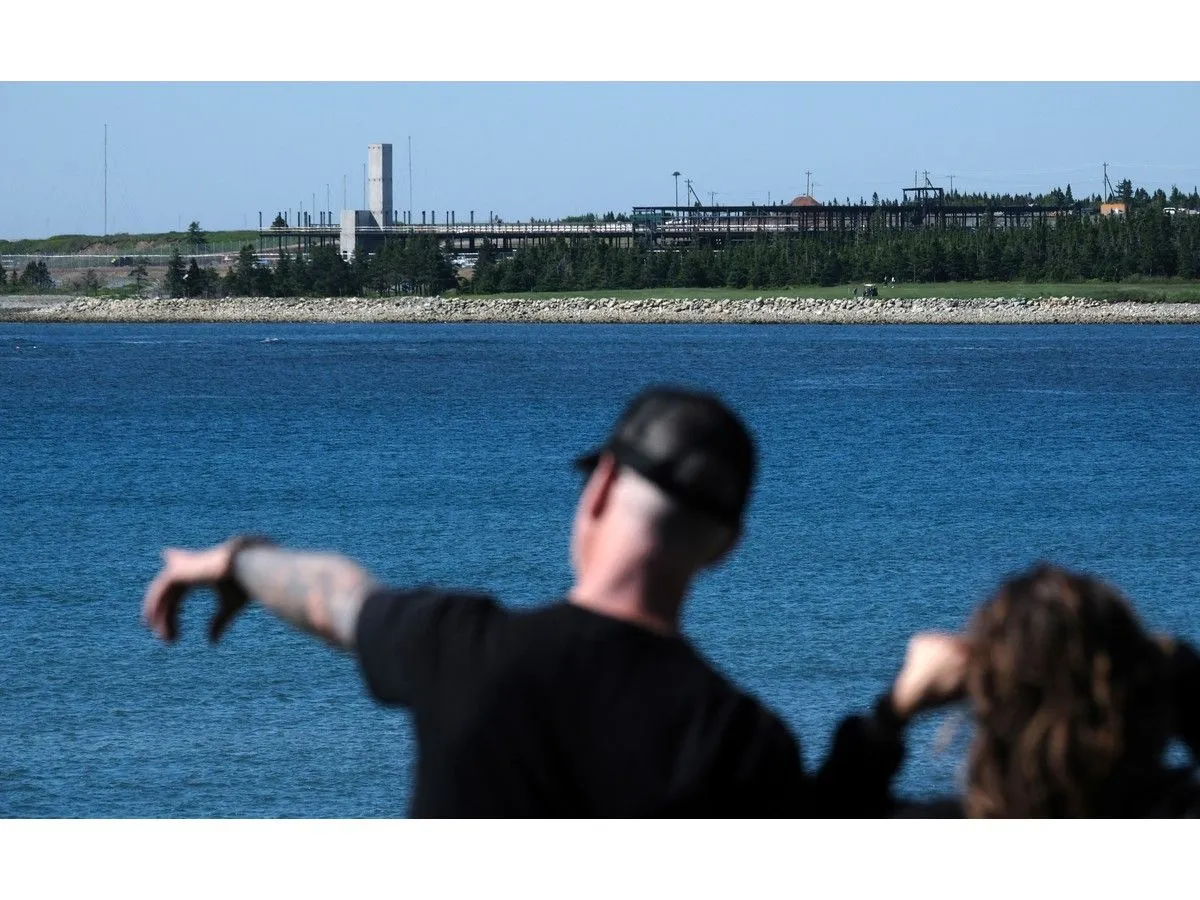
Skip to Content News Archives Economy Energy Oil & Gas Renewables Electric Vehicles Mining Commodities Agriculture Real Estate Mortgages Mortgage Rates Finance Banking Insurance Fintech Cryptocurrency Work Wealth Smart Money Wealth Management Investor Personal Finance Family Finance Retirement Taxes High Net Worth FP Comment Executive Women Puzzmo Newsletters Financial Times Business Essentials More Innovation Information Technology FP500 Podcasts Small Business Lives Told Tails Told Shopping Financial Post Store Obituaries Place a Notice Advertising Advertising With Us Advertising Solutions Postmedia Ad Manager Sponsorship Requests Classifieds Place a Classifieds ad Working Profile Settings My Subscriptions Saved Articles My Offers Newsletters Customer Service FAQ News Economy Energy Mining Real Estate Finance Work Wealth Investor FP Comment Executive Women Puzzmo Newsletters Financial Times Business Essentials HomeNewsHere's where Canada’s new $7 billion warships will be testedA windswept stretch of Nova Scotia coastline is emerging as a critical piece of the country’s future defence infrastructureLast updated 3 hours ago You can save this article by registering for free here. Or sign-in if you have an account.The Department of National Defence's warship testing site at Hartlen Point is seen under construction from across Cow Bay, N.S., on Thursday. Photo by Tim KrochakAs billions of dollars flow into Canada’s naval renewal program, a windswept stretch of coastline at the entrance to Halifax Harbour is emerging as a critical piece of the country’s future defence infrastructure.Subscribe now to read the latest news in your city and across Canada.Exclusive articles from Barbara Shecter, Joe O'Connor, Gabriel Friedman, and others.Daily content from Financial Times, the world's leading global business publication.Unlimited online access to read articles from Financial Post, National Post and 15 news sites across Canada with one account.National Post ePaper, an electronic replica of the print edition to view on any device, share and comment on.Daily puzzles, including the New York Times Crossword.Subscribe now to read the latest news in your city and across Canada.Exclusive articles from Barbara Shecter, Joe O'Connor, Gabriel Friedman and others.Daily content from Financial Times, the world's leading global business publication.Unlimited online access to read articles from Financial Post, National Post and 15 news sites across Canada with one account.National Post ePaper, an electronic replica of the print edition to view on any device, share and comment on.Daily puzzles, including the New York Times Crossword.Create an account or sign in to continue with your reading experience.Access articles from across Canada with one account.Share your thoughts and join the conversation in the comments.Enjoy additional articles per month.Get email updates from your favourite authors.Create an account or sign in to continue with your reading experience.Access articles from across Canada with one accountShare your thoughts and join the conversation in the commentsEnjoy additional articles per monthGet email updates from your favourite authorsSign In or Create an AccountorThe Department of National Defence has begun redeveloping a 10-hectare property adjacent to Hartlen Point Forces Golf Club, a links-style course carved out of a closed artillery fortification. A three-wood shot from the clubhouse, construction is underway for a land-based testing and support campus that will serve Canada’s next generation of warships.The $275-million to $300-million Land‑Based Test Facility will support the Royal Canadian Navy’s future River-class destroyer fleet being built by Halifax-based Irving Shipbuilding Inc.Breaking business news, incisive views, must-reads and market signals. Weekdays by 9 a.m.By signing up you consent to receive the above newsletter from Postmedia Network Inc.A welcome email is on its way. If you don't see it, please check your junk folder.The next issue of Posthaste will soon be in your inbox.We encountered an issue signing you up. Please try againDefence officials describe the project as a significant step in modernizing Canada’s East Coast naval infrastructure, creating a permanent capability to test, integrate and validate complex combat systems before they are installed aboard vessels.“The . . . facility is essential to bringing the River‑class destroyers into service and supporting them throughout their life cycle,” DND spokesperson Suzanne Lalande said in an email. A sign at the construction site entrance in Hartlen Point where the Department of National Defence’s $300-million Land-Based Test Facility is being built. Photo by Glenn MacDonald“Because the (River‑class destroyer) combat systems are highly complex, the facility’s purpose is to integrate and commission these systems to ensure they function correctly before they are installed on the ships. This reduces integration risk during the build and allows operational capabilities to be delivered faster than if this work were done onboard.“The combat systems include a range of integrated components such as sensors, radar, communications systems, the command‑and‑control system, and the software that ties them together.”Construction of the test facility and supporting infrastructure is expected to continue into early 2028. Systems and equipment, such as radars, communications and computers, will begin moving into the facility that spring. Lalande said the federal government expects the facility to be fully operational by 2030.Canada’s River-class destroyer program, one of the largest military procurement projects in the country’s history, will see 15 new warships built to replace the aging Halifax-class frigates and retired Iroquois-class destroyers. Production of the first vessel is already underway in Halifax.The first River-class destroyer is expected to enter service in the early 2030s, while all 15 vessels are slated for delivery by 2050.By the time those ships begin joining the fleet, Hartlen Point will already be functioning as a permanent testing, training and support centre – a behind-the-scenes capability designed to ensure Canada’s most advanced warships are ready before they ever touch the water.“The Land-Based Test Facility will have a structure on the roof that mimics the size and shape of the ship’s mast, where sensors, antennas and other combat system components can be installed in their real-world positions,” Lalande explained. “This allows the systems to be integrated and tested in a realistic environment before being installed on the ship.“The building is also positioned on the site to maximize the radar’s view of the ocean horizon, allowing testing in conditions similar to what the ship will encounter in operations and providing an ideal environment for evaluating radar performance.”The River-class destroyers will incorporate highly advanced radar, sensor, communications and electronic warfare technologies. By replicating shipboard systems ashore, engineers can identify problems, validate performance and train crews before equipment reaches the shipyard and is installed in the vessels.“Testing ashore is less costly and lower risk, since issues can be identified and resolved in a controlled environment without the expense, constraints, or operational impacts of troubleshooting onboard a ship,” Lalande said.Defence officials say the approach reduces technical risk, shortens installation timelines, and lowers the likelihood of costly redesigns or delays once construction is underway.“This facility represents an important step in the River-class destroyer project,” Defence Minister David McGuinty said when construction was announced. “Once completed, it will play a vital role in bringing the new ships into service and preparing our personnel to work with the incoming ship systems.”DND estimates the project will support roughly 350 jobs during the various phases of construction. Once operational, the facility could employ over 100 full-time personnel, including military members, civilian defence employees and contractors.Lalande said the number of positions required once the facility is fully operational is still being determined by the federal government. She noted the facility will continue to be used throughout the entire lifecycle of the River‑class destroyers, “supporting ongoing testing, integration, and upgrades as new capabilities are added.”“This work will continue even after the fleet is in service,” she said.The Hartlen Point test facility reinforces Nova Scotia’s growing role in Canada’s defence economy.Combined with the multibillion-dollar shipbuilding program underway at Irving Shipyard across Halifax Harbour, the facility would further strengthen Nova Scotia’s growing defence sector. These investments are expected to support thousands of jobs and generate billions of dollars in economic activity over the coming decades. The Department of National Defence’s warship testing site at Hartlen Point is seen under construction near Cow Bay, N.S., on June 25. Photo by Tim Krochak“Nova Scotia is already Canada’s defence leader, with the people, infrastructure, supply chains and innovation ecosystem needed to support the country’s next generation of defence priorities,” said Chrissy Matheson, communications director for the Department of Growth and Development, in an email.“We are home to NATO’s North American headquarters for the Defence Innovation Accelerator for the North Atlantic, Canada’s first Defence Innovation Secure Hub, North America’s leading shipbuilder, growing air force assets in Greenwood and the future in-service maintenance of Canada’s eastern fleet of new submarines.”To meet the labour demands of those projects, Nova Scotia is expanding its skilled trades workforce. According to the Department of Labour, Skills and Immigration, the province has more than 8,600 active apprentices working toward certification and more than 2,700 employers participating in the apprenticeship system.The province has also surpassed its apprenticeship certification targets, issuing more than 1,000 certifications in each of the past two years.“Nova Scotia has a once-in-a-generation opportunity to strengthen its economy through major defence investments while supporting Canada’s sovereignty,” Greg Hanna, communications director for the Department of Labour, Skills and Immigration, said in an email. “We are not waiting for that demand to arrive – we are building the workforce today.” Join the Conversation This website uses cookies to personalize your content (including ads), and allows us to analyze our traffic. Read more about cookies here. By continuing to use our site, you agree to our Terms of Use and Privacy Policy.
Here's where Canada’s new $7 billion warships will be tested
DND has begun redeveloping Hartlen Point property for land-based testing facility that will serve Canada’s next generation of warships
1,549 words~7 min read