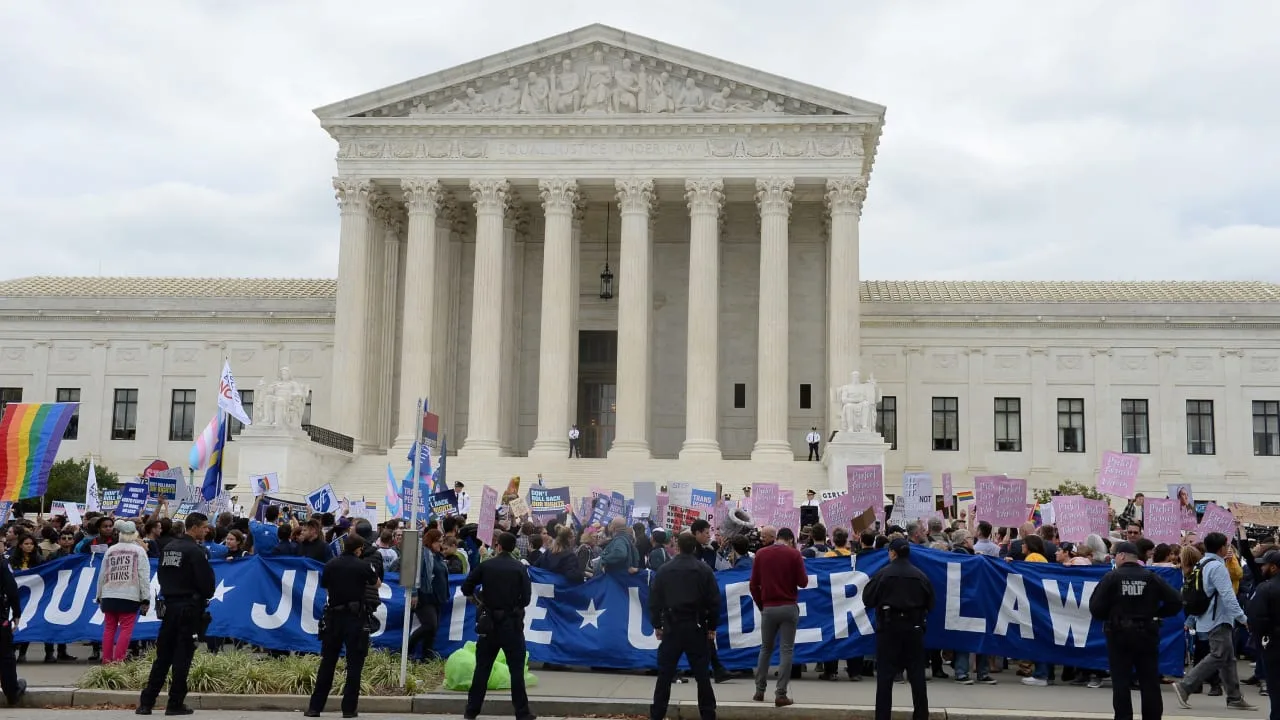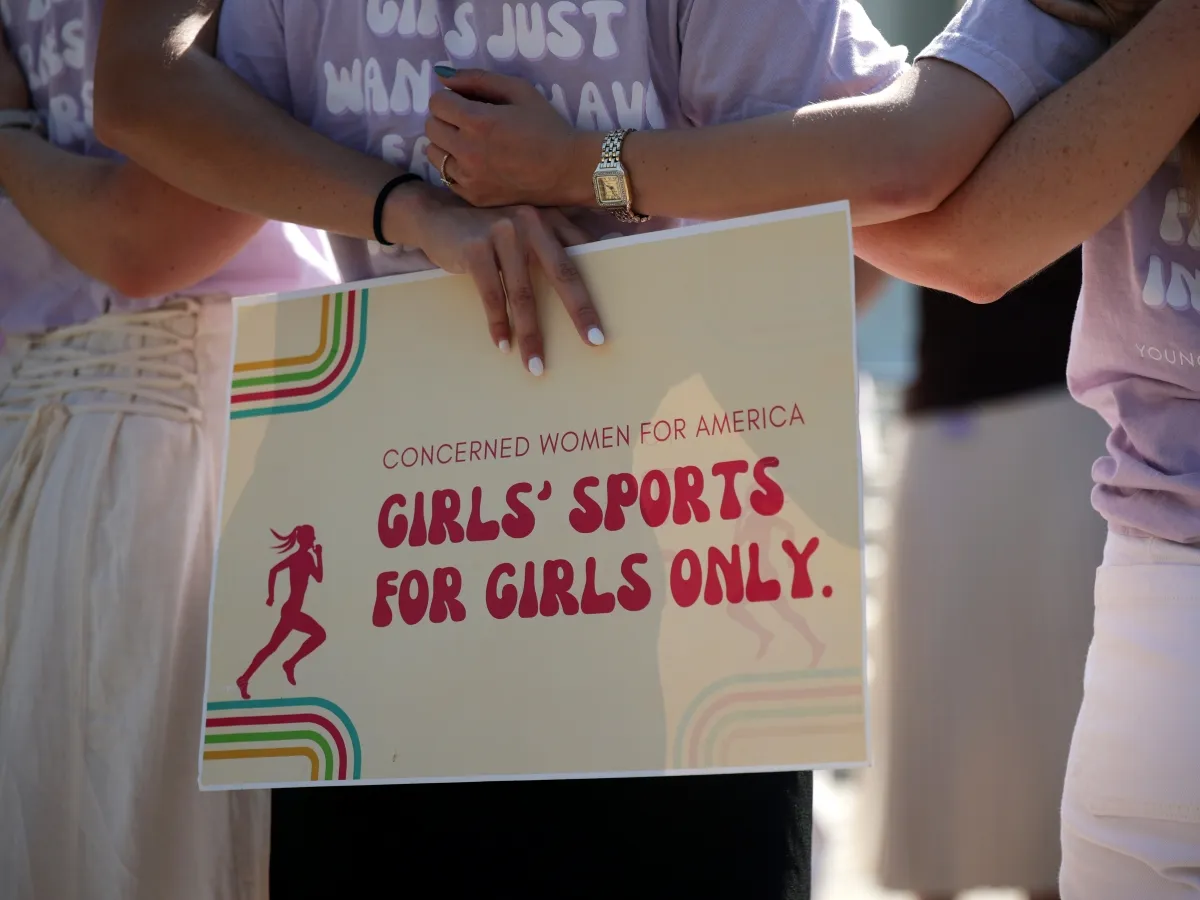
Skip to Content Subscribe Our Offers My Account Manage My Subscriptions FAQ Newsletters Canada Canadian True Crime Canadian Politics Health World Israel & Middle East Financial Post NP Comment Longreads Puzzmo Diversions Comics NP News Quiz New York Times Crossword Horoscopes Life Eating & Drinking Style Sponsored Play for Ontario Travel Travel Canada Travel USA Travel International Cruises Travel Essentials Culture Books Celebrity Movies Music Theatre Television Business Essentials Advice Lives Told Tails Told Shopping Buy Canadian Home Living Outdoor Living Kitchen & Dining Tech Style & Beauty Personal Care Entertainment & Hobbies Gift Guide Travel Guide Amazon Prime Day Deals Savings National Post Store More Sports Hockey Baseball Basketball Football Soccer Golf Tennis Driving Vehicle Research Reviews News Gear Guide Obituaries Place an Obituary Place an In Memoriam Classifieds Place an Ad Celebrations Working Business Ads Archives Healthing Epaper Manage Print Subscription Profile Settings My Subscriptions Saved Articles My Offers Newsletters Customer Service FAQ Newsletters Canada World Financial Post NP Comment Longreads Puzzmo Diversions Life Shopping Epaper Manage Print Subscription HomeNP CommentAdam Zivo: Why American transgender athletes lost the right to play female sportsNew U.S. Supreme Court decision upheld protections for sex, not genderLast updated Jul 08, 2026 You can save this article by registering for free here. Or sign-in if you have an account.Defenders of female sports categories gather in front of the U.S. Supreme Court as they wait for rulings on June 30, 2026 in Washington, D.C. Photo by Alex Wong/Getty ImagesThe U.S. Supreme Court ruled last week that states can ban trans-identifying males (“transgender women”) from female sports in the interest of athletic fairness. Although critics have denounced this decision as discriminatory, it is, in reality, a victory for common sense and judicial restraint.Enjoy the latest local, national and international news.Exclusive articles by Conrad Black, Barbara Kay and others. Plus, special edition NP Platformed and First Reading newsletters and virtual events.Unlimited online access to National Post.National Post ePaper, an electronic replica of the print edition to view on any device, share and comment on.Daily puzzles including the New York Times Crossword.Support local journalism.Enjoy the latest local, national and international news.Exclusive articles by Conrad Black, Barbara Kay and others. Plus, special edition NP Platformed and First Reading newsletters and virtual events.Unlimited online access to National Post.National Post ePaper, an electronic replica of the print edition to view on any device, share and comment on.Daily puzzles including the New York Times Crossword.Support local journalism.Create an account or sign in to continue with your reading experience.Access articles from across Canada with one account.Share your thoughts and join the conversation in the comments.Enjoy additional articles per month.Get email updates from your favourite authors.Create an account or sign in to continue with your reading experience.Access articles from across Canada with one accountShare your thoughts and join the conversation in the commentsEnjoy additional articles per monthGet email updates from your favourite authorsSign In or Create an AccountorOver the past six years, 27 states have enacted policies barring males, regardless of their gender identity, from competing in female sports. Their rationale has been straightforward: males enjoy an inherent strength advantage over females and ergo cannot fairly compete against them, and this advantage is not erased when transgender-identified males use puberty blockers or cross-sex hormones.Two transgender students separately challenged these bans in West Virginia and Idaho, where they initially secured favourable rulings in lower courts. The Supreme Court then adjudicated their cases together and overturned the previous rulings, establishing a definitive national precedent.The National Post newsletter that doesn’t hold back, giving readers the unvarnished truth on media, politics and culture.By signing up, you consent to receive the above newsletter from Postmedia Network Inc.A welcome email is on its way. If you don't see it, please check your junk folder.The next issue of Right? will soon be in your inbox.We encountered an issue signing you up. Please try againThe litigants argued that the bans violated Title IX — a civil rights statute which bars discrimination “on the basis of sex” — and the U.S. Constitution’s 14th Amendment, which guarantees equality under the law.The Supreme Court unanimously found that Title IX had not been violated, but was split on the 14th Amendment: six conservative justices believed that the bans were clearly constitutional, while three liberal justices disagreed.The majority ruling, authored by Justice Brett Kavanaugh, explained that Title IX was enacted in 1972, when “sex” ordinarily meant “biological sex and not gender identity,” making a gender-based interpretation of its wording implausible. Although Title IX did not originally address sports, it was amended in 1974 to require “reasonable provisions” for athletic fairness, spurring comprehensive regulations for female-only teams.Kavanaugh and his colleagues found that West Virginia and Idaho’s bans on males in female sports did not violate Title IX because, in the context of athletics, the statute expressly permits sex segregation.The litigants actually agreed that Title IX concerns biological sex, but argued that, while athletic sex segregation is generally defensible, it would be unreasonable to deny exceptions to transgender-identified males who have taken puberty blockers or hormones.This did not persuade the court’s conservative justices, who found that nothing in the statute’s language requires that exceptions be made on the basis of gender identity. As such, while American policymakers can debate transgender inclusion in female sports (and, indeed, may even permit it within their own jurisdictions), Title IX does not prohibit laws requiring such athletes to compete according to their sex.All three liberal justices concurred that Title IX was not violated, but Justice Ketanji Brown Jackson, in her written dissent, disagreed on whether the statute only provides sex-based protections. She cited three previous Title IX cases — from 1978, 1999 and 2005 — that prohibit discrimination on the basis of sex stereotypes, and argued that, as such stereotypes are not rooted in biology, this jurisprudence suggests gender identity may be protected, too.Her commentary here matters because both the Obama and Biden administrations creatively reinterpreted Title IX as applying to both gender identity and sex, which created new (but ultimately temporary) legal rights for transgender Americans (e.g. access to preferred bathrooms). The first and second Trump administrations consequently restored the statute’s original, strictly biological meaning.Despite Jackson’s objections, the Supreme Court’s new ruling will entrench the conservative (and clearly more accurate) interpretation of Title IX, making it harder to contort going forward. That doesn’t mean that new civil rights protections can’t be enacted for transgenderism — they will just have to be purpose-built, with real democratic buy-in, rather than piggybacking on sex-based protections.Regarding the 14th Amendment, the Supreme Court’s conservative majority felt that West Virginia and Idaho did not run afoul of the U.S. Constitution for several reasons.As explained by Kavanaugh, American constitutional jurisprudence allows sex-based discrimination only when it is “substantially related” to achieving an “important” government objective. As there is a clear interest in providing safety and competitive fairness to female athletes, shielding them from male competitors is generally constitutional.The bans on male participation in female sport are, by extension, also constitutional because they discriminate on the basis of sex, not gender identity or transgender status. If all males, regardless of gender identity, are banned from female sports, then it cannot be said that transgender people are being targeted. As a contrast, Kavanaugh pointed out that prohibiting transgender individuals from joining a co-ed sports team would be an altogether separate, and less defensible, matter.The litigators argued that transgender-identified males who use puberty blockers and cross-sex hormones should be granted exceptions, because their strength is allegedly comparable to females.Most of the court disagreed.Kavanaugh wrote that whether such medications nullify male physical advantages is still “the subject of ongoing medical and scientific debate,” and that the “judiciary must be cautious about swooping in and invalidating laws” in “areas fraught with medical and scientific uncertainties.” Historically speaking, the courts have, in situations like these, deferred to the authority of the legislatures, as they are better equipped to review “vast amounts of data” and their carefully considered decisions on such matters are often difficult for judges to “meaningfully evaluate.”Lastly, Kavanaugh noted that it would be impractical to grant court-mandated exemptions for specific transgender athletes. Such a system would be vulnerable to arbitrary decision-making, as it would be “almost impossible” for judges to equitably evaluate the athletic capacities — and medical realities — of individual transgender athletes in their relevant sport.“And if those kinds of ad hoc exemptions based on physical capacity were constitutionally required, would exemptions also be required for biological males who still identify as male but contend that they, too, are no taller, no stronger, no faster than the typical females in their chosen sport? Would those males also be entitled to play on a women’s or girls’ team? If not, why not?” wrote Kavanaugh.His ruling ended with an appeal to empathy for both sides: “We are acutely aware of the difficulties sometimes faced by boys who identify as girls (and by girls who identify as boys) in middle school, high school, and beyond…. Their desire to compete warrants respect. No student-athlete on either side of the issue, whether a biological female or transgender, deserves to be ostracized or vilified.”In a separate concurrence, though, Justice Clarence Thomas took a blunter tone than his conservative colleagues: “Men and boys with gender dysphoria are not women or girls, even if they believe they are.” He condemned terms like “biological men” and “boys who identify as girls” as language that “obscures reality” and shows “indifference regarding the truth.”Thomas argued that — unlike sex, race or national origin — gender dysphoria is not an immutable characteristic as it is “the object of psychiatric treatment,” and thus should be given a lower level of protection, on the same tier as mental illness or immigration status (both of which are mutable).The liberal justices, led by Sonia Sotomayor, disagreed with their conservative colleagues regarding constitutionality.In her dissent, Sotomayor acknowledged that it was unclear to the court whether puberty blockers and cross-sex hormones nullify male strength advantages. However, she argued that the correct response would have been to allow more fact-finding to occur — as had been requested by a lower court.Maybe the litigants would have been able to show that science was on their side, or maybe not. She explicitly took no position on their chances of success. Yet, she argued that by issuing a definitive ruling in a “slapdash” manner, the court’s conservative majority was not heeding its own calls for judicial restraint.National Post Join the Conversation This website uses cookies to personalize your content (including ads), and allows us to analyze our traffic. Read more about cookies here. By continuing to use our site, you agree to our Terms of Use and Privacy Policy.
Adam Zivo: Why American transgender athletes lost the right to play female sports
New U.S. Supreme Court decision upheld protections for sex, not gender
1,777 words~8 min read