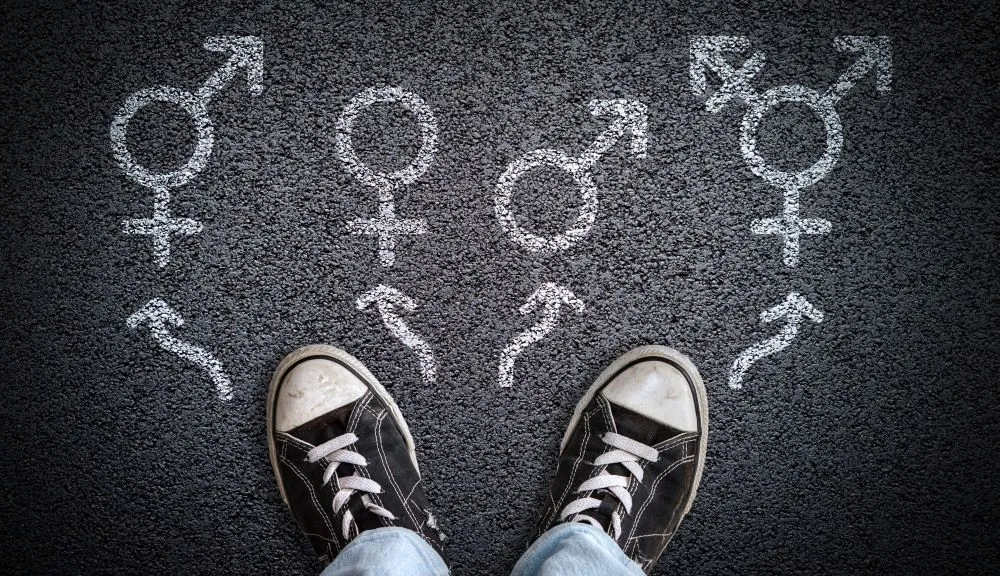
Skip to Content Subscribe Our Offers My Account Manage My Subscriptions FAQ Newsletters Canada Canadian True Crime Canadian Politics Health World Israel & Middle East Financial Post NP Comment Longreads Puzzmo Diversions Comics NP News Quiz New York Times Crossword Horoscopes Life Eating & Drinking Style Sponsored Play for Ontario Travel Travel Canada Travel USA Travel International Cruises Travel Essentials Culture Books Celebrity Movies Music Theatre Television Business Essentials Advice Lives Told Tails Told Shopping Buy Canadian Home Living Outdoor Living Tech Style & Beauty Kitchen & Dining Personal Care Entertainment & Hobbies Gift Guide Travel Guide Deals Savings National Post Store More Sports Hockey Baseball Basketball Football Soccer Golf Tennis Driving Vehicle Research Reviews News Gear Guide Obituaries Place an Obituary Place an In Memoriam Classifieds Place an Ad Celebrations Working Business Ads Archives Healthing Epaper Manage Print Subscription Profile Settings My Subscriptions Saved Articles My Offers Newsletters Customer Service FAQ Newsletters Canada World Financial Post NP Comment Longreads Puzzmo Diversions Life Shopping Epaper Manage Print Subscription HomeNP CommentAdam Zivo: Survey shows immigrants and minorities less supportive of gender expressionSupport for gender expression declining across Canada, lowest among immigrants and minorities You can save this article by registering for free here. Or sign-in if you have an account.A person standing on asphalt road with gender symbols of male, female, bigender and transgender. Concept of choice or gender confusion or dysphoria. Photo by iStockphoto /Getty Images/iStockphotoA new government report, which analyzes recent survey data gathered on gender-based issues, has indirectly confirmed that Canadian support for transgender rights is falling, and that immigrants and ethnic minorities are comparatively conservative on these matters. Though unsurprising, these insights deal yet another blow against the myths of “intersectional” progressivism and make a strong case for further ethnicity-based social research.Enjoy the latest local, national and international news.Exclusive articles by Conrad Black, Barbara Kay and others. Plus, special edition NP Platformed and First Reading newsletters and virtual events.Unlimited online access to National Post.National Post ePaper, an electronic replica of the print edition to view on any device, share and comment on.Daily puzzles including the New York Times Crossword.Support local journalism.Enjoy the latest local, national and international news.Exclusive articles by Conrad Black, Barbara Kay and others. Plus, special edition NP Platformed and First Reading newsletters and virtual events.Unlimited online access to National Post.National Post ePaper, an electronic replica of the print edition to view on any device, share and comment on.Daily puzzles including the New York Times Crossword.Support local journalism.Create an account or sign in to continue with your reading experience.Access articles from across Canada with one account.Share your thoughts and join the conversation in the comments.Enjoy additional articles per month.Get email updates from your favourite authors.Create an account or sign in to continue with your reading experience.Access articles from across Canada with one accountShare your thoughts and join the conversation in the commentsEnjoy additional articles per monthGet email updates from your favourite authorsSign In or Create an AccountorPublished in Statistics Canada’s Juristat, the report draws from the Survey of Safety in Public and Private Spaces (SSPPS), which was conducted in 2018 and 2025. The survey asked Canadians to respond to eight statements related to sexism, LGBT issues and intimate partner violence, and, thanks to its large sample size (46,511 in 2025), permits credible analysis of niche subpopulations.This newsletter from NP Comment tackles the topics you care about. (Subscriber-exclusive edition on Fridays)By signing up you consent to receive the above newsletter from Postmedia Network Inc.We encountered an issue signing you up. Please try againTransgender acceptance was measured using two statements: 1) “people should be able to express their gender however they choose,” and 2) “I would support a family member if they came out as transgender.”The 2025 results show that, although most Canadians still agree with these statements, their backing has noticeably fallen since 2018 and varies significantly between demographic groups.Women have been more progressive on LGBT issues, but their support for free gender expression decreased from 85 per cent to 77 per cent, while support among men decreased from 78 per cent to 70 per cent. Similarly, female support for accepting transgender family members decreased slightly from 80 per cent to 77 per cent, while male support decreased somewhat more dramatically, from 72 per cent to 65 per cent.Survey respondents were slightly more supportive of free gender expression if they were more educated or lived in urban areas and, far more supportive if they identified as homosexual or bisexual. Women were also more supportive if they were younger or had higher incomes, although age only varied in that 25-34 year-old men were roughly 4 per cent more supportive than the other age cohorts and male earnings had almost no consequential effect on male responses.Crucially, the 2025 survey showed that immigrants and certain ethnic minorities were more socially conservative than the general population.Foreign-born women, for example, were noticeably less supportive of free gender expression than their native-born counterparts (70 per cent versus 80 per cent) — a gap that was similar, albeit smaller, for equivalent men (67 per cent versus 71 per cent).When averaging out male and female responses, Caucasian and Indigenous respondents supported free gender expression at almost the same rates (76 per cent and 74 per cent, respectively), but non-Indigenous minorities, also known as “racialized” Canadians, were slightly less accepting, with 69 per cent support.Credible data was not available for all ethnic groups (the margin of errors for some were enormous), but, among those that could be analyzed, Arab Canadians were the least supportive of free gender expression (59 per cent), followed by Black Canadians (65 per cent) and Chinese Canadians (66 per cent).This matters, of course, because it rebuts the narratives of “intersectional” progressives who claim, without evidence, that all “oppressed” groups are seamlessly allied with one another. As this data shows, Canada’s racial minorities are not champions of gender non-conformists and are, in fact, disproportionately among their skeptics.The SSPPS also asked respondents whether same-sex couples should have the right to adopt children. It not only found high levels of support among Canadians (79.6 per cent for women, 70.8 per cent for men), but that this support, rather than eroding, had actually increased — ever so slightly — by a single percentage point. So it would therefore seem that the backlash against transgender issues has not fully spilled over to LGB adoption rights.Unfortunately, the report provided only a sliver of the SSPPS’s data, leaving critical gaps that undermine independent analysis. For example, when it comes to same-sex adoption and supporting transgender family members, breakdowns of ethnicity and immigration status were not provided, even though this would have been relevant to Canadians.Do Black, Arab and Chinese communities support same-sex adoption at the same levels as Caucasians? Would they reject transgender family members more than general society? We don’t know, because the relevant data tables are missing in this report, and SSPPS data is not readily available on Statistics Canada’s website.The absence of this data downplays the social conservatism of certain minority groups. It stresses, for example, that Filipina and Southeast Asian women were accepting of free gender expression, but neglected to mention that, conversely, other ethnicities had shown disproportionate hostility. In other words: the authors were capable of ethnic analysis, but seemed to selectively spotlight only the more positive findings.The report’s ideological slant makes itself known in other ways, too.For example, the authors suggest that decreased acceptance of free gender expression was caused by “vocal public discourse which aims to legitimize transphobic perspectives” and provincial policies that “limit the rights of transgender and non-binary people.” The sources cited in support of these claims, of course, are quasi-academic activist papers that demonize Canada’s parental rights movement and warn against “right-wing agendas.”One would imagine that Statistics Canada’s analysts — who are supposed to be non-partisan — would be a bit more discreet about their political sympathies.In any case, it’s clear that more research needs to be done in this area. Not only should the SSPPS data be made easily available to the public, more surveys of this type should be conducted — because if Canada truly cares about understanding gender-based issues, then it needs to invest in data collection, even if that invites complicated conversations about immigration and ethnic communities.National Post Get the latest from Adam Zivo straight to your inbox Join the Conversation This website uses cookies to personalize your content (including ads), and allows us to analyze our traffic. Read more about cookies here. By continuing to use our site, you agree to our Terms of Use and Privacy Policy.
Adam Zivo: Survey shows immigrants and minorities less supportive of gender expression
Support for gender expression declining across Canada, lowest among immigrants and minorities
1,425 words~6 min read