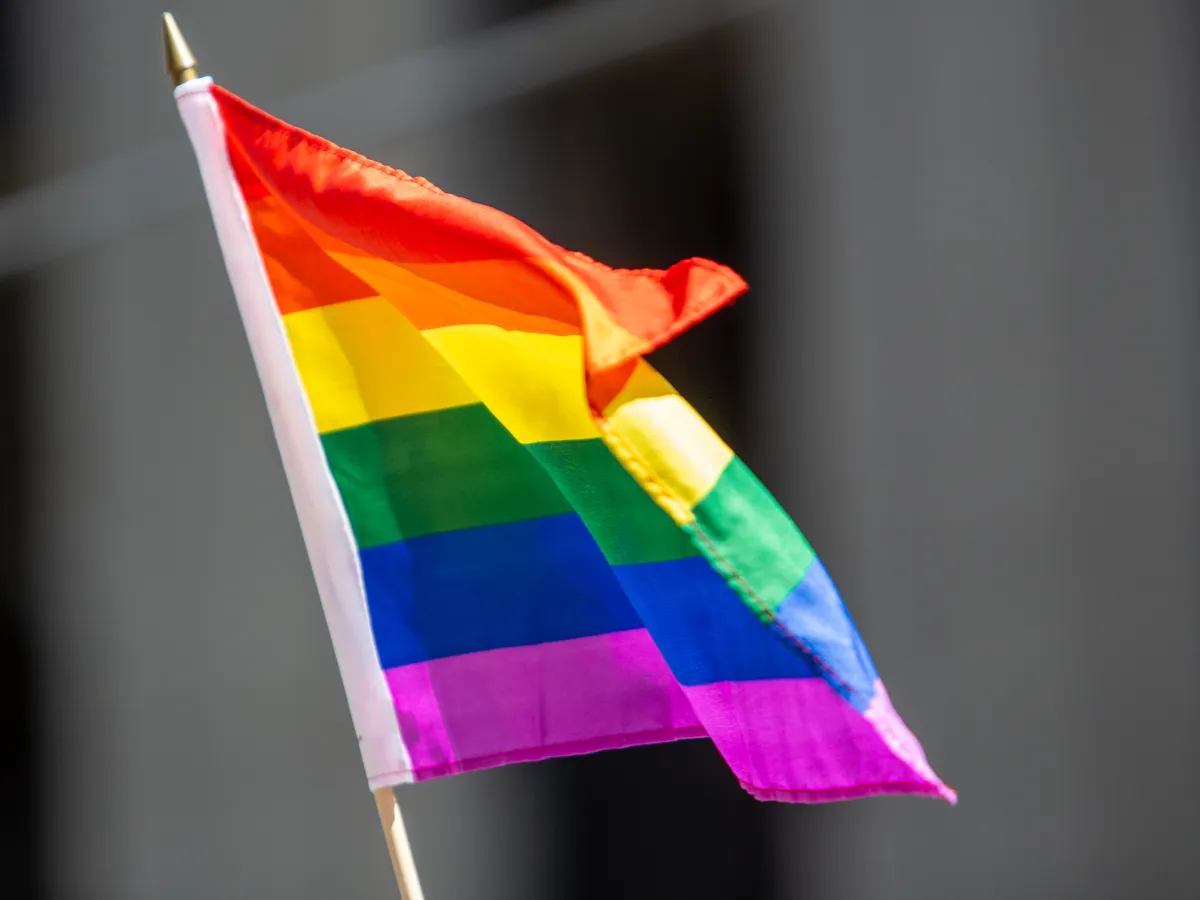
Skip to Content Subscribe Our Offers My Account Manage My Subscriptions FAQ Newsletters Canada Canadian True Crime Canadian Politics Health World Israel & Middle East Financial Post NP Comment Longreads Puzzmo Diversions Comics NP News Quiz New York Times Crossword Horoscopes Life Eating & Drinking Style Sponsored Play for Ontario Travel Travel Canada Travel USA Travel International Cruises Travel Essentials Culture Books Celebrity Movies Music Theatre Television Business Essentials Advice Lives Told Tails Told Shopping Buy Canadian Home Living Outdoor Living Kitchen & Dining Tech Style & Beauty Personal Care Entertainment & Hobbies Gift Guide Travel Guide Amazon Prime Day Deals Savings National Post Store More Sports Hockey Baseball Basketball Football Soccer Golf Tennis Driving Vehicle Research Reviews News Gear Guide Obituaries Place an Obituary Place an In Memoriam Classifieds Place an Ad Celebrations Working Business Ads Archives Healthing Epaper Manage Print Subscription Profile Settings My Subscriptions Saved Articles My Offers Newsletters Customer Service FAQ Newsletters Canada World Financial Post NP Comment Longreads Puzzmo Diversions Life Shopping Epaper Manage Print Subscription HomeNP CommentAdam Zivo: The necessary rise of 'homonationalism'Throughout Europe, the gay community is increasingly supporting populist parties — and that's a good thingLast updated 41 minutes ago You can save this article by registering for free here. Or sign-in if you have an account.Photo by Nick Kozak for Postmedia NewsLGBT communities are increasingly embracing nationalist politics and proudly acknowledging that, when it comes to protecting gender and sexual minorities, western societies are morally superior to the developing world. While progressive activists condemn this as “homonationalism,” it is, in fact, a rational political development that should be encouraged, not disparaged.Enjoy the latest local, national and international news.Exclusive articles by Conrad Black, Barbara Kay and others. Plus, special edition NP Platformed and First Reading newsletters and virtual events.Unlimited online access to National Post.National Post ePaper, an electronic replica of the print edition to view on any device, share and comment on.Daily puzzles including the New York Times Crossword.Support local journalism.Enjoy the latest local, national and international news.Exclusive articles by Conrad Black, Barbara Kay and others. Plus, special edition NP Platformed and First Reading newsletters and virtual events.Unlimited online access to National Post.National Post ePaper, an electronic replica of the print edition to view on any device, share and comment on.Daily puzzles including the New York Times Crossword.Support local journalism.Create an account or sign in to continue with your reading experience.Access articles from across Canada with one account.Share your thoughts and join the conversation in the comments.Enjoy additional articles per month.Get email updates from your favourite authors.Create an account or sign in to continue with your reading experience.Access articles from across Canada with one accountShare your thoughts and join the conversation in the commentsEnjoy additional articles per monthGet email updates from your favourite authorsSign In or Create an AccountorThe term “homonationalism” was first coined in 2007 by Jasbir Puar, an American gender studies professor, to describe how, during the War on Terror, the United States positioned gay rights as a symbol of modernity, and, in contrast, portrayed Middle Eastern adversaries as homophobic and uncivilized.This newsletter from NP Comment tackles the topics you care about. (Subscriber-exclusive edition on Fridays)By signing up you consent to receive the above newsletter from Postmedia Network Inc.We encountered an issue signing you up. Please try againQueer theorists quickly popularized the term as a pejorative against any alignment between gay and nationalist politics — especially if criticisms of Islam and immigration were involved.In western gender studies departments, denunciations of homonationalism became a bona fide obsession, akin to “decolonization,” such that a 2014 academic paper, published in the radical journal Antipode, described the theory as “virtually hegemonic in contemporary queer thought and activism.”The discourse around homonationalism then seeped into the wider world in the mid-2010s, amid Europe’s burgeoning refugee crisis and the rise of the Islamic State. In 2015, David Coburn, a gay right-wing European parliamentarian, expressed support for limiting inflows of Muslim refugees into the United Kingdom, as he worried that some of them could harbour violently homophobic Islamist beliefs.After the 2016 Orlando Pulse shooting in Florida, then-presidential candidate Donald Trump similarly decried a “failed immigration system” that was “importing Islamic terrorism,” and vowed to protect homosexuals “from the violence and oppression of a hateful foreign ideology.”This kind of commentary resonated with some parts of the gay community, but it infuriated progressive queer activists, who did their best to contain the homonationalist wave. Out magazine, for example, published a 2015 op-ed condemning Coburn for “promoting a fascist mentality.”The Huffington Post published a similar op-ed in 2016, which criticized homonationalists as “largely white gay people blinded by privilege,” who had abandoned “intersectional activism” and the fight against “Islamophobia.”A third op-ed, published in Public Seminar, criticized homonationalism as the “imposition of an agenda by the supposedly advanced on the supposedly backward,” and called for inter-community “solidarity” in the struggle against “neoliberalism.”The discourse around homonationalism subsequently fell into a lull, only to resurge in the 2020s as part of a wider anti-immigration backlash that reoriented Europe’s gay communities towards conservative politics.Over the past few years, the gay dating app Romeo has polled its European users ahead of elections and found surprising levels of support for anti-immigrant parties and candidates.A poll of over 60,000 German users, for example, showed that Alternative for Germany (AfD), a hard-right nationalist party, was most popular, with 27.9 per cent support.Another poll of 4,216 Austrian Romeo users found that the hard-right Freedom Party of Austria was their Number 1 choice, with 29.3 per cent support.Meanwhile, in France, the populist National Rally party was the second-most-popular option among 7,221 users, with 28.2 per cent support.Although these polls have significant methodological limitations, they nonetheless strongly suggest that conservative anti-immigration parties have become popular among European gays.In an essay published in Spiked last year, Albie Amankona, a prominent British gay conservative, also observed that, not only are European homosexuals drifting rightward, populist leaders are getting gayer, too.Famously, AfD’s co-leader, Alice Weidel, is in a civil union with a Sri Lankan woman — a fact that vexes “intersectional” progressives to no end. Less well-known, though, is the fact that, in France, the National Rally sent the highest number of gay parliamentarians to the National Assembly after the 2022 election.For Amankona, the rise of gay conservative populism isn’t hard to explain: “Progressive politics has spent years insisting that all cultures are equal, that borders barely matter and that any concern about immigration is morally suspect.“In doing so, it has refused to confront a basic reality. Attitudes to homosexuality vary dramatically across the world, and large numbers of migrants to Europe come from countries that remain deeply hostile to gay people.”The response from progressive queer activists, however, has been predictably obtuse.Mexican gay activist Raúl Caporal, for example, wrote a 2025 article decrying homonationalism with all the usual tropes: apparently, it “steals our empathy” and “transforms our struggles into propaganda” by undermining “solidarity with other oppressed peoples.”A 2022 article in the Michigan Daily similarly asserted that, “Homonationalist sentiments ultimately pit queer people and people of colour against one another,” and that using “some standard of modernity or progressiveness” for comparisons is “ignorant.”Their words are representative of the wider progressive landscape. Mirroring the op-eds published a decade ago, contemporary activists refuse to accept the well-documented reality of Islamic homophobia, so they either outright ignore it, or downplay it with morally vacuous cultural relativism.Unable to formulate coherent arguments, they deploy smokescreens of jargon and sanctimony, while dogmatically asserting the need for “intersectional” solidarity that is, in truth, unreciprocated.Some halfway-decent arguments against homonationalism, however, were raised in a 2022 article published in Feministclub Amsterdam.Although the author resorted to lazy cliches (such as accusing homonationalists of fostering “racist and especially Islamophobic discourses”), she also pointed out, quite reasonably, that populist conservatism has often been hostile toward LGBT people, having, until recently, opposed the recognition of same-sex relationships and families.Yet political movements are always evolving and should primarily be evaluated by their current beliefs and dynamics, not their political genealogy — it was not that long ago that the centre-left also opposed many forms of gay rights, after all.It also speaks volumes that homosexuals would rather gamble on populist conservatism than accept open-borders Islamo-leftism. From this angle, rising homonationalism is a searing indictment of progressivism’s degeneration.Minority groups must deal with the world as it is, not as they would like it to be, and the cold truth is that, without nationalism, the West cannot adequately protect LGBT people. There is nothing wrong with having the cultural self-confidence to assert this.National Post Join the Conversation This website uses cookies to personalize your content (including ads), and allows us to analyze our traffic. Read more about cookies here. By continuing to use our site, you agree to our Terms of Use and Privacy Policy.
Adam Zivo: The necessary rise of 'homonationalism'
Throughout Europe, the gay community is increasingly supporting populist parties — and that's a good thing
1,462 words~7 min read