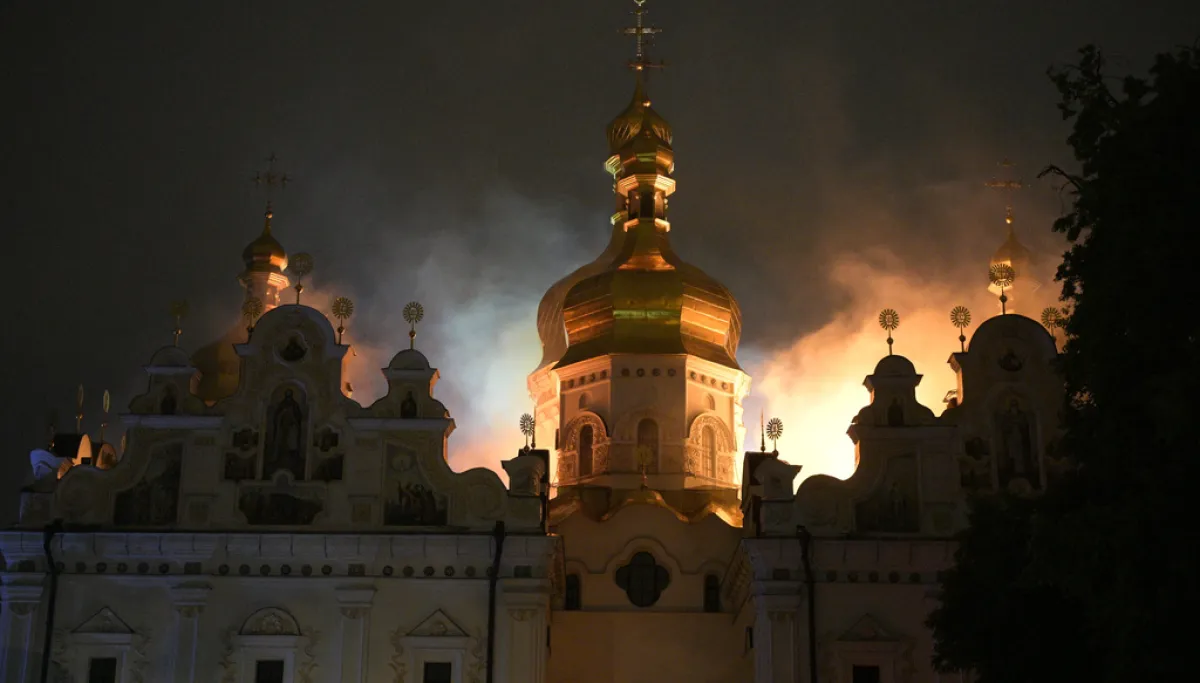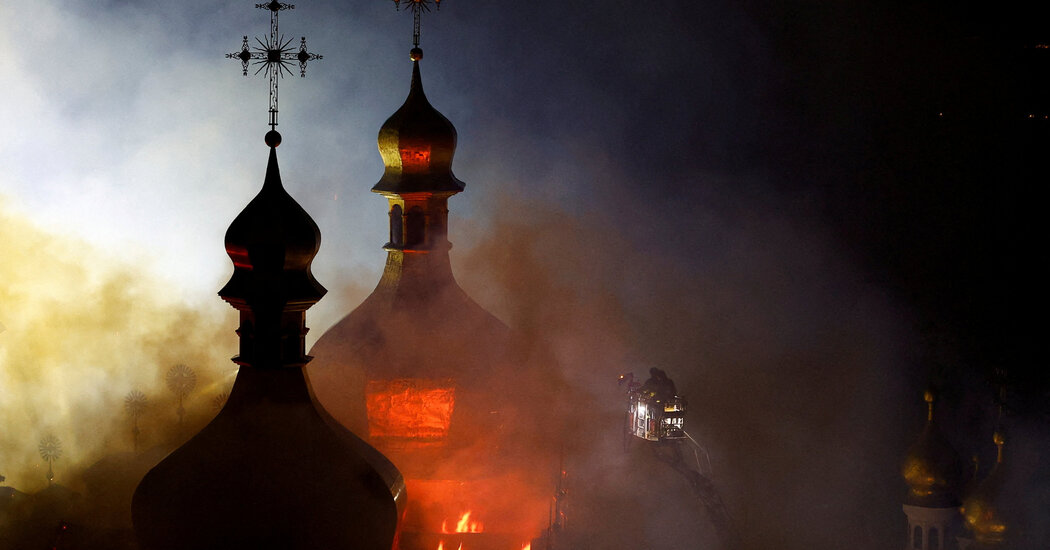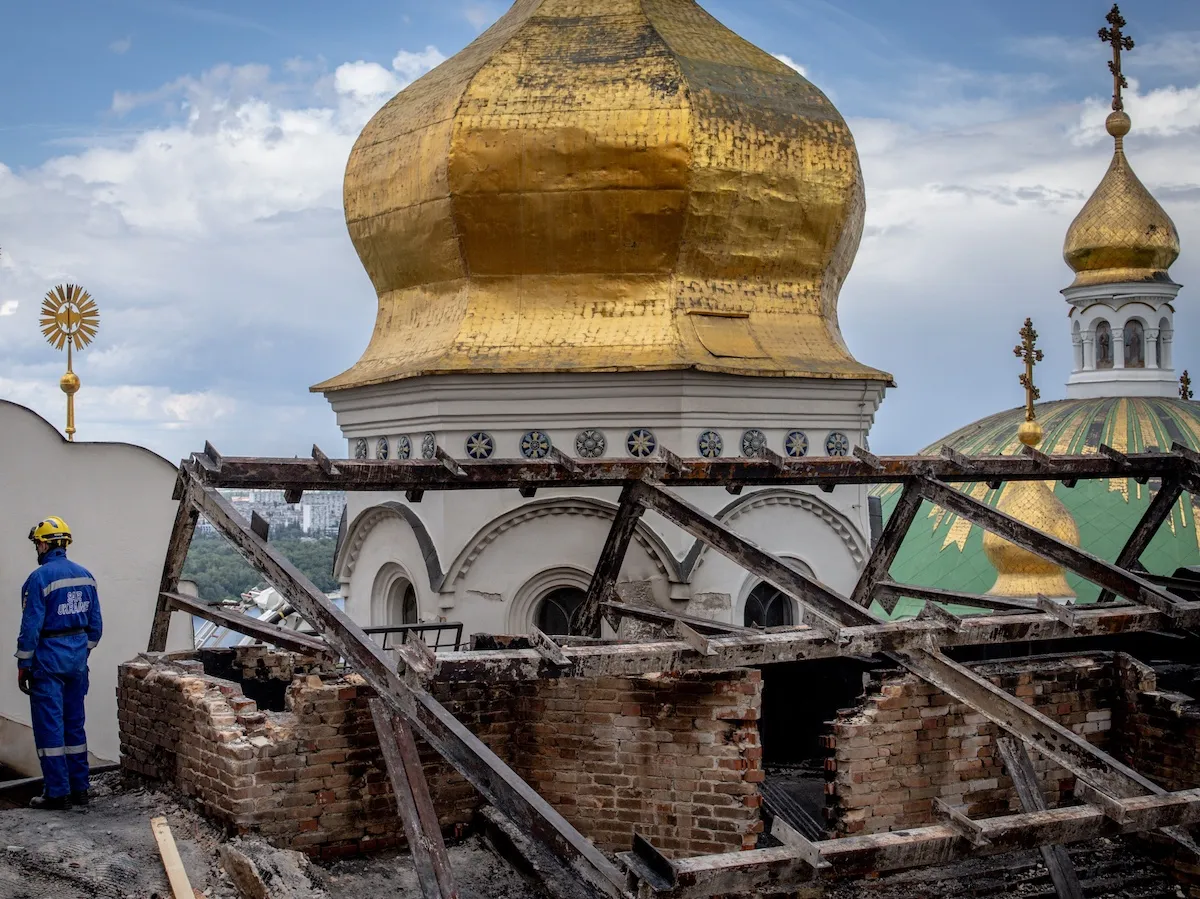
Skip to Content Subscribe Our Offers My Account Manage My Subscriptions FAQ Newsletters Canada Canadian True Crime Canadian Politics Health World Israel & Middle East Financial Post NP Comment Longreads Puzzmo Diversions Comics NP News Quiz New York Times Crossword Horoscopes Life Eating & Drinking Style Sponsored Play for Ontario Travel Travel Canada Travel USA Travel International Cruises Travel Essentials Culture Books Celebrity Movies Music Theatre Television Business Essentials Advice Lives Told Tails Told Shopping Buy Canadian Home Living Outdoor Living Kitchen & Dining Tech Style & Beauty Personal Care Entertainment & Hobbies Gift Guide Travel Guide Amazon Prime Day Deals Savings National Post Store More Sports Hockey Baseball Basketball Football Soccer Golf Tennis Driving Vehicle Research Reviews News Gear Guide Obituaries Place an Obituary Place an In Memoriam Classifieds Place an Ad Celebrations Working Business Ads Archives Healthing Epaper Manage Print Subscription Profile Settings My Subscriptions Saved Articles My Offers Newsletters Customer Service FAQ Newsletters Canada World Financial Post NP Comment Longreads Puzzmo Diversions Life Shopping Epaper Manage Print Subscription HomeNP CommentAdam Zivo: Putin is vandalizing Ukraine’s Christian heritageA 1,000 years of history is at riskLast updated 1 day ago You can save this article by registering for free here. Or sign-in if you have an account.Emergency service personnel work on the burnt and damaged roof of the Dormition Cathedral in the Orthodox complex of the Kyiv Pechersk Lavra after it was damaged by Russian strikes. (Photo by Chris McGrath/Getty Images)On Sunday night, Russia vandalized Ukraine’s religious and cultural heritage by bombing a thousand-year-old monastery in central Kyiv. The holy site is among the most revered in Eastern Orthodox Christianity, equivalent in significance to Paris’ Notre Dame, yet that provided no protection against Moscow’s nihilistic war machine. Enjoy the latest local, national and international news.Exclusive articles by Conrad Black, Barbara Kay and others. Plus, special edition NP Platformed and First Reading newsletters and virtual events.Unlimited online access to National Post.National Post ePaper, an electronic replica of the print edition to view on any device, share and comment on.Daily puzzles including the New York Times Crossword.Support local journalism.Enjoy the latest local, national and international news.Exclusive articles by Conrad Black, Barbara Kay and others. Plus, special edition NP Platformed and First Reading newsletters and virtual events.Unlimited online access to National Post.National Post ePaper, an electronic replica of the print edition to view on any device, share and comment on.Daily puzzles including the New York Times Crossword.Support local journalism.Create an account or sign in to continue with your reading experience.Access articles from across Canada with one account.Share your thoughts and join the conversation in the comments.Enjoy additional articles per month.Get email updates from your favourite authors.Create an account or sign in to continue with your reading experience.Access articles from across Canada with one accountShare your thoughts and join the conversation in the commentsEnjoy additional articles per monthGet email updates from your favourite authorsSign In or Create an AccountorNestled in the very centre of the Ukrainian capital, the Kyiv Pechersk Lavra — also known as the Monastery of the Caves or the “jewel of the Orthodox world” — is a compound of creamy white and turquoise towers, topped with hammered golden domes overlooking the Dnipro river. Its elegant buildings, adorned with crosses and painted icons, sit above ancient labyrinths of underground crypts and chapels where one can find frescos and Christian artefacts. The “lavra” (a term reserved for the highest echelon of Orthodox monasteries) is widely beloved by Ukrainians and an essential landmark for foreign visitors. Yet, over its thousand year history, it has suffered repeated destruction at the hands of eastern invaders. This newsletter from NP Comment tackles the topics you care about. (Subscriber-exclusive edition on Fridays)By signing up you consent to receive the above newsletter from Postmedia Network Inc.We encountered an issue signing you up. Please try againThe holy site was first built in the 11th century when the Kyivan Rus — a Slavic proto-Ukrainian state — was among the powerful forces in Europe and Moscow was still undeveloped swampland. Architects from Constantinople designed the original monastery, and, though their work was plundered by Turkic raiders shortly after, the lavra was repaired and became an early bastion of Slavic Orthodox Christianity. Two hundred years later, in the mid-13th century, the Mongols razed Kyiv to the ground, massacring over 90 per cent of the city’s inhabitants and leaving the lavra ruined for decades. The Rus was fragmented into squabbling, semi-autonomous principalities while the city withered into a provincial town of marginal importance. Though the lavra was again ravaged by Turkic powers in the 1400s — first the Golden Horde, then the Crimean Khanate — Ukrainians obstinately repaired it each time. In the 1600s, Kyiv experienced a cultural revival under Lithuanian-Polish rule, but control over the city was soon handed over to the Russian Empire. Local Ukrainian elites sponsored the lavra’s restoration and expansion during this period, building the compound’s now-distinct baroque architecture, but Russia placed the holy site under the authority of the Moscow Patriarchate and enacted a policy of Russification. Under a regime of strict censorship, references to Ukrainian language and culture were banned within the lavra. The compound’s printing house, previously a beacon of Ukrainian nationhood, was repurposed in service of Moscow’s colonization. Centuries later, after the Bolshevik Revolution, Russian-led Soviet authorities desecrated the lavra by turning it into a communist museum of anti-religious propaganda. Then, amid the Second World War, Russian secret police blew up the lavra’s main cathedral as they retreated from the city, blaming the destruction on the approaching Nazis. In the final decades of Soviet rule, Moscow permitted religious worship insofar as it could be used for social surveillance, and filled the Russian Orthodox Church with spies and informers. The lavra, by extension, became an instrument of secular repression and government control. When the Soviet Union finally crumbled, freeing Eastern Europe from Russia’s tyranny, restoration work on the lavra began in earnest, resurrecting its lost splendour. Yet, the institution’s soul remained corrupted by foreign influence. Until recently, Ukrainians generally had no choice but to attend the “Ukrainian Orthodox Church” (UOC – Moscow Patriarch), which is merely a branch of the Kremlin-controlled Russian Orthodox Church. However, a new Kyiv-based church was established in 2018 – the “Orthodox Church of Ukraine” (OCU) — which worshippers overwhelmingly defected to. These defections were driven by the perception that the UOC is ultimately loyal to Moscow, not the Ukrainian people — a perception that was validated when, during Russia’s full-scale invasion, several of its clergymen were caught preaching surrender and engaging in pro-Kremlin espionage. During this schism, the UOC (and ergo, the Moscow Patriarch) retained ownership of the lavra, which was governed by a pro-Russian bishop known for collecting luxury cars and cheerleading the Kremlin’s military advances. Ukrainian authorities consequently handed the lavra over to the Kyiv-based church in 2023, restoring ownership to the Ukrainian people. That brings us to last weekend: having failed to steal Ukraine’s Christian heritage sites, it seems that Russian President Vladimir Putin would rather destroy them instead. This should be unsurprising, because, although Putin pretends to defend “traditional values,” he, like his Soviet predecessors, ultimately sees churches as tools of political control. When Protestants and Evangelicals grew their flocks in Russia, undermining the influence of the government-controlled Russian Orthodox Church, Putin responded by outlawing public proselytization through the 2016 “Yarovaya law.” He later transplanted these restrictions to Ukraine’s occupied territories, instigating the systematic persecution of politically-inconvenient Christian denominations (e.g. Evangelicals, Protestants, Catholics, non-Russian Orthodox). Since the beginning of the full-scale invasion, Russian forces have reportedly destroyed hundreds of Ukrainian religious buildings and tortured or killed dozens of priests, pastors and monks. Bombing the lavra is simply the natural extension of this terror campaign. One would expect that international institutions would fully condemn these crimes — but they have held back. UNESCO, for example, released a bureaucratically-worded statement that only tepidly condemned the lavra attack and refrained from acknowledging Moscow’s responsibility. The statement was condemned by Ukraine’s Foreign Ministry spokesperson Heorhii Tykhyi, who wrote on X: “The organisation tasked with protecting cultural heritage does not even know whom it protects it from. Why is it so hard to just say ‘Russian strike’?” Amid this institutional cowardice, it is critical that Western governments — and their Christian citizens, especially — loudly condemn Putin’s ongoing assaults on Ukrainian religious sites. The world should not be robbed of a thousand years of Orthodox history because of the bloodlust of an ex-KGB thug. National Post Join the Conversation This website uses cookies to personalize your content (including ads), and allows us to analyze our traffic. Read more about cookies here. By continuing to use our site, you agree to our Terms of Use and Privacy Policy.
Adam Zivo: Putin is vandalizing Ukraine’s Christian heritage
A 1,000 years of history is at risk
1,455 words~7 min read