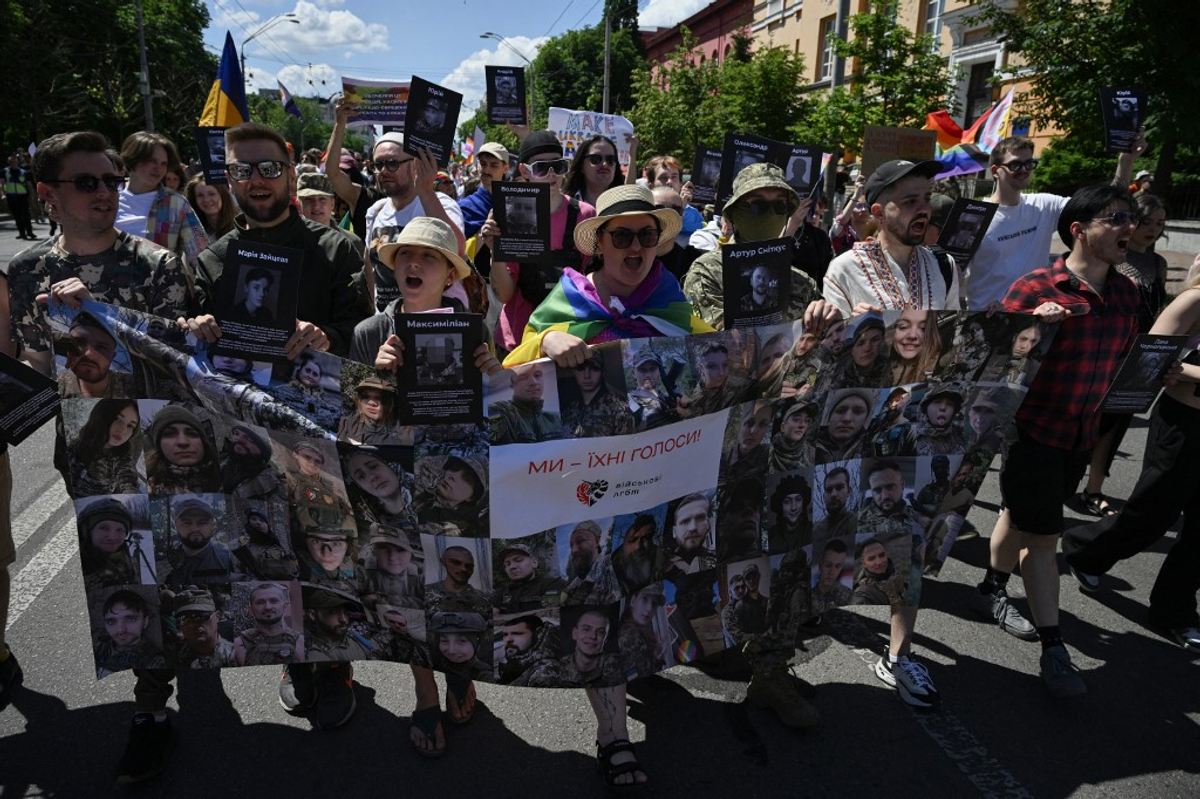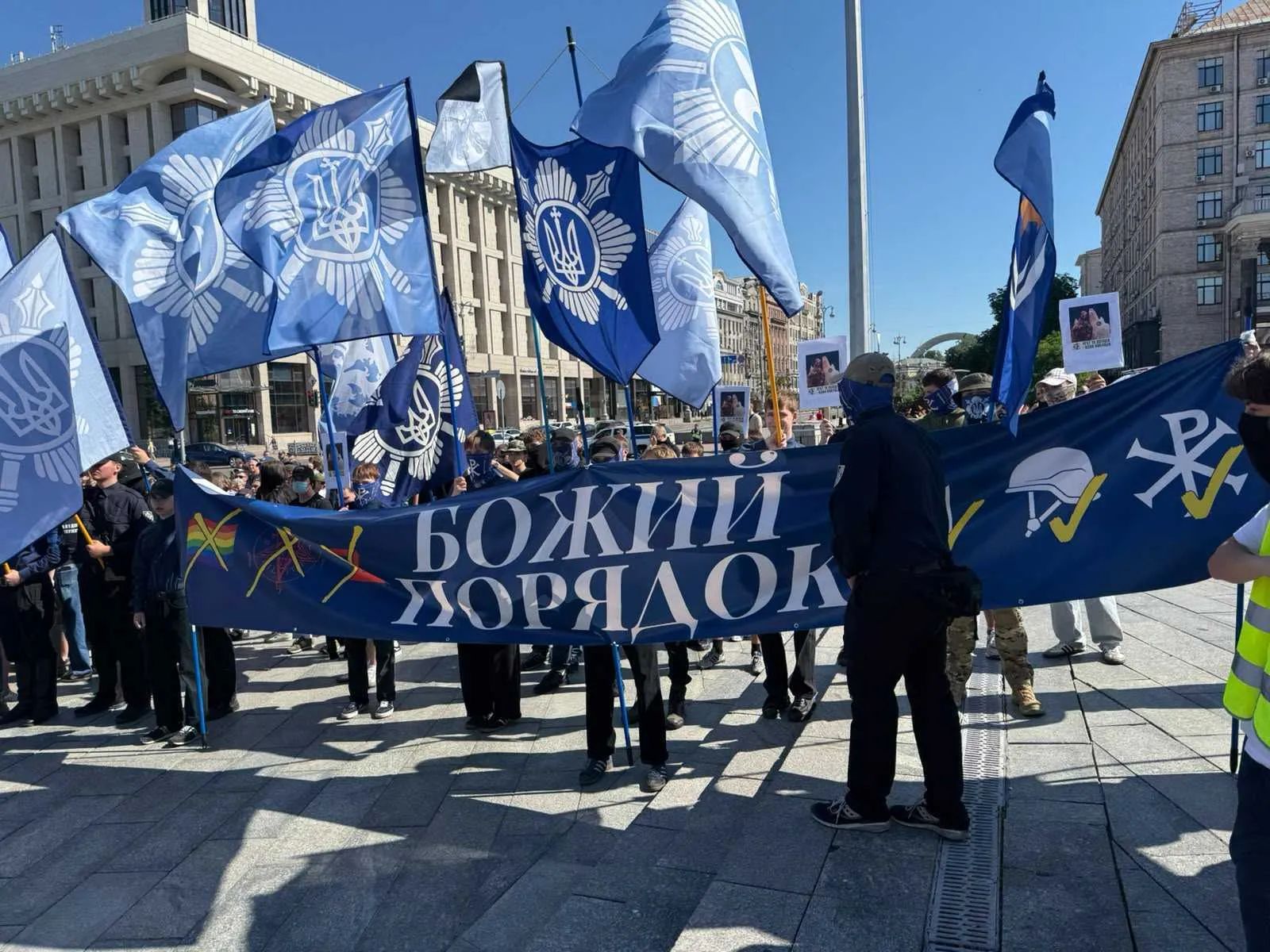
Skip to Content Subscribe Our Offers My Account Manage My Subscriptions FAQ Newsletters Canada Canadian True Crime Canadian Politics Health World Israel & Middle East Financial Post NP Comment Longreads Puzzmo Diversions Comics NP News Quiz New York Times Crossword Horoscopes Life Eating & Drinking Style Sponsored Play for Ontario Travel Travel Canada Travel USA Travel International Cruises Travel Essentials Culture Books Celebrity Movies Music Theatre Television Business Essentials Advice Lives Told Tails Told Shopping Buy Canadian Home Living Outdoor Living Kitchen & Dining Tech Style & Beauty Personal Care Entertainment & Hobbies Gift Guide Travel Guide Amazon Prime Day Deals Savings National Post Store More Sports Hockey Baseball Basketball Football Soccer Golf Tennis Driving Vehicle Research Reviews News Gear Guide Obituaries Place an Obituary Place an In Memoriam Classifieds Place an Ad Celebrations Working Business Ads Archives Healthing Epaper Manage Print Subscription Profile Settings My Subscriptions Saved Articles My Offers Newsletters Customer Service FAQ Newsletters Canada World Financial Post NP Comment Longreads Puzzmo Diversions Life Shopping Epaper Manage Print Subscription HomeNP CommentAdam Zivo: Kyiv Pride defied Russian missiles and counterprotestersPride attendees, including LGBT soldiers, marched for equality despite counterprotesters and the threat of Russian missilesLast updated 30 minutes ago You can save this article by registering for free here. Or sign-in if you have an account.KYIV UKRAINE — Banner of ultra-nationalists at Pride Parade on June 21, 2026. The banner reads "God's Order." Adam Zivo/National PostKYIV, UKRAINE — Thousands marched in Kyiv Pride last Sunday, despite the threat of Russian bombings and nationalist counterprotesters, in a spectacle that epitomized Ukraine’s Europeanization. Their message was clear: although Ukrainian society increasingly accepts LGBT people, the government is failing to keep pace and deliver overdue reforms.Enjoy the latest local, national and international news.Exclusive articles by Conrad Black, Barbara Kay and others. Plus, special edition NP Platformed and First Reading newsletters and virtual events.Unlimited online access to National Post.National Post ePaper, an electronic replica of the print edition to view on any device, share and comment on.Daily puzzles including the New York Times Crossword.Support local journalism.Enjoy the latest local, national and international news.Exclusive articles by Conrad Black, Barbara Kay and others. Plus, special edition NP Platformed and First Reading newsletters and virtual events.Unlimited online access to National Post.National Post ePaper, an electronic replica of the print edition to view on any device, share and comment on.Daily puzzles including the New York Times Crossword.Support local journalism.Create an account or sign in to continue with your reading experience.Access articles from across Canada with one account.Share your thoughts and join the conversation in the comments.Enjoy additional articles per month.Get email updates from your favourite authors.Create an account or sign in to continue with your reading experience.Access articles from across Canada with one accountShare your thoughts and join the conversation in the commentsEnjoy additional articles per monthGet email updates from your favourite authorsSign In or Create an AccountorPride marches are not new to the city — the first one was attempted in 2012, after then-president Viktor Yanukovych proposed a Kremlin-inspired “gay propaganda” law that would’ve criminalized public LGBT activism. It was aborted when thousands of counterprotesters arrived with bats and other weapons, but foreign diplomats and journalists joined in subsequent years, forcing local police to provide proper security.Attendance steadily grew over time — especially after the 2014 pro-western Euromaidan Revolution — such that, by 2021, 7,000 marchers were met by only a few hundred counterprotesters. Although Kyiv Pride was paused after Russia’s full-scale invasion of Ukraine, it resumed last year at a smaller, wartime scale of 1,500.This newsletter from NP Comment tackles the topics you care about. (Subscriber-exclusive edition on Fridays)By signing up you consent to receive the above newsletter from Postmedia Network Inc.We encountered an issue signing you up. Please try againSecurity was a significant concern in the days before the march this year. Counterprotesters were anticipated, but it was believed that the risk of military conscription would deter hooliganism. Ukraine had bombed Moscow’s main oil refineries a few days earlier, though, and retaliation was expected: could a Russian drone or missile turn pride into a mass casualty event?On the morning of the march, I passed by Maidan Square — the very heart of the capital — and stumbled upon the ultra-nationalist counterprotesters, who had assembled beside the forest of flags that memorialize Ukraine’s wartime dead.There were around 700 to 900 young men, predominantly below conscription age, dressed in black with their faces covered by scarves, hoods and sunglasses. They were organized into a long, battalion-like formation, five rows deep, which terminated in a group carrying sky blue flags and a banner — labelled “God’s Order” — that compared gay rights to Satanism.The young men roared slogans and thumped their chests in unison. One of them, a young man wearing a cross and armband, brandished a crucifix like a theatre prop.“This is a march for marriage, family and Ukraine… It is not only about morality, it is about national security,” explained Ruslan Kukharchuk, one of the event’s organizers, as we stood on the steps above the crowd. He emphasized that Ukraine’s population had decreased by 20 million people over the past three decades, and that, in his eyes, opposing gay pride is essential to fighting demographic decline.I asked him why LGBT people should be considered a major cause of Ukraine’s depopulation — as opposed to emigration, low-fertility rates and Russia’s invasion of Ukraine — and what he thought about the gay soldiers who are currently fighting and dying on the frontlines.Kukharchuk responded that gays promote a “child-free ideology” and that same-sex couples cannot give birth and therefore cannot increase the population. As for gay soldiers, he dismissed their existence as “fake propaganda” and claimed that there are actually only a very small number of them — perhaps two or three — and that they primarily focus on “making LGBT propaganda” in the media. He further argued that, even if gay soldiers exist, it “means nothing” as alcoholics and drug addicts can be soldiers, too.I continued onwards to the Taras Shevchenko National University of Kyiv, where the pride march was set to begin. Police had cordoned off the district and, amid the empty streets and shuttered storefronts, were screening approaching visitors.There was a crowd of LGBT demonstrators there — perhaps around 2,000 from what I could see, mostly young and female, although Kyiv Pride officially claimed an attendance of 5,000 that day. They carried colourful flags and homemade signs, chanting: “Our family is a part of Ukraine! Our family is a part of Ukraine!”There were no corporate sponsors, swimsuits, fetish gear, nudity, dance beats or any of the other frivolities associated with western pride festivals. The crowd exuded patriotism, and was not preoccupied with civilizational self-loathing or “dismantling capitalism.” It was a protest with practical goals, not a party or avenue for revolutionary cosplay.The front of the procession was dedicated to Ukraine’s LGBT soldiers, who have become a pillar of the nation’s gay rights movement. As military personnel must show political neutrality while serving, these marchers mostly consisted of recently demobilized fighters. They carried posters memorializing their dead comrades and a large banner featuring one hundred uniformed LGBT members of the armed forces. GBT Ukrainians, including demobilized soldiers, lead the Kyiv Pride march with a banner honouring gay and lesbian Ukrainian soldiers. (June 21, 2026) Adam Zivo/National PostBecause same-sex relationships are not legally recognized in Ukraine, these soldiers’ romantic partners have no right to visit them in the hospital, or to make medical decisions on their behalf, should they be wounded or incapacitated. If a gay soldier dies on the frontline, his partner also has no right to inherit his property or handle funeral arrangements, and may even be denied state compensation normally given to surviving family members.“We want people to see that there are also military LGBT people, and that we also need our rights because we protect this country,” said a young, bearded military psychologist. He recounted how, when he was outed while serving, most soldiers were either supportive or “silently neutral,” but others gossiped behind his back. Still, they had “no choice” but to accept him as a comrade.His message to the West was simple: “We need all the help we can get to win the war, and to win the war for our rights. So help us, okay?”Alyona, a young woman brandishing a cardboard sword, said that LGBT soldiers are “very important” because they are “fighting for the future of Ukraine” and “show that no matter who you are, you are still a part of society.” She called the Russian government “Nazis” and said that if Moscow — a power that criminalizes gay activism — were to ever take over, there would be “no rights for LGBT people.”Ukraine likely won’t legalize same-sex marriage anytime soon, though, as that would require a rewrite of the national constitution, which is prohibited during wartime. A 2023 opposition-sponsored bill would have circumvented this barrier by legalizing civil unions, but it remains in parliamentary limbo due to conservative obstructionism.Some LGBT Ukrainians have sought limited rights under the country’s Civil Code, which currently defines a “family” in gender-neutral language oriented around cohabitation. Ukraine’s Supreme Court even released a historic decision this spring recognizing a same-sex couple as a de facto family, paving the way for broader judicial protection of homosexual partnerships.Yet, the Ukrainian government is in the process of passing a new law that would broadly reform the Civil Code and, among other changes, define “families” in strictly heterosexual terms. The move has attracted significant criticism, partially because it undermines the country’s EU accession. Demands for its cancellation were one of the main themes at Kyiv Pride this year.Ukraine’s government may be dragging its feet on LGBT rights, but cultural acceptance is slowly rising. Polling data gathered by the Kyiv International Institute of Sociology, for example, shows that 78 per cent of Ukrainians supported equal rights for LGBT people in 2025 — a significant increase from 2022, when only 64 per cent did.“I’ve never felt this free and liberated being here with all these people, with all of these colours…. I’ve never felt happier actually,” said Rostyk, a bespectacled young man in a tank top who had a rainbow painted on his cheek: “What I’m most impressed by is the police — like, multiple ranks of police. I feel so protected and defended… it’s great because I feel supported.”When asked about the counterprotesters, Rostyk replied: “What exactly are you defending? That’s what I would ask them. Just let people live. Go back to your families and be happy with them, and try to nourish and be with them, and not try to mess with other people’s lives.”Andrii, a gentle-looking student in a pink cardigan, said that it’s “really hard” for him to be gay, as he is still in the closet and cannot easily maintain a double life, but that the country, despite its flaws, is going in the right direction. A nearby heterosexual woman, who had come to support her friends, said: “I see great progress, actually. Even in my bubble, I do think people are more accepting now.”As Kyiv Pride progressed through the empty streets, encircled by police, I bumped into a delegation of foreign ambassadors to Ukraine — including Canadian ambassador Natalka Cmoc – who were jointly carrying a large rainbow flag.“Ukrainians who have been defending on the frontlines are made up of every type of member of this society, including the LGBTQ community. They are fighting; they are dying for Ukraine. They want the same rights… and we are here to help them, support them in defending those rights,” said Cmoc, emphasizing the country’s European values.Belgian ambassador Luk Jacobs said that it was “very important” to Europe that Ukraine defend human rights, and that the country “has already gone a very long way in the right direction,” even if public attitudes towards the LGBT community have been “mixed” and characterized by “gradual acceptance.”Irish ambassador Jonathan Conlon similarly said that LGBT acceptance has a “generational aspect to it,” and that change doesn’t happen overnight. He noted that pride parades are not allowed in Moscow, so the presence of one in Kyiv — attended by people who are “very open and tolerant” — underlines the differences between Russia and Ukraine.The march eventually stopped at the Square of Ukrainian Heroes, beside the entrance to a deeply-buried metro station, where several dignitaries, including Cmoc, gave speeches.An air siren rang out. The crowd paid little attention to it, so a police officer began shouting into a megaphone, repeating, again and again, that everyone should seek shelter. He was ignored. His voice became more beseeching, anxious. And then there was an explosion in the distance — not too big, probably an interception — and finally the crowd descended, calm and laughing, into the metro, shepherded by the police cordons.The trains arrived after a long delay and hurtled through the underground, skipping all stops, transporting everyone straight to the terminal stations at the edge of the city — far away from the counterprotesters, who now could not hunt stray prey. The pride attendees melted into the city from there, anonymous again.By the time my journalistic friends and I made it back downtown in a taxi, the streets had already returned to normal. The patios and sidewalks bustled. Stalls sold cold coffee and ice cream. That night, the city went to bed in anticipation of a Russian bombing that failed to materialize, and elsewhere, on the frontlines, gay blood seeped into the soil, red like that of any Ukrainian — an oblation to a skeptical nation.National Post Join the Conversation This website uses cookies to personalize your content (including ads), and allows us to analyze our traffic. Read more about cookies here. By continuing to use our site, you agree to our Terms of Use and Privacy Policy.
Adam Zivo: Kyiv Pride defied Russian missiles and counterprotesters
Pride attendees, including LGBT soldiers, marched for equality despite counterprotesters and the threat of Russian missiles
2,305 words~10 min read