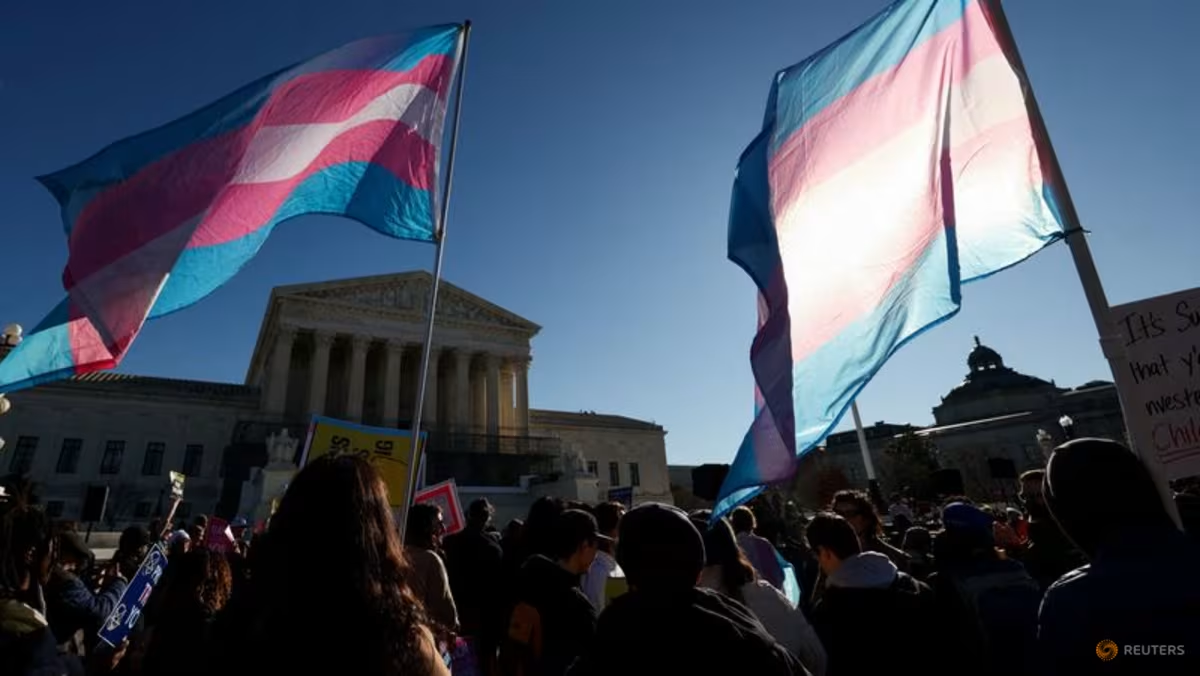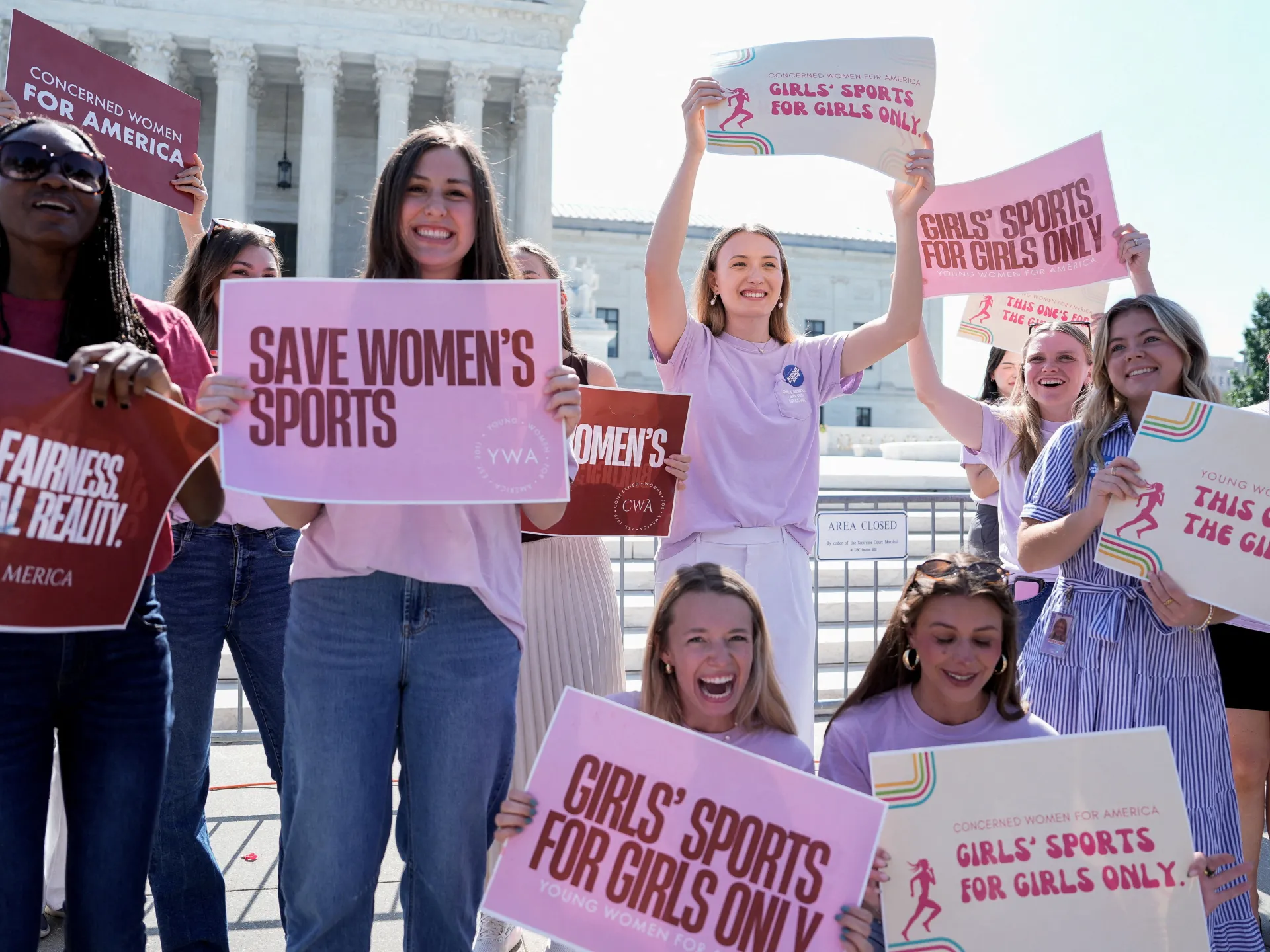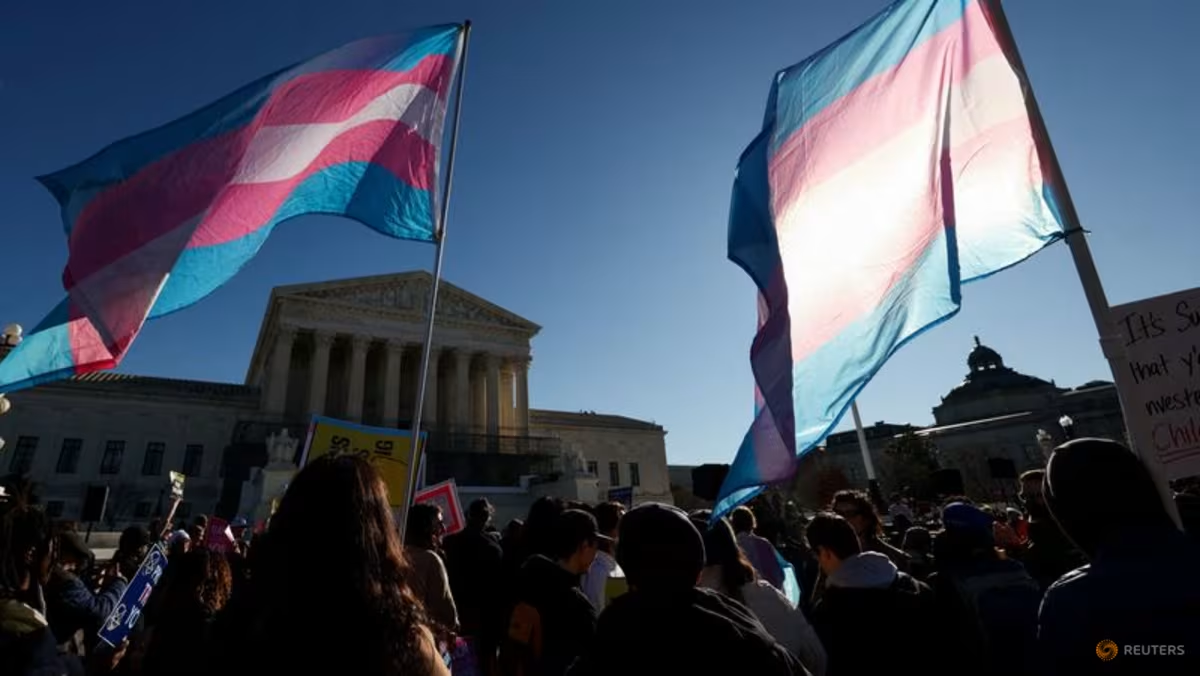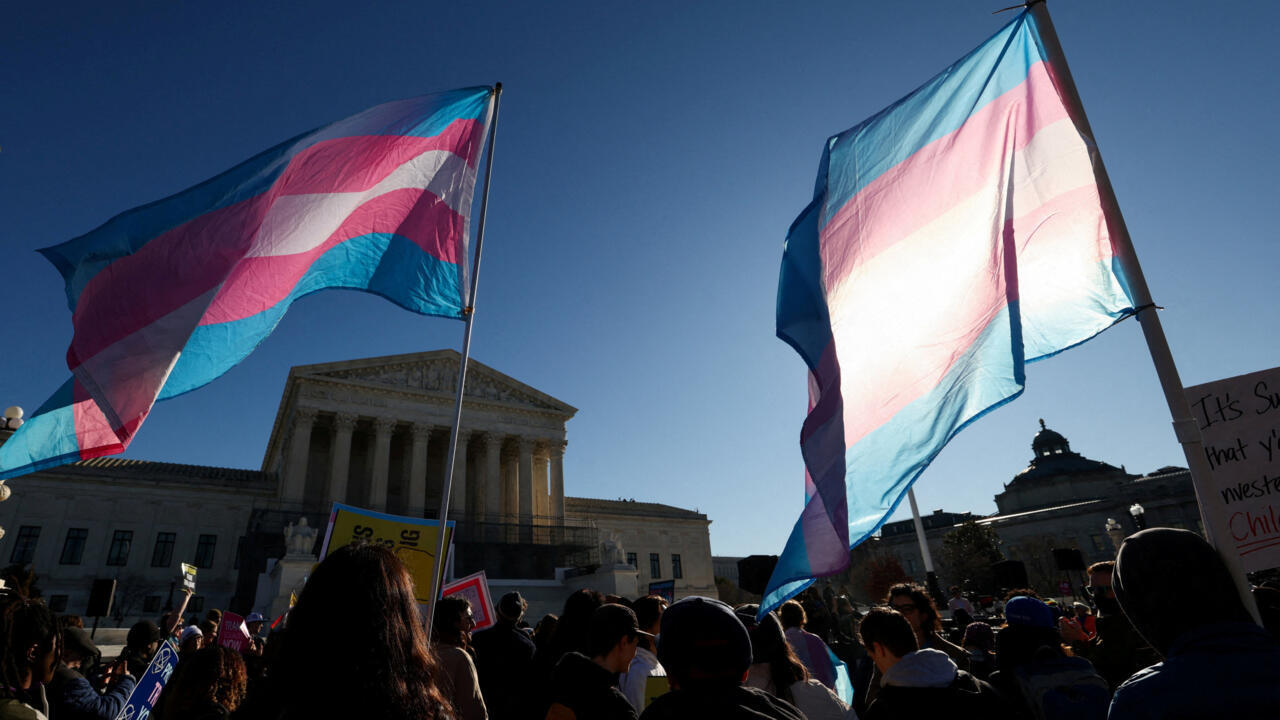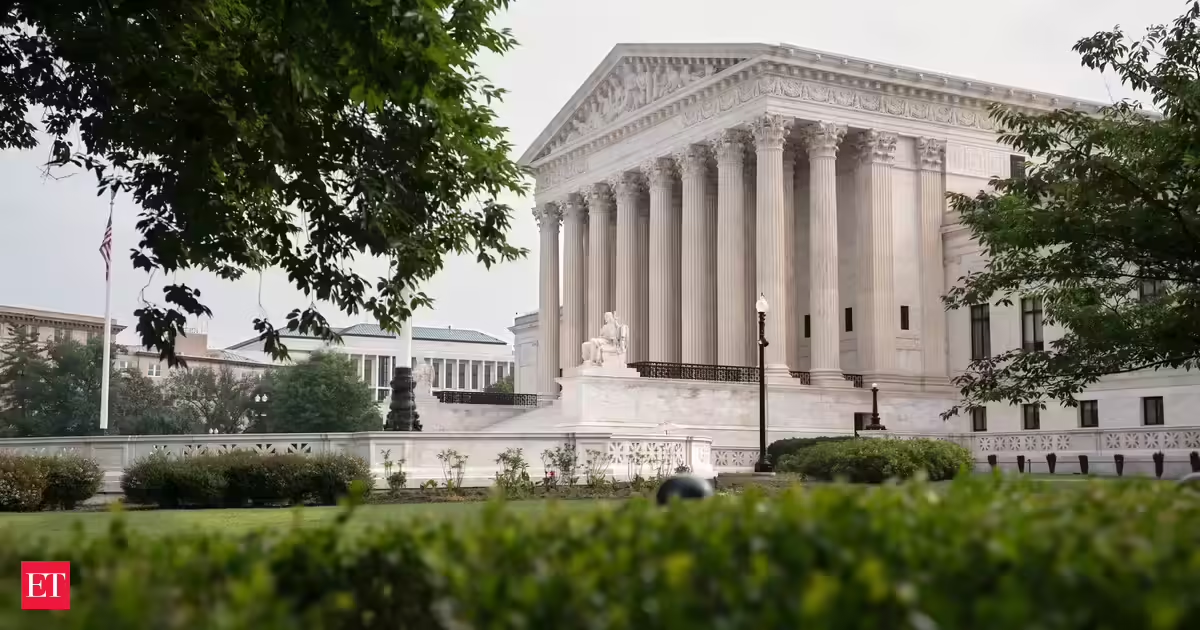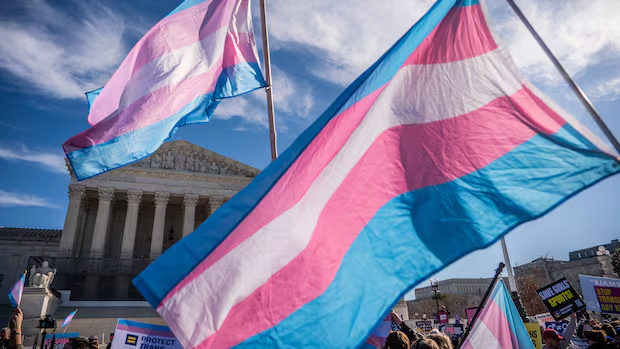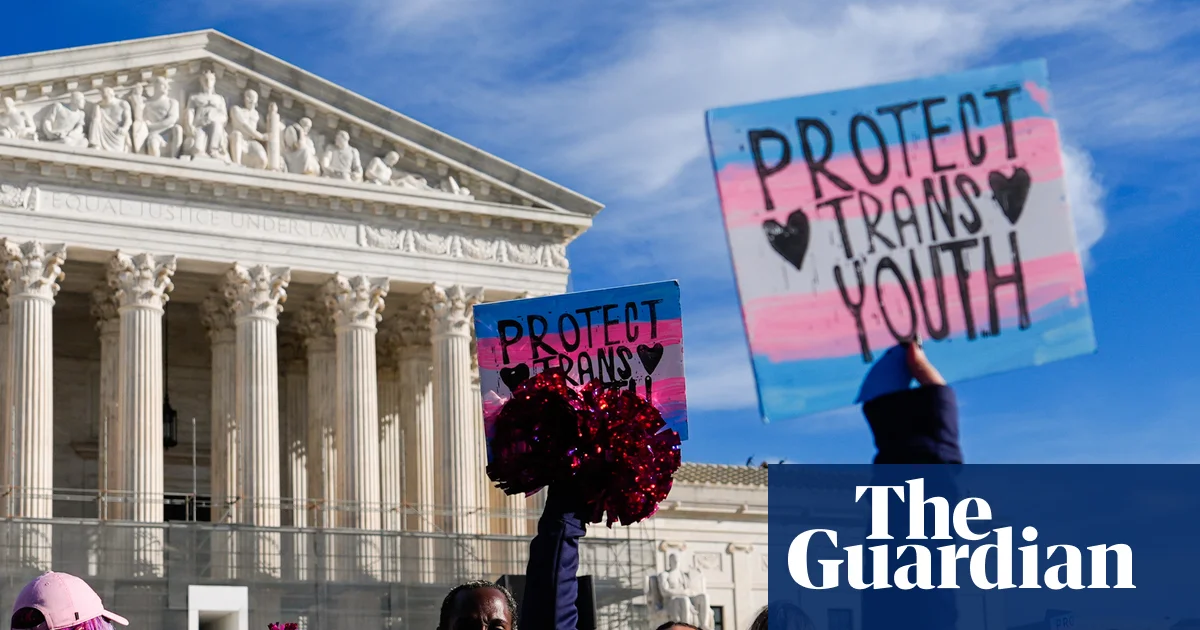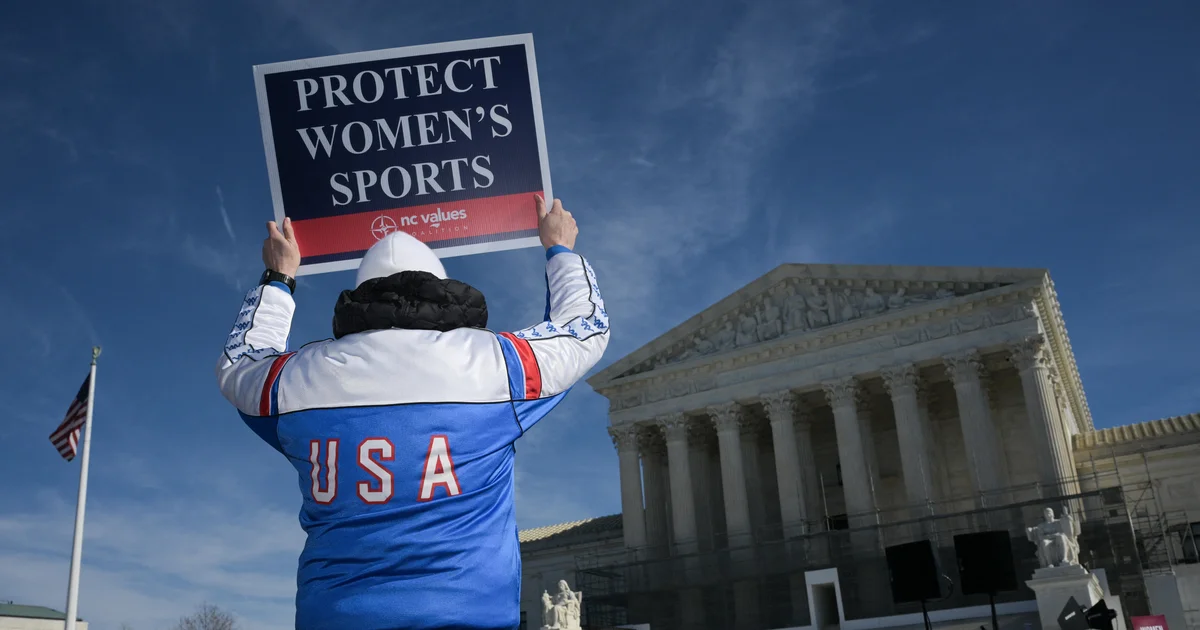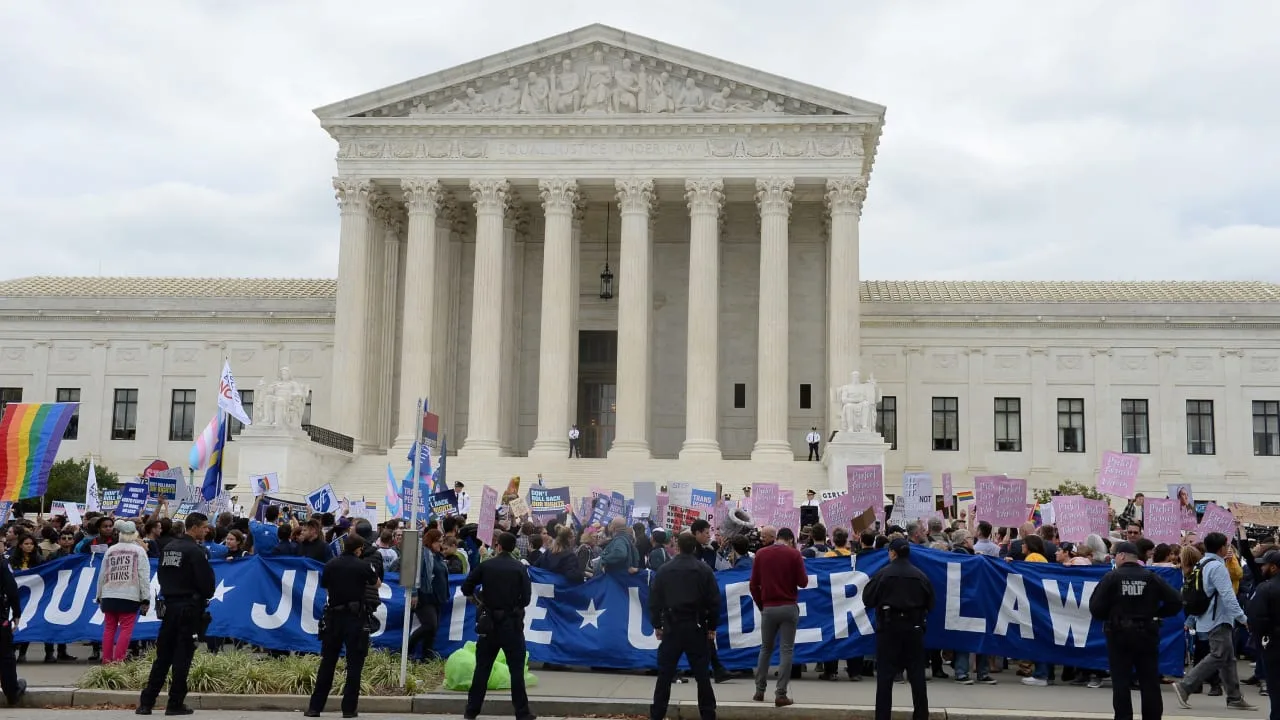
ByREUTERSJUNE 30, 2026 17:58The US Supreme Court cleared the way on Tuesday for states to impose restrictions on transgender student athletes, upholding laws in West Virginia and Idaho banning them from female sports teams - a contentious issue enmeshed in the nation's culture wars.The justices overturned decisions by lower courts siding with transgender students who challenged the bans in the two states as violating the US Constitution and a federal anti-discrimination law.The Idaho and West Virginia laws designate sports teams at public schools including universities according to "biological sex" and bar "students of the male sex" from female teams. Twenty-five other states have similar laws on the books.The court decided 9-0 that the state laws do not violate the Title IX civil rights statute that bars discrimination in education "on the basis of sex."The justices, however, divided along ideological lines, with the six conservative justices in the majority, that the laws also do not violate the Constitution's 14th Amendment guarantee of equal protection under the law. The three liberal justices said a factual dispute in the West Virginia case should have precluded resolving that issue.Kavanaugh's majority ruling held that Trump's order is consistent with Title IX and the US ConstitutionThe ruling was authored by conservative Justice Brett Kavanaugh.THE US Supreme Court (credit: REUTERS)"Consistent with Title IX and the Equal Protection Clause, we hold that the states may maintain women's and girls' sports for biological females. They may determine eligibility for women's and girls' sports based on biological sex. The Constitution and Title IX do not require an overhaul of women's and girls' sports throughout America," Kavanaugh wrote.US President Donald Trump's administration, which has cracked down on transgender rights, has backed the states in the litigation.Idaho and West Virginia said the laws preserve fair and safe competition for women and girls, while critics see the measures as part of a broader assault on the rights of transgender Americans.The students who challenged the measures said they discriminate based on a person's sex or status as transgender in violation of the 14th Amendment and Title IX."Sports are different from, say, a typical employment or educational opportunity where equal protection often may require that the government generally treat an individual without regard to the individual's sex," Kavanaugh wrote. "In the sports context, by contrast, everyone agrees that the states may maintain separate women's and men's teams — in other words, that the states may make distinctions based on sex — because of the inherent physical differences between women and men."Kavanaugh said Title IX was a landmark law that "promoted equal opportunity for female student-athletes and has facilitated the extraordinary growth of women's and girls' sports over the past 54 years."The term "sex" in the 1972 statute, he said, "cannot plausibly be interpreted to refer to anything other than biological sex." Kavanaugh said the states' laws likewise did not violate the Equal Protection Clause by barring transgender girls from playing on female sports teams, saying the bans furthered the states' substantial interests in "safety and competitive fairness."In a social media post on Tuesday, the White House wrote in all capital letters: "FROM NOW ON, WOMEN'S SPORTS WILL ONLY BE FOR WOMEN."Another major ruling in 2025 considered a similar topicIn another major transgender rights ruling, the Supreme Court in a case from Tennessee last year let states ban medical treatments such as puberty blockers and hormones for people under age 18 experiencing gender dysphoria. That term refers to the clinical diagnosis for significant distress that can result from an incongruence between a person's gender identity and sex at birth.The Supreme Court, which has a 6-3 conservative majority, has backed other restrictions on transgender people, letting Trump ban transgender people from the military and bar passport applicants from selecting the sex reflecting their gender identities for the document.The court in 2020 delivered a landmark ruling protecting transgender people from workplace discrimination under a federal law called Title VII of the Civil Rights Act of 1964 that contains wording similar to Title IX. Conservative Justice Neil Gorsuch authored that ruling.In a concurring opinion on Tuesday, Gorsuch said that 2020 decision, Bostock v. Clayton County, supports rather than undermines the Supreme Court's decision on how to interpret "sex" in Title IX."Put simply, it is a mistake to assume that, just because firing someone in part because of his biological sex amounts to unlawful discrimination in violation of Title VII, sponsoring a single-sex sports team limited to biological women or girls must also amount to unlawful discrimination in violation of Title IX," Gorsuch wrote.Trump's conservative policy on transgender sports participationThe issue of transgender athletes playing on female sports teams has become part of the US culture wars.Trump has taken a hard line on transgender rights since returning to office in January 2025. He has cast the gender identity of transgender people as a lie and issued multiple executive orders to limit their rights including one involving sports participation.The challenge to West Virginia's law was brought by Becky Pepper-Jackson and her mother Heather Jackson. Pepper-Jackson attends high school in Bridgeport, West Virginia, and participates in shot put and discus.The Idaho challenge was brought by Lindsay Hecox, a transgender student who previously participated in soccer and running clubs at Boise State University, a public university.Hecox decided to quit playing sports and sought to dismiss the case in part due to a fear of harassment and growing intolerance toward transgender people. Hecox's lawyers argued that the development rendered this challenge moot.The Supreme Court heard arguments in January. Its conservative justices raised concerns about imposing a uniform rule on the entire country amid disagreement and uncertainty over whether medications like puberty blockers or gender-affirming hormones eliminate male physiological advantages in sports.Tuesday was the final day of rulings for the court's current term, which began in October.Follow us on Google
US Supreme Court upholds rules states can impose transgender sports restrictions | The Jerusalem Post
The court decided 9-0 that the state laws do not violate the Title IX civil rights statute that bars discrimination in education "on the basis of sex."
965 words~4 min read