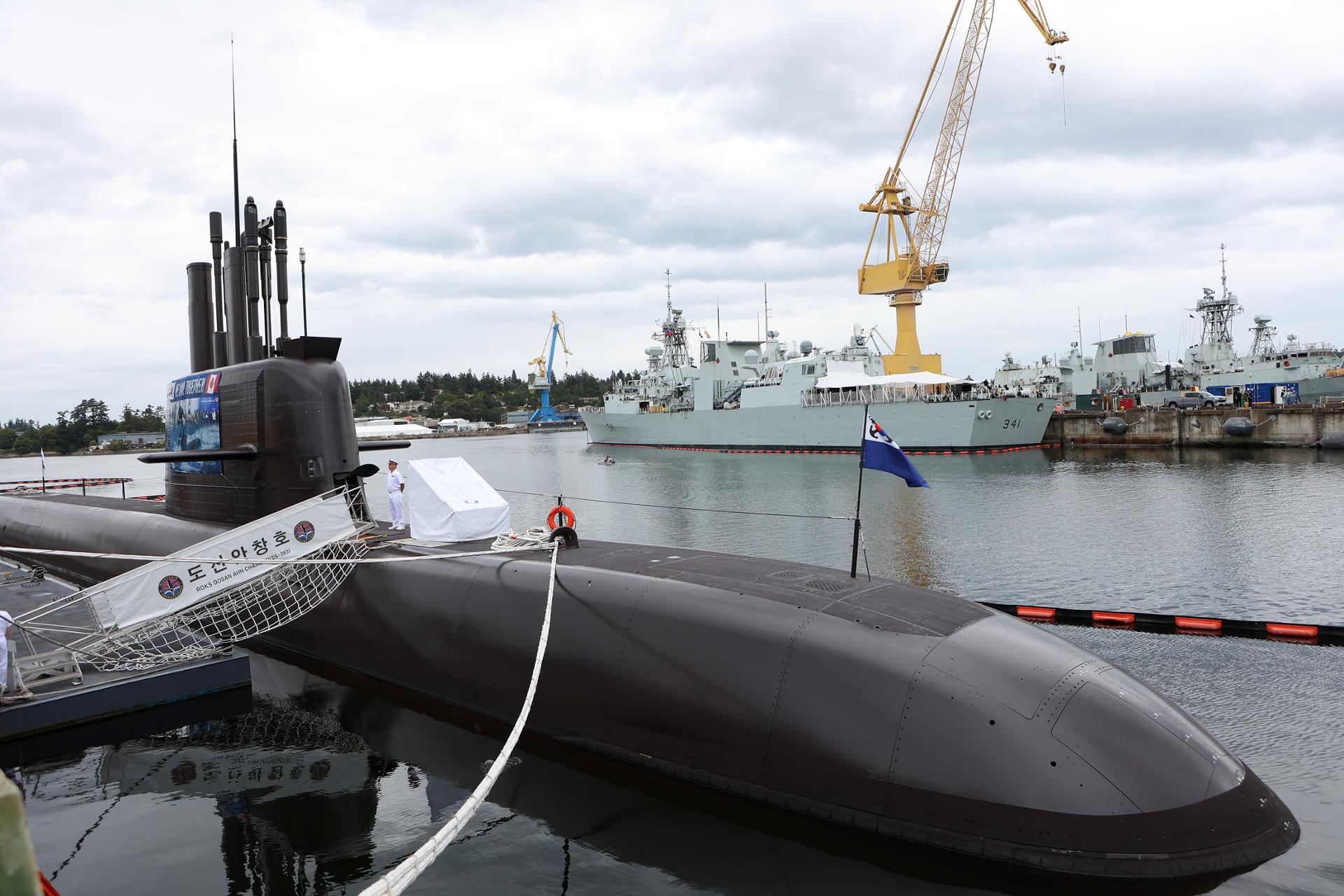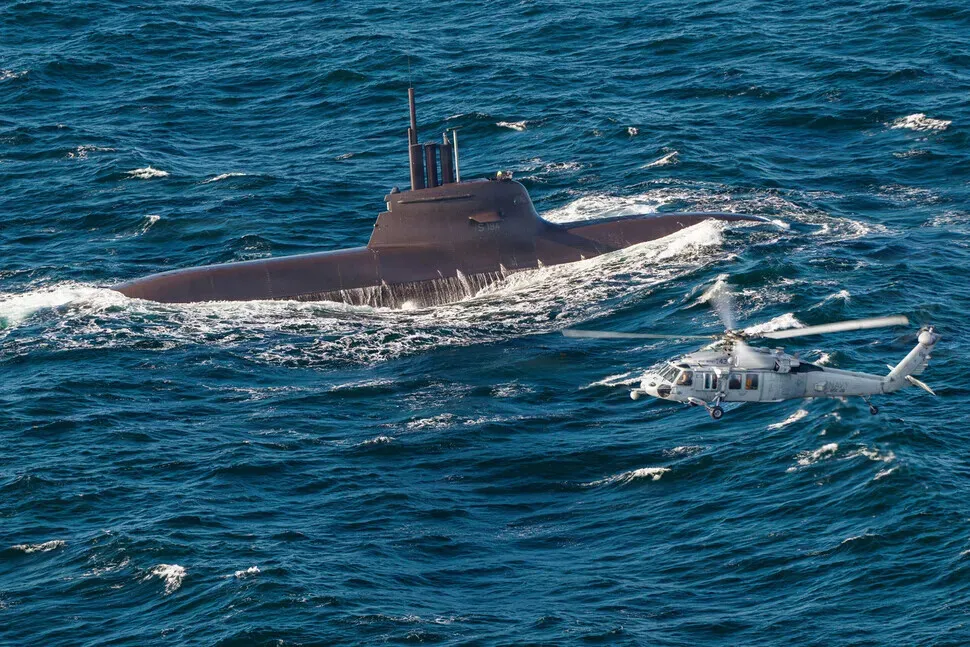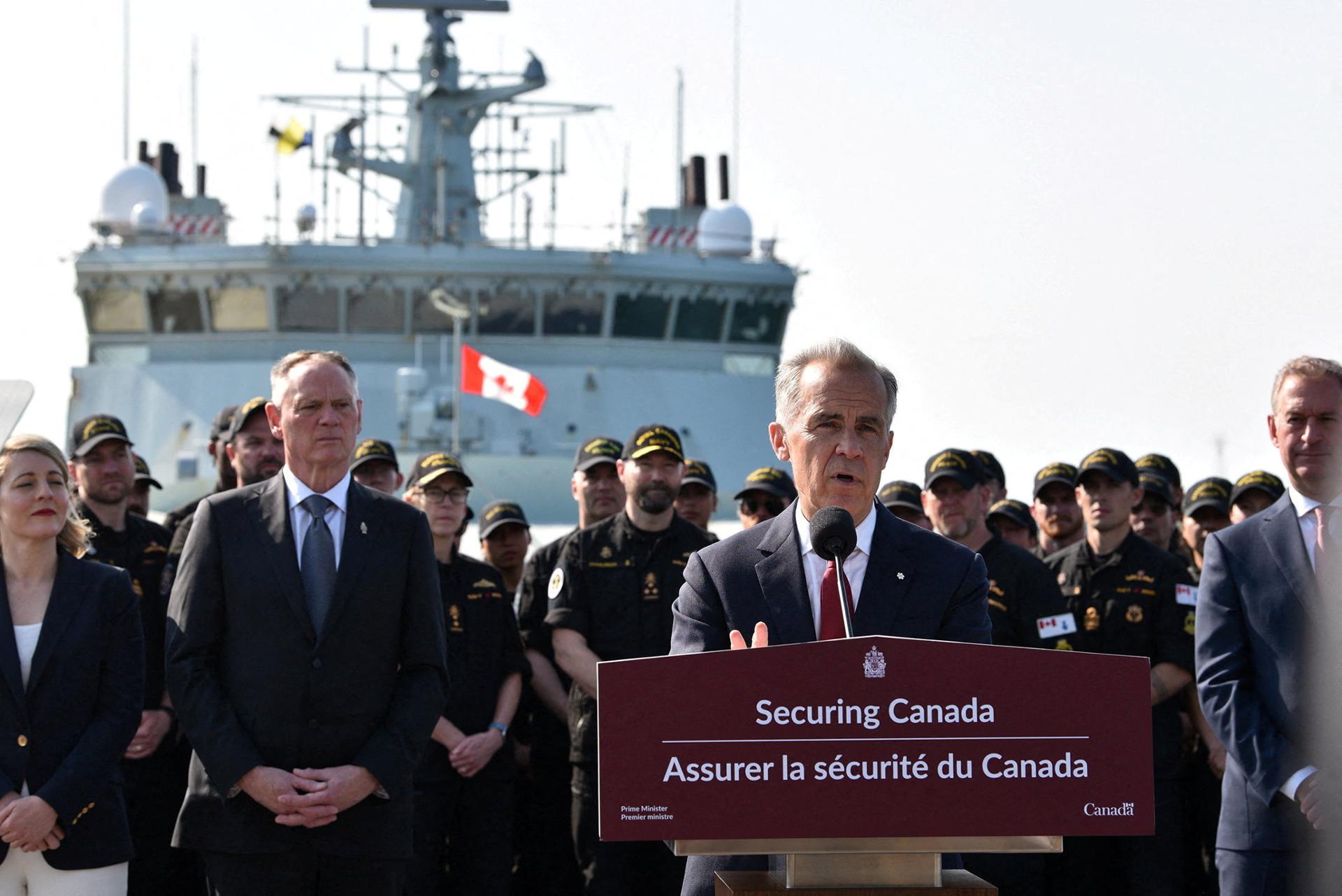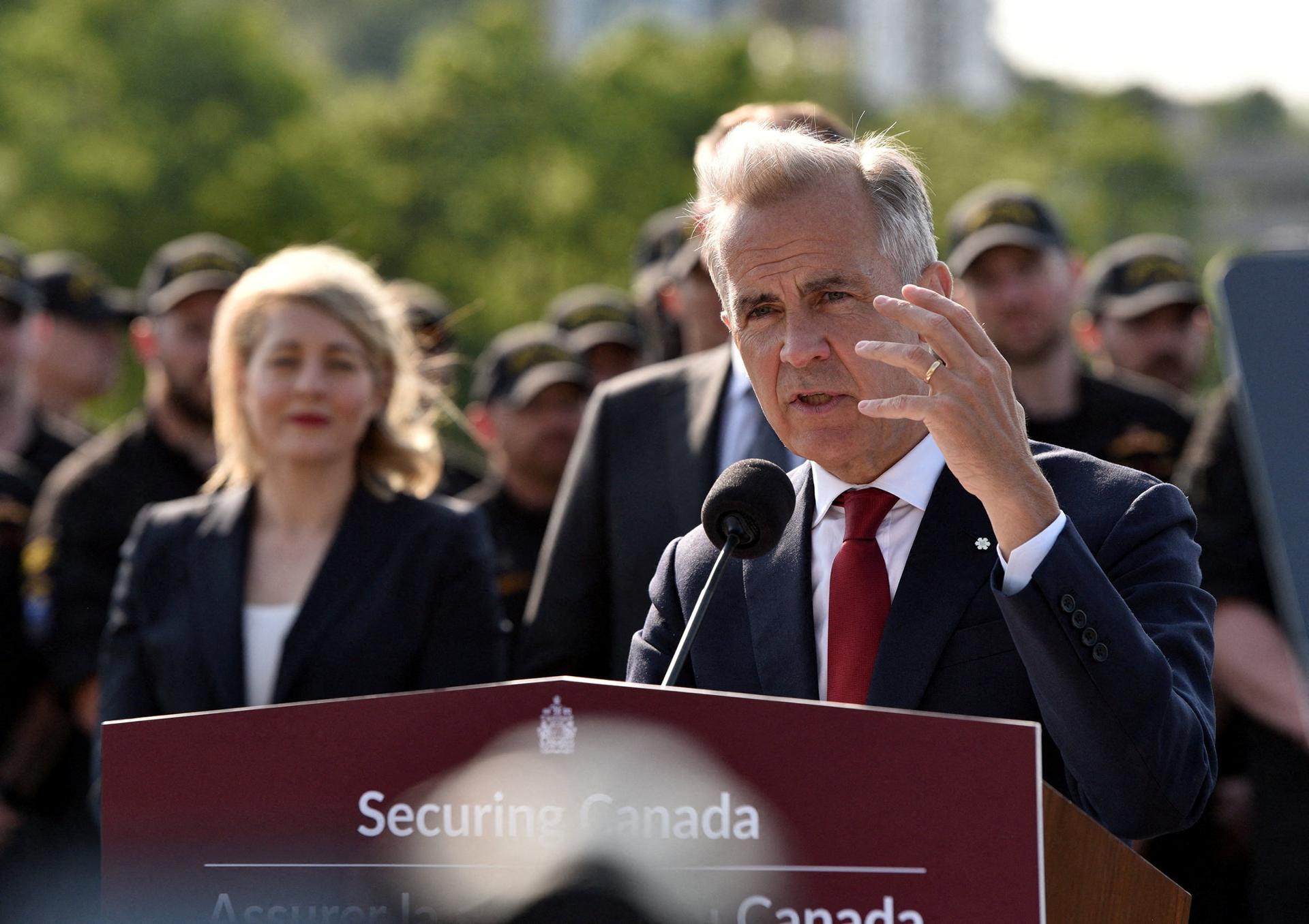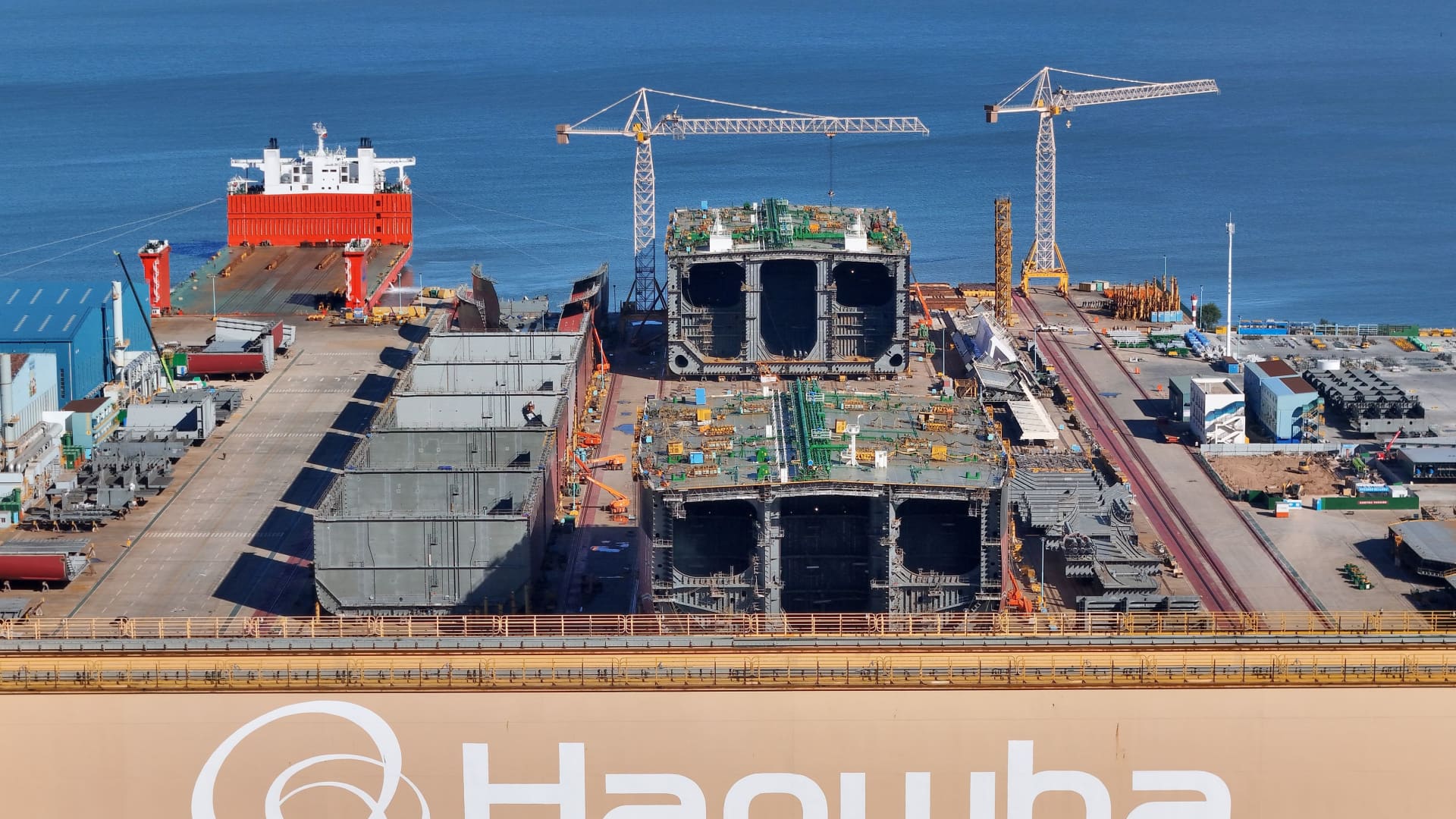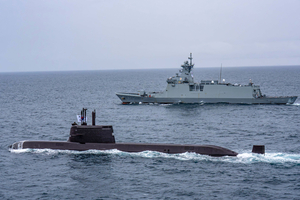
The South Korean Navy’s Dosan Ahn Chang-ho submarine (left) and Daejeon frigate conduct tactical maneuvers during a joint naval exercise with the Canadian Navy in waters off western Canada from June 4-5. (Republic of Korea Navy) Canada has selected German shipbuilder Thyssenkrupp Marine Systems as the preferred bidder for its multibillion-dollar next-generation submarine project, dealing a setback to South Korea’s Hanwha Ocean in one of the world’s most closely watched naval procurement contests.Canadian Prime Minister Mark Carney made the announcement Monday at a naval base in Halifax, Nova Scotia, before traveling to Turkey for a NATO summit, where allied defense spending and industrial cooperation are expected to be high on the agenda.“As part of our commitments to defend Canada and support our allies, I am pleased to announce that Canada has selected TKMS as the preferred supplier for Canada’s Patrol Submarine Project,” Carney said.Carney said Canada would begin negotiations with TKMS, but added that the government retains the right to open talks with Hanwha Ocean if negotiations with the German shipbuilder fail.The CPSP aims to acquire up to 12 diesel-electric submarines for the Royal Canadian Navy to replace its aging fleet, which operates across the Arctic, Atlantic and Pacific oceans. The project is estimated in South Korea to be worth as much as 60 trillion won ($39.24 billion) when construction costs and about three decades of maintenance, repair and overhaul are included.The decision deals a blow to South Korea, which had made an all-out effort to win what could become Canada’s largest-ever defense procurement project. A successful bid also could have marked Seoul’s largest defense export.The South Korean government had mobilized a public-private campaign to support Hanwha Ocean’s bid, with a delegation led by Presidential Chief of Staff Kang Hoon-sik visiting Canada twice this year, in January and June, to press the case for deeper defense industrial cooperation.Hanwha Ocean had promoted its KSS-III-based proposal as a ready and proven platform already operated by the South Korean navy. The company also emphasized fast delivery, life-cycle support and cooperation with Canadian industry as key strengths.
Hanwha Ocean loses out as Canada picks TKMS for submarine project
Canada has selected German shipbuilder Thyssenkrupp Marine Systems as the preferred bidder for its multibillion-dollar next-generation submarine project, dealin
344 words~2 min read