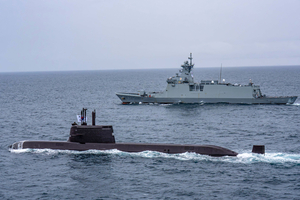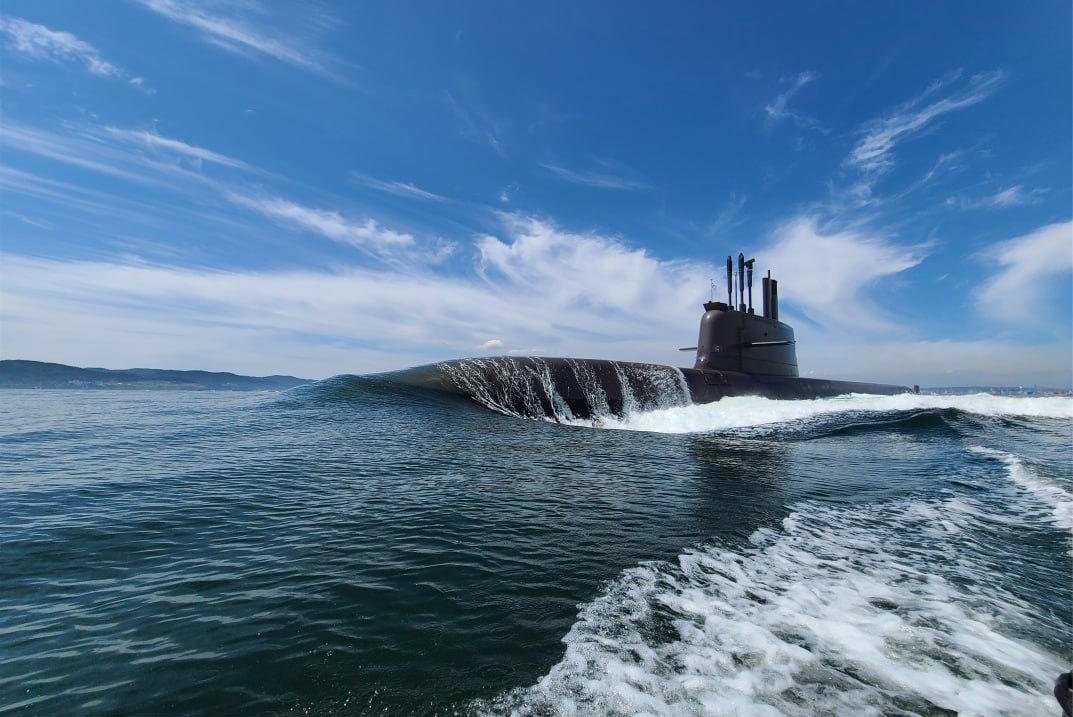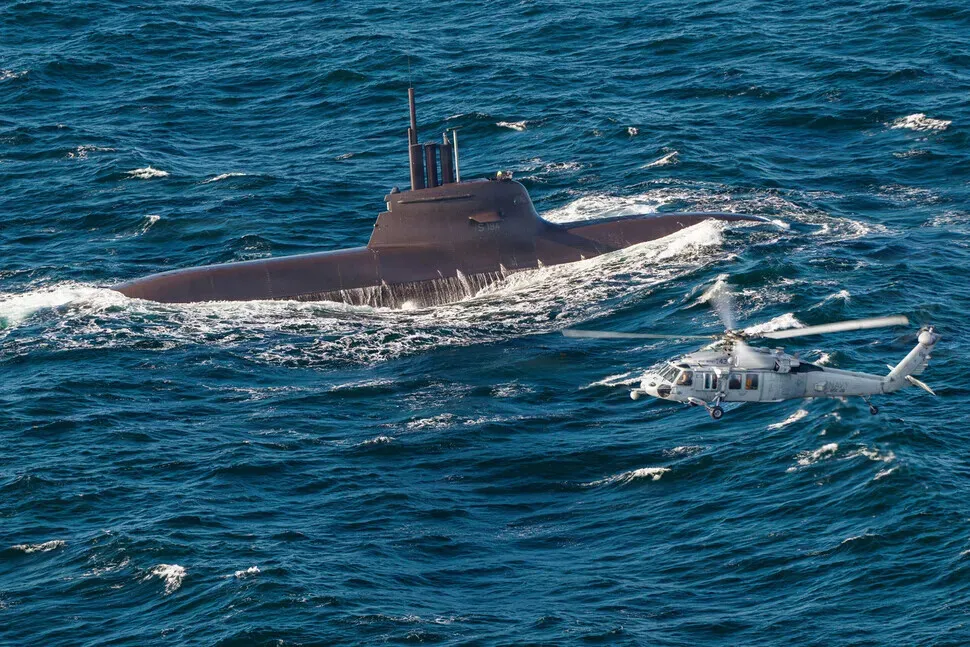
A US Navy MH-60S Seahawk helicopter hovers near the German Navy Type 212A diesel-electric attack submarine (U-34), made by German shipyard TKMS, during casualty evacuation training as part of Baltic Operations (BALTOPS) 2026, in the Baltic Sea, June 16, 2026. (Reuters/Yonhap)
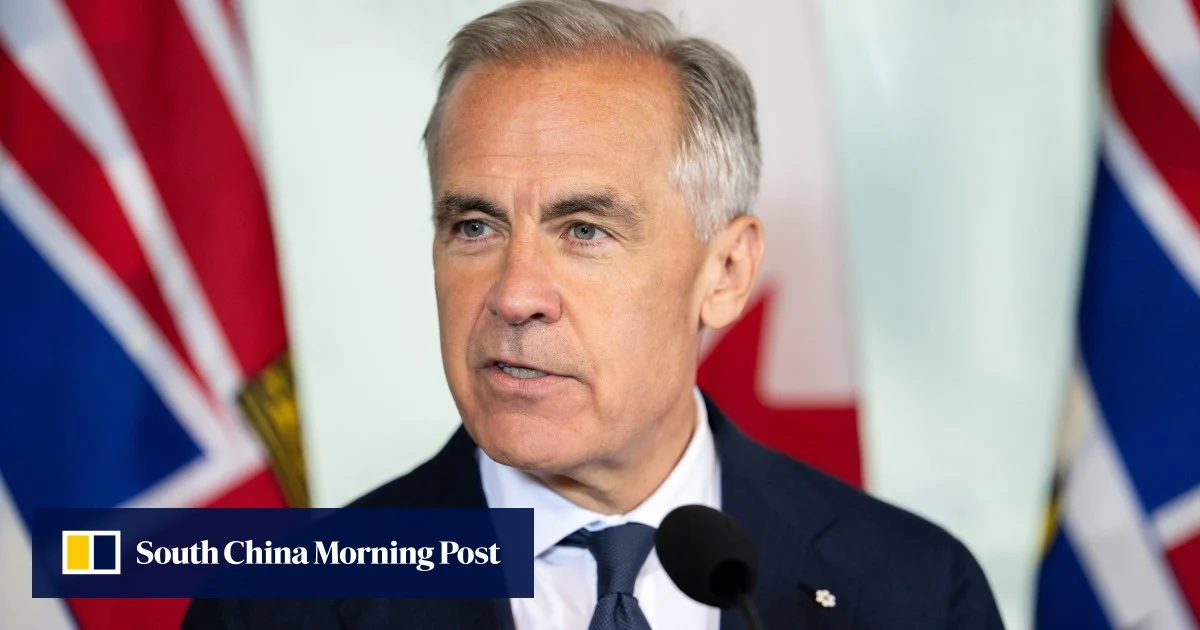
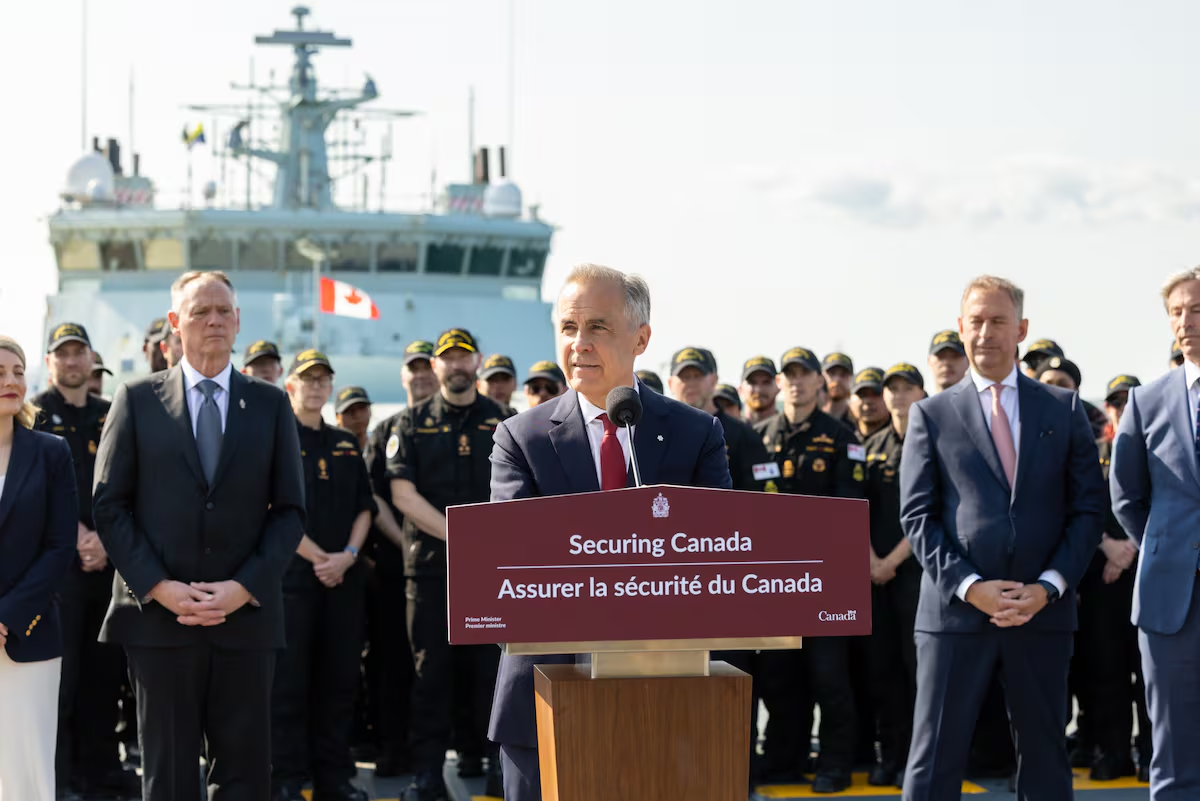
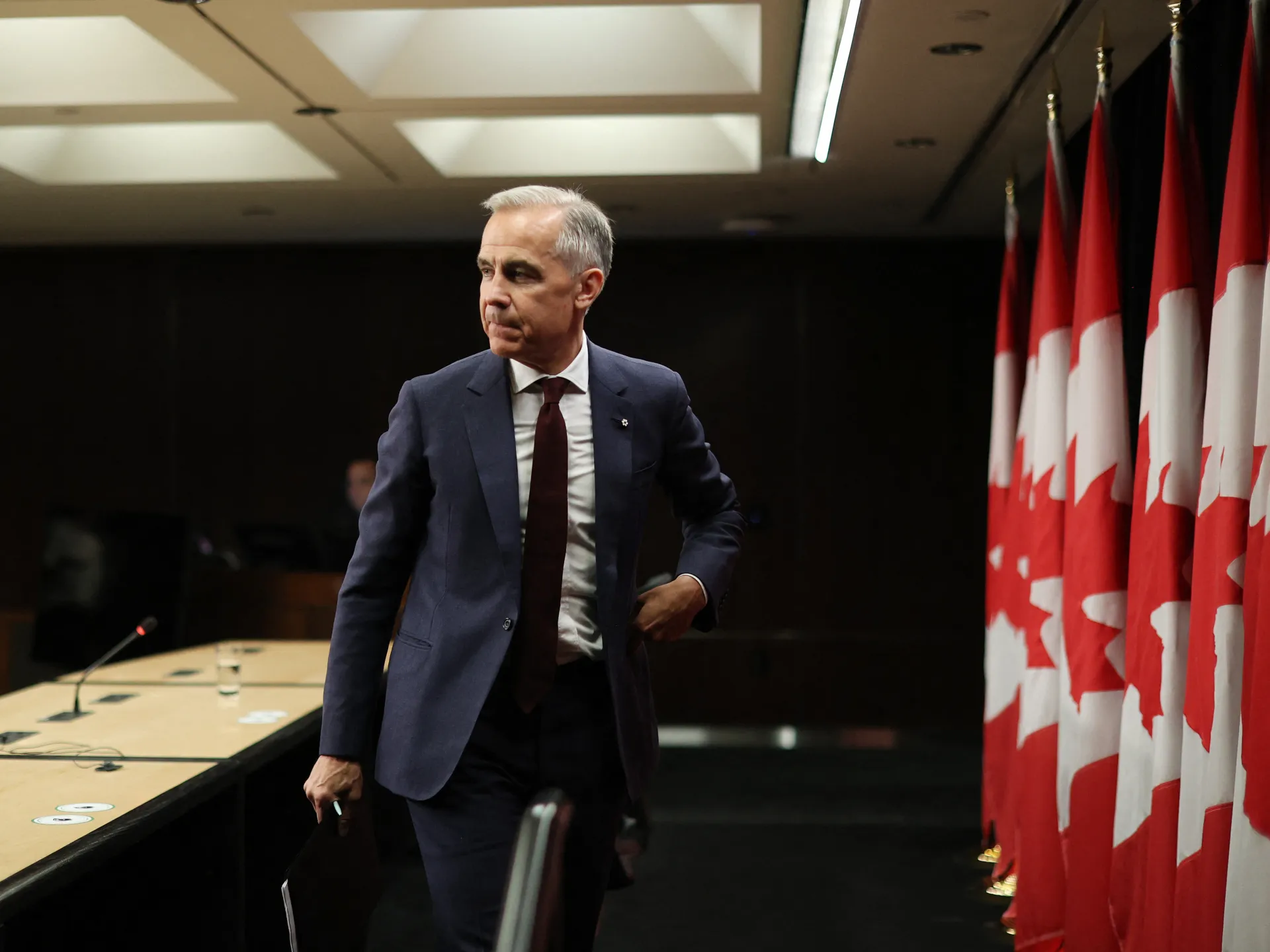
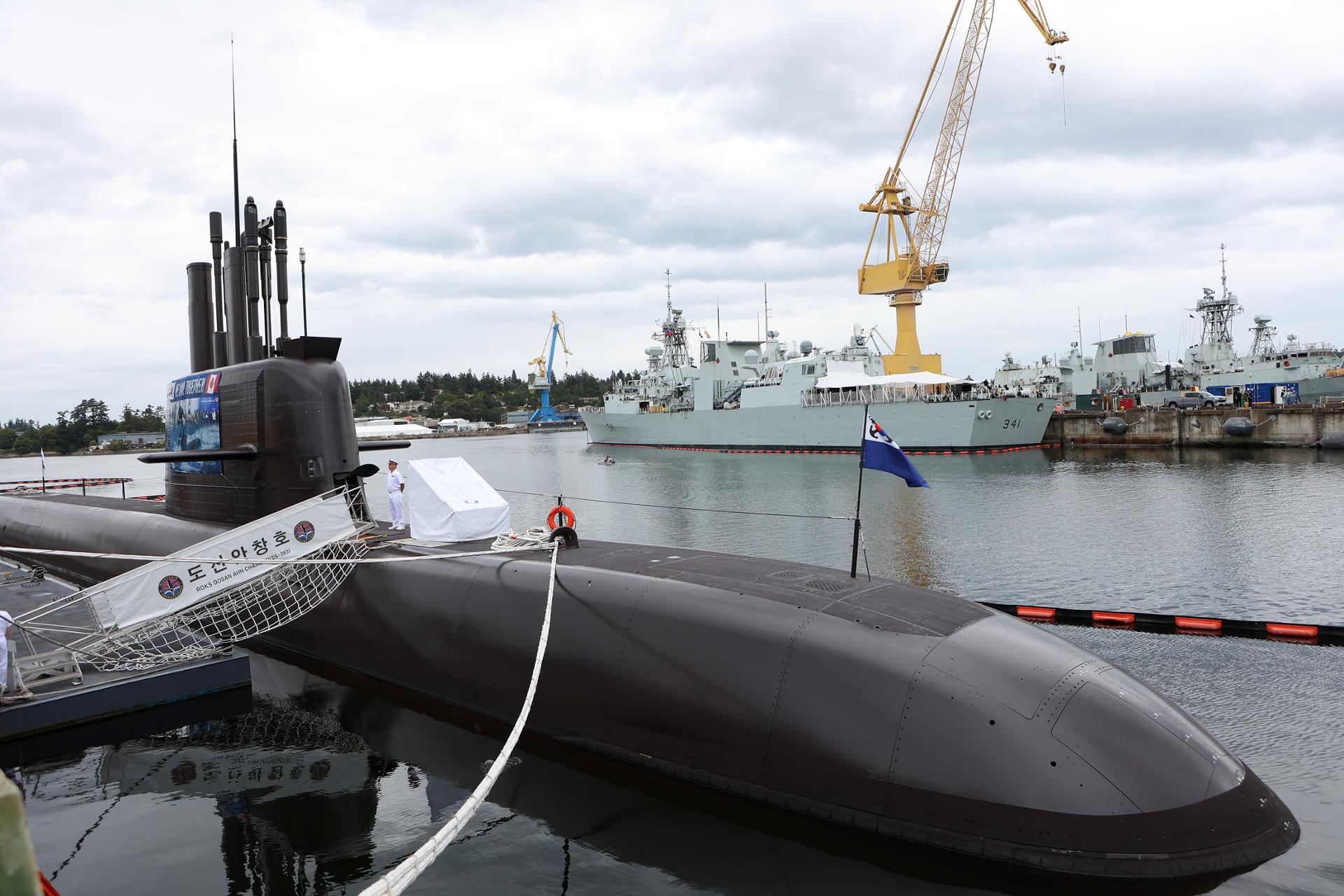
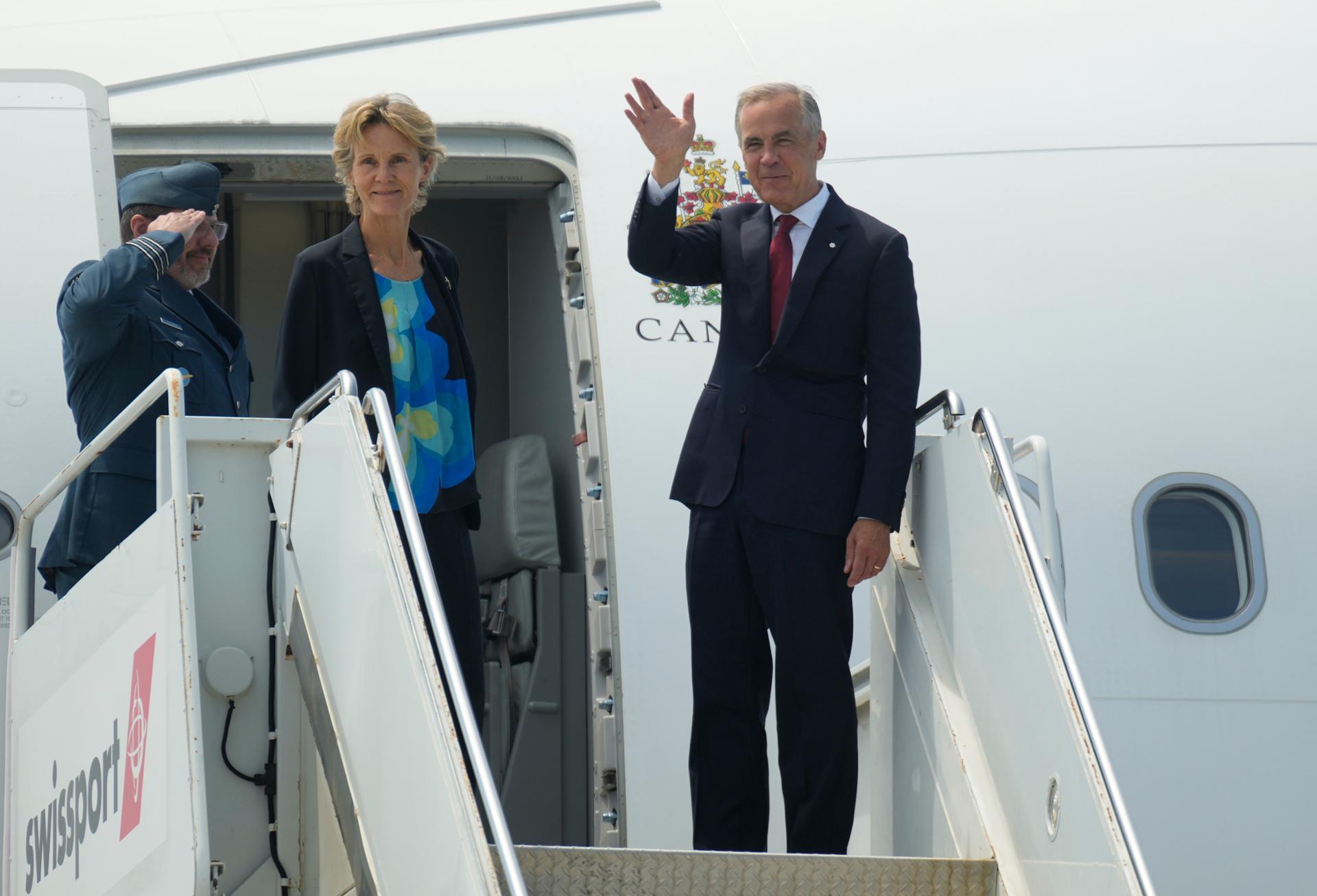
Canada has named ThyssenKrupp Marine Systems (TKMS) of Germany as the preferred bidder for a procurement project that aims to upgrade the Royal Canadian Navy’s submarine fleet.By snubbing runner-up Hanwha Ocean of Korea, Ottawa opted for the consortium led by companies from Germany and Norway, two NATO member states.Canadian Prime Minister Mark Carney on Monday made the announcement at Canadian Forces Base Halifax in Halifax, Nova Scotia. While the move marks a significant step forward, it does not necessarily signal the imminent signing of a final contract. Ottawa reserves the right to hold negotiations with Hanwha Ocean, the next-in-line candidate, if those with TKMS break down.This major defense project seeks to replace the four Victoria-class submarines that Canada acquired from the UK in 1998. Under a plan to procure up to 12 new diesel-electric submarines, the project could be worth over US$100 billion, covering not only construction but also maintenance and operating expenses over three to five decades.Reuters quoted industry estimates as saying the submarine deal alone is worth over US$12 billion, and other reports said the first batch will be delivered in 2034-35.Ties with NATO are seen as a major factor in the Canadian government's decision. TKMS, the world's largest producer of non-nuclear submarines, joined forces with Norway for the bid, highlighting how it supplies some 70% of NATO's non-nuclear submarine fleet. Even if Hanwha Ocean is competitive in technological and production capabilities, Germany said, it cannot offer the same operational and intelligence interoperability among allies like the consortium can because Korea is not a NATO member state.The German company also benefited from Canada's recent move to strengthen security and defense cooperation with Europe. The Carney administration has pledged to drastically raise the military budget to 5% of GDP to meet NATO's new targets for defense spending, and is expected to use this decision as an example of stronger defense capabilities at this week’s NATO summit in Turkey.TKMS also emphasized the project’s potential economic impact for Canada, forecasting US$160 billion in total economic activity, US$86 billion in GDP growth and creation of over 650,000 jobs. But these estimates reflect the economic effects over the submarines’ lifecycle, with no specific calculation period provided.Hanwha Ocean also conducted an aggressive localization strategy for the bid. It proposed the KSS-III-class submarine, stressing the economic benefits for Canada's steel and aluminum industries, and pledged cooperation with Ontario-based Algoma Steel, investment in military vehicle production and job creation. A Hanwha-commissioned study also forecast that the project would create 22,000 jobs and an economic impact of over US$60 billion.The Korean government and industry put in an all-out joint effort by the public and private sectors for the contract. Hanwha Ocean highlighted its technical prowess and operational expertise, such as the deployment of submarines across the Pacific Ocean to Canada.Yet Ottawa apparently placed higher value on its cooperation networks with NATO allies, operational connectivity in the Arctic and the promise of expanded defense cooperation with Europe.Canada's submarine fleet is struggling with operations due to aging infrastructure and frequent breakdowns. Reports in Canada said just one quarter of Victoria-class submarines are deemed fully operational. Ottawa expects that its acquisition of 12 new submarines will form an underwater force that can operate simultaneously in the Atlantic, Pacific and Arctic regions.By Kim Won-chul, Washington correspondentPlease direct questions or comments to [english@hani.co.kr]