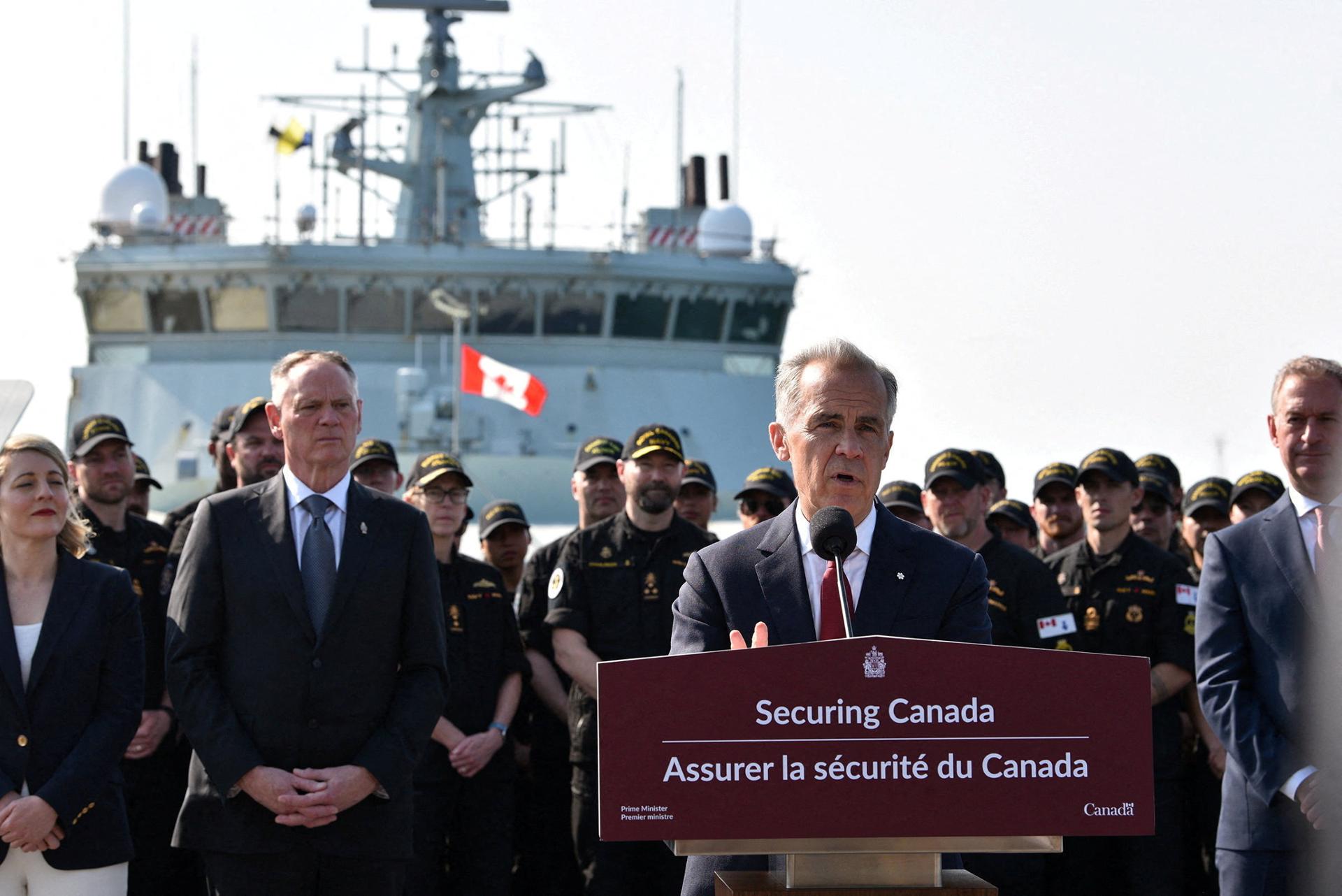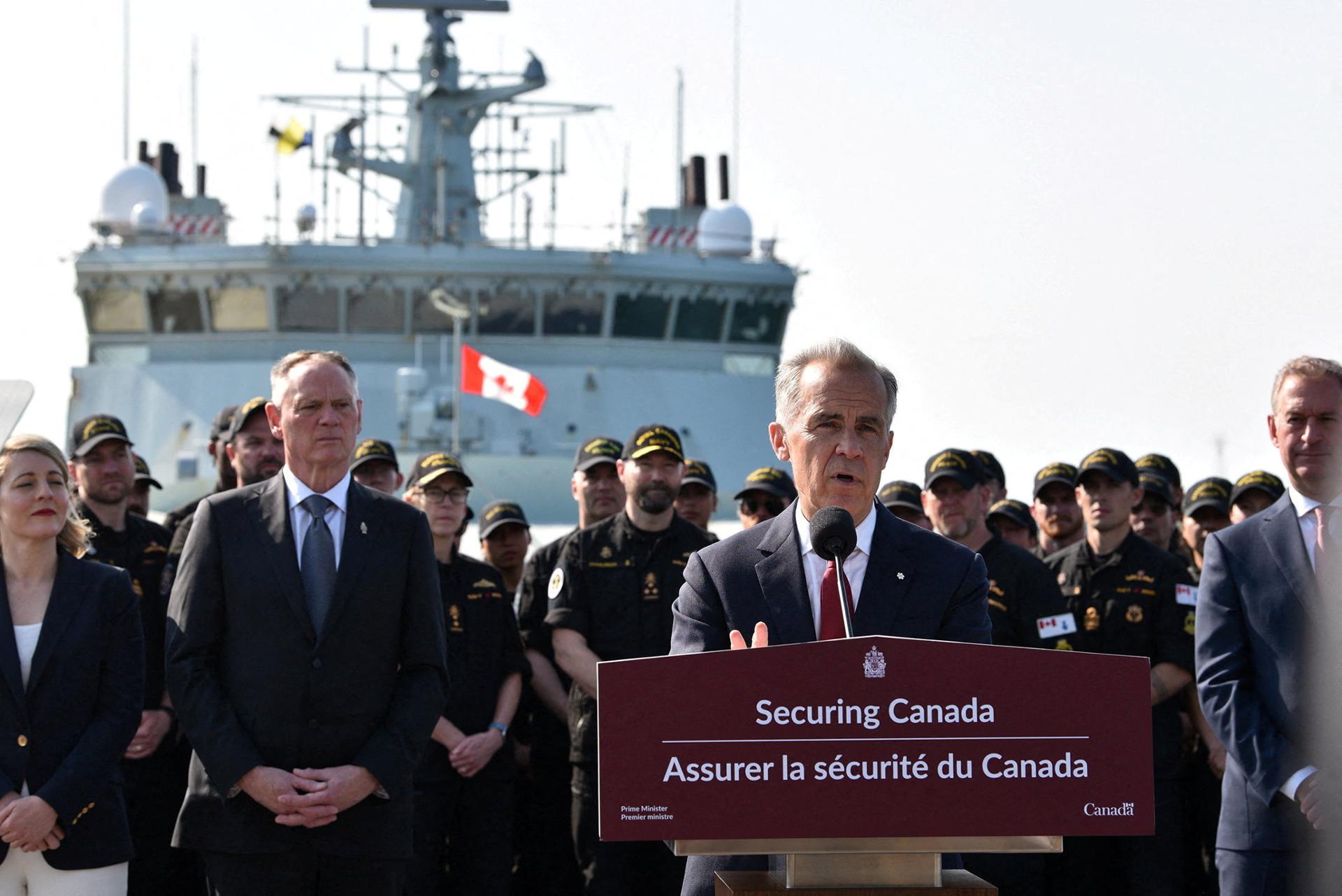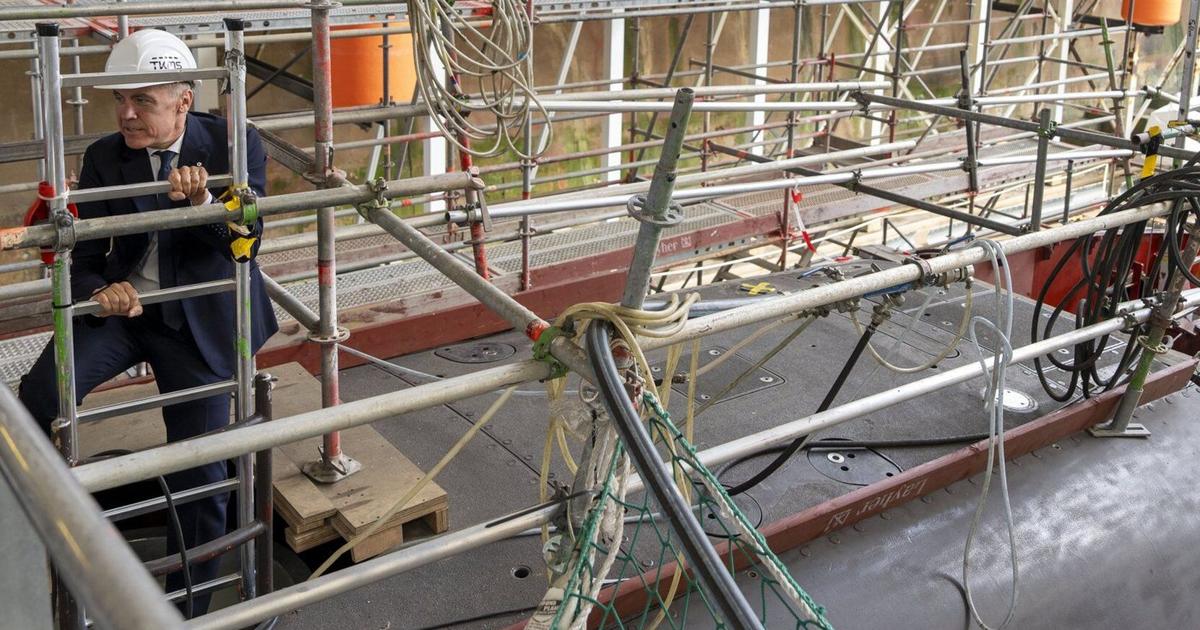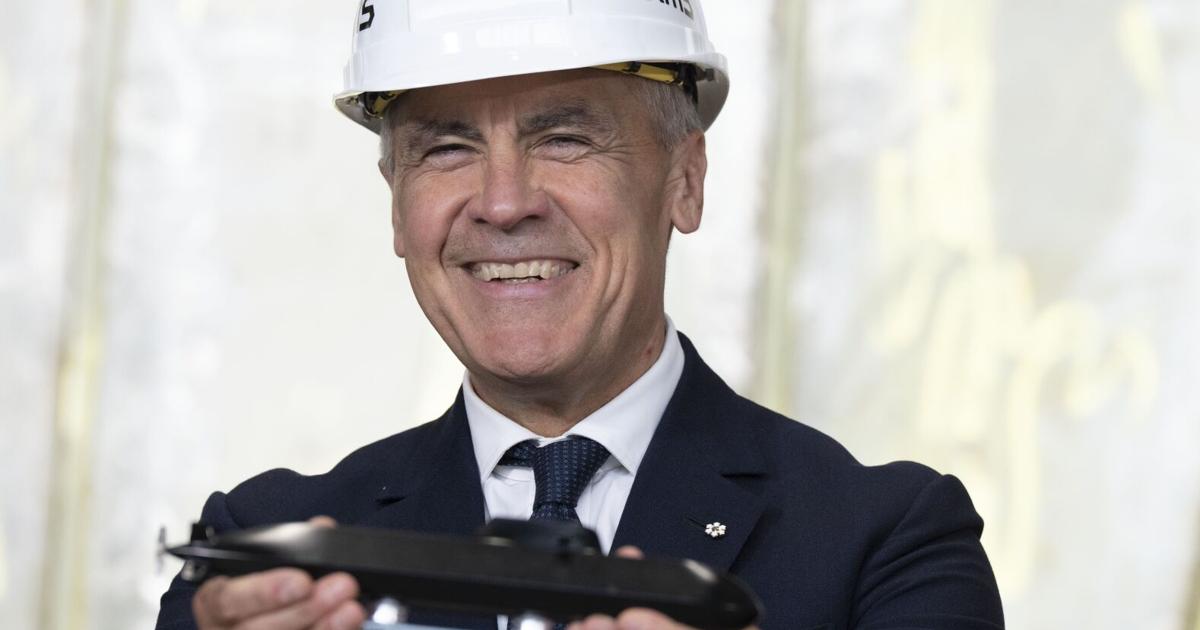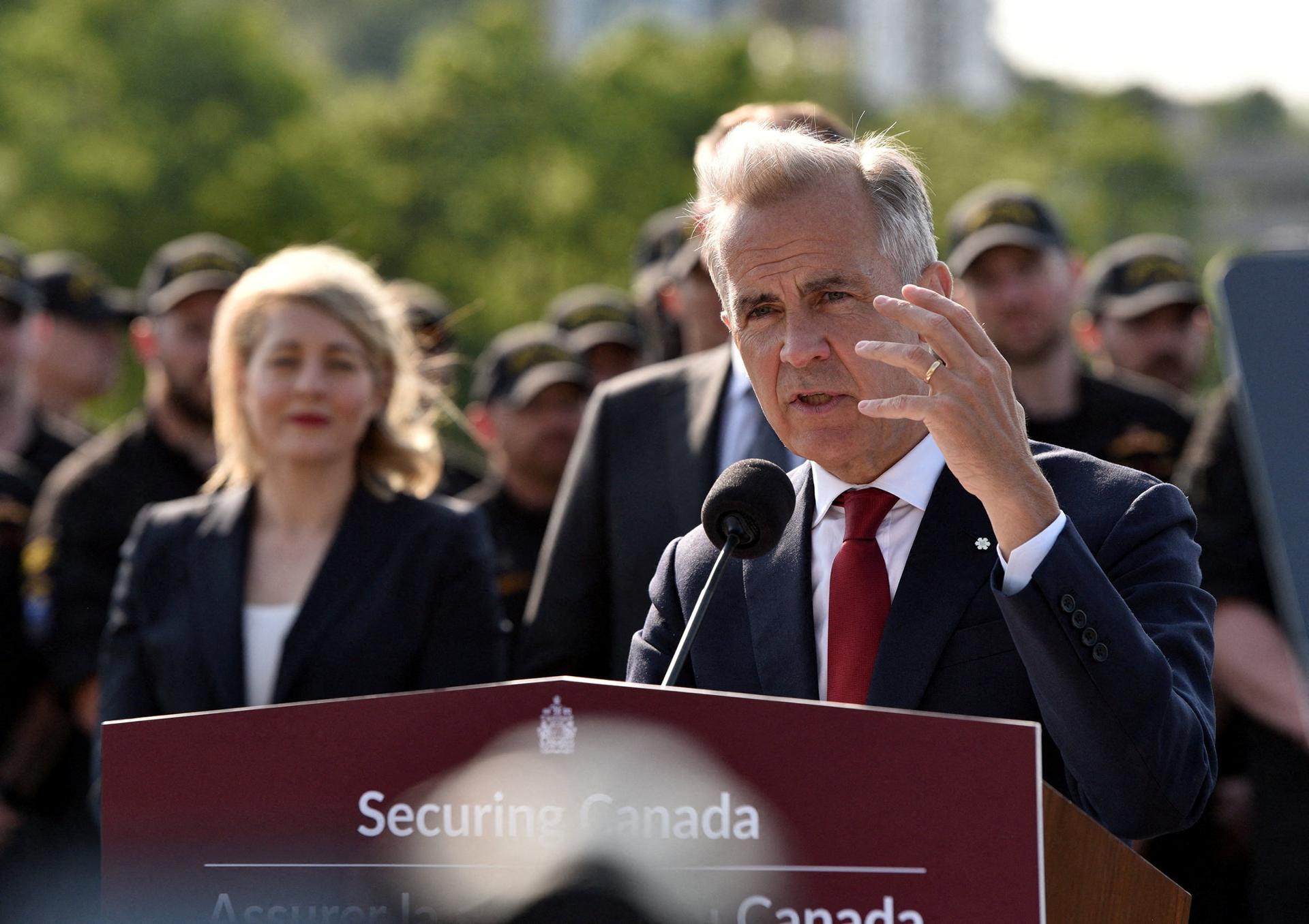
Canada’s Prime Minister Mark Carney announces that Canada has selected Germany’s TKMS to build 12 submarines for its navy, at HMC Dockyard in Halifax, Nova Scotia, July 6. Yonhap
Canada's decision to award its next-generation submarine program to Germany's Thyssenkrupp Marine Systems (TKMS) is more than the outcome of a commercial competition. It is a reminder that, in today's defense market, geopolitical alignment can outweigh technological capability, industrial competitiveness and delivery performance. For Korea, the result is disappointing. For the international defense industry, it raises broader questions about how open and competitive major procurement processes truly are.
Canadian Prime Minister Mark Carney acknowledged that the choice was exceptionally close. Both TKMS and Hanwha Ocean, he said, satisfied the Royal Canadian Navy's operational requirements and submitted strong proposals. That admission is significant. It suggests that technical capability was not the decisive factor.
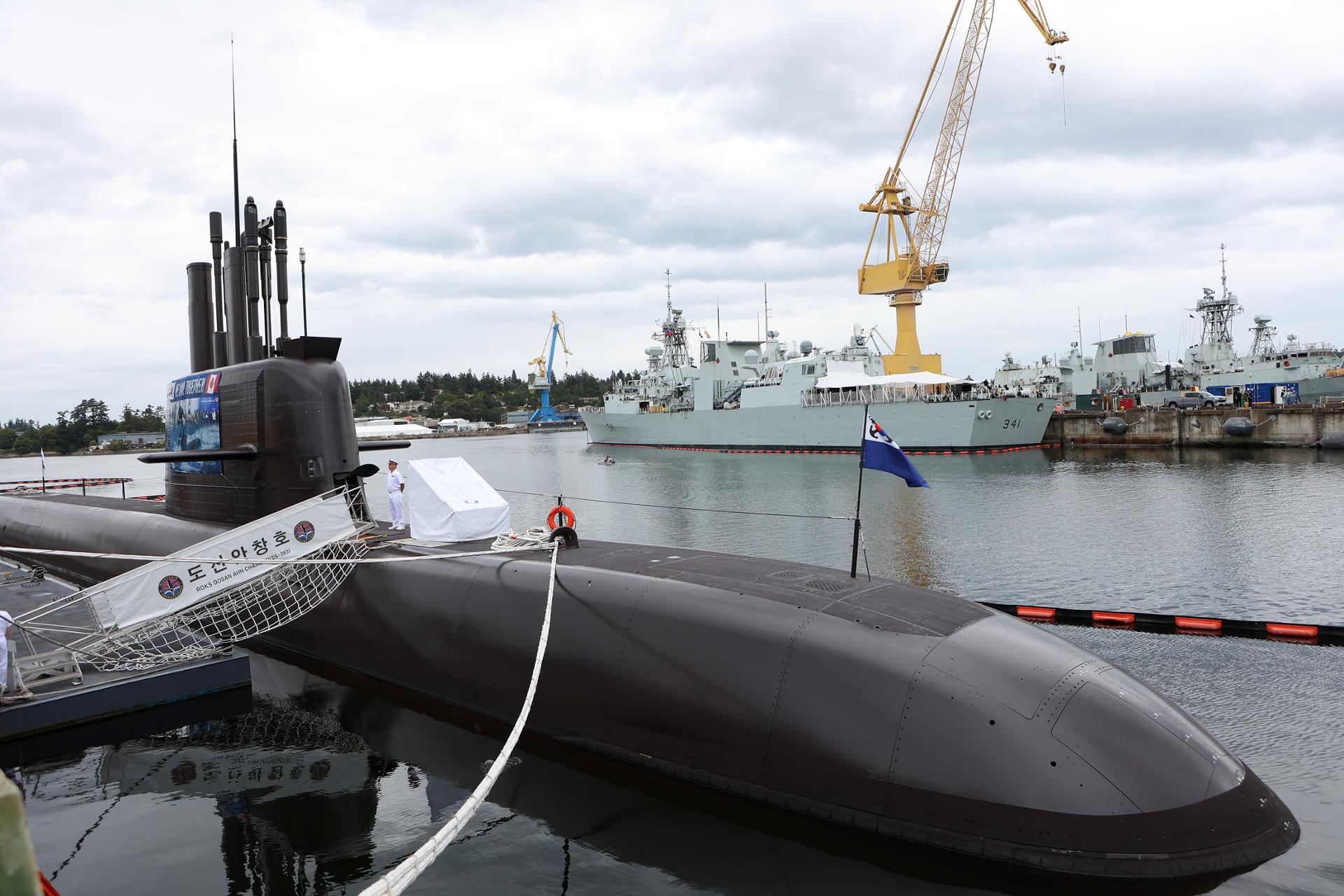
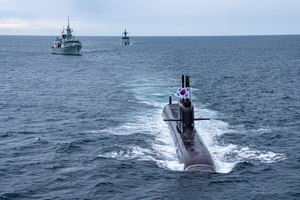
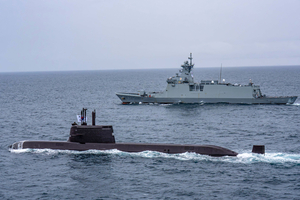
Hanwha Ocean entered the competition with a compelling case. Its KSS-III Batch-II submarine represents one of the world's most sophisticated conventional submarine designs, combining air-independent propulsion, lithium-ion batteries and long-endurance underwater operations. Equally important, the Korean company promised to deliver the first submarine by 2032 — an ambitious timeline at a moment when many Western shipyards continue to struggle with production delays and capacity constraints.