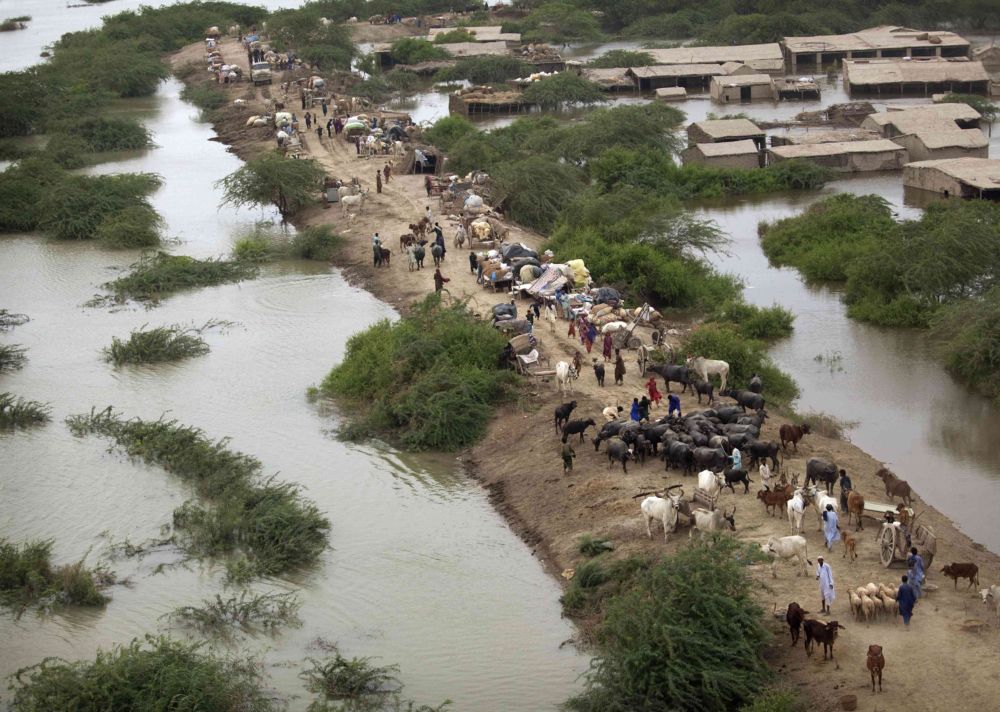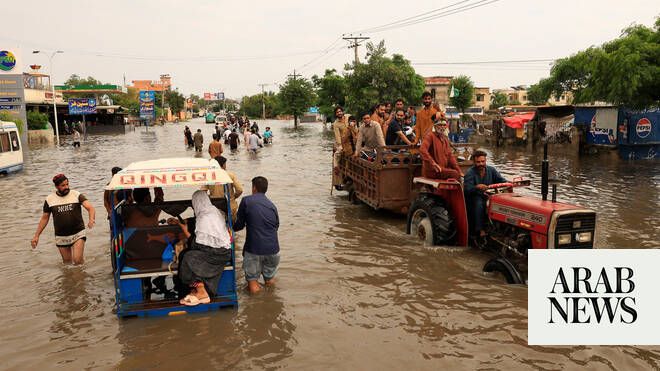
Pakistani residents wading through floodwaters that had swept towards two small towns near the Indus River. The area was hit by record flooding in August last year. Indian authorities have rejected Pakistan's "misinformation" regarding the flow of water in the river systerm, arguing that Pakistan continues to receive more water than previously estimated.
India has pushed back against what it calls a "deliberate misinformation campaign" in Pakistan over the Indus Waters Treaty (IWT), even as the 1960 pact remains in abeyance.
Officials and water experts cited data showing Pakistan continues to receive higher river flows than originally estimated under the treaty, arguing that Islamabad's water woes stem from domestic mismanagement rather than Indian action.
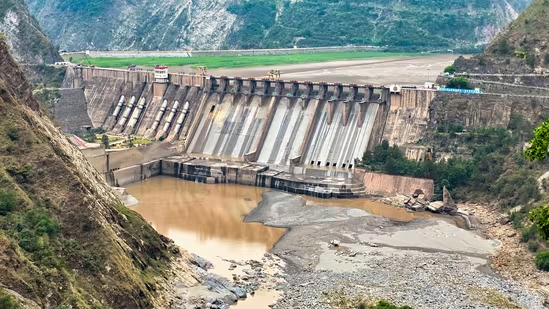
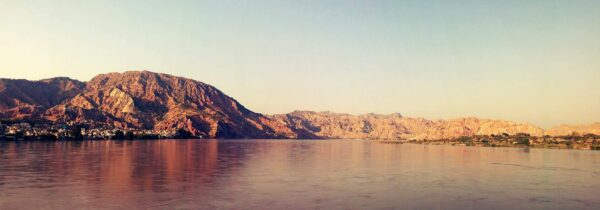
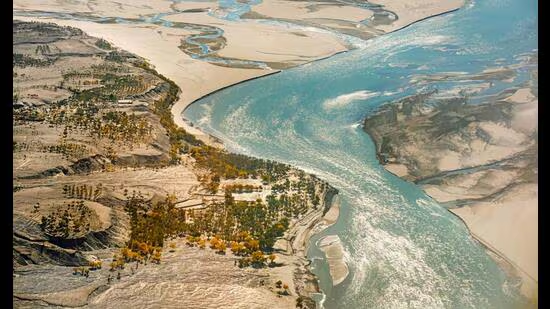
The IWT, signed in 1960, divided the six rivers of the Indus basin. Under Article-III, India is obligated to let flow the waters of the three western rivers, Indus, Jhelum and Chenab, to Pakistan, except for specific uses permitted to India for domestic, non-consumptive, agricultural and hydropower purposes. India received exclusive rights to the three eastern rivers, Ravi, Beas and Sutlej.
India placed the treaty in abeyance earlier this year, but said Pakistan's public narrative ignores hydrological realities. According to research institute assessments, Pakistan receives an average of 140 Million Acre Feet, or MAF, annually in the Indus basin from the western rivers. That figure exceeds the 135 MAF estimated at the time the treaty was signed.