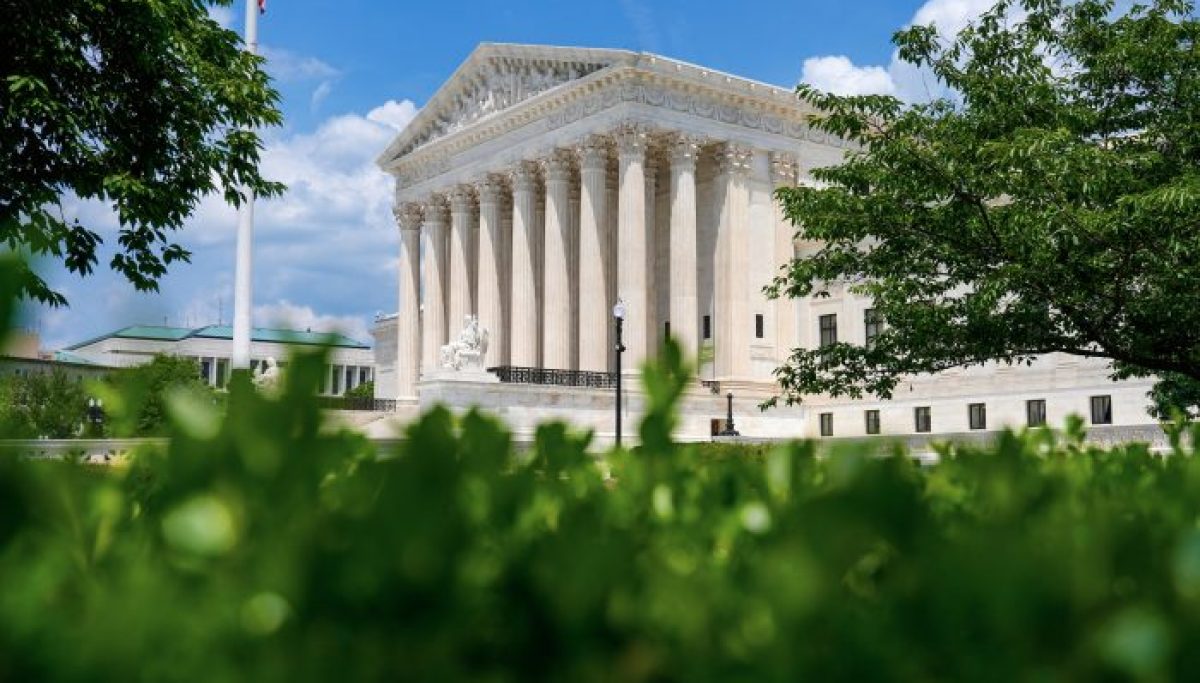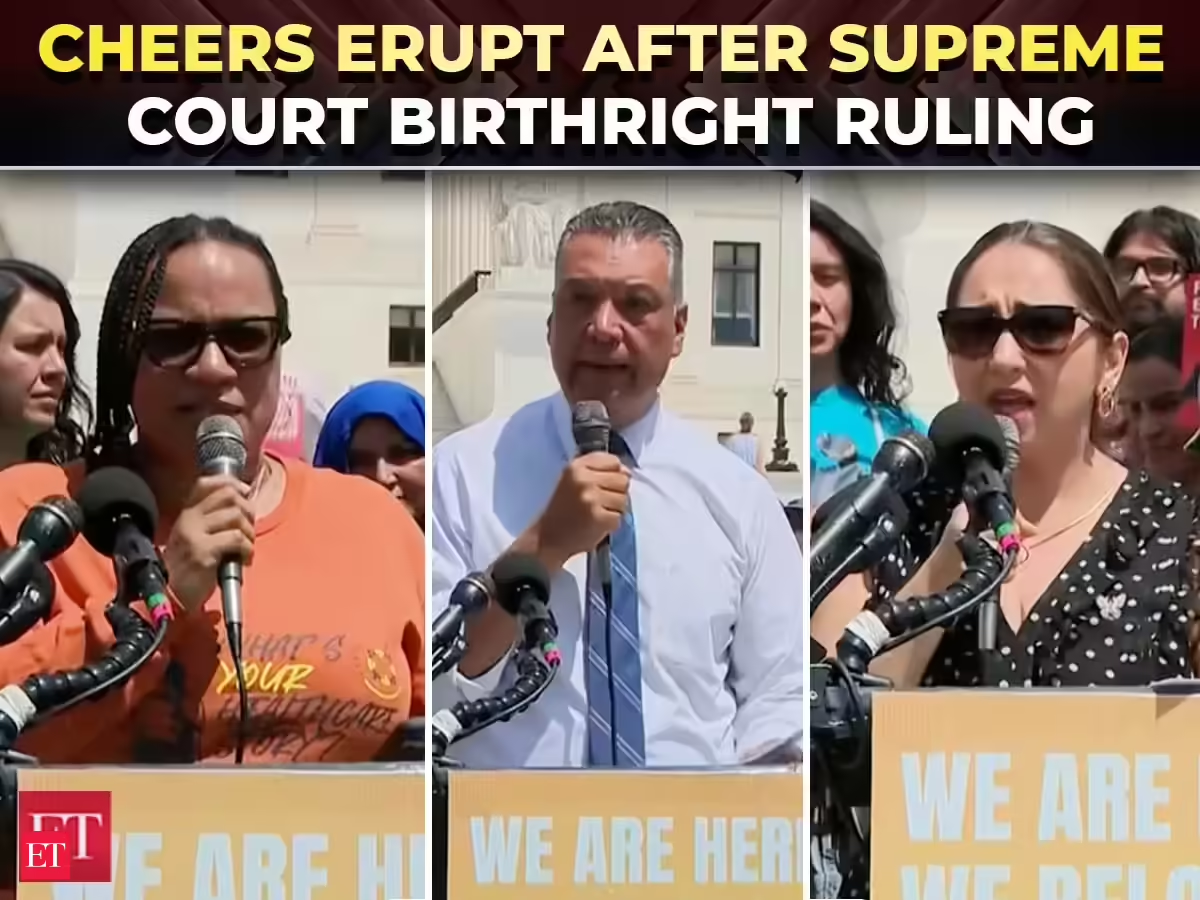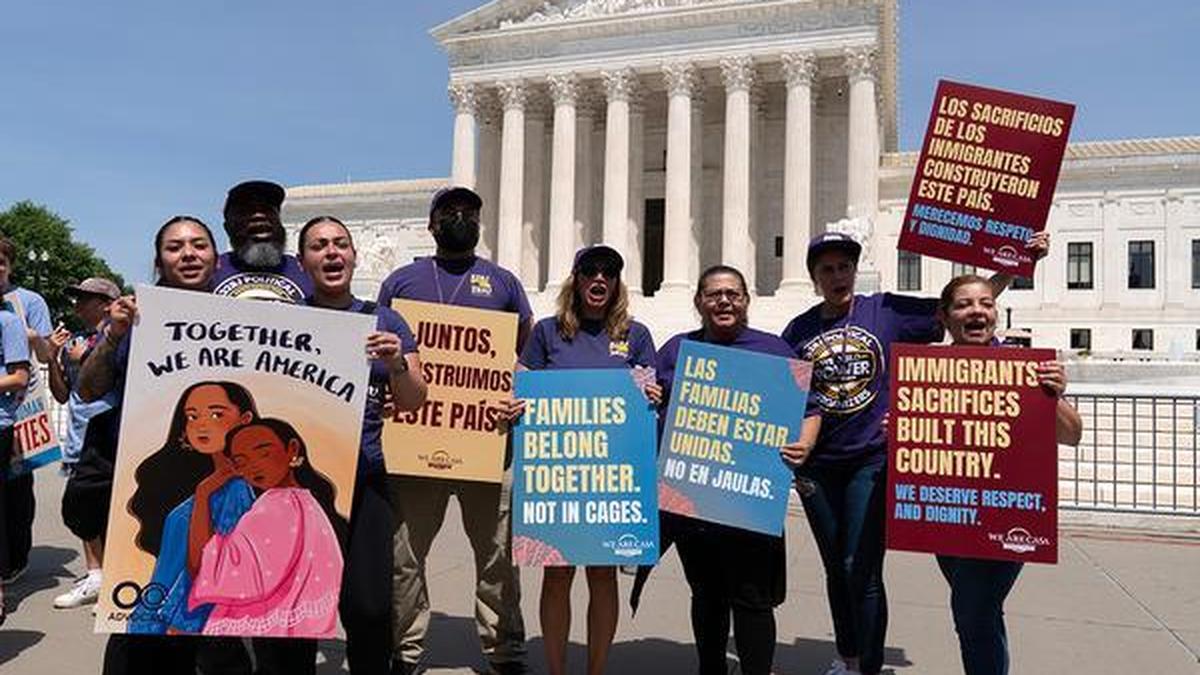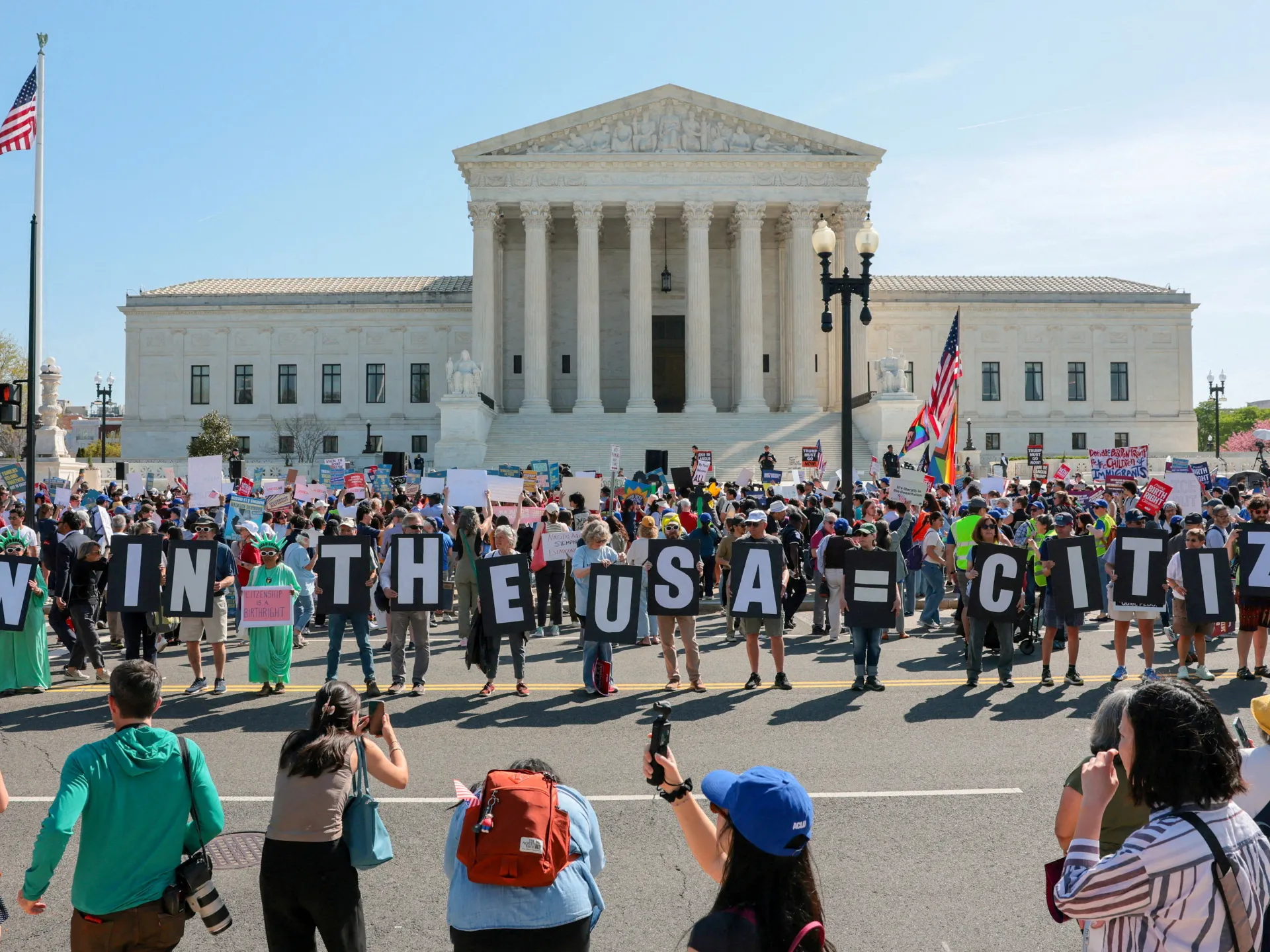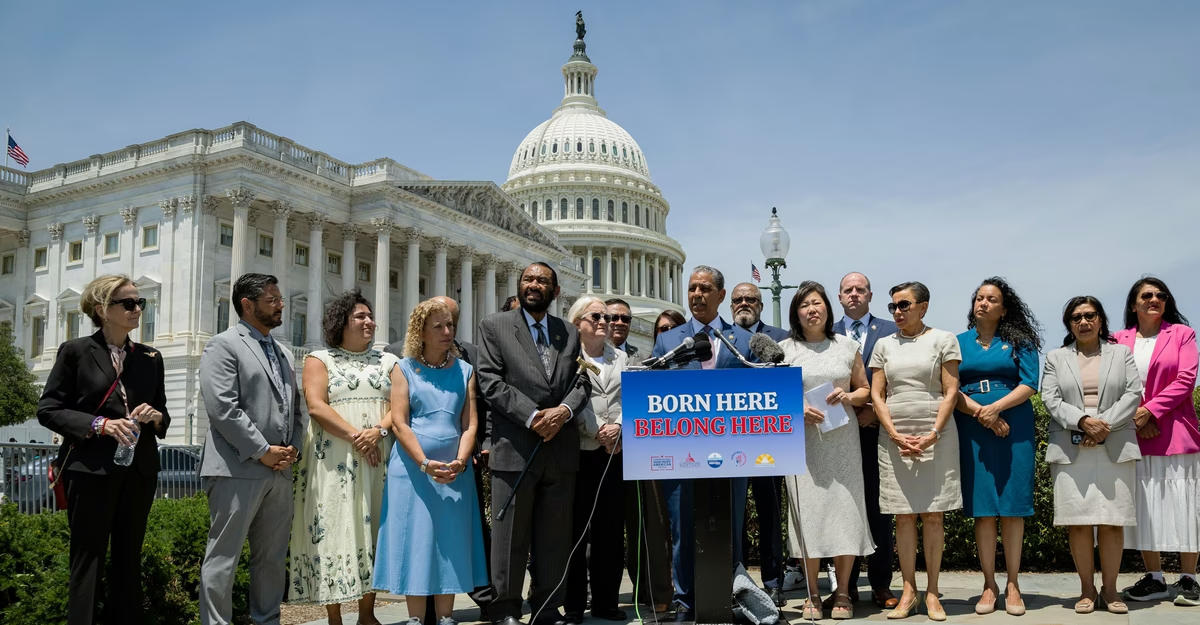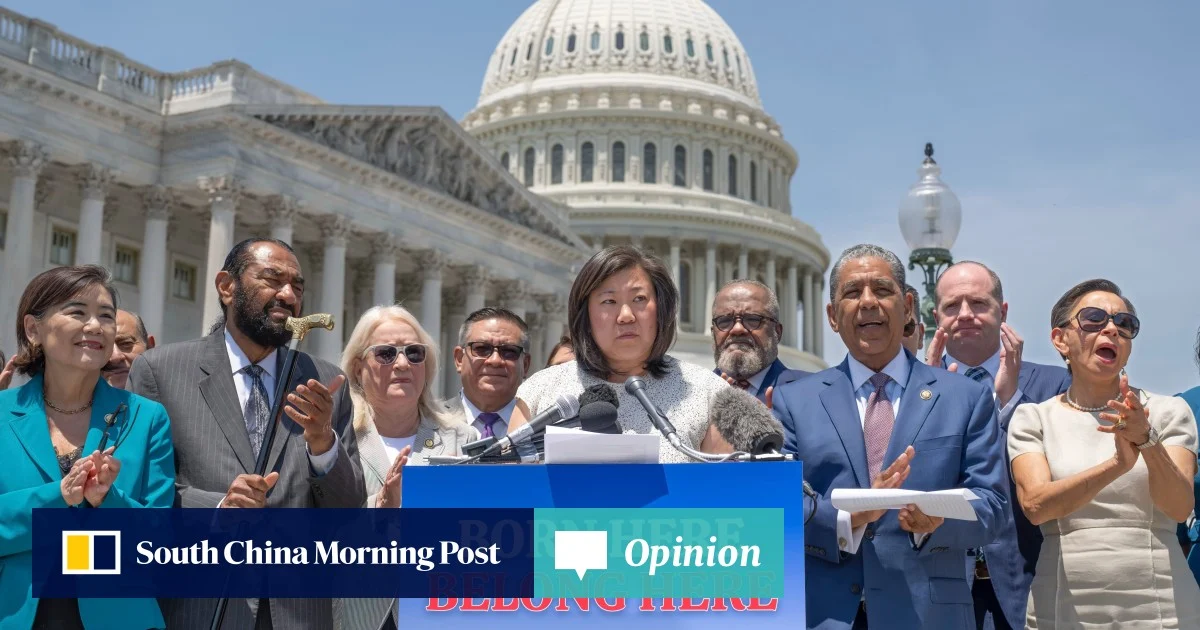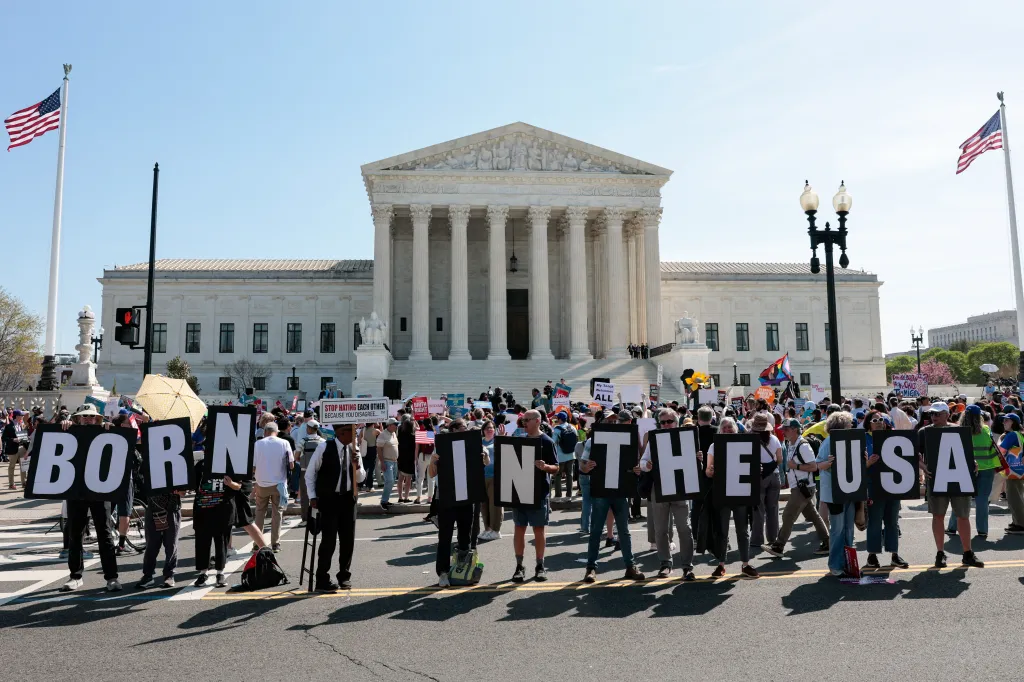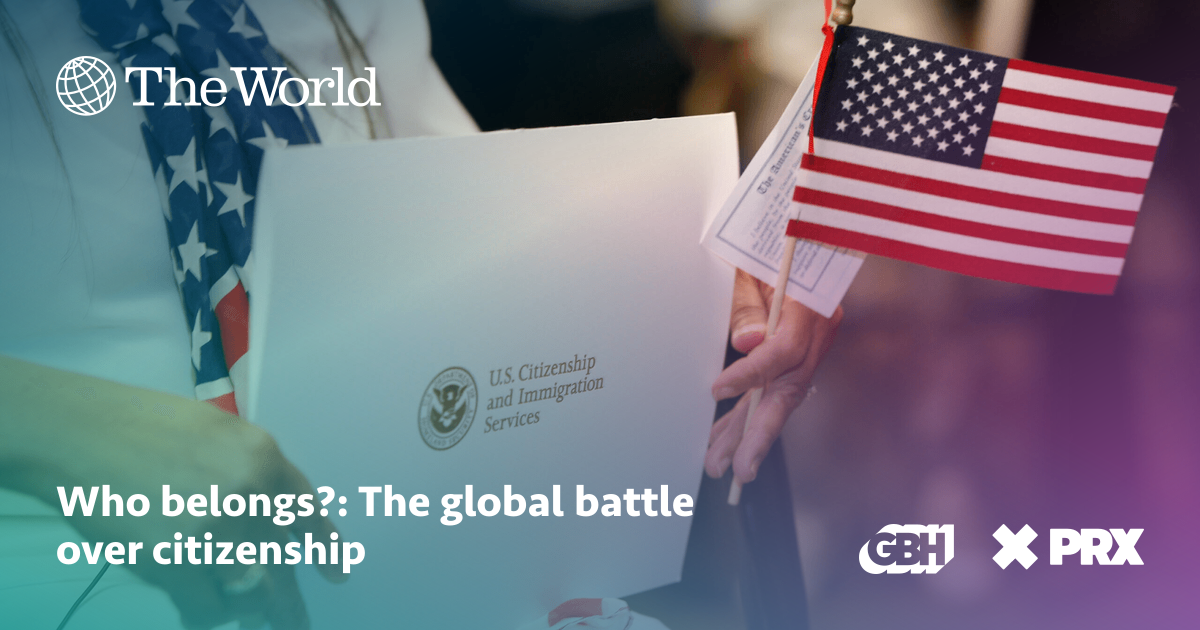
Public radio’s longest-running daily global news program.AboutContactDonateMeet the TeamPrivacyTerms of use©2026 The World from PRXPRX is a 501(c)(3) organization recognized by the IRS: #263347402.Who belongs?: The global battle over citizenshipThe US Supreme Court birthright citizenship decision is not an isolated legal event. Increasingly, around the globe, countries are struggling to redefine who belongs within their borders, from anti-immigrant protests in South Africa to Spain’s decision to regularize large numbers of undocumented migrants. François Crépeau, a professor emeritus of public international law at McGill University in Montreal, speaks with The World’s Host Marco Werman about the political dynamics behind the different approaches.7:44Vivian Ragan holds the envelope containing her United States citizenship papers and an American flag at a naturalization ceremony, May 16, 2019, in Centennial, Colo.The US Supreme Court upheld the tradition of birthright citizenship in the country in a vote of 6-3. This decision reaffirmed the 14th Amendment guarantee of citizenship to virtually all persons born in the United States, regardless of their parents’ immigration status.The United States is not the only country to wrestle with the issue of who gets citizenship and on what basis. That’s currently a flashpoint across the globe.The World reached out to François Crépeau, a professor emeritus of public international law at McGill University in Montreal, for a worldwide perspective on the ruling.According to him, “It’s 194 pages. They did the whole history of the birthright citizenship mechanism, starting with the English common law that was inherited by the US, as well as by Canada. And they come to the 14th Amendment and explain how the 14th Amendment has been interpreted. How in the ’80s, there was a movement to restrict its interpretation, and that’s what the Court rejected, saying that everyone who is on the territory is under the jurisdiction of the US, and therefore people who are born in the US therefore have birthright citizenship.”In this Sept. 16, 2015, photo, a woman in Sullivan City, Texas, who said she entered the country illegally shows the footprints of her daughter, reaching into photo, who was born in the United States, but was denied a birth certificate. Texas has for seven years said it won’t accept Mexican identification cards when issuing birth certificates for children of people in the United States illegally. But it doesn’t appear to have stepped up enforcement until recently, amid mounting political pressure to get tougher on immigration, documents obtained by The Associated Press show. Eric Gay/APThe US has been for decades, if not centuries, the epitome of a welcoming society. Canada and Australia are, too. We have our flaws, all of us, but we were, you know, welcoming societies. We welcomed lots of immigrants. We defined ourselves as immigration countries, and birthright citizenship was part of the DNA of those immigration countries. That’s how we made sure that immigrants would integrate, integrate quickly, integrate effectively, become citizens despite, you know, their accents that would last for their whole lives, they would still be Americans or Canadians or Australians. And that is what is questioned today.In this Sept. 2017 file photo, a flag is waved outside the White House, in Washington. The Trump administration is coming out with new visa restrictions aimed at restricting a practice known as “birth tourism.” That refers to cases when women travel to the United States to give birth so their children can have U.S. citizenship. Carolyn Kaster/AP FileBecause we had to people a land that was vast and was not very much populated. We grabbed those lands from the hands of the Indigenous peoples, that’s for sure. So, it was a land grab, but we wanted to people them. We wanted to become — the strength of a country was often calculated by the numbers, the number of its citizens, because those people could be drafted into armies and the size of the armies was important. Today it’s less so. Smart countries, I mean, Switzerland, for example, has a small population. It’s the equivalent of the population of Quebec, 8 million. But it’s an incredibly powerful country in terms of science and technology and finance, etc.A Nepalese activist blows on a whistle during a protest demanding provision in the new constitution to avail citizenship in the name of one’s mother, in Katmandu, Nepal, Jan. 8, 2015. Activists participated in the protest against the denial of citizenship rights to children if their fathers are not Nepalese citizens. While Nepal’s new constitution promises full citizenship to all children with one Nepalese parent, the laws are routinely flouted when only the mother is a citizen. Niranjan Shrestha/APEven countries like Germany, for example, had only immigration by descent. You could only be German if your parents were German. They have changed. They have allowed people who were born in Germany from parents who were not German to become German. And so, there is an opening on that side, as well, because in the case of Germany, they have several millions of Turks — descendants of Turks but born in Germany — who were not becoming German. And so, Germany has changed its laws and allowed those to acquire German citizenship and to become dual citizens from Turkey, in particular, but also from other countries. And this is also a more liberal attitude toward citizenship, allowing these people to integrate and to participate. And if you participate and you have a stake in the political discussions, well, you tend to be better citizens. You feel integrated, you feel accepted, and you tend to thrive much more than if you are left on the margins. So, you have both movements.Parts of this interview have been lightly edited for length and clarity.
Who belongs?: The global battle over citizenship - The World from PRX
The US Supreme Court birthright citizenship decision is not an isolated legal event. Increasingly, around the globe, countries are struggling to redefine who belongs within their borders, from anti-immigrant protests in South Africa to Spain’s decision to regularize large numbers of undocumented migrants. François Crépeau, a professor emeritus of public international law at McGill University in Montreal, speaks with The World’s Host Marco Werman about the political dynamics behind the different approaches.
940 words~4 min read