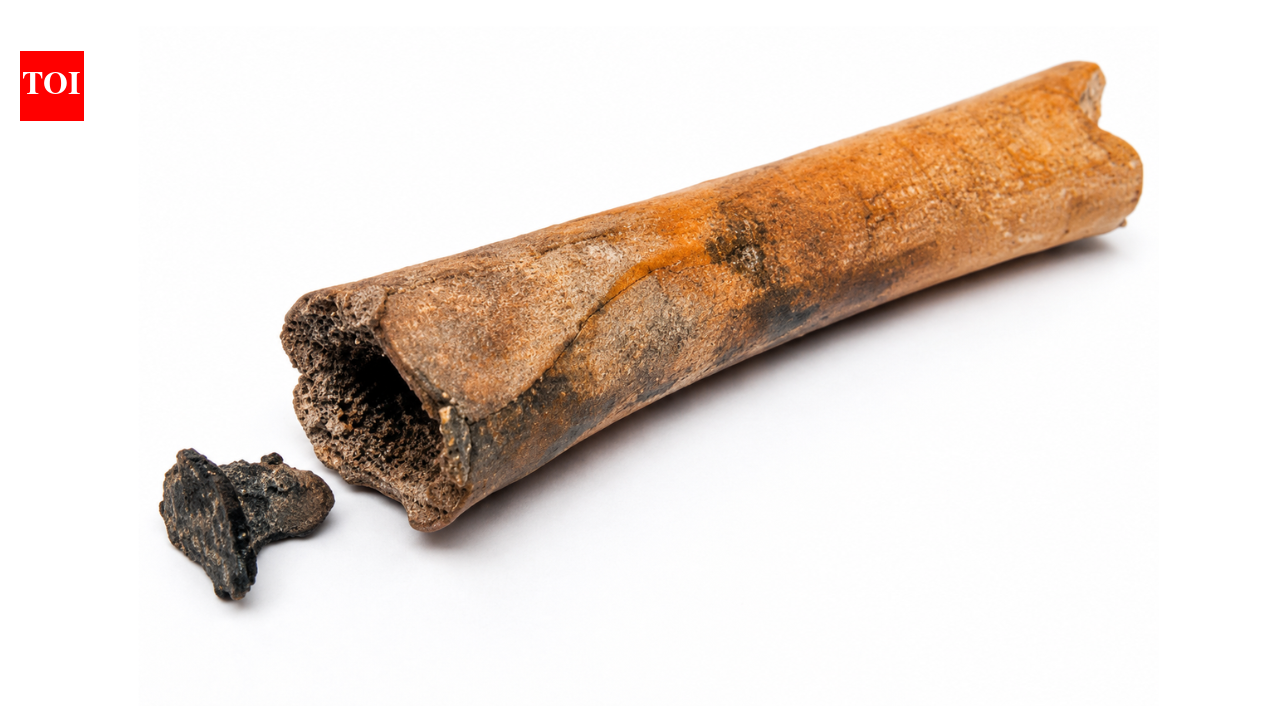
A small hollow bone recovered from an ancient Roman archaeological site has offered an unexpected window into medical practice nearly 2,000 years ago.
For years, the object attracted little attention and was catalogued as an ordinary artefact.
Modern laboratory analysis has now revealed that it preserved the remains of a carefully prepared medicinal mixture, providing rare physical evidence of how remedies were stored and transported during the Roman period.Researchers from Cambridge University, using advanced chemical techniques, detected traces of plant extracts, fats and other organic compounds that point to a deliberately formulated medicine rather than a household substance.
Among the ingredients identified was black henbane (Hyoscyamus niger), a powerful medicinal plant prized in antiquity for its pain-relieving and sedative effects.
The discovery not only sheds fresh light on Roman healthcare but also demonstrates how biomolecular science is helping archaeologists uncover hidden stories preserved inside even the smallest ancient objects.What was hidden inside the 2,000-year-old Roman bone containerThe artefact is a hollow animal bone that had been carefully fashioned into a small cylindrical container.