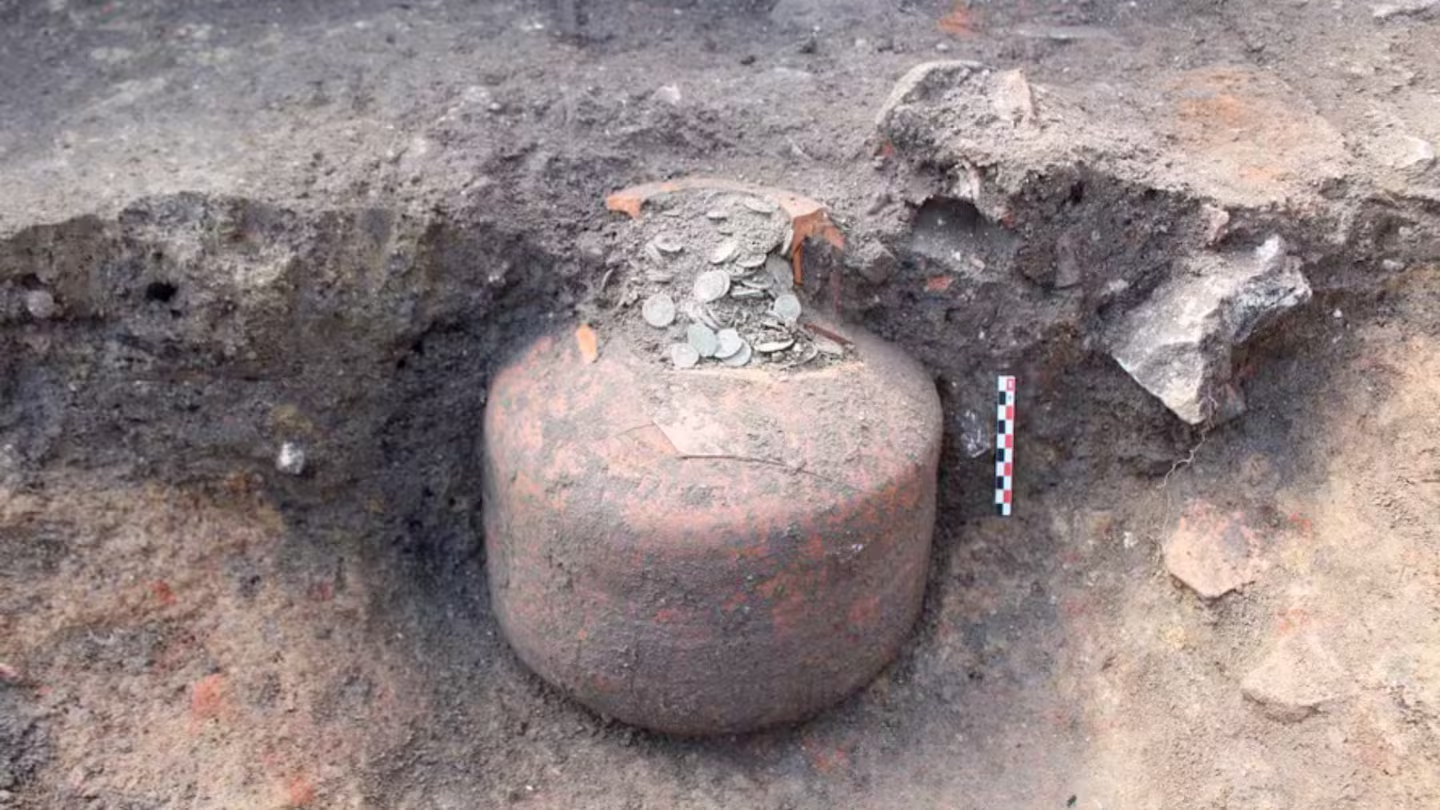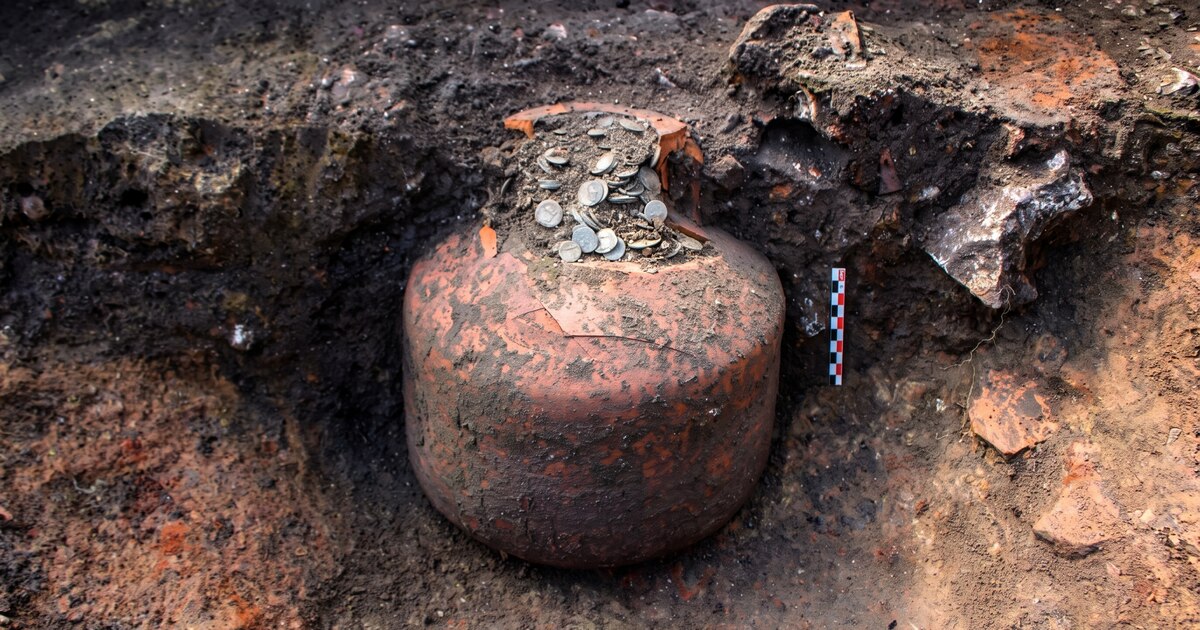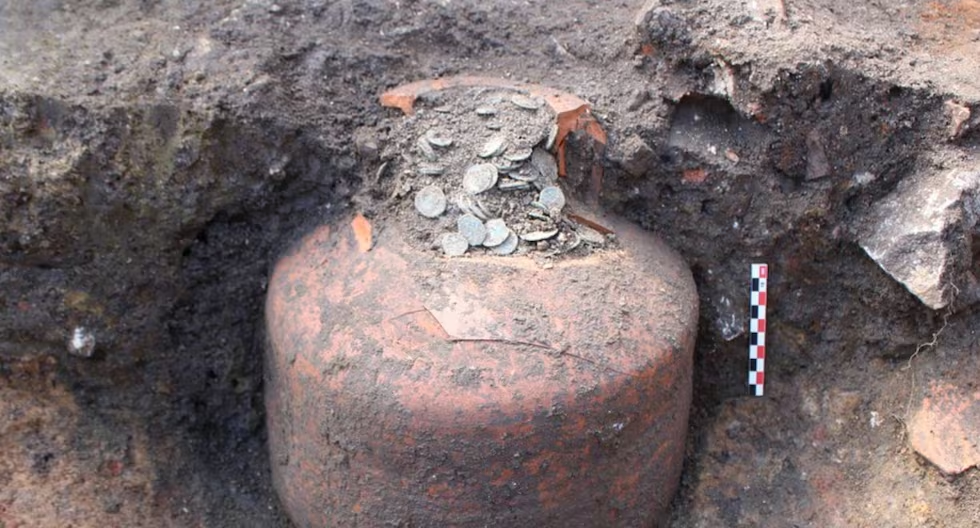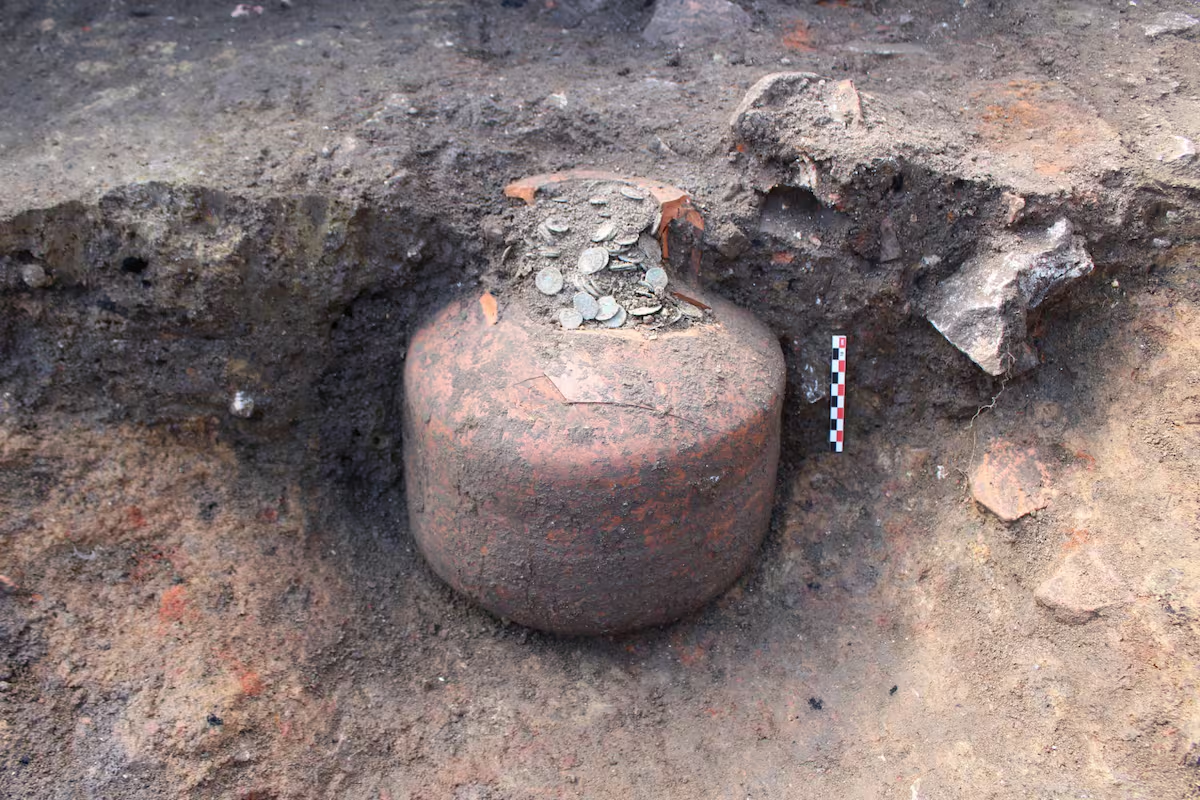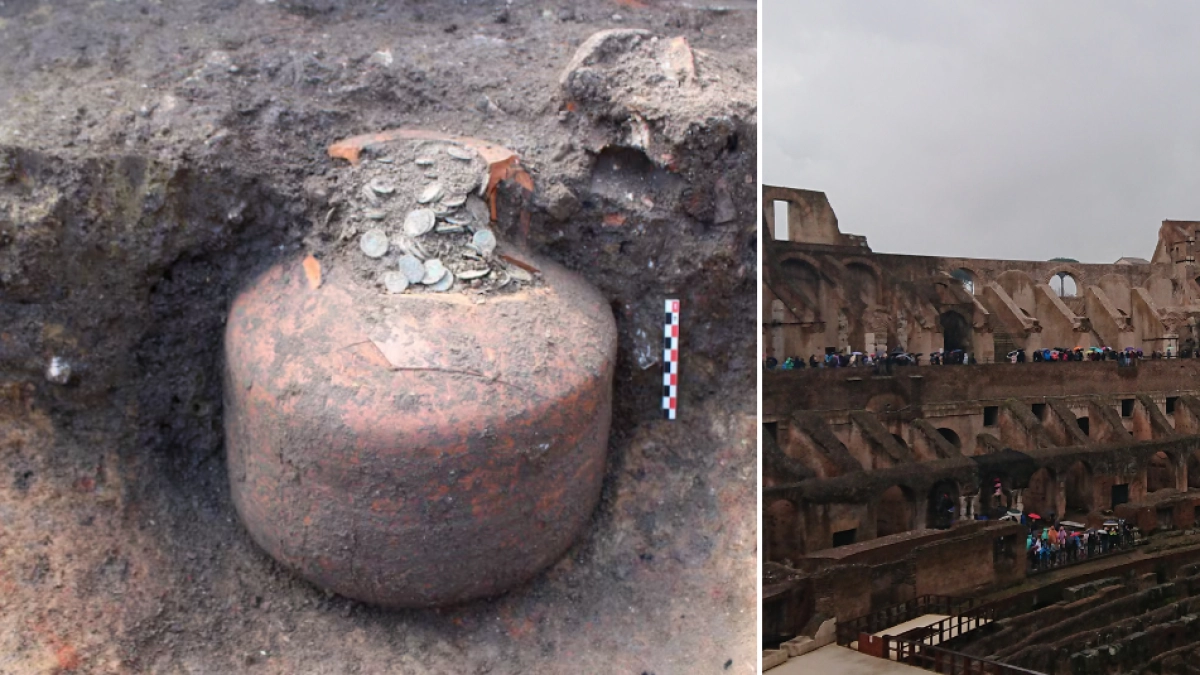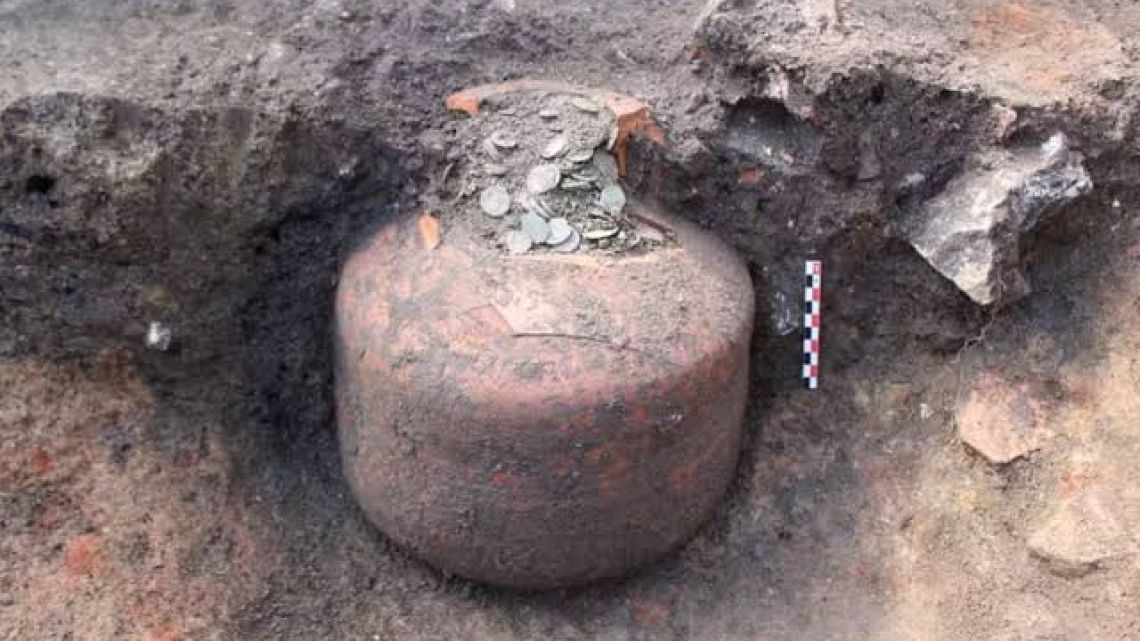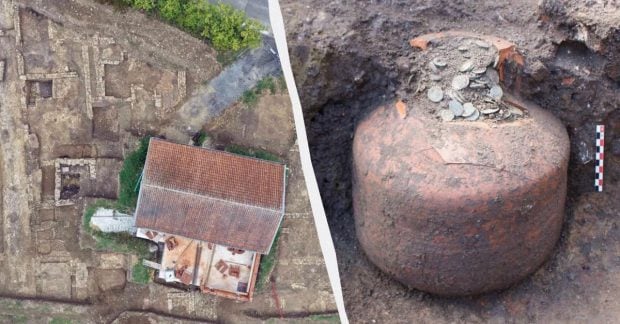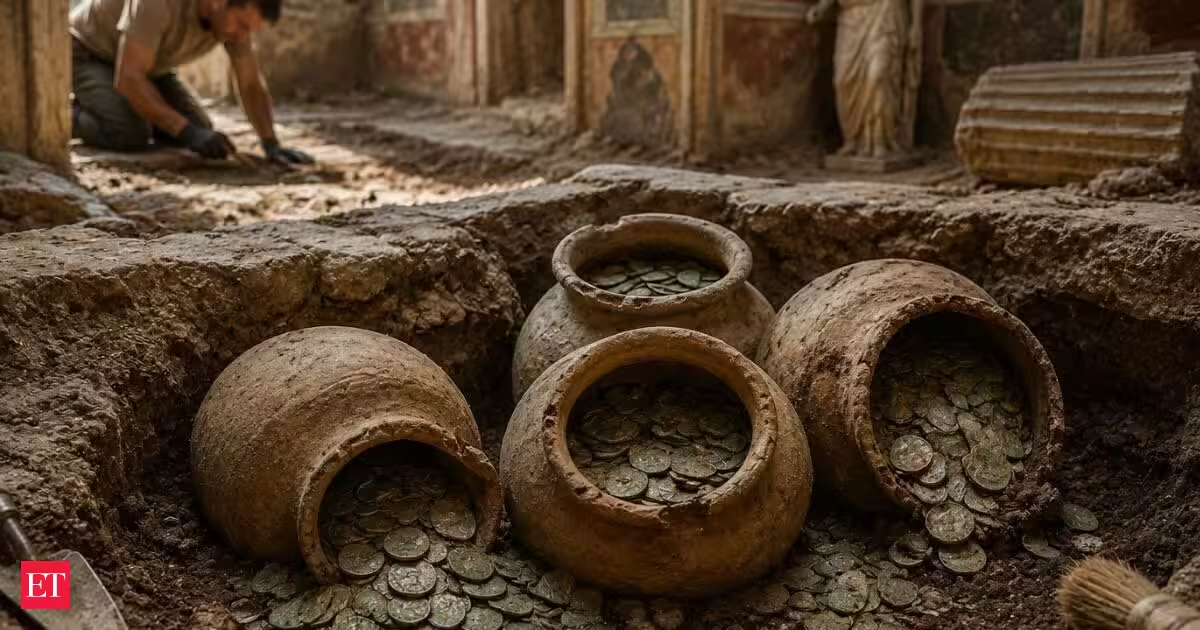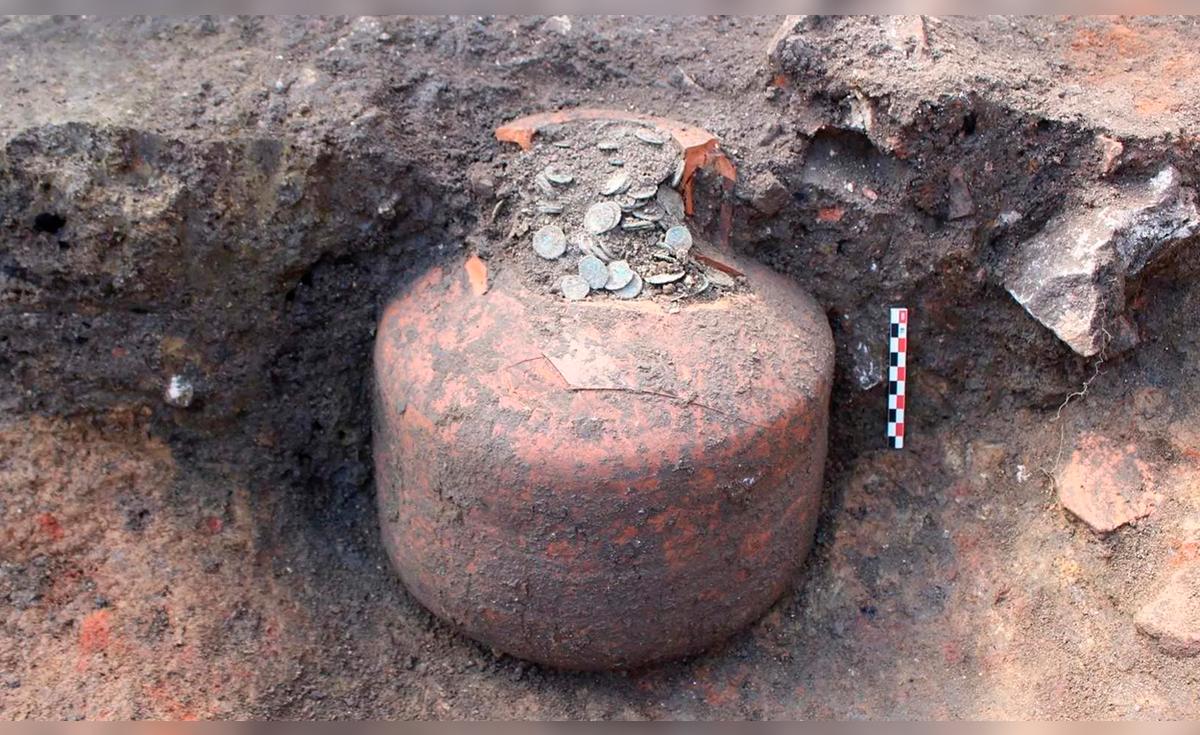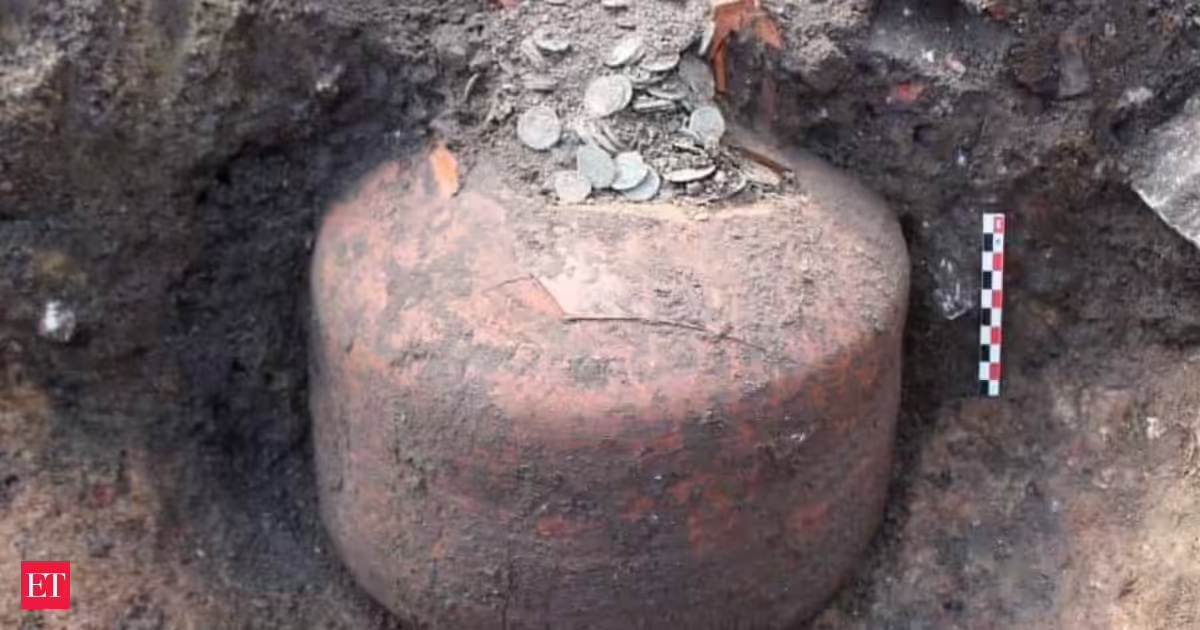
If you thought hiding cash in a mattress was a modern move, just wait until you hear about the folks in Roman-era France. Archaeologists excavating beneath the small village of Senon, in northeastern France, just unearthed three ceramic jars, or amphorae, that could contain more than 40,000 Roman coins, all dating back some 1,800 years, according to a Live Science report. How the jars were buried suggests something more interesting than a family hiding savings in a panic before fleeing danger. It looks like a real working household bank account.The dig is being led by INRAP, or the National Institute for Preventive Archaeological Research, a government agency that intervenes whenever construction threatens to disturb a historical site. The official statement from INRAP says the dig is about 1,500 square meters and was triggered by routine construction work.The excavation has already turned up a remarkably dense sequence of remains, from Gaulish postholes and ditches to at least three Roman houses, two paved streets, and an estimated dozen limestone quarries, some nearly 3 meters deep. According to INRAP, the preserved layout even shows the district expanding over time, with homes later enlarged and rebuilt in stone around courtyards and cellars.Meet the neighborhood that time forgotSenon was a busy little settlement way before Rome showed up. Archaeologists had to contend with postholes, pits, and ditches so densely packed that some zones had more than one structure per square meter, according to INRAP. Even 2,000 years ago, this was prime real estate, when the area was home to the Mediomatrici, a Celtic tribe.But once Julius Caesar conquered Gaul, everything was different. By the end of the first century CE, Senon had grown into a full-blown Roman town, with paved streets and stone houses, underfloor heating and courtyards used as workshops. The well-built houses and everyday objects found at the site suggest residents who were relatively well-off, probably artisans or merchants, according to INRAP.An aerial view of the excavation showing pits and postholes from Senon's earliest Gallic-era buildings, alongside later stone wall foundations. Credit: Simon Ritz/InrapSo why bury 40,000 coins under the floor?The coins show the faces of Victorinus, Tetricus I, and Tetricus II. These three men ruled the breakaway Gallic Empire, which held Gaul and nearby provinces independently from 260 CE until 274 CE, when Emperor Aurelian reestablished the territory under Roman control. Experts believe, based on the coins themselves, that the amphorae were buried sometime between 280 and 310 CE, a genuinely turbulent stretch for the region.The timing would make you think someone was scared and had buried their life savings. But according to INRAP, it is not certain that these were treasures hidden during a period of insecurity. The physical arrangement supports that. The jars were buried in specially constructed pits so that their mouths were level with the floor above, essentially a walk-in vault you could get into whenever you wanted. Archaeologists even found coins stuck to the rims of two jars, evidence that people kept adding cash even after the vessels were already buried and before the pits were filled in. That is not what a one-time emergency stash looks like. That is a habit.The first jar held an estimated 83 pounds of coins or about 23,000 to 24,000 individual pieces, according to INRAP numismatist Vincent Geneviève, who is analyzing the coins. The other jar and its contents weighed about 110 pounds and probably contained another 18,000 to 19,000 coins, judging by the 400 coins pulled from its broken neck. The third jar speaks for itself: it looks as if it had been dug up and emptied in antiquity, and only three coins were left behind in the empty pit. Archaeology Magazine states that a Roman fortification was only 150 meters away, and researchers are investigating a possible connection between the coin hoards and that nearby military presence.The remains of a hypocaust floor, part of Senon's ancient underfloor heating system, resting above an older, abandoned cellar. Credit: Lino Mocci/InrapA town that survived one fire, then didn't survive the nextLife at Senon wasn't smooth sailing. According to INRAP, a fire ravaged the neighbourhood around the early 4th century, and the inhabitants rebuilt after, reusing old cellars and turning broken columns and temple stones into new walls. Reconstruction lasted only some 50 years until a second fire occurred in the middle of the 4th century, and this time nobody came back. As the ruins collapsed, the coin hoards, previously easily accessible from the floor above, were buried deeper. The site disappeared into orchards and farmland for the next 1,500-plus years.Why this matters even if you've never thought about Roman coins beforeThere is something oddly relatable here for anyone who has ever tucked away some cash as a rainy-day fund. In the third century, people were doing a version of the same core idea: saving money, growing it steadily, and relying on a system to keep it available and secure. It turned out that the system was a buried clay jar, not a savings app.The excavation was legally preventative, and French heritage law vested the coins in the state immediately upon discovery. The hoard has now been removed for cleaning and numismatic analysis, the site digitally recorded in 3D for the historical record, and the excavation backfilled and returned to the owner of the property. The coins are gone from the ground, but the story they tell about how ordinary people managed money nearly two thousand years ago is only just beginning to come into focus.
Nearly 40,000 Roman coins lay hidden beneath a French village for 1,800 years until archaeologists uncovered them
Archaeologists in northeastern France have discovered three ceramic jars containing nearly 40,000 Roman coins from the Gallic Empire, suggesting an intriguing ancient banking practice. This remarkable finding sheds light on the financial habits of people living in that era.
913 words~4 min read