When engineers think about protective materials, like those used in packaging and support, they usually think about strength, stiffness and durability. But what if those same materials could also sense their external environment?
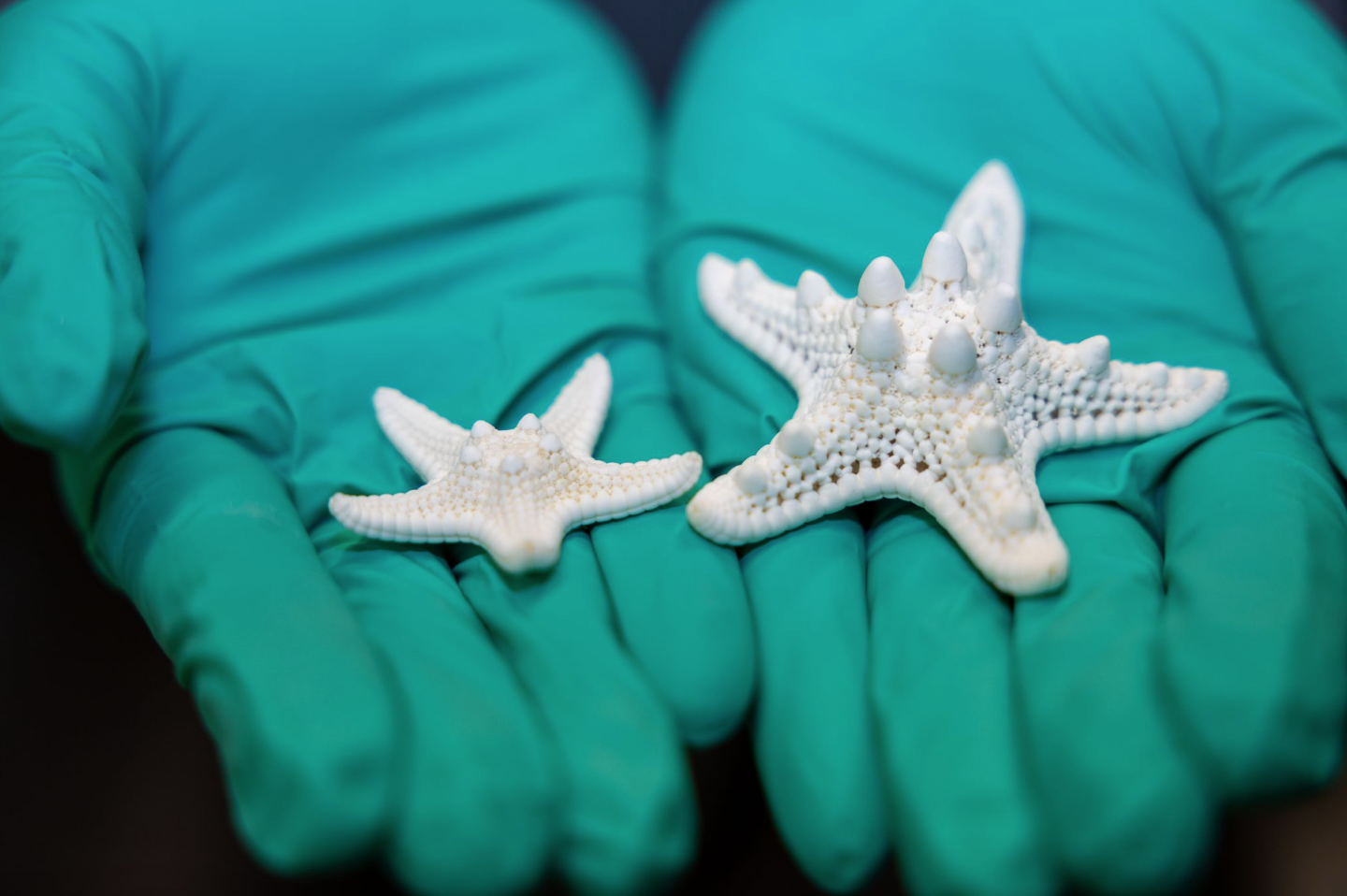
That question emerged unexpectedly for Ling Li, Associate Professor in Materials Science and Engineering, when his lab and colleagues were investigating how sea stars build lightweight yet resilient skeletons.
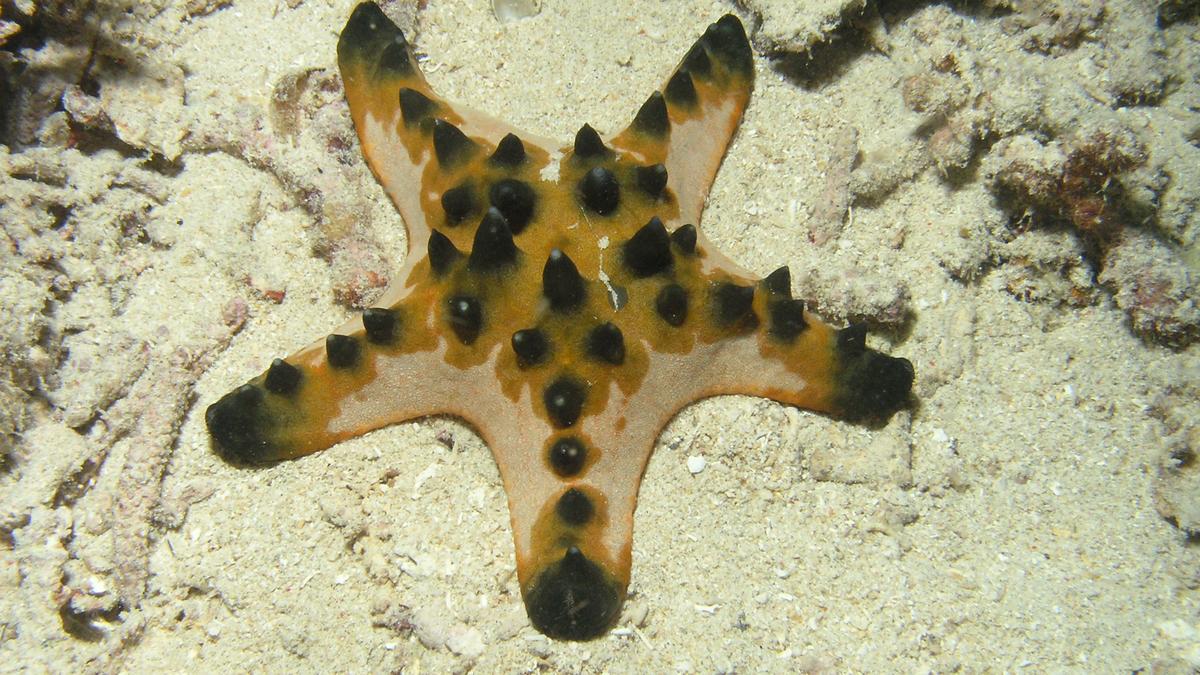
“We were looking at sea stars to understand how nature creates porous skeletal materials that are both strong and lightweight,” says Li. “Then we discovered lens-like structures embedded in the tips of the sea stars’ arms.”
That surprise became the focus of a study published in Proceedings of the National Academy of Sciences (PNAS), where Li, Ph.D. student and first author Liuni Chen and their collaborators from Penn Engineering, Virginia Tech, MIT, Bowdoin College, the University of South Carolina and the Zuse Institute Berlin, revealed that the skeleton of the sea star Protoreaster nodosus contains specialized mineral structures capable of guiding and concentrating light. The finding suggests that nature may have evolved a way to combine mechanical support and optical sensing within the same material system.