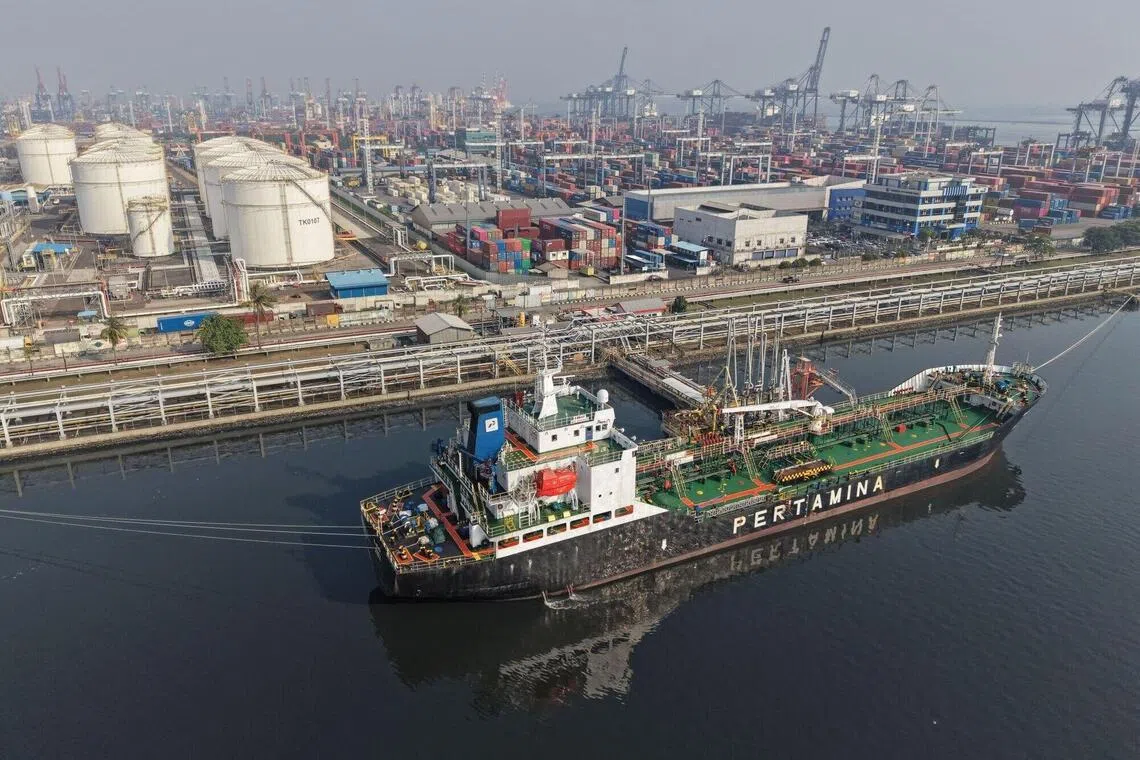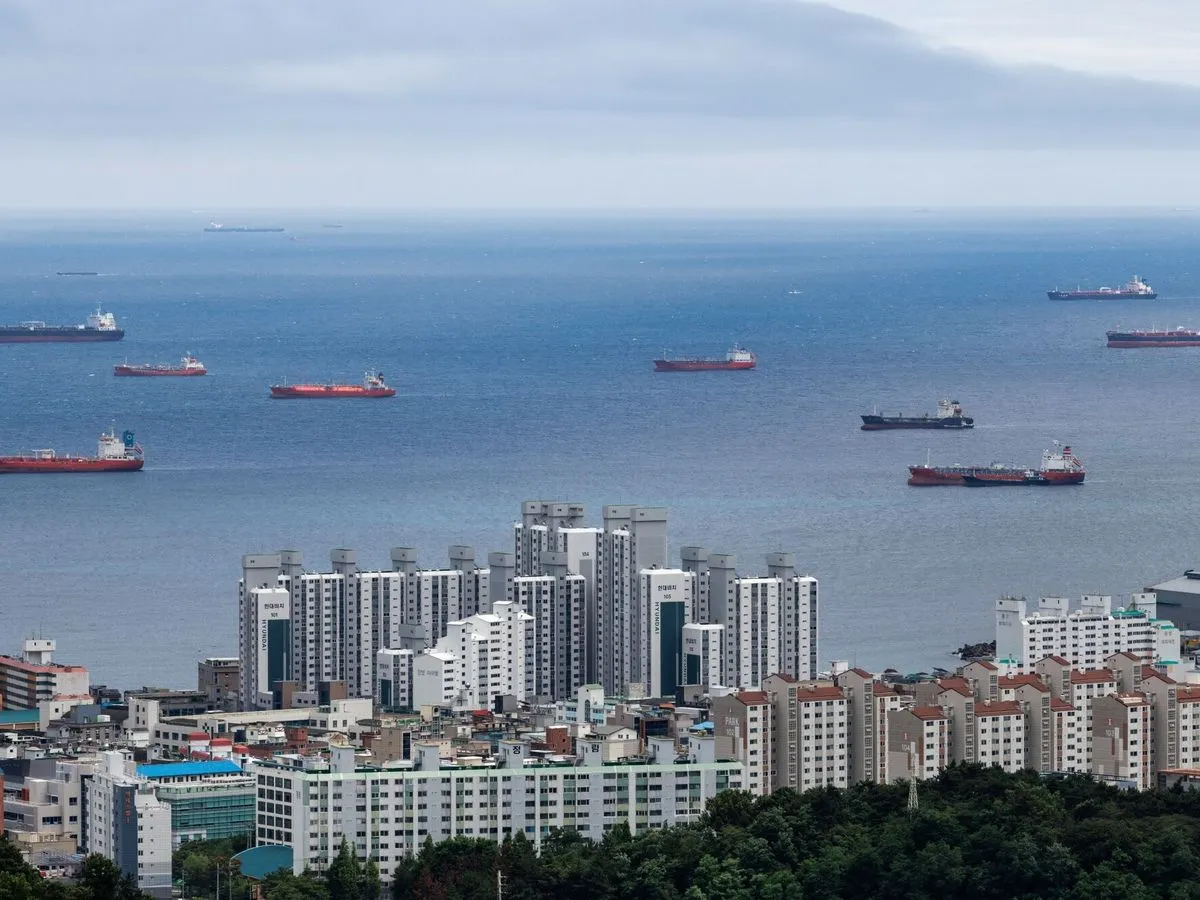
Skip to Content News Archives Economy Energy Oil & Gas Renewables Electric Vehicles Mining Commodities Agriculture Real Estate Mortgages Mortgage Rates Finance Banking Insurance Fintech Cryptocurrency Work Wealth Smart Money Wealth Management Investor Personal Finance Family Finance Retirement Taxes High Net Worth FP Comment Executive Women Puzzmo Newsletters Financial Times Business Essentials More Innovation Information Technology FP500 Podcasts Small Business Lives Told Tails Told Shopping Financial Post Store Obituaries Place a Notice Advertising Advertising With Us Advertising Solutions Postmedia Ad Manager Sponsorship Requests Classifieds Place a Classifieds ad Working Profile Settings My Subscriptions Saved Articles My Offers Newsletters Customer Service FAQ News Economy Energy Mining Real Estate Finance Work Wealth Investor FP Comment Executive Women Puzzmo Newsletters Financial Times Business Essentials HomePMN BusinessOil's Stunning Reversal Rekindles Fears of a Global GlutOil prices are tumbling everywhere as a peace deal between the US and Iran unleashes a wave of supply, overwhelming demand from buyers and prompting talk of a glut of crude.Author of the article: You can save this article by registering for free here. Or sign-in if you have an account.Tankers moored off the coast in Ulsan, South Korea, on Thursday, June 25, 2026. Brent oil erased all of its wartime gains after flows through the Strait of Hormuz ramped up following progress on a US-Iran peace deal. Photo by SeongJoon Cho /Bloomberg(Bloomberg) — Oil prices are tumbling everywhere as a peace deal between the US and Iran unleashes a wave of supply, overwhelming demand from buyers and prompting talk of a glut of crude.Subscribe now to read the latest news in your city and across Canada.Exclusive articles from Barbara Shecter, Joe O'Connor, Gabriel Friedman, and others.Daily content from Financial Times, the world's leading global business publication.Unlimited online access to read articles from Financial Post, National Post and 15 news sites across Canada with one account.National Post ePaper, an electronic replica of the print edition to view on any device, share and comment on.Daily puzzles, including the New York Times Crossword.Subscribe now to read the latest news in your city and across Canada.Exclusive articles from Barbara Shecter, Joe O'Connor, Gabriel Friedman and others.Daily content from Financial Times, the world's leading global business publication.Unlimited online access to read articles from Financial Post, National Post and 15 news sites across Canada with one account.National Post ePaper, an electronic replica of the print edition to view on any device, share and comment on.Daily puzzles, including the New York Times Crossword.Create an account or sign in to continue with your reading experience.Access articles from across Canada with one account.Share your thoughts and join the conversation in the comments.Enjoy additional articles per month.Get email updates from your favourite authors.Create an account or sign in to continue with your reading experience.Access articles from across Canada with one accountShare your thoughts and join the conversation in the commentsEnjoy additional articles per monthGet email updates from your favourite authorsSign In or Create an AccountorIt’s a staggering turnaround: less than three months ago the world’s main physical oil benchmark hit an all-time high, and only a few weeks ago senior industry executives were warning that the world’s inventories were reaching critically low levels.Today, the future of the conflict is still uncertain and much Middle Eastern production remains offline. Global inventories have indeed been dramatically drawn down during the war. Yet already Brent crude futures have erased all their wartime gains and are trading near $70 a barrel, while the physical oil market is flashing signs of weakness more extreme than any time since the demand collapse of Covid.Get the latest headlines, breaking news and columns.By signing up you consent to receive the above newsletter from Postmedia Network Inc.A welcome email is on its way. If you don't see it, please check your junk folder.The next issue of Top Stories will soon be in your inbox.We encountered an issue signing you up. Please try againFor the global economy, the dramatic switch from famine to feast means that worries of an oil-led inflation spike from the biggest supply disruption on record are all but vanquished. For major oil producers in the Organization of the Petroleum Exporting Countries, it means that questions about how quickly they can restore production may soon be replaced by questions about whether they are ready to curb supply to prop up prices, or ultimately find themselves in a fight for market share.Beyond the immediate impact of the reopening, analysts from Morgan Stanley to Goldman Sachs Group Inc. have warned this week that the market is at risk of a glut heading into next year. “Right now the overwhelming feeling is bearish,” said Kitt Haines, head of oil at Energy Aspects, a consultant.Even before the US and Iran signed a memorandum of understanding to reopen the Strait of Hormuz in mid-June, suppliers inside the Persian Gulf had been ramping up shipments. But in the weeks since, there has been a flood of more than 60 million trapped barrels that were frozen in place when the war began. Both Saudi Arabia and the United Arab Emirates have been at or close to the level of exports they were shipping prior to the Iran war, helped by US military protection while sailing through the Strait of Hormuz, together with pipelines they’ve been using to bypass the waterway. Iranian oil, for years subject to heavy American sanctions, is now free to purchase again after the US issued sanctions waivers.Wartime WorkaroundsThe recovery in Hormuz is happening at the same time that much of the oil market’s wartime workarounds are still in place. China, which helped to stabilize the global market by drastically reducing its purchases, has remained largely on the sidelines. And every week millions of barrels are continuing to flow from emergency underground storage caverns on the US Gulf Coast, part of a record 400 million-barrel release designed to alleviate an oil crisis that no longer exists. “The market is facing the risk of a temporary glut as trapped oil finally re-enters a system that has already spent months learning how to function without it,” Natasha Kaneva, the head of commodities research at JPMorgan Chase & Co., said in a note. “The barrels now exiting Hormuz increasingly have nowhere to go except China. But China is not buying.”It’s a surplus that’s visible on both the trading screens of Wall Street and the supertankers plowing the world’s oceans. In recent days each of the main futures benchmarks in the US, Europe and Asia have traded in a contango pattern. That structure incentivizes traders to put barrels into storage tanks when supply outstrips demand. UAE oil is traveling as far afield as the US, and is even being offered to buyers in Hawaii. One vessel laden with Venezuelan crude sailed more than 10,000 miles to the coast of India and has now been idling for more than two weeks without a buyer. A key reason for those unusual journeys is that China, which has slashed imports by some 5 million barrels a day compared to pre-war levels, has yet to meaningfully boost purchases.In a sign of how weak Chinese buying has been, grades of oil for which Chinese refiners are the typical buyers have collapsed to historic lows. The physical price of Oman crude – a key grade of Middle Eastern oil — has sunk to a $4 discount to the Dubai benchmark, the biggest since 2020. A cargo of Republic of the Congo’s Djeno crude has not sold despite being offered at a $14 discount to Brent – the widest on record. While there have been some indications of Chinese refiners opportunistically buying cargoes of Middle Eastern crude in the past week, analysts say they are not yet sizable enough to reverse the sentiment.“Chinese buyers remain conspicuously absent,” Citigroup Inc. analysts including Francesco Martoccia said in a note. “Without a meaningful return of Chinese demand, the incremental barrels being pushed into the market simply deepen the emerging surplus.”One-Off BoostTo be sure, there are reasons to think that the physical crude market may not stay so weak for long. The initial rush of oil that has been stuck in Hormuz is by definition a one-off boost to supply. Production in the Gulf is rising rapidly but remains some way off pre-war levels, with a Bloomberg survey showing OPEC production was 28% below February levels in June.Oil products markets are looking stronger than crude. Benchmark diesel futures in Europe cost almost $50 a barrel more than crude, with traders concerned about a sharp drop last month in Russian shipments and even a potential export ban. The gasoline market is also under pressure, with stockpiles in the US well below seasonal norms thanks in part to refiners focusing on jet fuel production in recent months.And releases from strategic petroleum reserves are set to slow to a near-halt in the next month, according to the International Energy Agency. Some analysts expect governments will rapidly look to rebuild their stockpiles, adding to demand and helping to absorb any surplus.What comes next will likely depend on three things: whether the shaky peace deal can stick, whether the OPEC+ group of producing nations is willing to curb its production rebound in order to protect prices, and China.Jorge Leon, head of geopolitical analysis at Rystad Energy who previously worked at the OPEC secretariat, says that the normalization of flows through Hormuz will pose tough questions to the group. “The real challenge will come once flows normalize, inventories rebuild and the group has to move from adding barrels back to defending the market,” he said. “That is when the question becomes not how much OPEC+ can produce, but who is willing to cut.”As for China, some believe that the prospect of sharply lower prices as Middle Eastern producers kick off a new monthly sales cycle in the coming days could tempt Chinese refiners back to the market.“Iranian oil is struggling to sell, despite the waiver. And in China, crude from the UAE and Iraq is even cheaper than Iranian,” says Homayoun Falakshahi, a senior analyst at intelligence firm Kpler Ltd. “For a recovery, you need China to come back — but I think we’re close to the bottom.”—With assistance from Jack Wittels, Sherry Su, Bill Lehane and Christopher Charleston. Join the Conversation This website uses cookies to personalize your content (including ads), and allows us to analyze our traffic. Read more about cookies here. By continuing to use our site, you agree to our Terms of Use and Privacy Policy.
Oil's Stunning Reversal Rekindles Fears of a Global Glut
Oil prices are tumbling everywhere as a peace deal between the US and Iran unleashes a wave of supply, overwhelming demand from buyers and prompting talk of a glut …
1,739 words~8 min read