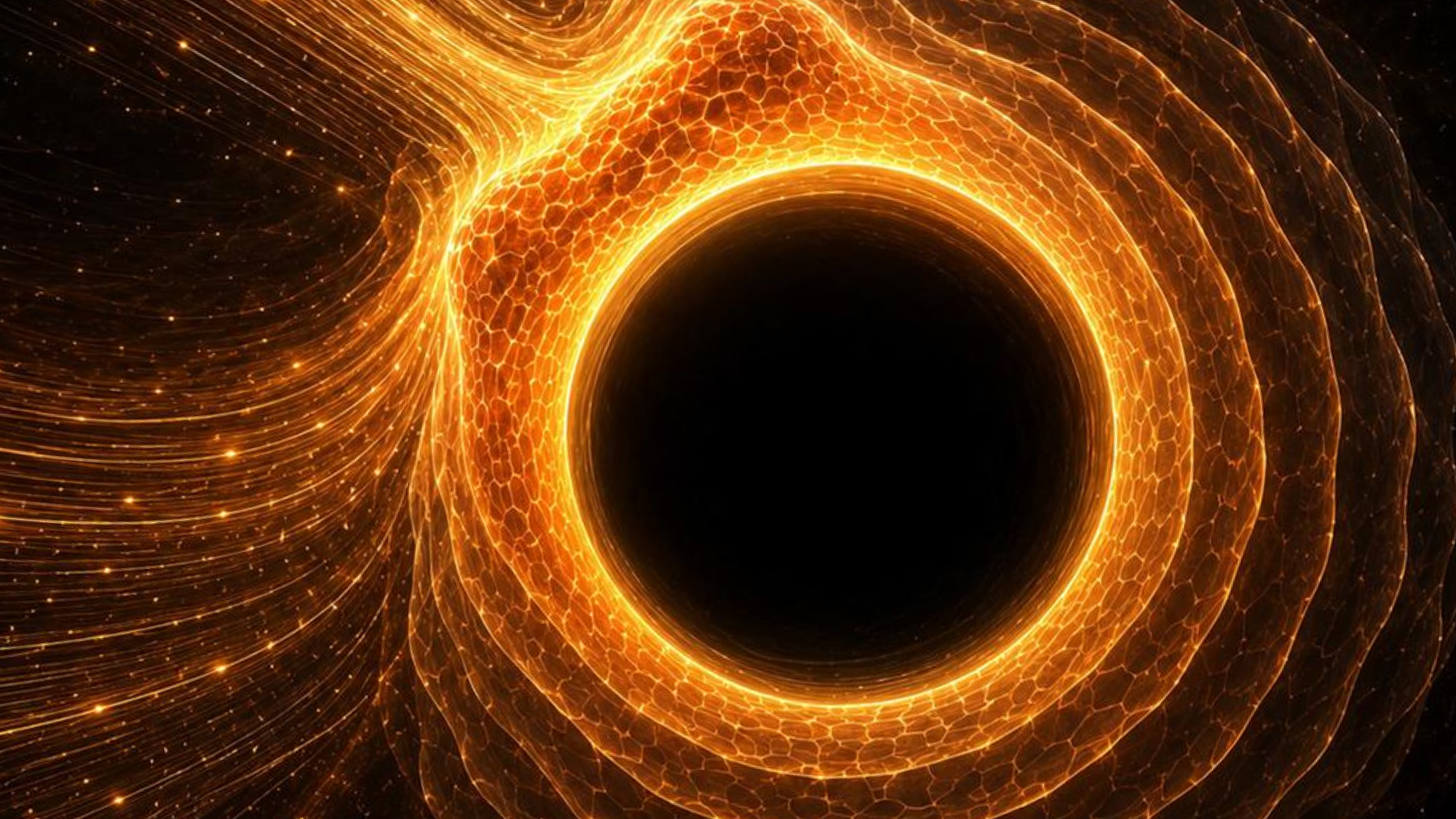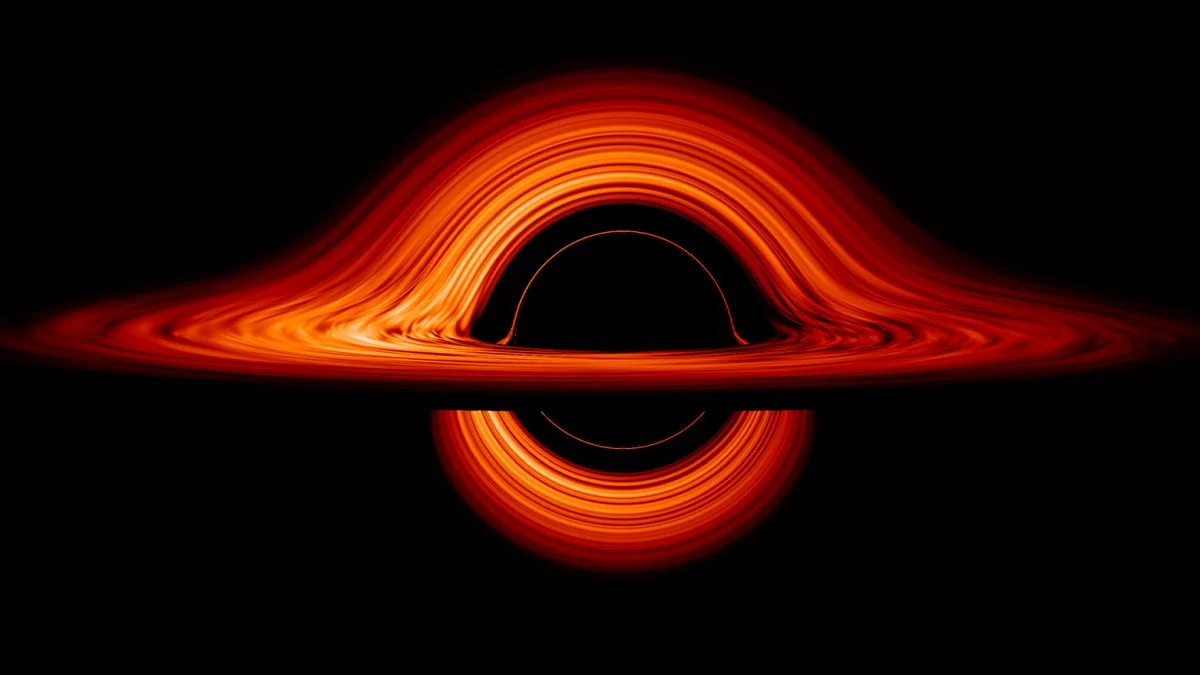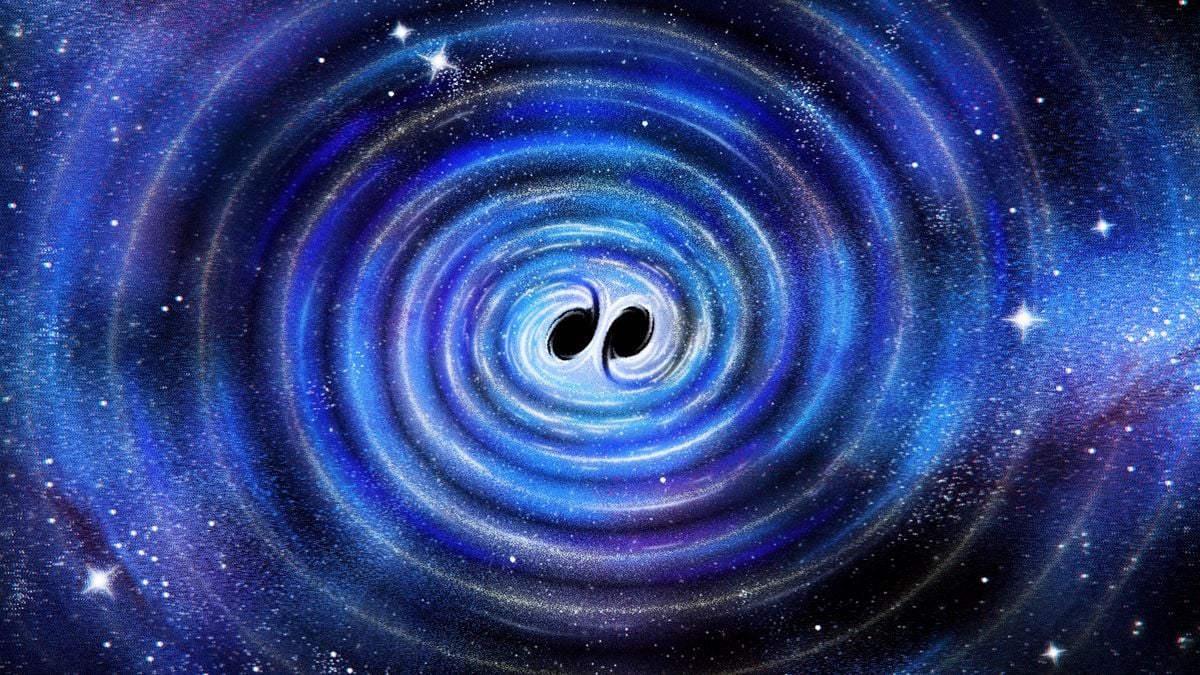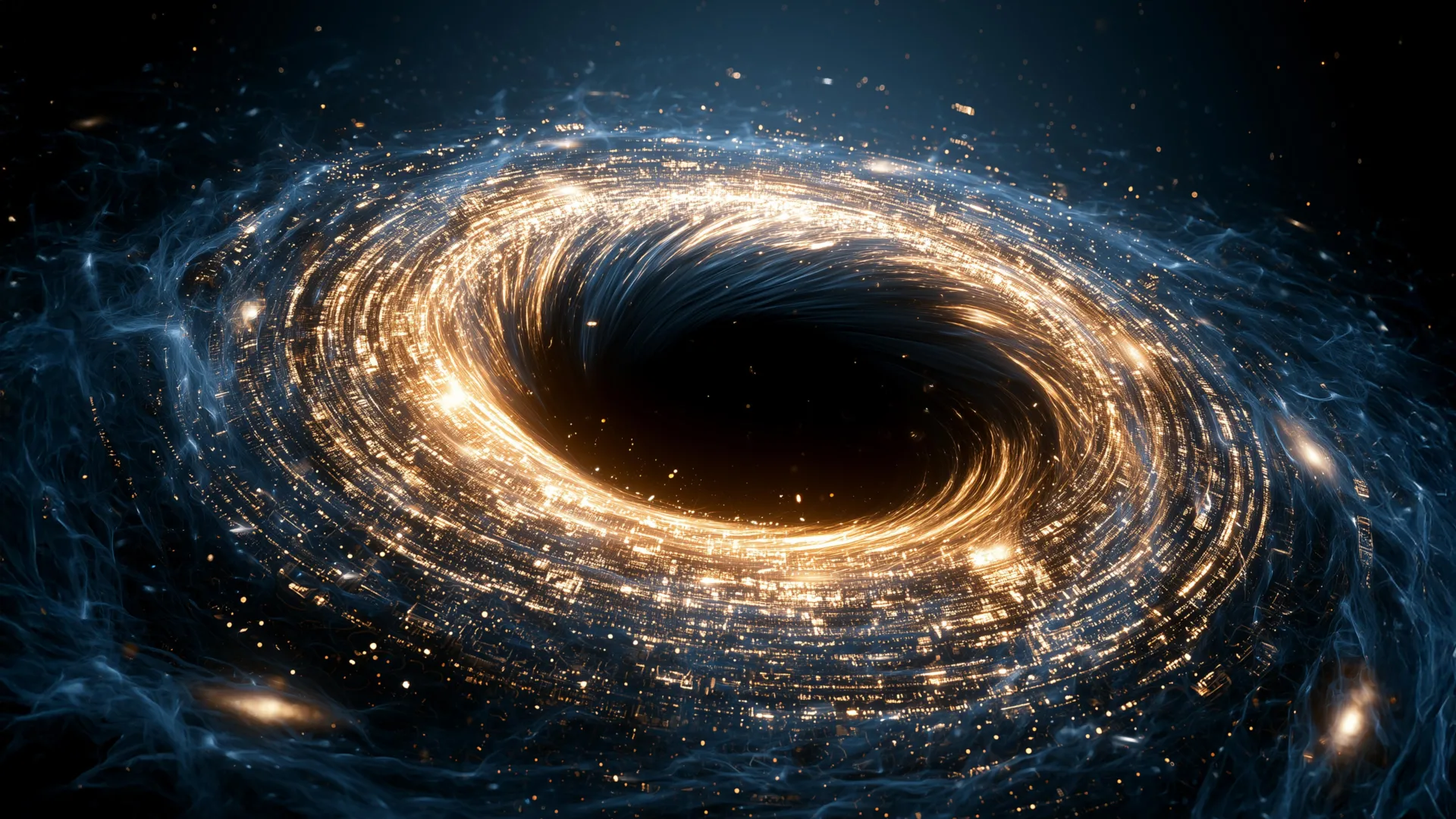
For decades, physicists have wrestled with one of the deepest puzzles in modern science: the "black hole information paradox." Now, a new theoretical study suggests a possible solution, one that could also shed light on another major mystery in physics, the origin of the mass of fundamental particles.
The paradox traces back to work by Stephen Hawking in the 1970s. Using semi-classical calculations, Hawking showed that black holes are not completely black. Instead, they emit a faint form of radiation that slowly drains their energy, causing them to shrink and eventually disappear.
That result created a serious problem. According to quantum mechanics, information cannot be destroyed. Yet if a black hole evaporates completely, all information about the matter that fell into it appears to vanish as well. This apparent contradiction became known as the black hole information paradox.
A new study led by Richard Pinčák and published in General Relativity and Gravitation proposes a different outcome. The researchers suggest that the answer may lie in the geometry of a higher dimensional universe.
Extra Dimensions and Twisted Spacetime