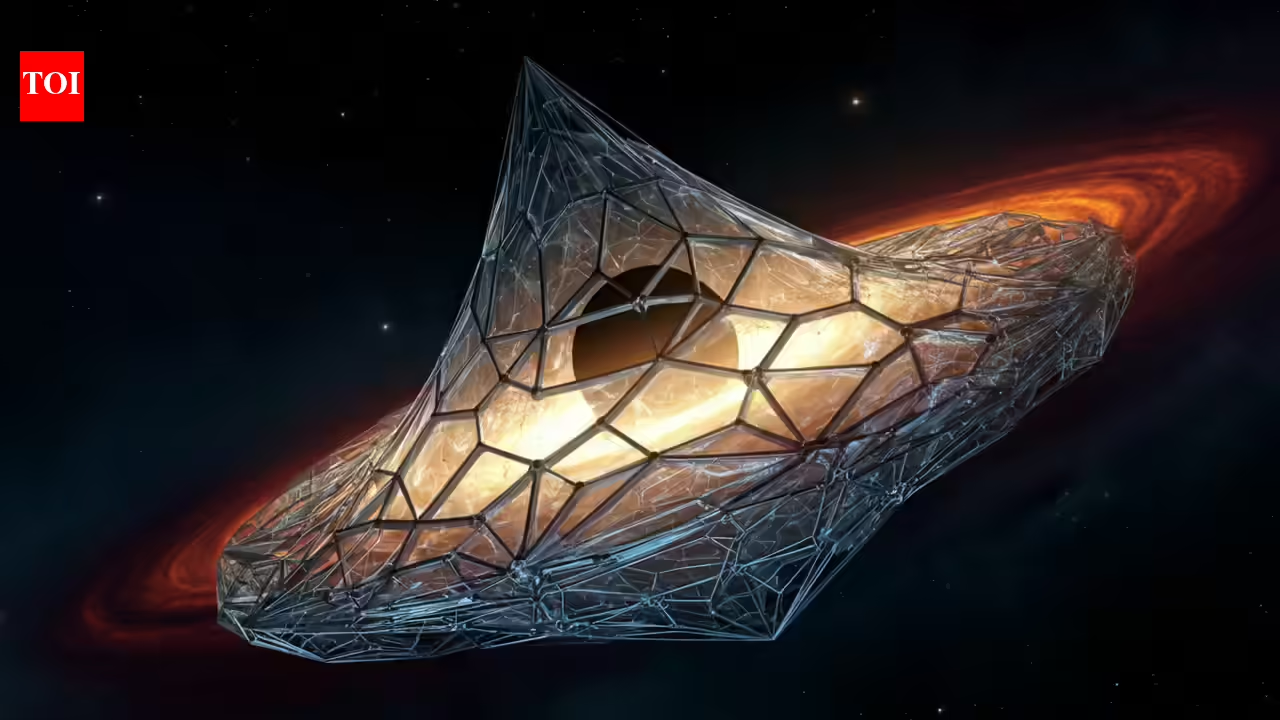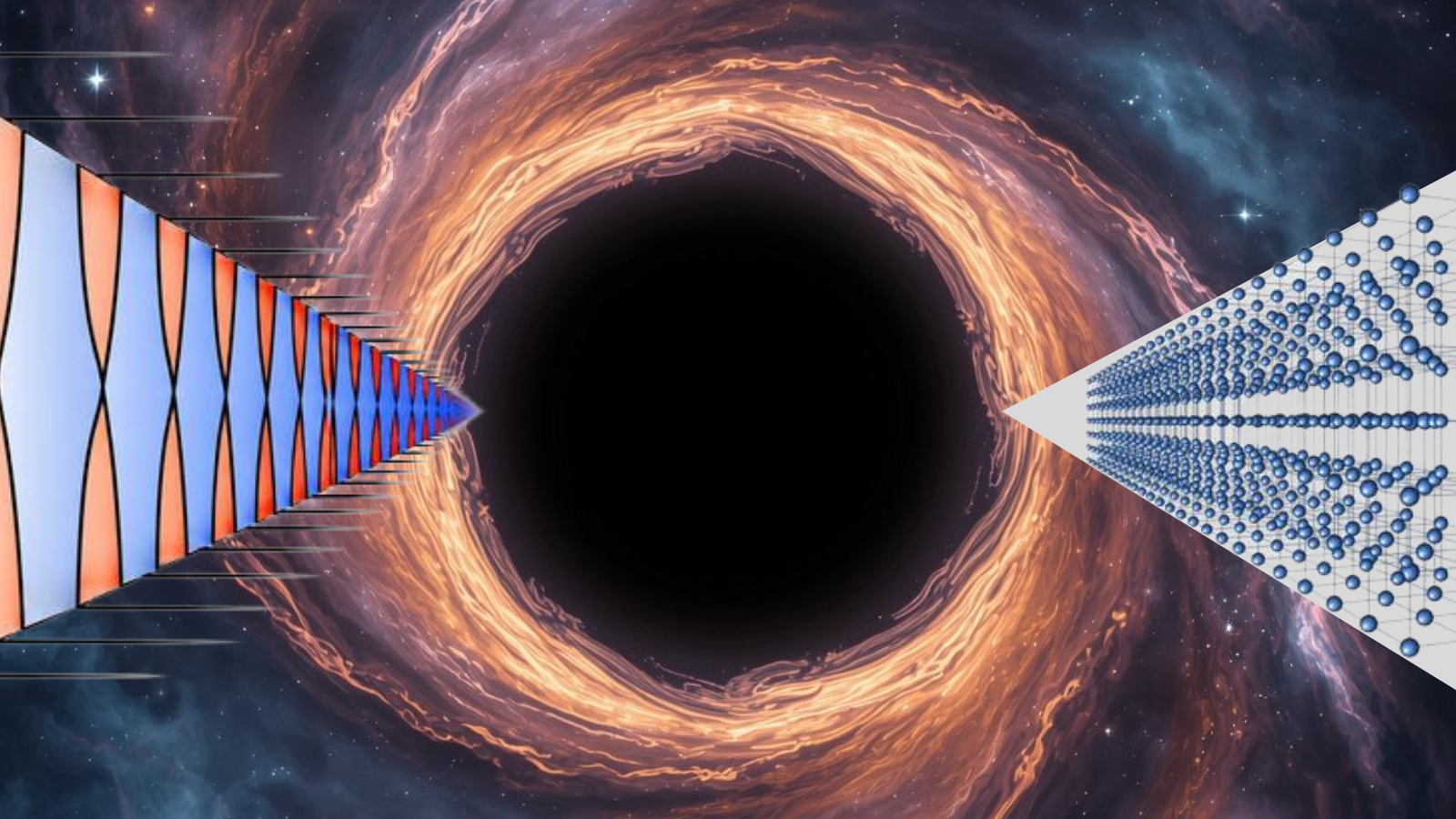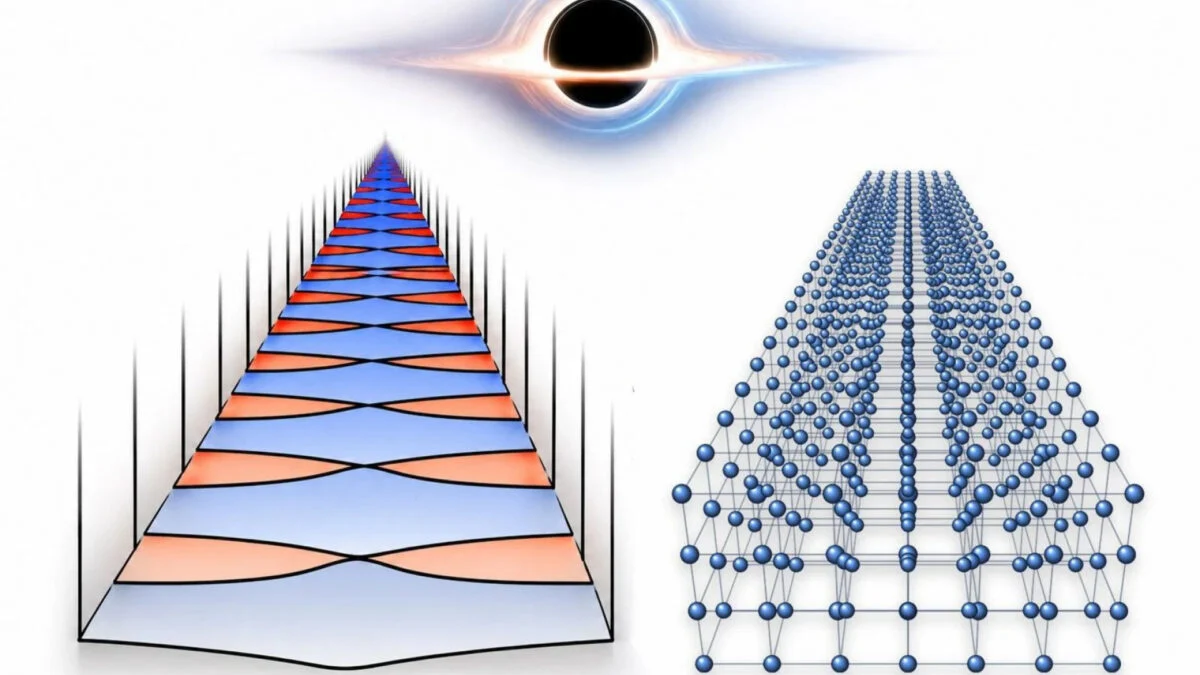
In 1993, Canadian physicist Matthew Choptuik demonstrated black holes may emerge spontaneously from critical collapse, during which spacetime curvatures organize themselves into a defined, repeating crystal-like pattern. But researchers weren’t quite able to describe this nicely in formulaic language—until now. A team of theoretical physicists say it’s found the long-sought formula for how spacetime crystals could collapse into black holes, reporting its work in a recent Physical Review Letters paper. To be clear, the heavily mathematical study will need further testing via empirical investigations. But the theoretical results, nevertheless, offer astronomers more precise parameters for exploring a fascinating alternative for how black holes emerged, particularly in the universe’s earliest days. “Depending on the desired precision, we can systematically improve our formulas using additional approximation methods,” Florian Ecker, the study’s co-author and a theoretical physicist at TU Wien in Austria, said in a statement. “This gives us a new method for studying black-hole-related phenomena that could previously not be analyzed analytically.”
Small ripples, big consequences An example of gravitational lensing producing an Einstein Ring (and a smiley face) around galaxy cluster SDSS J1038+4849. Credit: NASA/ESA Albert Einstein’s general relativity views gravity as the curvature of spacetime. As one of the most successful theories in physics, this idea has been confirmed observation after observation, particularly through faraway, massive objects that only make themselves visible to us via gravitational lensing, which warps and magnifies their light.