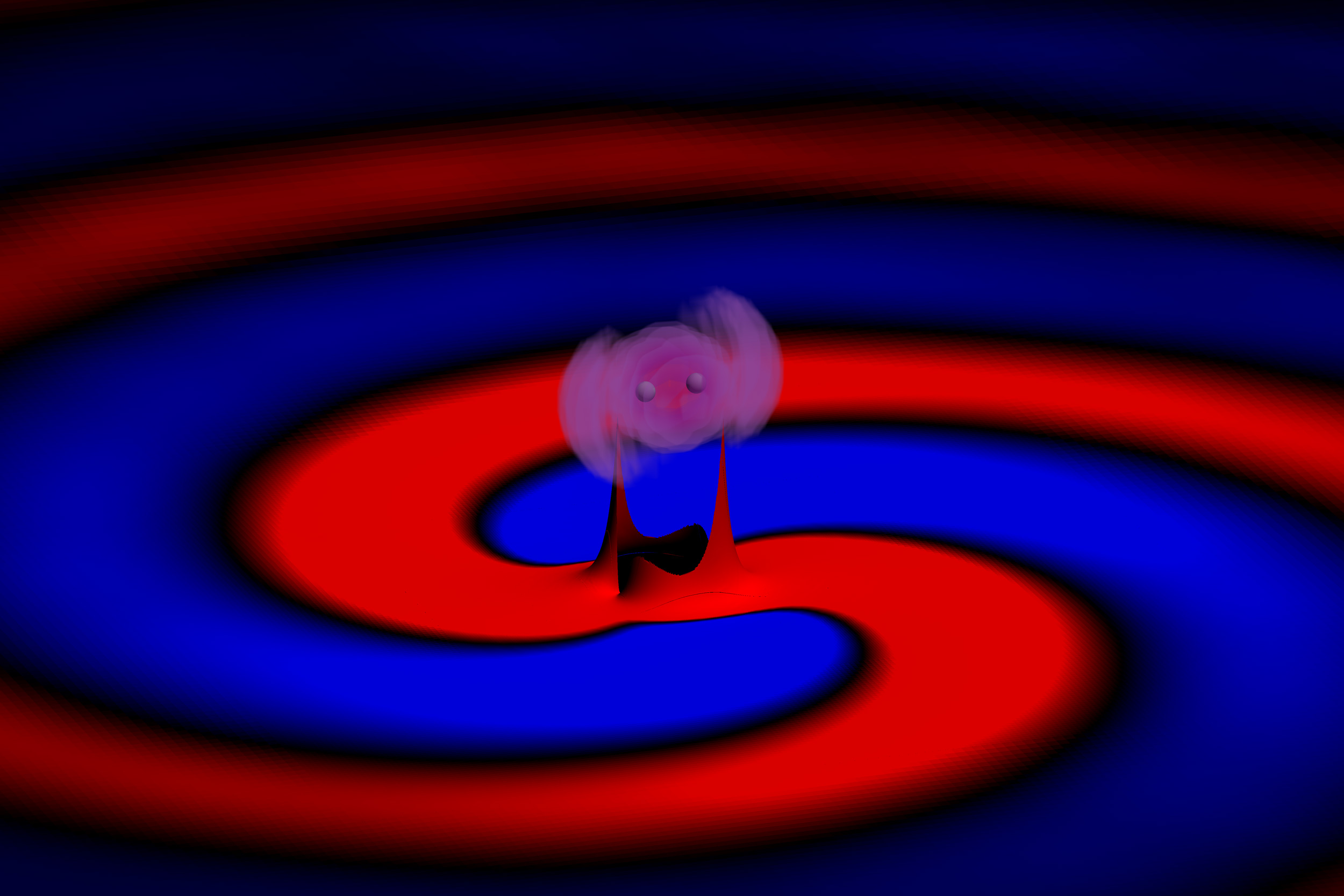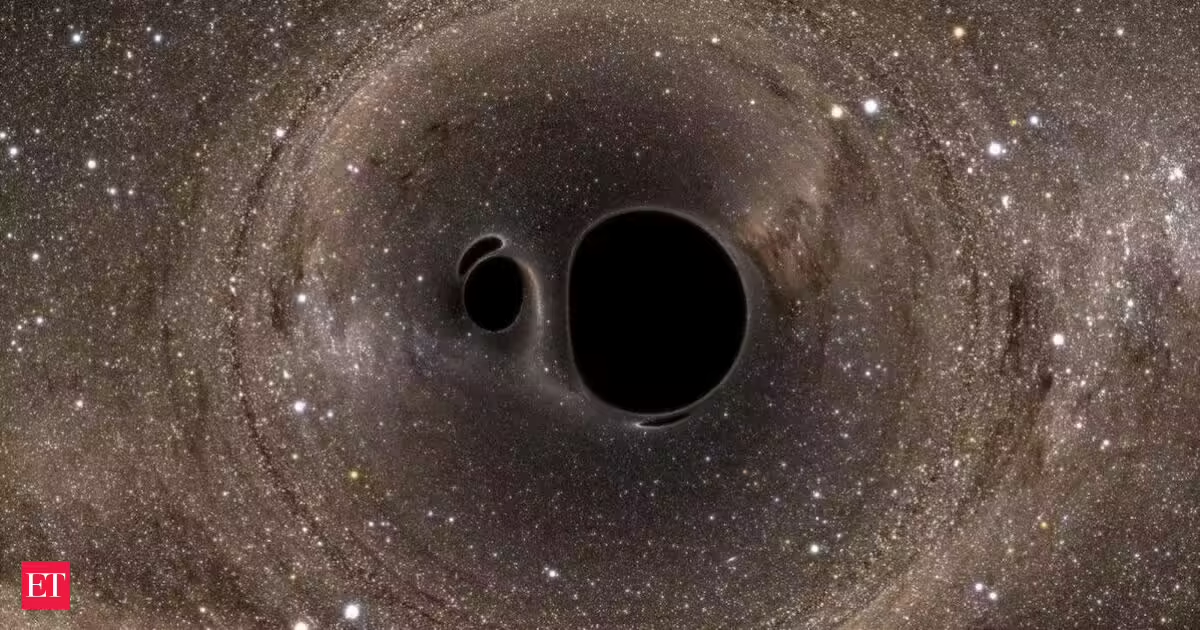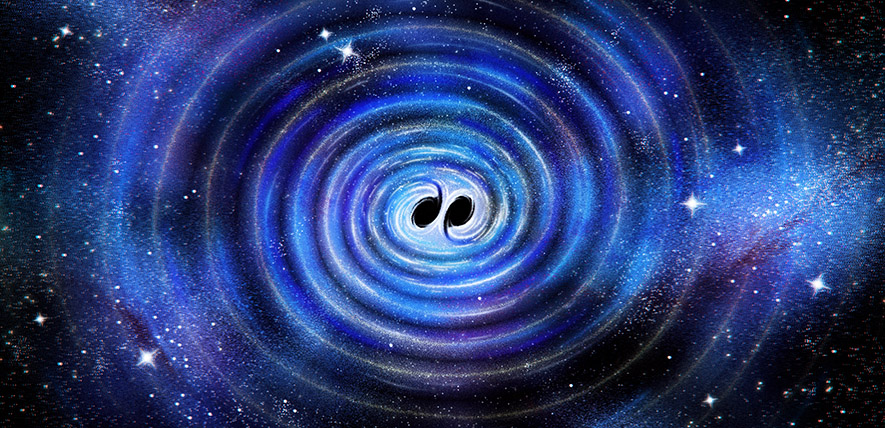
Researchers have developed a technique to analyse how black holes ‘ring’ when they collide and merge: one of the universe’s most dramatic events.
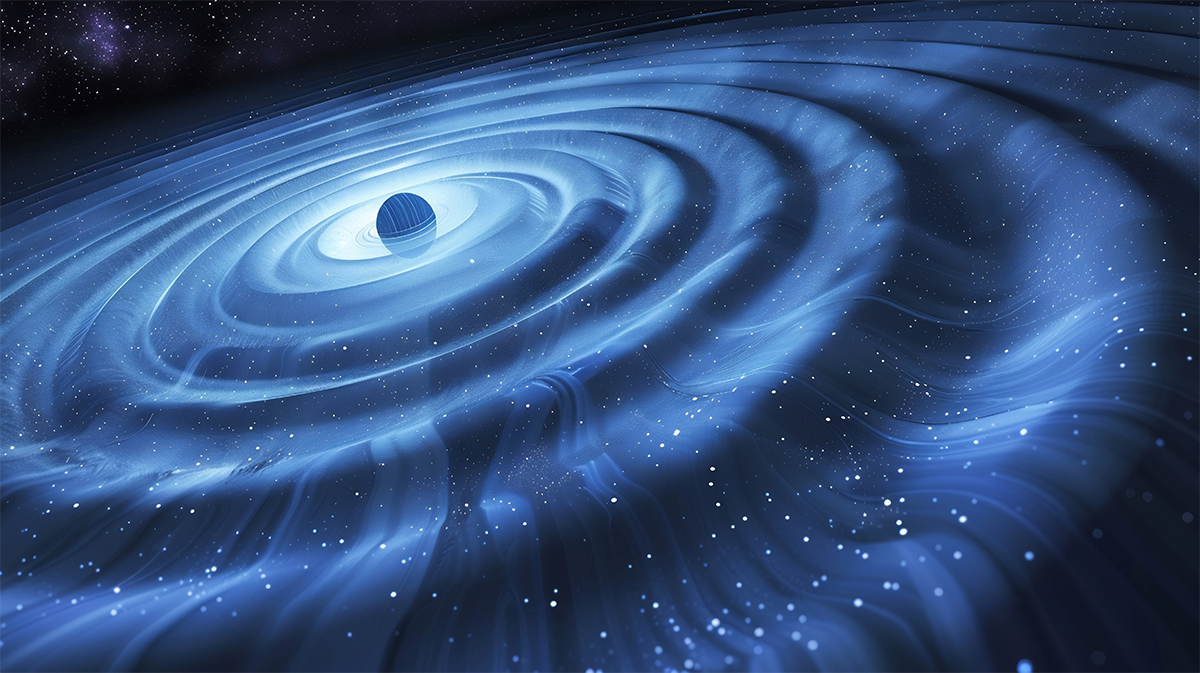
When black holes merge, the collision produces a new, larger black hole that ‘rings’ like a plucked guitar string or a bell while it settles into its final, stable shape. But instead of sound waves, the new black hole rings with gravitational waves: ripples in spacetime first predicted by Albert Einstein.
The new black hole vibrates at a specific set of frequencies, depending on its mass and spin, which helps scientists learn about the object formed in the collision.
These vibrations, known as quasinormal modes, are the fingerprint of a black hole. Detecting them is central to testing Einstein’s general theory of relativity in the most extreme gravitational environments in the universe.
Now, researchers from the University of Cambridge have developed a method to identify and catalogue these modes with greater accuracy than before. Writing in the journal Physical Review Letters, they outline how they sifted through computer simulations of black hole mergers and identified not just the fundamental ‘note’ the black hole rings at, but also the ‘overtones’, the fainter harmonics that fade away more quickly.