Every year, smartphone companies introduce faster processors, better cameras, brighter displays, and new artificial intelligence features. While many people use the same phone for four or five years, others line up for launch day or place a preorder as soon as a new model is announced. To some observers, this habit may seem wasteful or purely status-driven. Psychology suggests the picture is more nuanced.People differ in how much they enjoy novelty, technology, and new experiences. For some, upgrading to the newest phone is less about impressing others and more about curiosity, personal identity, and the excitement of exploring something new.Of course, not everyone upgrades for the same reason. Some people need newer devices for work, photography, gaming, or software compatibility. However, several well-established psychological theories help explain why many people are naturally drawn to the latest technology.Some people are naturally drawn to noveltyOne of the strongest explanations comes from Novelty Seeking, a personality trait studied by psychiatrist C. Robert Cloninger. Novelty seekers enjoy exploring new experiences, products, and ideas.You Might Also Like:For them, buying a new phone isn't simply about owning another device. It's about discovering new features, experimenting with technology, and experiencing something different.Imagine someone who eagerly tests new AI tools, camera modes, and productivity features. The excitement comes from exploration itself.New purchases provide a temporary emotional boostAnother explanation comes from Hedonic Adaptation. Psychologists have found that people quickly become accustomed to improvements in their lives. The excitement of a brand-new smartphone gradually fades as it becomes part of everyday routine.When another model is released with upgraded features, the cycle of excitement begins again. This doesn't mean people are shallow, it reflects a normal psychological tendency to adapt to positive changes over time.You Might Also Like:Smartphones can become part of personal identityAnother useful theory is Extended Self Theory, developed by consumer psychologist Russell Belk. The theory suggests people often view meaningful possessions as extensions of who they are.For some individuals, a smartphone isn't just a communication device. It represents creativity, innovation, productivity, or a passion for technology. Someone who works in content creation, photography, or app development may see the newest device as part of both their lifestyle and identity.Technology helps people express themselvesPsychologists studying Self-Expression have found that people use products to communicate aspects of their personality. Some personalize their phones with unique cases, wallpapers, and accessories. Others enjoy owning cutting-edge devices because they identify as early adopters or technology enthusiasts.Just as clothing or cars can express identity, smartphones can also become part of how people present themselves.Some people dislike missing out on new experiencesAnother explanation involves the Fear of Missing Out (FOMO). Research shows that some individuals experience discomfort when they believe others are enjoying experiences they are missing.When friends begin using new AI features, better cameras, or improved productivity tools, some people feel motivated to upgrade so they don't feel left behind. The motivation isn't always social status. Sometimes it's simply the desire to stay current with rapidly changing technology.Curiosity encourages explorationPsychologists also describe Openness to Experience, one of the Big Five Personality Traits. People who score high in openness tend to enjoy learning, creativity, innovation, and experimentation. Trying the newest smartphone often fits naturally with this personality trait.The appeal lies in discovering what technology can do rather than simply owning an expensive device.Upgrading doesn't always mean someone is materialisticA common misconception is that people who frequently buy new phones are obsessed with status or money. Psychology doesn't support such a broad conclusion.Many are motivated by curiosity, work requirements, creative interests, or a genuine enthusiasm for technology. Others simply enjoy learning about innovation. At the same time, for some individuals, social status may play a role, but it is far from the only explanation.FAQsWhy do some people always buy the newest phone?Psychologists say curiosity, novelty seeking, technology enthusiasm, and interest in innovation often motivate frequent upgrades.Does upgrading phones frequently mean someone is materialistic?Not necessarily. Many people upgrade because of work, hobbies, photography, productivity, or genuine interest in new technology.
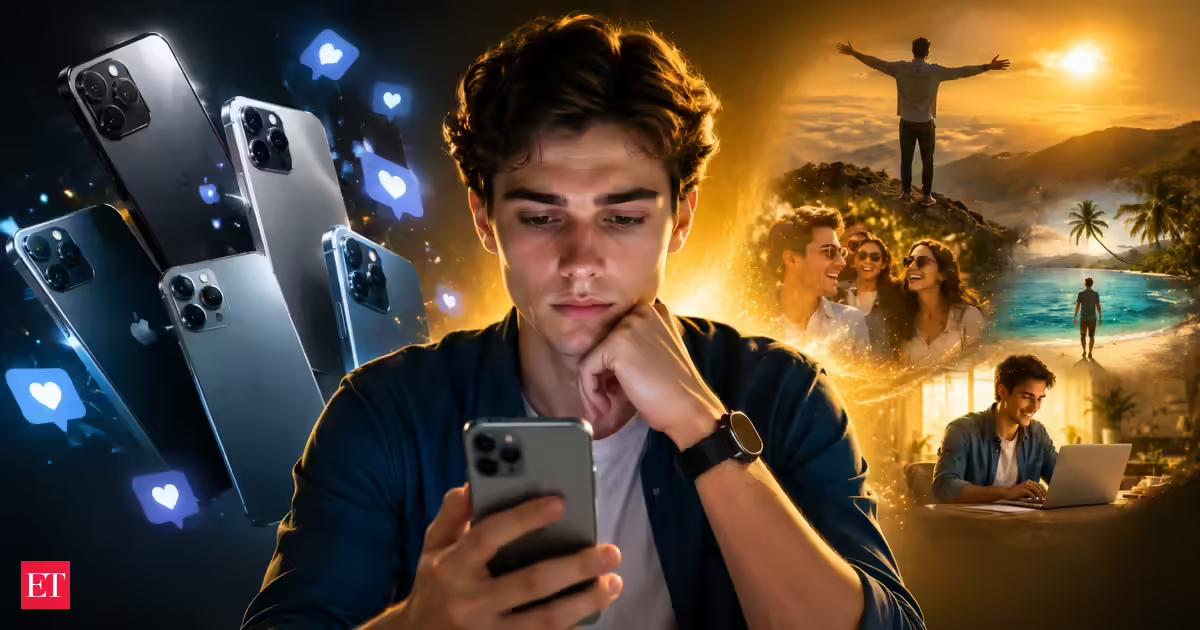
Psychology says people who keep changing their phones and always have the latest ones aren't necessarily showing off, they may be chasing more than technology
Psychology suggests that people who always upgrade to the latest smartphones aren't necessarily trying to impress others. For many people, a new phone isn't just another gadget, it's an opportunity to explore what's possible next.
663 words~3 min read