(Image credit: Tom's Guide)
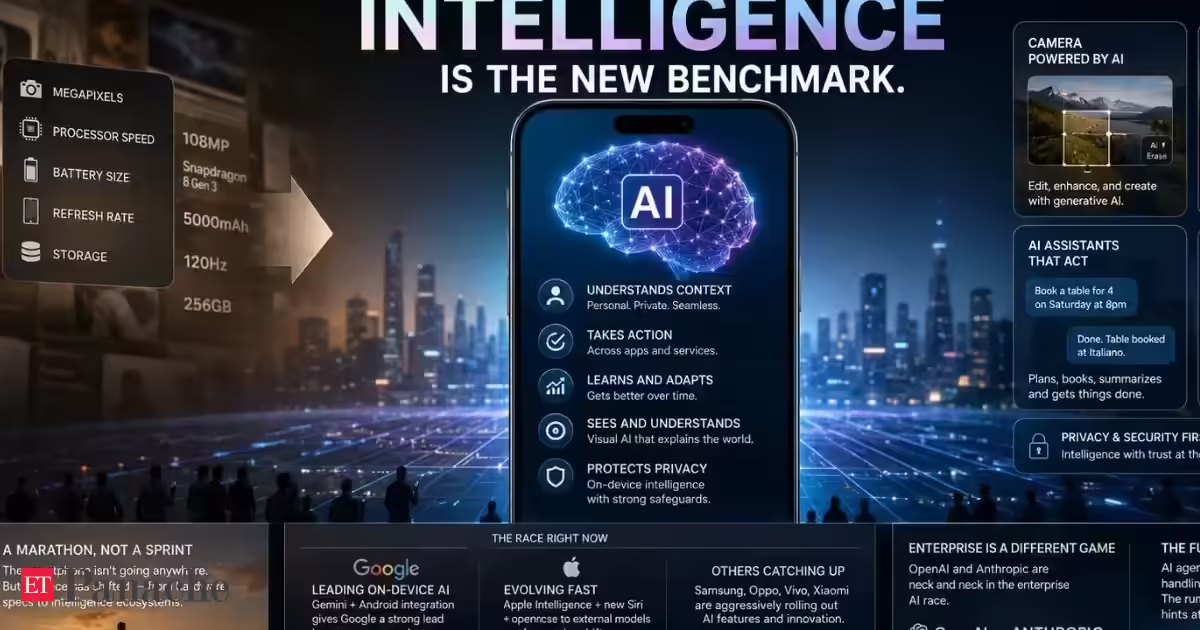
It's no secret that phones have been pretty stagnant for the past several years. In fact, the last time phones started doing something truly original was eight years ago, when the first foldable phones hit the scene, and even that was an exception rather than the norm. Incremental updates are just part and parcel of the phone industry.In recent years, phone companies have been trying to offer a different solution: AI.Rather than offering major upgrades to the phones themselves, it's all about the newest AI features and capabilities that are on offer. While I will be the first to admit that software is just as important as hardware, it's starting to feel like phone makers are using AI as a crutch to cover for their own weak upgrades — and I'm rather sick of it.Considering flagship phones cost several hundred dollars, and over a thousand in many cases, we need more than just a few more flashy AI-centric features that may or may not be useful.Overreliance on AI is lazy
(Image credit: Tom's Guide)Yes, I get it, having a strong AI means the features on your phone are bigger and better than they otherwise could have been. In theory, features like Samsung Now Nudge or Google Lens wouldn't be as effective if there weren't an AI model working in the background to analyze all the relevant data and figure out exactly what the user wants and needs.But this doesn't change the fact that AI seems to be the only thing any phone company is willing to talk about right now. The emphasis does not seem to be on making better phones; it's about filling them up with as many AI features as possible at the expense of other advancements.Take, for instance, the Samsung Galaxy S26 Ultra. It is, without any doubt, one of the best phones you can buy right now. But its hardware hasn't changed all that much from the Galaxy S25 Ultra that was released last year. The biggest upgrades are the addition of the Privacy Display and the increased wired and wireless charging speeds. But everything else? The differences are so minor that the majority of people won't notice any difference.Get instant access to breaking news, the hottest reviews, great deals and helpful tips.The same was true of the Pixel 10 Pro. The phone did come packing Qi2 wireless charging, complete with full magnetic support; the rest of the phone is only marginally different from the Pixel 9 Pro. The camera quality is identical, battery life has barely improved, and the Tensor G5 is honestly not that impressive.What both these phones have in common is how much their respective makers invested in the additional AI features. There were a lot of them, too, ranging from 100x Super Res Zoom to a more advanced Circle to Search. Potentially very useful things to have on your phone, but they aren't exactly major selling points. Certainly not when the hardware itself hasn't really improved by all that much.AI features rarely stay exclusive for long