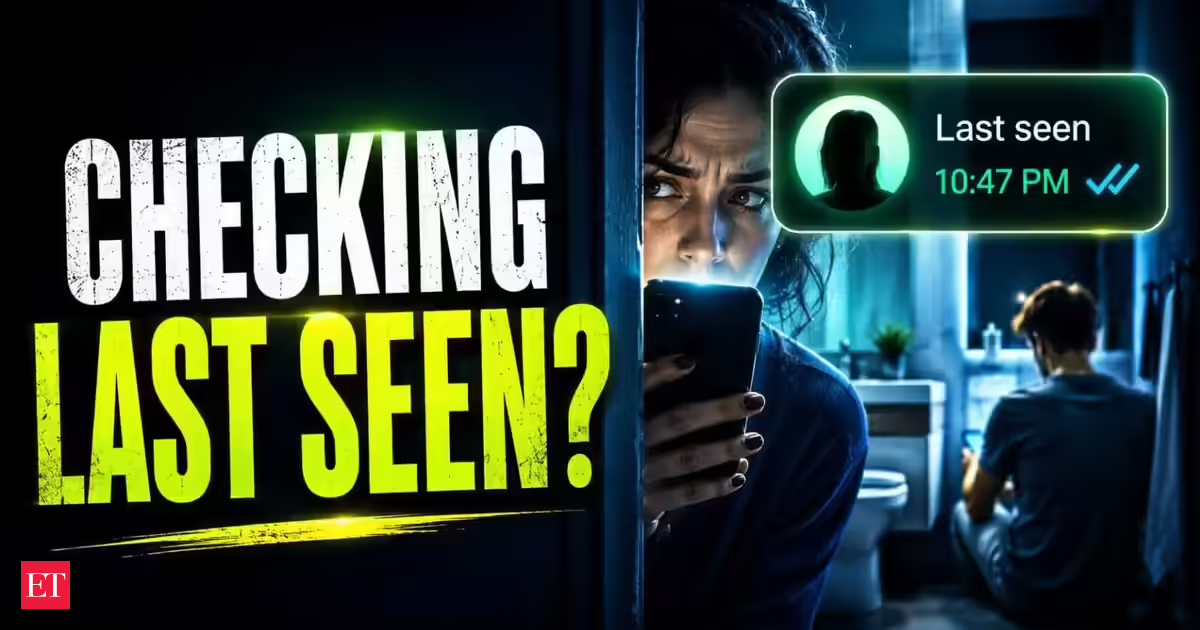
If you think about it, all of us have been in this situation at least once. You unlock your phone, open WhatsApp, Instagram, Snapchat, or your messages app, check for a notification, close it, and then repeat the same cycle a few minutes later. Sometimes nothing has changed at all. Yet somehow, your brain convinces you to check again.n The strange part is that you are often not waiting for everyone's messages. You are waiting for one specific person. A crush. A romantic partner. A situationship. Someone you deeply care about. Psychology suggests this behavior is not simply obsession or poor self-control. In many cases, it is a complex interaction between attachment, anticipation, uncertainty, and the brain's reward system. The phone is not always the real attraction. It is the emotional possibility attached to it.Why The Brain Gets Addicted To PossibilityOne of the strongest explanations comes from Variable Reward Theory, a concept popularized by behavioral psychologist B.F. Skinner. The brain becomes highly engaged when rewards arrive unpredictably. Unlike a scheduled event, uncertain rewards create stronger anticipation. Psychology says people who keep opening and closing their phones waiting for a message, are not obsessed: Why the brain gets hooked on the possibility of one special personA message from someone special follows this exact pattern. You do not know when it will arrive. It could come in one minute, one hour, or tomorrow. That unpredictability keeps the brain alert. Interestingly, the anticipation itself often becomes more stimulating than the message. This is the same principle that makes people repeatedly refresh social media feeds. The brain starts chasing possibility.Why One Person Can Quietly Control Your MoodPsychologists also connect this behavior to Attachment Theory, developed by psychiatrist John Bowlby. Humans naturally seek emotional closeness and reassurance from important relationships. When someone becomes emotionally significant, their actions begin carrying greater psychological weight.A simple message can suddenly influence your mood for hours. If they reply quickly, you may feel happy. If they take longer than usual, anxiety can appear. This emotional dependence is particularly common when the relationship is new, uncertain, or undefined. The brain starts treating communication as evidence of connection.You Might Also Like:Why Situationships Make The Habit WorseModern dating has introduced a unique problem. Many relationships today exist in ambiguous spaces. People may talk every day without official labels or clear expectations. Psychologists call this Ambiguous Loss. Ambiguous loss occurs when something is emotionally present but psychologically uncertain.You are connected, but not fully committed. This uncertainty creates a powerful emotional loop. The brain constantly searches for clues. A delayed response suddenly feels meaningful. A heart emoji feels significant. A missing reply becomes a source of worry. Without clarity, people often become hyperfocused on communication patterns.Why Opening Apps Repeatedly Feels AutomaticAnother explanation comes from Habit Loop Theory, popularized by researcher Charles Duhigg. Every habit generally contains three components: Cue, Routine, RewardFor example:You Might Also Like:Cue: Thinking about the personRoutine: Opening the messaging appReward: The possibility of receiving a message Psychology says people who keep opening and closing their phones waiting for a message, are not obsessed: Why the brain gets hooked on the possibility of one special personAfter enough repetition, the brain automates the cycle. This explains why people often unlock their phones without consciously deciding to do so. The habit moves into autopilot mode. Even when no message arrives, the routine continues.Why Social Media Has Intensified This BehaviorTechnology has changed how humans experience relationships. Previous generations waited for phone calls or face-to-face meetings. Today's adults carry constant access to emotional information in their pockets. Features such as:Online status indicatorsRead receiptsLast seen timestampsStory viewsActivity notificationshave created endless opportunities for overthinking. For example, someone may think: "They're online, but they didn't reply.""They posted a story but ignored my message.""Why did they react to someone else's post first?"Psychologists refer to this state as hypervigilance. The brain becomes excessively alert to social signals. Unfortunately, this often increases anxiety instead of reducing it.Why Uncertainty Feels More Powerful Than RejectionOne of the most fascinating explanations comes from Intolerance of Uncertainty. Humans naturally prefer clear answers. Surprisingly, uncertainty can sometimes feel more emotionally draining than rejection itself. A direct answer allows the brain to process reality. Waiting without answers keeps the brain stuck in a state of emotional suspense. This is why people keep checking. They are not necessarily seeking a message. They are seeking certainty.Why Romantic Validation Feels So RewardingPsychologists also point to Self-Verification Theory. Humans naturally seek evidence that confirms they are valued, appreciated, and important. When someone special sends a message, it often acts as a tiny affirmation.The brain interprets it as:"I matter.""They thought about me.""I'm important to them."Over time, these emotional rewards become deeply reinforcing. The danger is that external validation can slowly begin controlling internal peace.The Bigger Psychological TruthPsychology suggests people who repeatedly open and close their phones are rarely addicted to technology itself. More often, they are attached to what the technology represents which are connection, reassurance, possibility. The most important insight is that people are not always waiting for a message. They are waiting for emotional certainty. Perhaps that is why this habit feels so difficult to break. The phone is simply acting as a doorway to hope. And hope, especially in uncertain relationships, can become one of the most powerful rewards the human brain will ever chase.FAQsWhy do people repeatedly check their phones for one person's message?Psychology suggests they are often seeking reassurance, emotional connection, and certainty.Is constantly checking messages a sign of obsession?Not necessarily. It is often connected to attachment patterns, anticipation, and uncertainty.
Psychology says people who keep opening and closing their phones waiting for a message, are not obsessed: Why the brain gets hooked on the possibility of one special person
Psychology suggests that people who constantly open and close their phones are rarely attached to the technology itself. More often, they are responding to what the device symbolizes, connection, reassurance, and the possibility that something important might happen at any moment.
922 words~4 min read