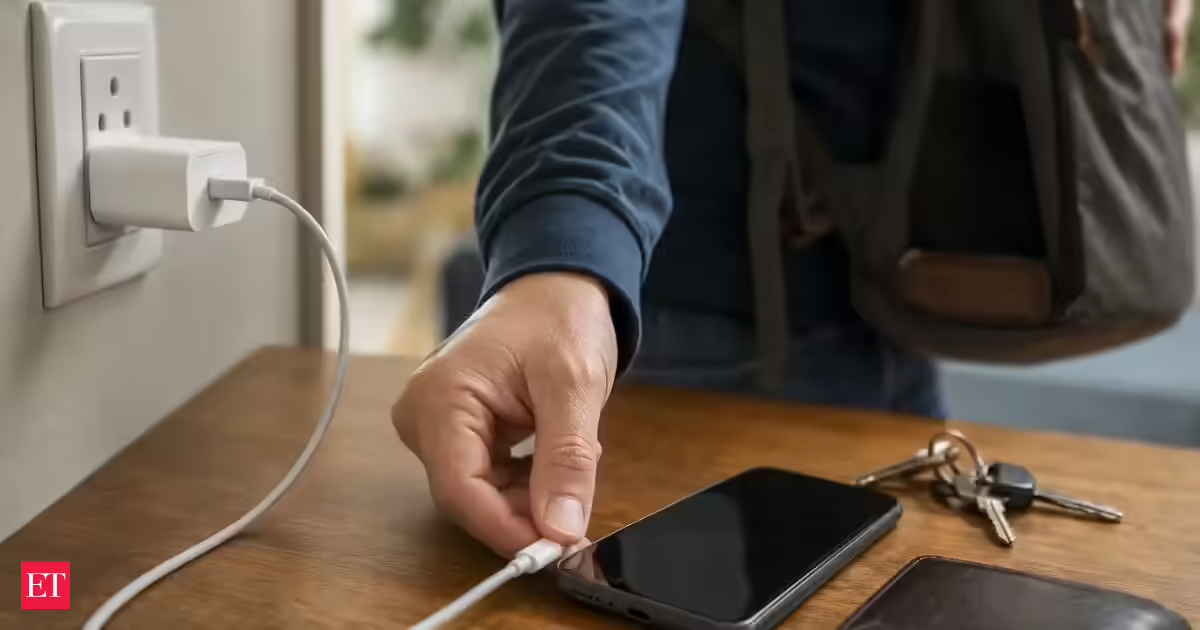
A person plugging in their phone when the battery is still at 86% may look overly careful or obsessed with keeping the device fully charged. But psychologists say the behaviour may not be about using the phone more, it can come from a deeper fear of being disconnected when someone might need them.For most people, an 86% battery level is enough to get through an entire day. They would leave home without thinking twice. But for some, the charger becomes the final thing they check before stepping out, whether they are going to work, shopping or meeting friends.Also Read: Salary doesn't decide happiness: Many see income and achievements as measure of success, but one study says the respect from people around you matters more than your place on the economic ladderThe habit may appear like a small obsession with numbers. But underneath it can be a constant worry, what if someone calls and they are not available?They are not addicted to their phones, they fear losing connectionPeople who keep their phones charged at all times are not necessarily the ones spending hours scrolling. Many can stay away from their devices for long periods. Some even wish they could be the kind of person who forgets their phone until it runs out of battery.But a dead phone means something different to them.It represents being cut off from family, friends or anyone who may suddenly need support.Researchers have a name for this fear — nomophobia, the anxiety linked to being without access to a mobile phone. A 2015 study by Caglar Yildirim and Ana-Paula Correia explored the condition and found that the fear is connected to concerns around losing communication, losing access to information and feeling disconnected.The study suggested that for some people, the phone is not just a device but a connection point to their social world.Even when they know that 50% or 80% battery is enough, the worry does not disappear. The fear is not based only on logic — it is linked to the possibility of being unavailable at the wrong moment.The phone has become more than a gadgetThe emotional attachment people have with their phones is also explained by research on the idea of the “extended self”.Consumer researcher Russell Belk, in his 2013 study Extended Self in a Digital World, argued that digital devices have become connected to people’s identity, memories and relationships.For many users, losing access to a phone does not feel like losing just a piece of technology. It can feel like losing access to conversations, family connections and important parts of daily life.That explains why a low battery can create discomfort even when the phone is not being actively used.The fear goes beyond battery percentageThe charging habit is only one visible sign.These people often keep their phones close enough to hear every notification. They may avoid silent mode for long periods and quickly return missed calls because they worry it could be important.The checking is not always about wanting to use the phone.It is about confirming that the phone is there, working and ready.Places with weak network coverage can also create uneasiness. A tunnel, a remote area or a location where signals disappear can trigger the same concern because the real fear is not only about battery life — it is about losing connection.It is not about missing messages, it is about missing important momentsFor many people, the biggest fear is not missing social media updates or casual conversations.It is missing the one call that matters.It could be a school calling about a child, an elderly parent trying to reach them or a family member needing urgent help.Research on fear of missing out, including a 2013 study by Andrew Przybylski and colleagues, has shown that uncertainty about missing important experiences or information can create emotional discomfort. While FOMO is usually linked with social media, the same feeling can appear when people worry about being unavailable during a meaningful moment.For these phone chargers, the fear is not about missing entertainment.It is about missing responsibility.Why some people feel responsible for always picking upMany people with this habit are also the ones others depend on.They are often listed as emergency contacts. Friends and family members know they respond quickly. Over time, being the person who always answers can create pressure to remain available.The more people rely on them, the stronger the feeling becomes that they cannot afford to disconnect.The habit may begin after one missed call that matteredA fear this specific often has a memory behind it.For some, there was a moment when they were unreachable and something important happened without them knowing.It could have been a phone dying during a night out, returning home to discover missed calls or finding out someone had tried to contact them during an emergency.That experience can create a personal rule: never be unavailable again.After that, charging the phone stops being a simple habit. It becomes an automatic response whenever the battery percentage drops.The hidden cost of always being reachableThere is also an emotional cost to staying connected all the time.Many people feel relief when their phone dies because it gives them a break. They are temporarily free from messages, calls and expectations.For someone with this fear, a dead phone does not feel like freedom.It feels like letting someone down before anyone has even tried to reach them.People may joke about their charging habits or call them overly cautious. But behind the behaviour is often a strong sense of responsibility.The charger remains the last thing they touch before leaving home.
People who are obsessed with charging phones to 100% aren't doing it due to any phone addiction; studies say they are not addicted to their phones, they fear losing connection
Many people repeatedly charge their phones not due to addiction, but a deep-seated fear of being unreachable. This anxiety stems from the possibility of missing an urgent call from family or friends needing help. A dead phone represents being cut off, leading to constant readiness.
918 words~4 min read