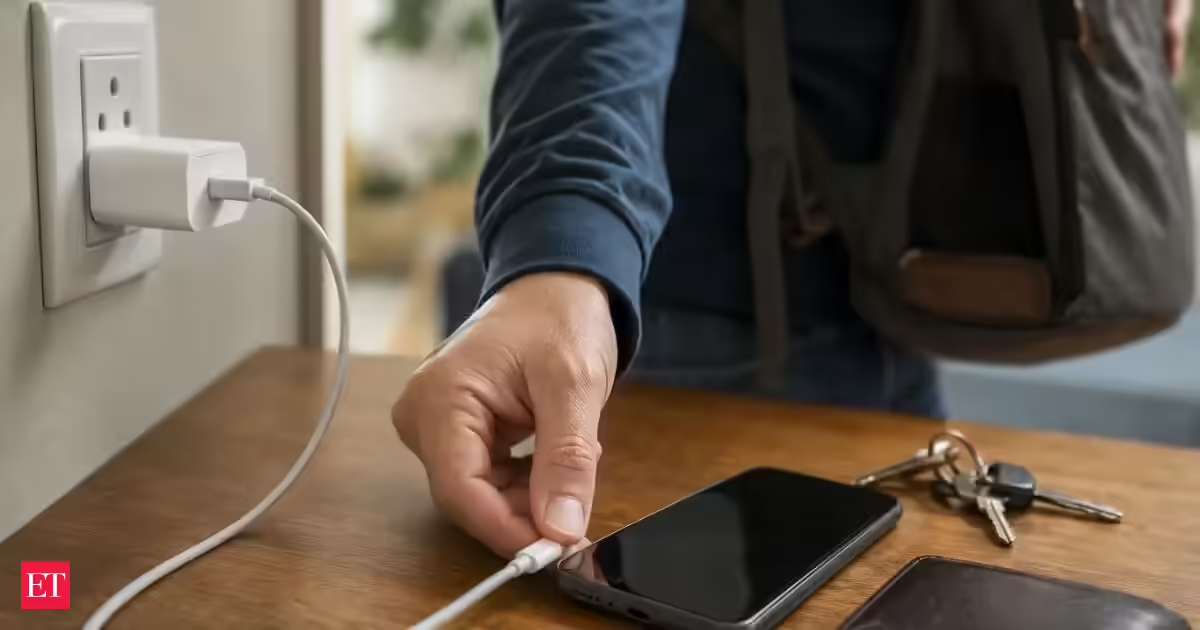
Some people become uncomfortable at 20%. Others start searching for a charger at 40%. And some feel anxious the moment their phone battery drops below 50%. To others, this behavior can seem excessive. After all, half the battery still remains. So why does the anxiety begin so early? Psychology suggests this behavior is rarely about electricity itself. For many adults, the smartphone has quietly evolved from a communication device into a tool for security, connection, identity, and daily functioning. In many ways, people are no longer protecting their battery. They are protecting their access to modern life.Why The Brain Treats Smartphones As A Survival ToolOne explanation comes from Extended Mind Theory, developed by philosophers Andy Clark and David Chalmers. The theory suggests humans often outsource parts of their thinking to external tools.Today, smartphones hold:Phone numbersMapsPhotosBanking appsWork emailsSchedulesMemoriesEmergency contactsThe phone is no longer just a device. It functions as an extension of the brain. Losing battery power can subconsciously feel like losing access to a part of oneself.Why Uncertainty Creates AnxietyPsychologists also discuss Intolerance Of Uncertainty Theory. Humans naturally dislike unpredictable situations. A low battery introduces multiple unknowns. People begin thinking:"What if someone needs me?""What if I get lost?""What if an emergency happens?""What if my boss calls?"The brain dislikes unanswered possibilities. Anxiety grows because uncertainty grows.Why Modern Adults Have Developed NomophobiaPsychologists increasingly study Nomophobia, short for "no mobile phone phobia." It refers to the discomfort people experience when they cannot access their smartphones. This does not mean everyone has a clinical condition. It simply reflects how dependent modern life has become on digital connectivity. Modern examples are everywhere.People use their phones to:Pay for groceriesEnter office buildingsBook transportationAccess boarding passesVerify identitiesA dead battery can temporarily disrupt all of these activities. The brain notices this dependence.Why The Brain Loves Being PreparedPsychologists also point to Anticipatory Anxiety. Humans often experience stress before a problem actually occurs. The possibility of a future inconvenience becomes stressful enough to trigger action. This explains why some people charge their phones several times a day despite rarely allowing them to fully drain. The behavior is proactive rather than reactive. The brain feels safer when it is prepared.Why Checking Battery Percentage Can Become A HabitAnother explanation comes from Operant Conditioning, developed by psychologist B.F. Skinner. Repeated behaviors become automatic when they provide relief. The cycle often looks like this: Battery drops. Anxiety appears. Person plugs in the charger. Anxiety disappears. The brain learns a simple lesson. "Charging the phone makes me feel safe." Over time, this behavior becomes deeply ingrained.Why Social Connection Plays A Huge RolePsychologists also discuss Attachment Theory, developed by John Bowlby. Humans are wired for connection. Smartphones have become modern attachment tools. They provide instant access to loved ones, communities, and support systems. For many people, battery anxiety is actually connection anxiety. The phone represents access to important relationships. The lower the battery gets, the more vulnerable people can feel.Why Younger Generations Experience This More OftenMillennials and Gen Z built their lives around digital ecosystems. Their phones manage entire daily routines. A smartphone now functions as:A walletA cameraA plannerA GPS deviceA workplaceAn entertainment centerThis level of integration naturally increases emotional dependence. The brain begins treating battery percentage as a resource that must be protected.The reason behind this psychology Psychology suggests adults who become anxious when their battery drops below 50% are rarely overreacting. More often, they are responding to how deeply smartphones have become embedded into modern life.Humans crave certainty. Humans crave preparedness. Humans crave connection. The most important insight is that people are not always worried about losing battery power. They are often worried about losing access to the systems that make life feel manageable. Perhaps that is why this behavior is becoming increasingly common.Because the phone is no longer just technology. For many adults, it has quietly become a portable safety blanket. And the battery percentage has become a tiny number that represents something much bigger than power. It represents security itself.FAQsWhy do some people panic when their phone battery drops below 50%?Psychology suggests smartphones now represent security, connection, and access to important daily functions.Is low battery anxiety a real phenomenon?Yes. Researchers often connect it to nomophobia, uncertainty, and digital dependence.
Psychology says adults who get anxious when their phone battery drops below 50% are not overreacting: Why people treat smartphones like a safety blanket
Psychology suggests that adults who become anxious when their phone battery drops below 50% are rarely overreacting. More often, they are responding to how deeply smartphones have become integrated into everyday life. For many people, a phone is no longer just a device for communication.
696 words~3 min read