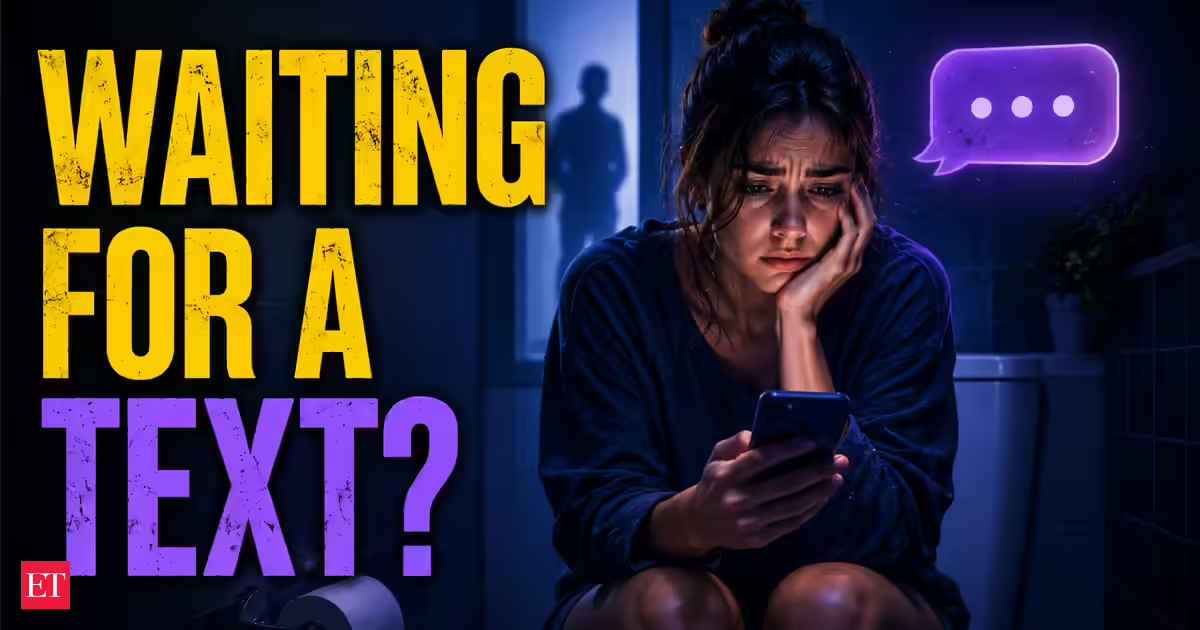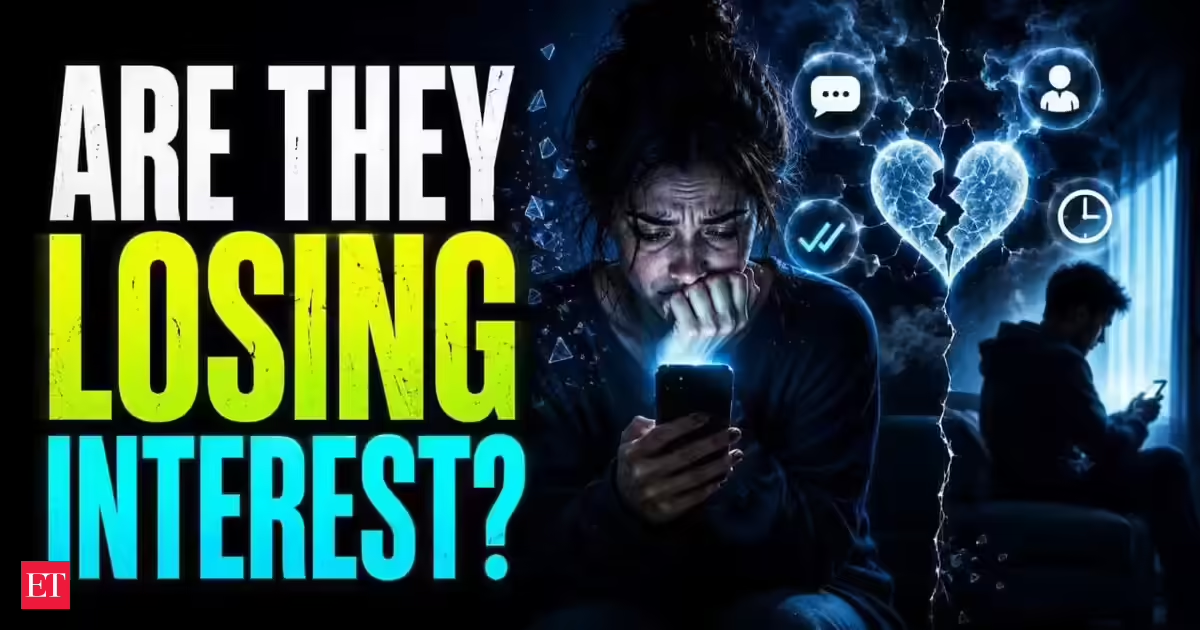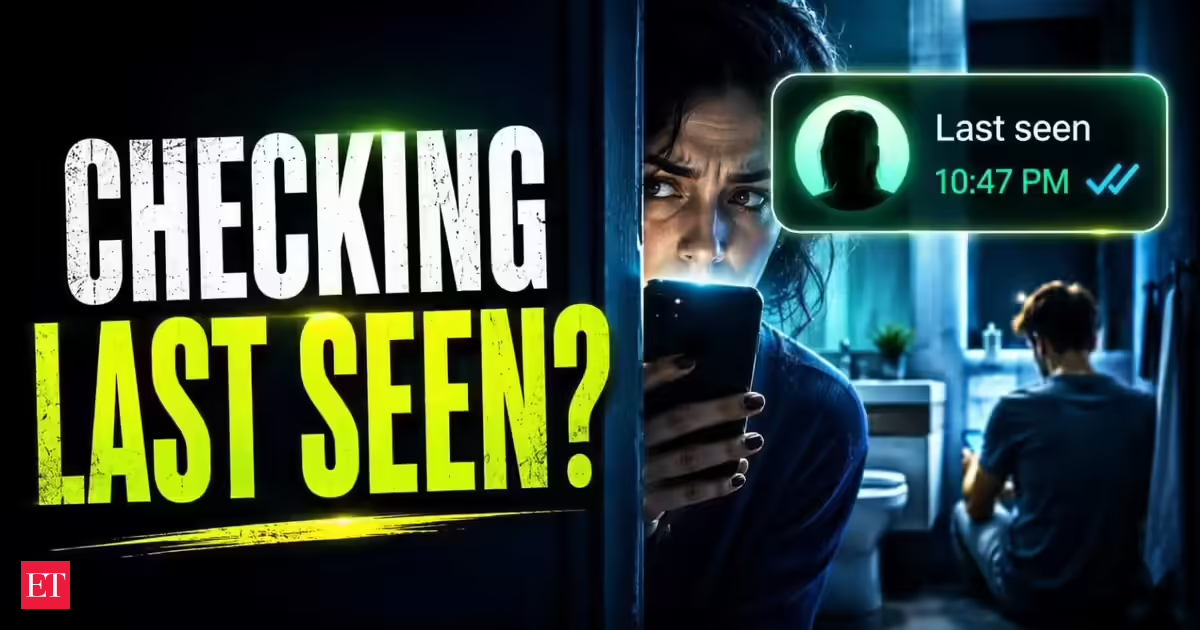
Most people have done it at least once. You send a message. Minutes pass. Then hours. Suddenly, you find yourself checking your partner's last seen status. You notice they were online recently. You wonder why they haven't replied. You check again. And then again.What starts as a quick glance can turn into a habit that creates stress, frustration, and endless questions. Psychology says this behavior is rarely about curiosity alone. In many cases, repeatedly checking a partner's online activity is connected to deeper emotional processes involving attachment, insecurity, fear of rejection, trust concerns, and relationship anxiety.The surprising part is that the last seen status itself is usually not the real issue. What matters is what the brain believes that information means.The Brain Constantly Searches for Emotional CertaintyHuman beings naturally seek predictability in relationships. Psychologists have found that uncertainty can create significant emotional discomfort, especially in close relationships.When a partner takes longer than expected to respond, the brain often begins filling in missing information. Instead of saying, "They're probably busy," the mind may generate alternative explanations.You Might Also Like:"Are they upset?""Did I say something wrong?""Are they ignoring me?"This tendency is linked to what psychologists call uncertainty reduction, the brain's effort to gather information that helps restore a sense of control. Checking a partner's last seen becomes an attempt to reduce uncertainty. Unfortunately, it often has the opposite effect.You Might Also Like:Attachment Theory Helps Explain the BehaviorOne of the most important psychological explanations comes from Attachment Theory. Research suggests that people develop patterns of emotional attachment based on early experiences and later relationship dynamics.Individuals with more anxious attachment tendencies often become highly sensitive to signs of distance, silence, or reduced communication. For these individuals, a delayed reply can feel much more significant than it actually is.Psychology says checking your partner’s last seen is not just curiosity, it shows where insecurity, trust issues, and relationship anxiety beginA modern example is someone noticing that their partner was online ten minutes ago but has not responded to a message. Rather than assuming everything is fine, they may immediately begin analyzing possible problems.The anxiety comes not from the last seen status itself but from the emotional meaning attached to it.Fear of Being Ignored Activates Powerful EmotionsHumans have a deep need for belonging and connection. Psychologists studying social relationships have found that feeling ignored can activate emotional responses similar to physical discomfort.This is one reason why unread messages can feel surprisingly stressful. The brain sometimes interprets silence as social rejection, even when no rejection exists. A partner may simply be driving, working, exercising, or spending time with family.Yet the anxious mind may perceive the delay as a personal statement. The result is repeated checking behavior designed to gain reassurance.Trust Issues Often Amplify Digital MonitoringTrust plays a major role in how people interpret online activity. When trust is strong, a delayed response is usually viewed as normal. When trust has been damaged by previous experiences, the same delay may trigger suspicion.Psychologists refer to this process as confirmation bias. People tend to notice information that supports existing fears or beliefs. Someone worried about betrayal may focus heavily on online behavior while overlooking harmless explanations. The last seen status becomes evidence for concerns that already exist beneath the surface.Relationship Anxiety Thrives in the Digital AgeModern technology has created unprecedented access to information about other people's behavior. Previous generations often waited hours or days for communication. Today, people can see when someone was online, active, typing, or viewed a message. While this information provides convenience, psychology suggests it can also fuel anxiety. A modern example is a person checking messaging apps multiple times within an hour because their partner has not responded.The constant availability of information encourages monitoring behavior that would have been impossible in earlier eras.Why Checking Becomes a HabitThe behavior is also connected to the brain's reward system. Sometimes checking provides relief. You discover your partner has replied. Your anxiety decreases. That relief reinforces the behavior. Psychologists call this negative reinforcement.The action removes discomfort temporarily, making the brain more likely to repeat it in the future. Over time, the habit can become automatic. The person may check without even realizing they are doing it.Healthy Relationships Need More Than Digital ReassuranceResearch consistently suggests that strong relationships are built on communication, trust, and emotional security rather than constant monitoring. While technology provides information, it rarely provides true reassurance.A last seen status cannot explain emotions. It cannot reveal intentions.And it cannot replace an honest conversation. Psychologists often note that excessive monitoring can increase anxiety rather than reduce it because it keeps attention focused on uncertainty.What Psychology Really Says About Checking a Partner's Last SeenPsychology does not suggest that everyone who checks a partner's last seen has trust issues or relationship problems. Human behavior is far more complex than that.Research indicates that attachment patterns, uncertainty reduction, fear of rejection, confirmation bias, relationship anxiety, and the need for emotional reassurance can all influence this behavior.For some people, it is an occasional habit. For others, it becomes a way of coping with deeper fears. The real issue is often not the last seen status itself but the emotional story the brain creates around it.And understanding that story may reveal far more about our emotional needs than any online status ever could.FAQsWhy do I keep checking my partner's last seen?Psychologists suggest it may be linked to uncertainty, emotional reassurance, attachment patterns, or relationship anxiety.Is checking a partner's last seen a sign of insecurity?Not always. However, frequent monitoring can sometimes reflect concerns about trust, rejection, or emotional safety.
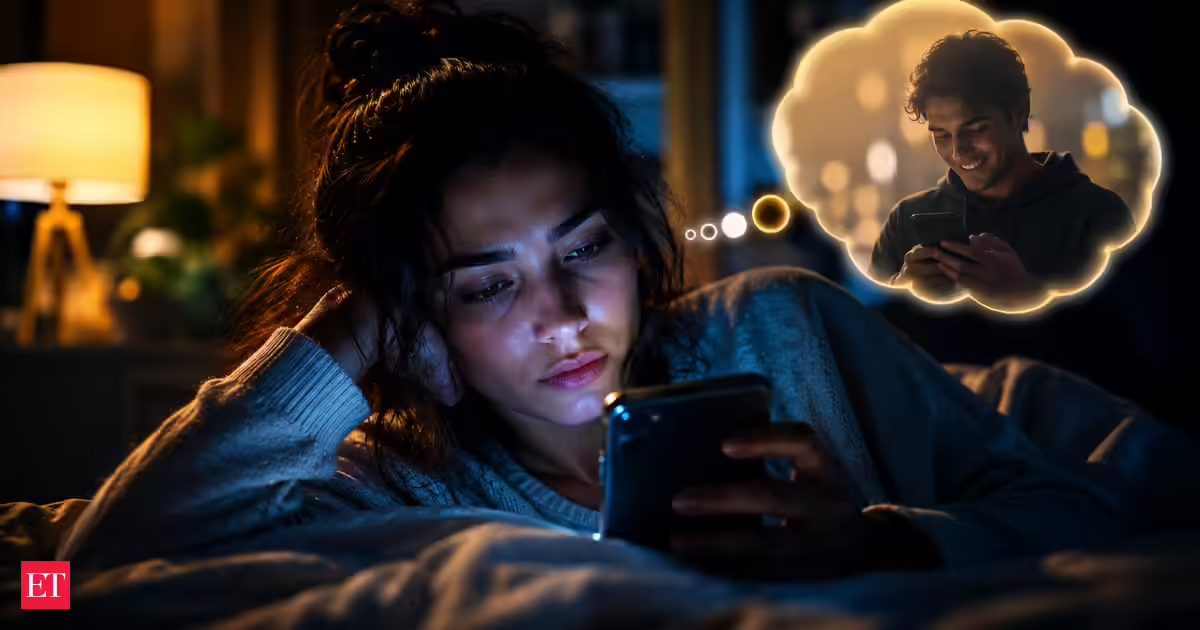
Psychology says checking your partner’s last seen is not just curiosity, it shows where insecurity, trust issues, and relationship anxiety begin
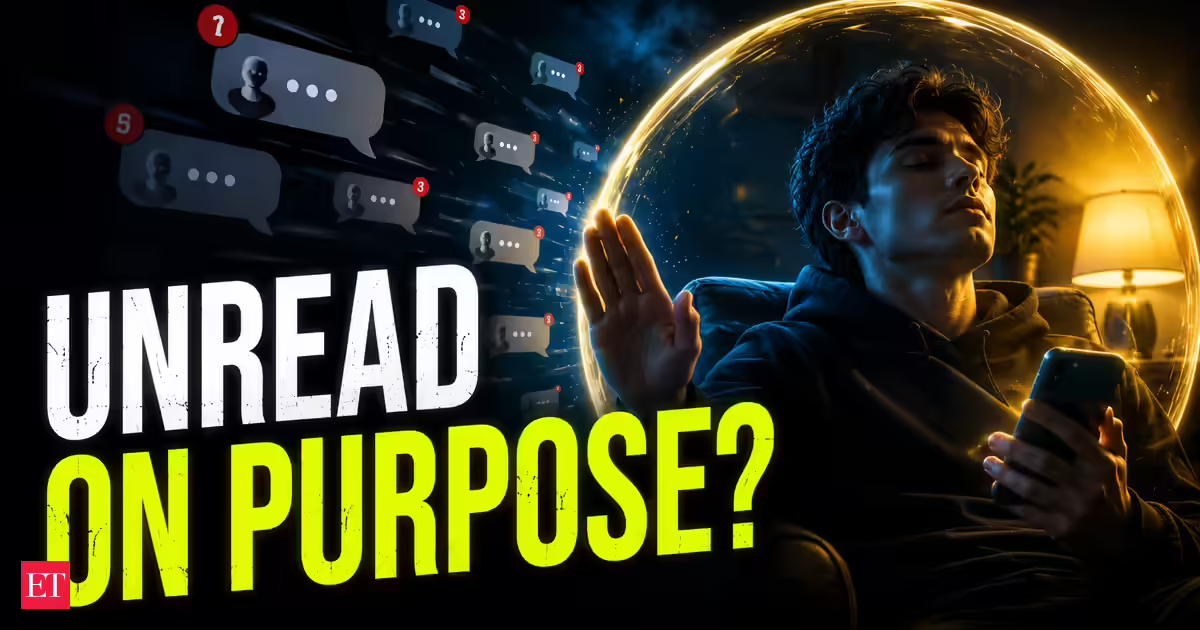
Humans are fundamentally wired for connection and a sense of belonging. Psychological research on social bonds suggests that feeling excluded or ignored can trigger emotional reactions that closely resemble experiences of physical discomfort. This may help explain why unanswered or unread messages can create a surprisingly strong sense of stress, unease, or anticipation.
921 words~4 min read