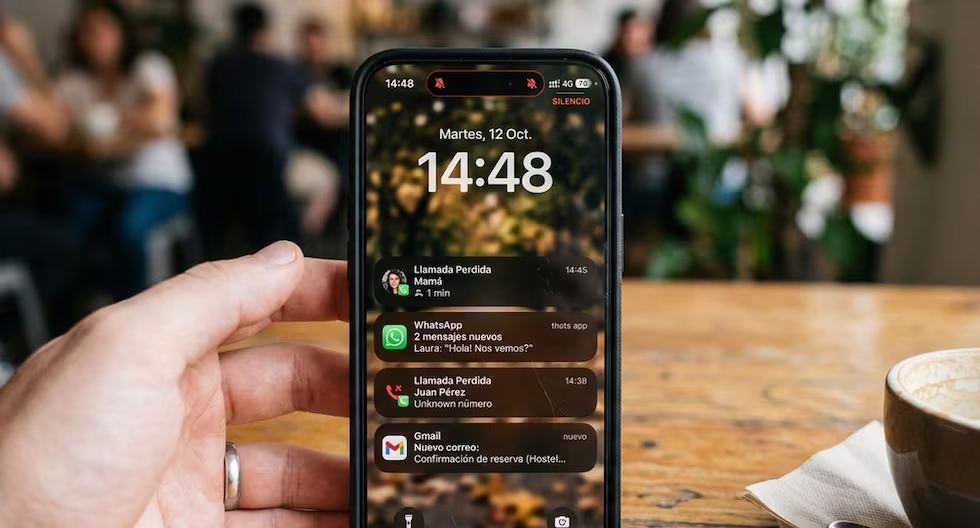
Psychology says people who always keep their phones on silent aren't necessarily trying to avoid conversations. Many people choose to silence their phones throughout the day for different reasons. Some want fewer distractions while working. Others prefer to respond to messages when they have time instead of reacting immediately. Psychology explains that this habit can reflect personal boundaries, self-control, and attention management. It should not always be seen as rude behavior. Understanding the reasons behind this choice helps people avoid making quick judgments. It also encourages healthier communication between family members, friends, and colleagues.What psychology says about keeping a phone on silent?Many people assume that someone who keeps a phone on silent is avoiding others. Psychology does not fully support this belief. Human behavior is influenced by personal habits, environment, work demands, and emotional needs.People who silence their phones may simply prefer to decide when they respond instead of reacting every time a notification appears. This allows them to stay focused on their current task. They often value uninterrupted time and believe that every message does not require an immediate reply.Psychologists also explain that constant notifications can increase mental overload. Reducing these interruptions may help people think more clearly and complete tasks without losing concentration.What does this behavior mean?Keeping a phone on silent can have different meanings for different people. It is not a sign of one fixed personality. Some people want privacy during the day. Others prefer to separate work from personal life. Some silence their phones because frequent sounds make them feel distracted. Others simply develop the habit over time.This behavior can also show that a person prefers planned communication instead of constant availability. They may still answer every important message, but only after checking their phone at suitable times. The habit often reflects how a person manages time rather than how much they value relationships.Why do people choose this habit?There are many practical and psychological reasons why people keep their phones on silent. Many workplaces require employees to avoid phone sounds during meetings or while completing important tasks. Students may also silence their devices while studying.Some people believe they can think better without repeated interruptions. Every notification can shift attention away from the task at hand. Returning to the original task may take several minutes.Others simply enjoy having control over their daily schedule. Instead of allowing technology to decide when they stop working, they choose the moments when they check their phone. Some individuals also use silent mode to reduce stress caused by continuous notifications from social media, emails, shopping apps, and messaging platforms.Psychology says people who always keep their phones on silent aren't showing the same personalityPsychology does not say that every person who keeps a phone on silent has the same personality. Human behavior is influenced by many factors. One person may silence their phone because they enjoy quiet surroundings. Another may do it because of work rules. Someone else may simply dislike notification sounds.Psychologists recommend avoiding quick conclusions about another person's intentions based on one habit alone. Looking at overall behavior, communication style, and personal circumstances provides a much better understanding than judging a single action.Which psychology theory explains this behavior?Several psychological concepts help explain this habit.Selective Attention Theory suggests that people naturally focus on information they believe is important while filtering out distractions. Silencing a phone reduces unnecessary interruptions and supports attention.Self-Regulation Theory explains that people often create habits that help them manage their behavior. Choosing silent mode may be one way to control distractions and maintain productivity.Boundary Management Theory also helps explain this behavior. Many people prefer clear boundaries between work, family time, and personal activities. Keeping a phone silent allows them to decide when communication fits those boundaries.These theories show that silent mode can be a conscious strategy rather than a sign of avoiding people.The principle behind this habitThe main principle behind this behavior is control over attention. Modern technology allows people to stay connected every moment of the day. While this offers convenience, it can also create continuous interruptions. Choosing silent mode allows individuals to decide when they engage with notifications. This gives them greater control over their attention, time, and daily routine.Psychologists believe that people often experience better concentration when they reduce unnecessary distractions during important activities. The principle is not about disconnecting from others. Instead, it is about deciding the right time to reconnect.What can people learn from this behavior?This habit offers several useful lessons.First, not every notification requires an immediate response. Many messages can wait until an appropriate time.Second, setting personal boundaries can improve focus and reduce unnecessary stress.Third, respecting another person's communication style helps build healthier relationships. Some people prefer instant replies, while others respond after completing their responsibilities.Finally, avoiding assumptions is important. A silent phone does not automatically mean someone is ignoring family, friends, or colleagues.Understanding individual differences helps improve communication and reduces misunderstandings.Life lessons from keeping phones on silentThis behavior highlights several practical lessons for everyday life. It reminds people that attention is valuable and should be protected. Managing distractions can improve work, learning, and personal conversations.The habit also shows that technology should support daily life rather than control it. Choosing when to answer calls or messages allows people to balance responsibilities with personal time.Most importantly, psychology encourages people to understand behavior before judging it. A single habit rarely explains someone's personality completely. Looking at the broader picture leads to better relationships and stronger communication.
Psychology says people who always keep their phones on silent aren't ignoring others: What this behavior may reveal?
Psychology says people who always keep their phones on silent aren't always avoiding calls or messages. Psychology suggests this habit may reflect a person's need for focus, control, privacy, and fewer interruptions. It does not always mean someone is distant or uninterested. Different psychological theories explain why many people prefer silence over constant notifications. Understanding this behavior can improve communication and help people respect different personal habits.
901 words~4 min read