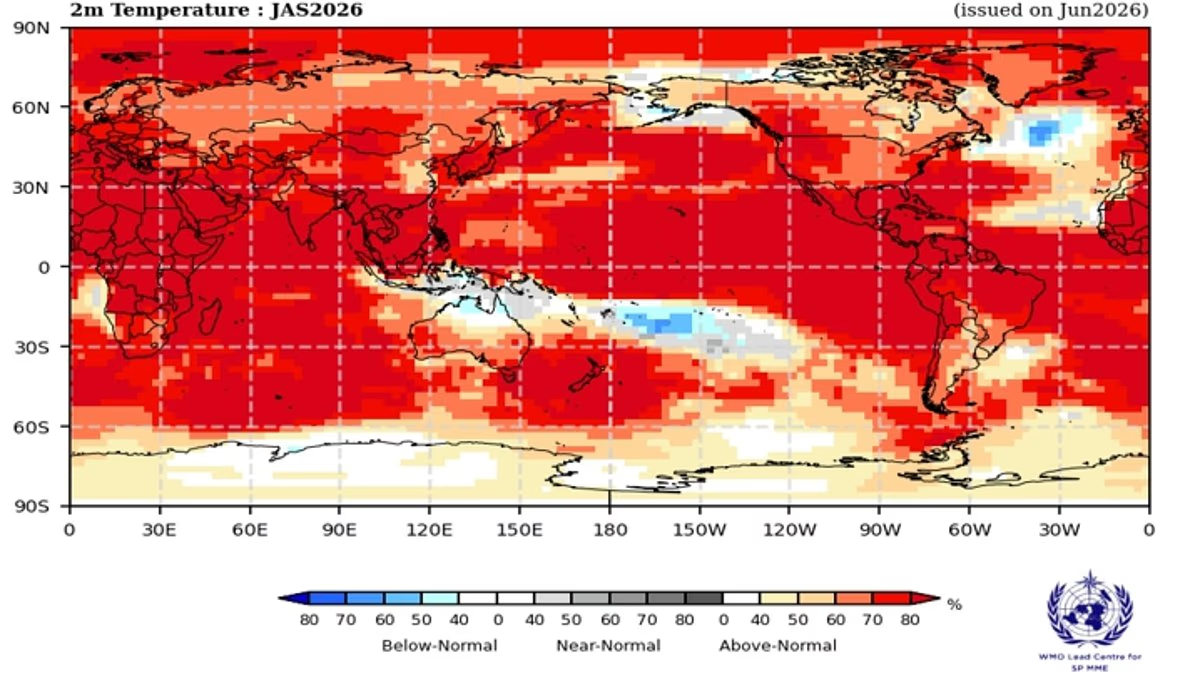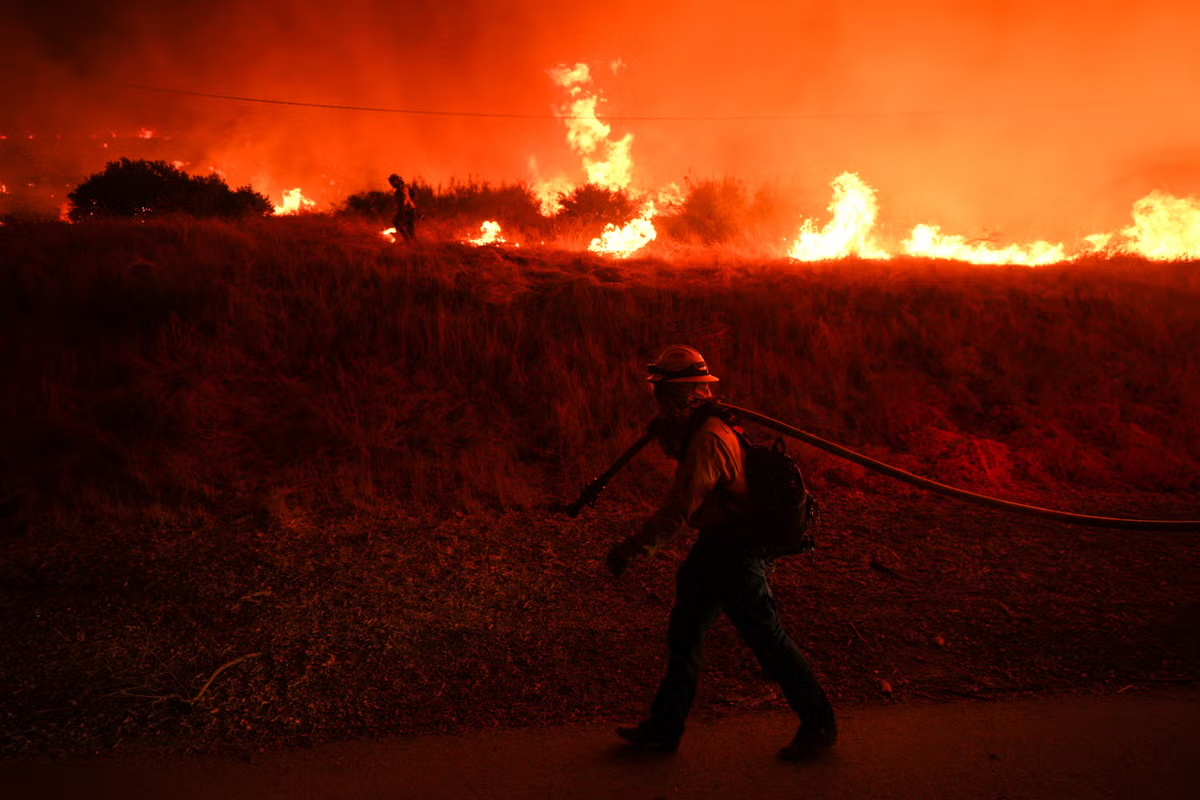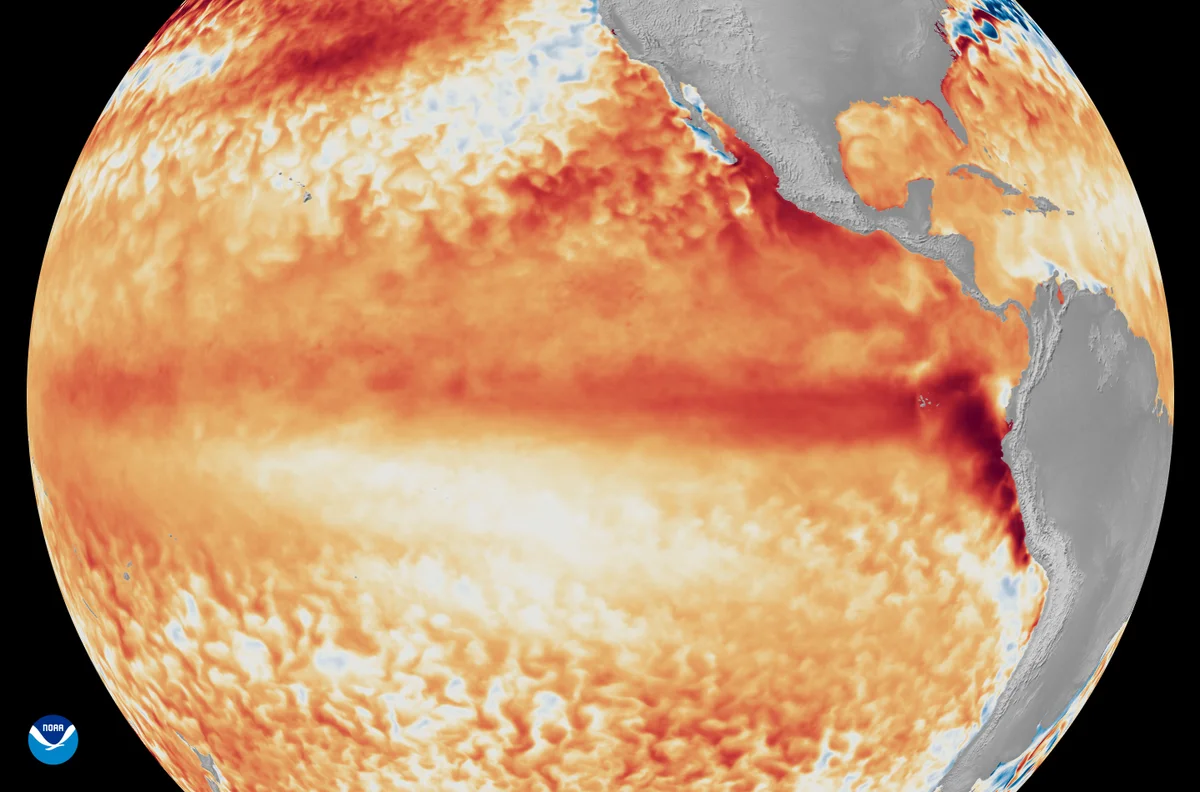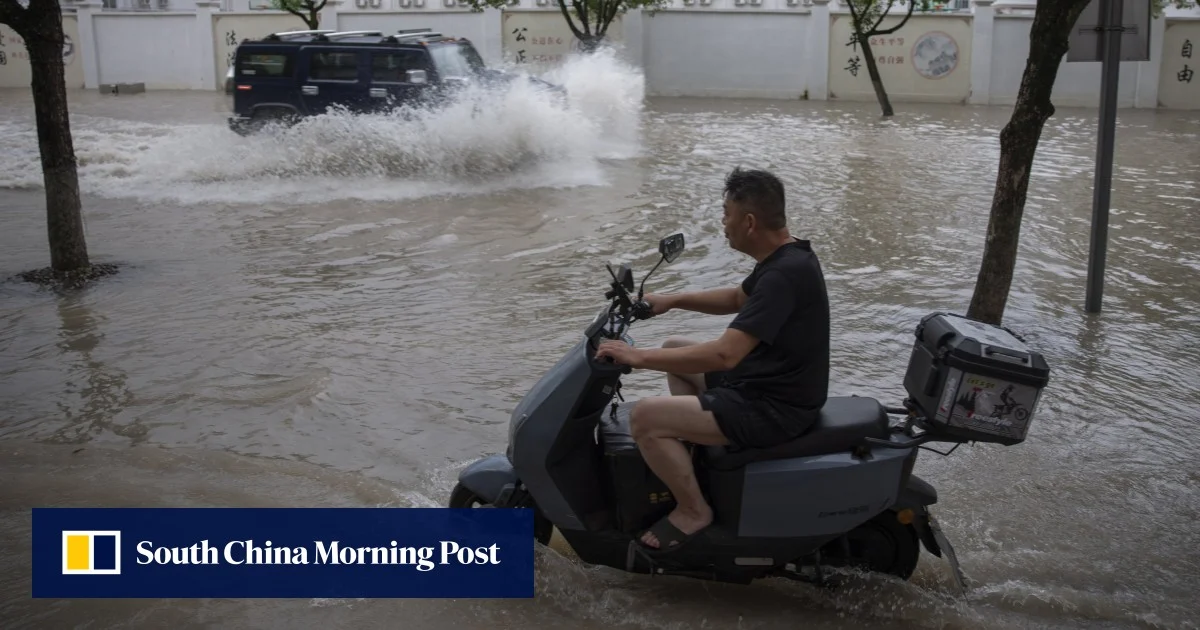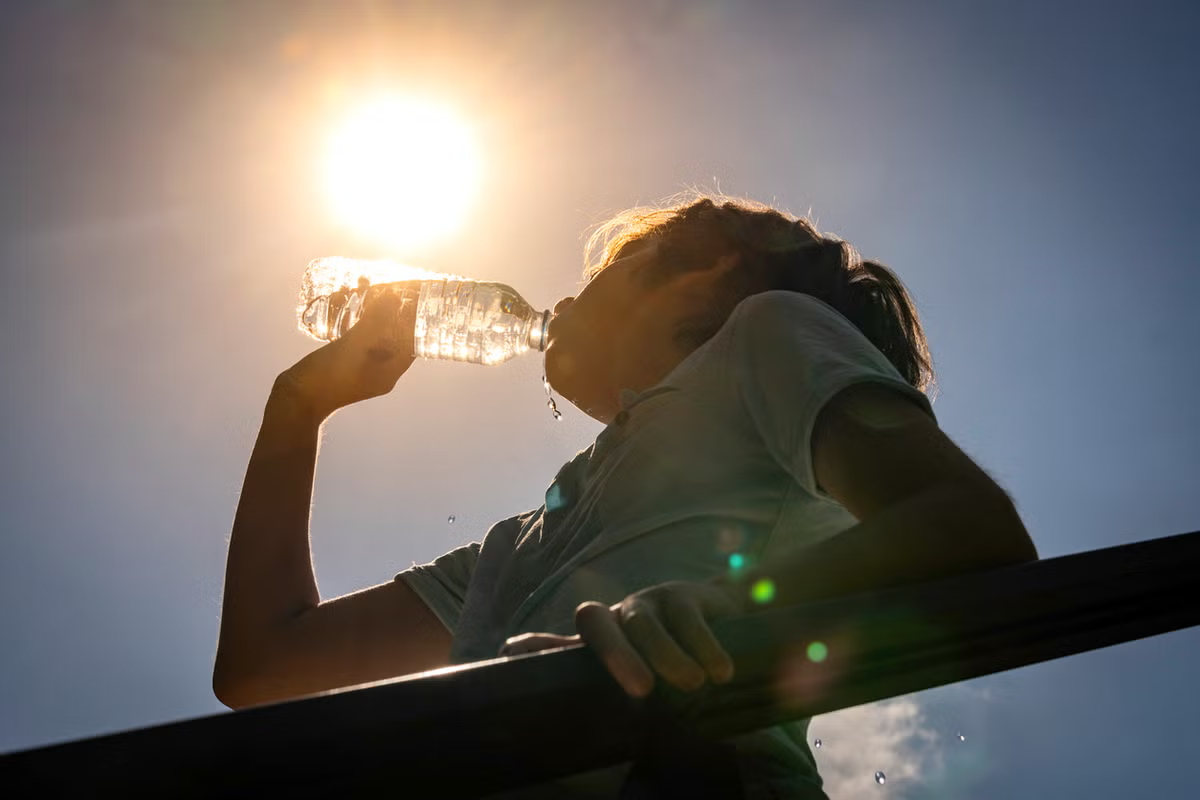
This year’s Super El Nino isn’t officially here yet. But it’s already a doozy.The world’s oceans are the hottest they have ever been for June.And that which makes a Pacific El Nino weather pattern truly “Super” is already underway.Its fallout is reaching faraway locations, such as Alaska, France and Siberia.Extreme temperatures are killing people across the United States and Europe. Wildfires are savaging landscapes. Power grids are straining.“Current conditions could indicate the beginning of a new phase, leading, once more, to uncharted territory,” the European weather centre’s Copernicus Climate Change Service warned on Friday. “With ocean temperatures at these levels and El Nino on the horizon, we are likely to see more temperature records fall in the coming months.”The global average sea surface temperature is a record 20.86C. Mediterranean waters are up to 8C warmer than usual.The North Sea is up an extra 3C. Western Pacific tropical waters are currently 1.24C above average. (It needs only to be 0.8C more to trigger an El Nino.)And waters off New South Wales and Tasmania are peaking at around 3-4C above average.“That may not sound like a big difference. But heating the world’s oceans this much requires a truly enormous amount of energy,” Chief Research Scientist (Environment) Alistair Hobday, UNSW oceanography Professor Matthew England and UNSW researcher Alex Sen Gupta write forThe Conversation. About 71 per cent of the world’s surface is covered by ocean.That makes it an enormous heat sink.And a globe-spanning heat pump.“Higher ocean temperatures keep the atmosphere warm for longer, provide extra energy to storms and increase evaporation,” the Copernicus statement explains.Every 1C extra average heat enables clouds to carry 7 per cent more water. That can mean more rain, dumped harder, in uncommon locations.“The heat in the ocean doesn’t just stay there,” the Australian climate scientists explain. “Hotter oceans fuel stronger cyclones, a more humid atmosphere, more intense rainfall and more heat in air masses over the seas, which can in turn make heatwaves over land more likely and more intense.”Unfolding extremesThis year’s El Nino, as it evolves over the next six months, is likely to be more severe than any seen in recent decades.It’s already not looking good.A global weather cascade may have already begun.El Nino-driven atmospheric jet streams are compressing hot air across the Northern Hemisphere.Almost 50 wildfires were recorded this week across the United States. This includes 16 in Alaska, seven in Utah and five in Colorado. The critical fire threat is expected to persist over much of the country over the weekend. And many of the nation’s 250th July 4 long weekend celebrations are expected to be curtailed due to extreme heat.Southern France is also being savaged by fire. Some 3000 tourists and residents of the coastal town Canet-en-Roussillon, near the Spanish border, were forced to evacuate. News footage shows warehouses and yachts aflame as thick smoke billows over the beach.Fires are also threatening the Aude and Herault regions. Marseilles, France’s second-largest city, experienced two blazes on its outskirts.“The situation is fairly tense,” French Prime Minister Sebastien Lecornu said while addressing a Marseilles crisis meeting on Thursday.His nation had just experienced 11 straight days of record-breaking heatwave conditions.Hundreds of millions of people in North America and Europe will continue to be exposed to dangerous conditions over the weekend.And the death toll is mounting.World Health Organisation chief Tedros Adhanom Ghebreyesus last week said some 1300 more deaths than usual had already been recorded across Europe for June.New Scientist reports one estimate that heat-related deaths in Europe may have been as high as 17,000 to 25,000 people. The actual figure won’t be revealed for several more months. Data has to be collected and collated from retirement homes, hostels, hospitals and morgues.It’s a similar story for the Super El Nino’s fallout.Deep-sea temperatures in the eastern Pacific have already increased by up to 6C.“While we can expect 2026 to be very hot – perhaps a new record – next year is very likely to be even hotter, as ocean heat is moved back to the surface,” the Australian climate scientists explain.Uncharted territory“We have indicators that place this El Nino in a similar pattern or signs that other very large El Niños had,” says University of Edinburgh climate analyst Ioana Colfescu. But that won’t necessarily make it predictable.El Nino usually brings drought to Asia and Australia, and floods to Peru and Ecuador.But a “Super” event takes the world into uncharted territory.“If we look back at previous events, El Niños have various impacts,” Ms Colfescu told The Conversation. “They are actually made much worse because the El Nino right now is overlapped on an already warm ocean because of climate change.”The weather, however, remains a political hot potato.University of New York Professor Steven Koonin says global warming fears are all hot air.The former chief scientist for multinational oil and gas company BP and Under Secretary for Science at the United States Department of Energy during the Obama administration insists we’re all better off because of it.He reportedly told a recent Alliance for Responsible Citizenship conference in London that too much emphasis is placed on bad and worst-case climate scenarios. He concedes that the world has warmed by 1.5C over the past 120 years. But over the same period, he argues, life expectancies increased by some 50 years, the global economy grew 20 times larger, and climate-related disaster deaths fell by 95 per cent.Professor Koonin is affiliated with the Heritage Foundation. That’s the conservative think-tank behind US President Donald Trump’s Project 2025 policy package. He told the London audience that fossil fuels should be seen as an asset to be developed, not a risk to be suppressed. And that 2C warming by the end of the century is nothing to be feared.It’s not a commonly held view.Some 97 to 99 per cent of all climate scientists actively publishing peer-reviewed research agree that humans are causing global warming and climate change, and that this change poses a risk.Jamie Seidel is a freelance writer
Map reveals horrifying global crisis
This year’s Super El Nino isn’t officially here yet. But it’s already a doozy.
990 words~5 min read