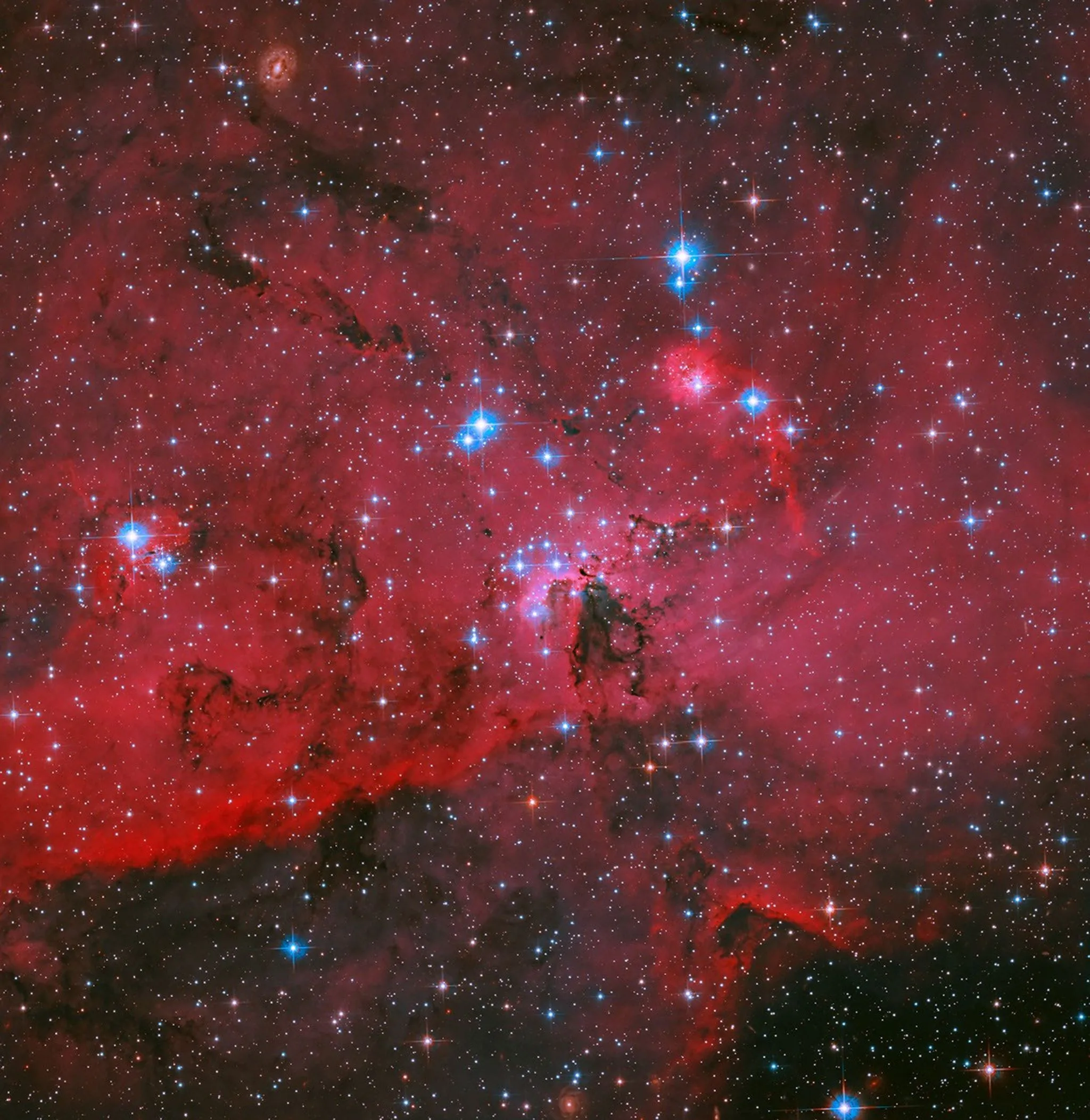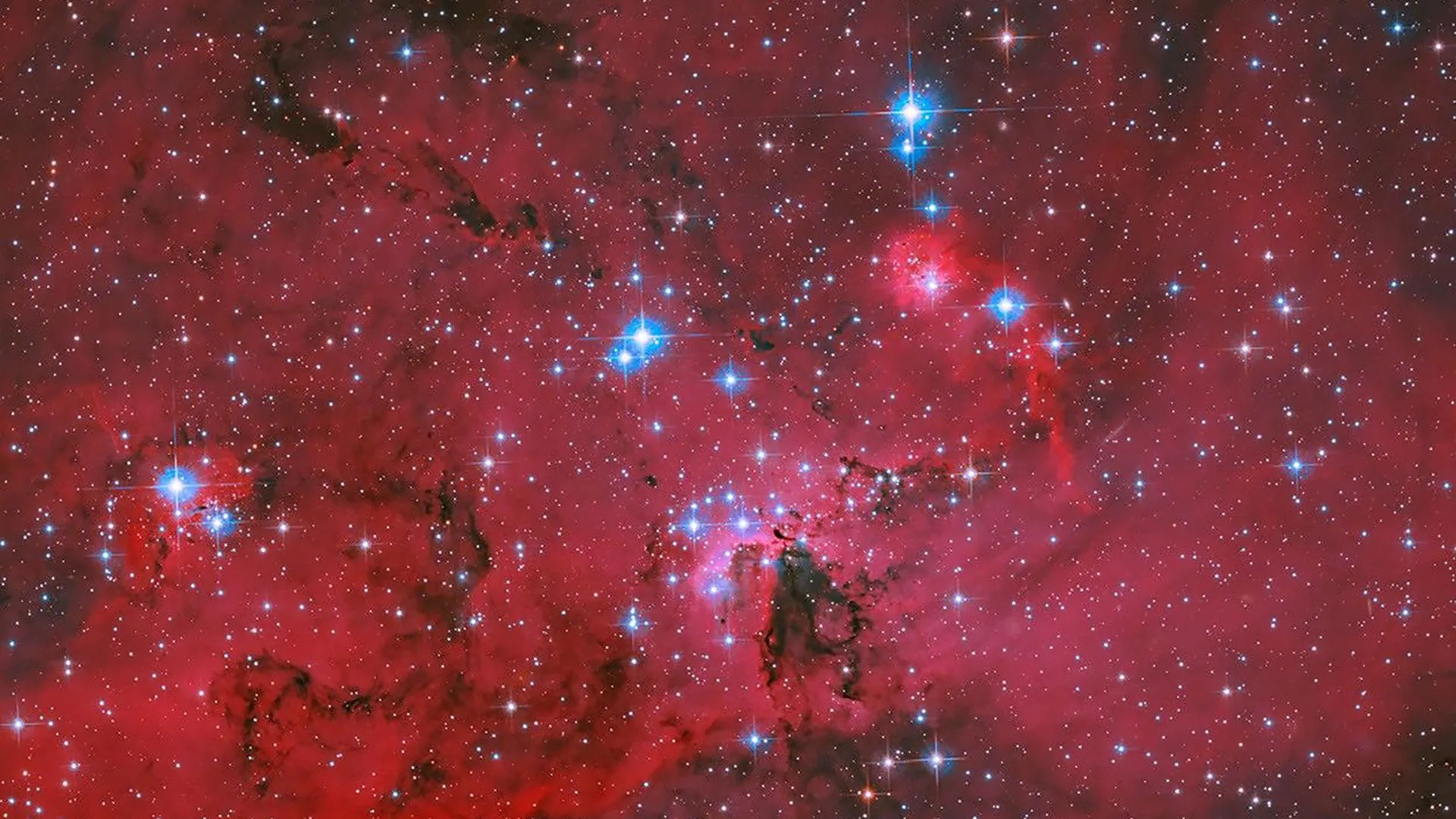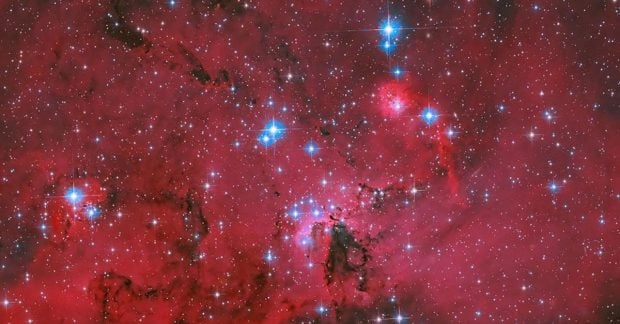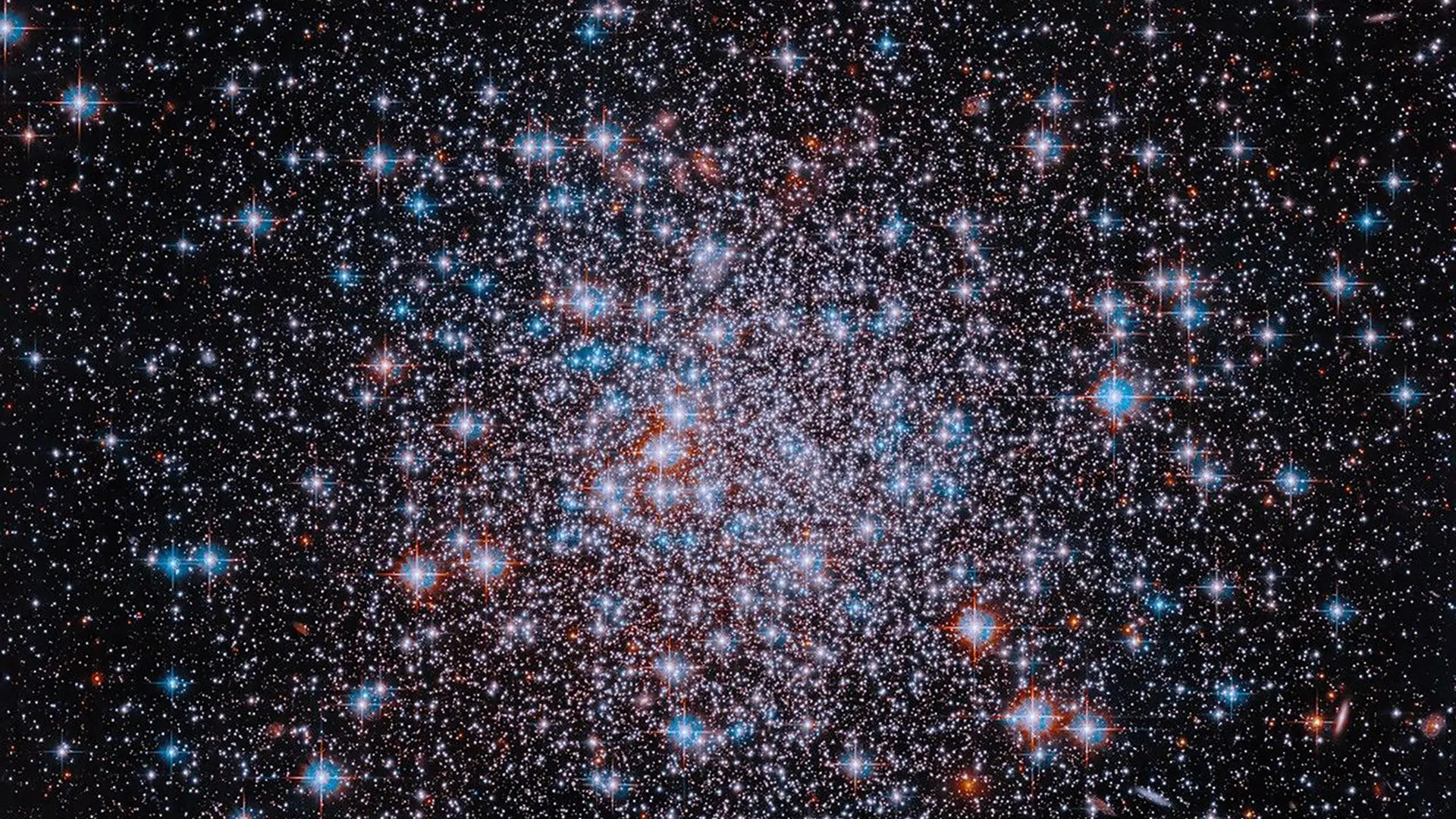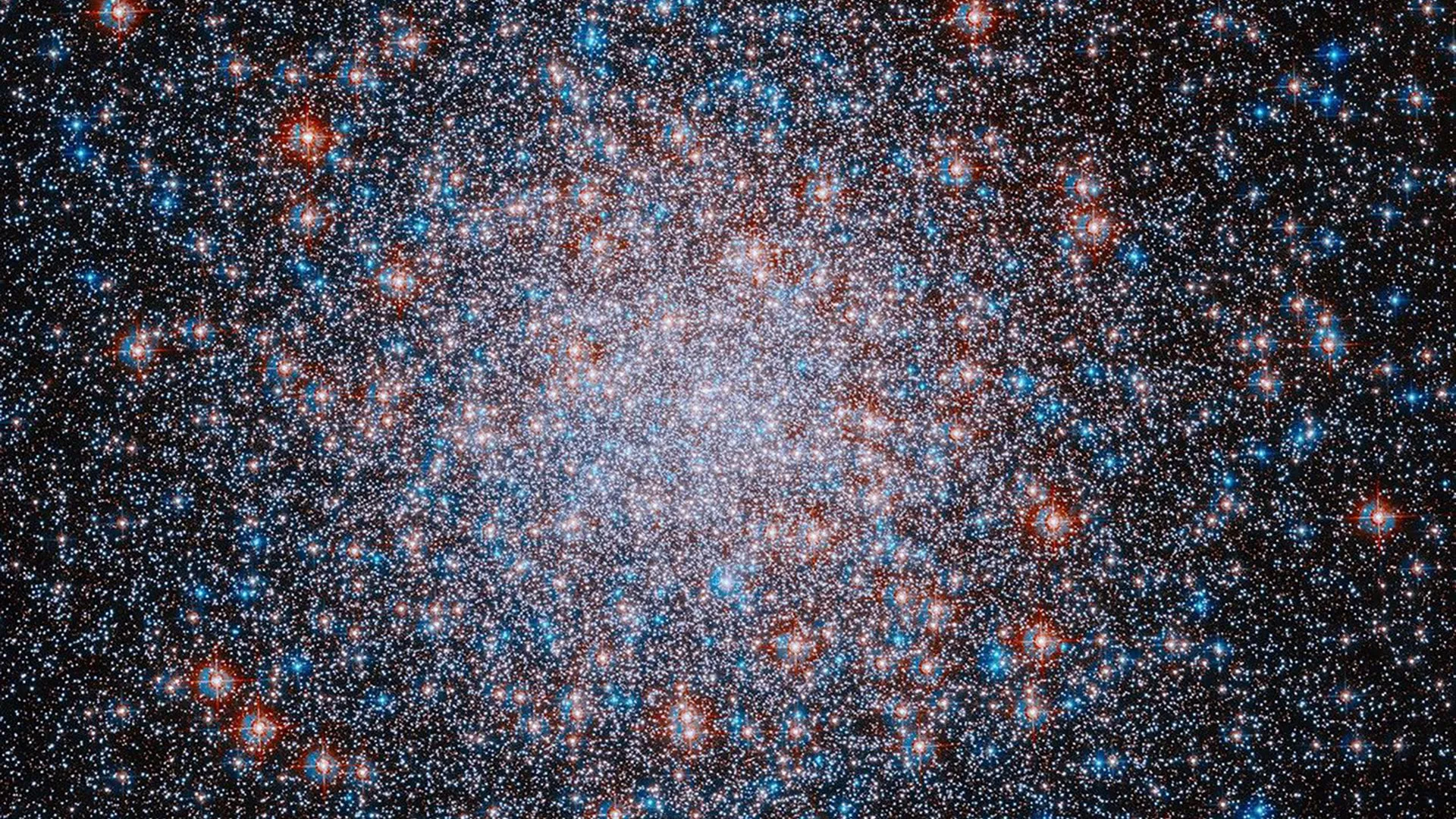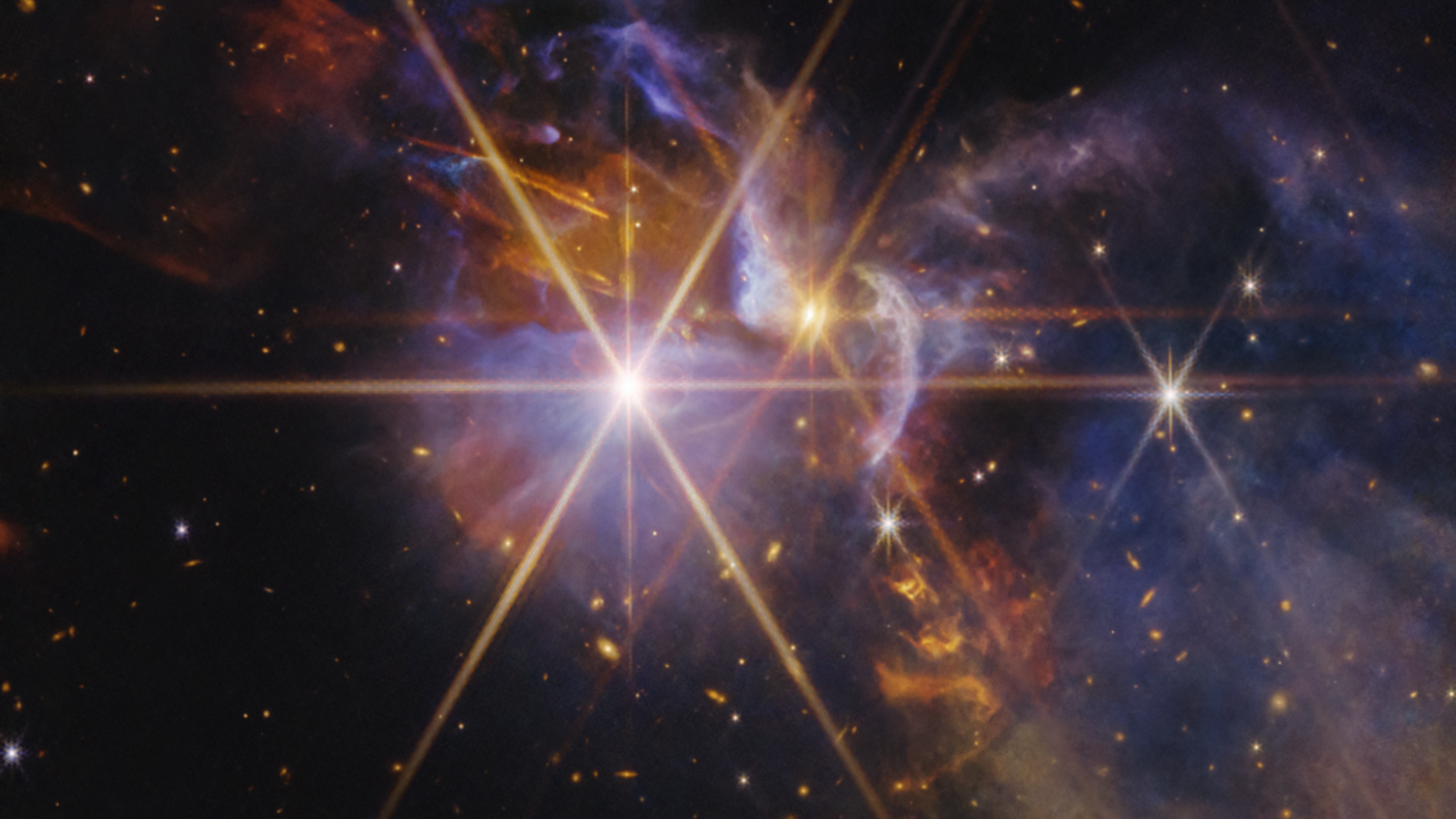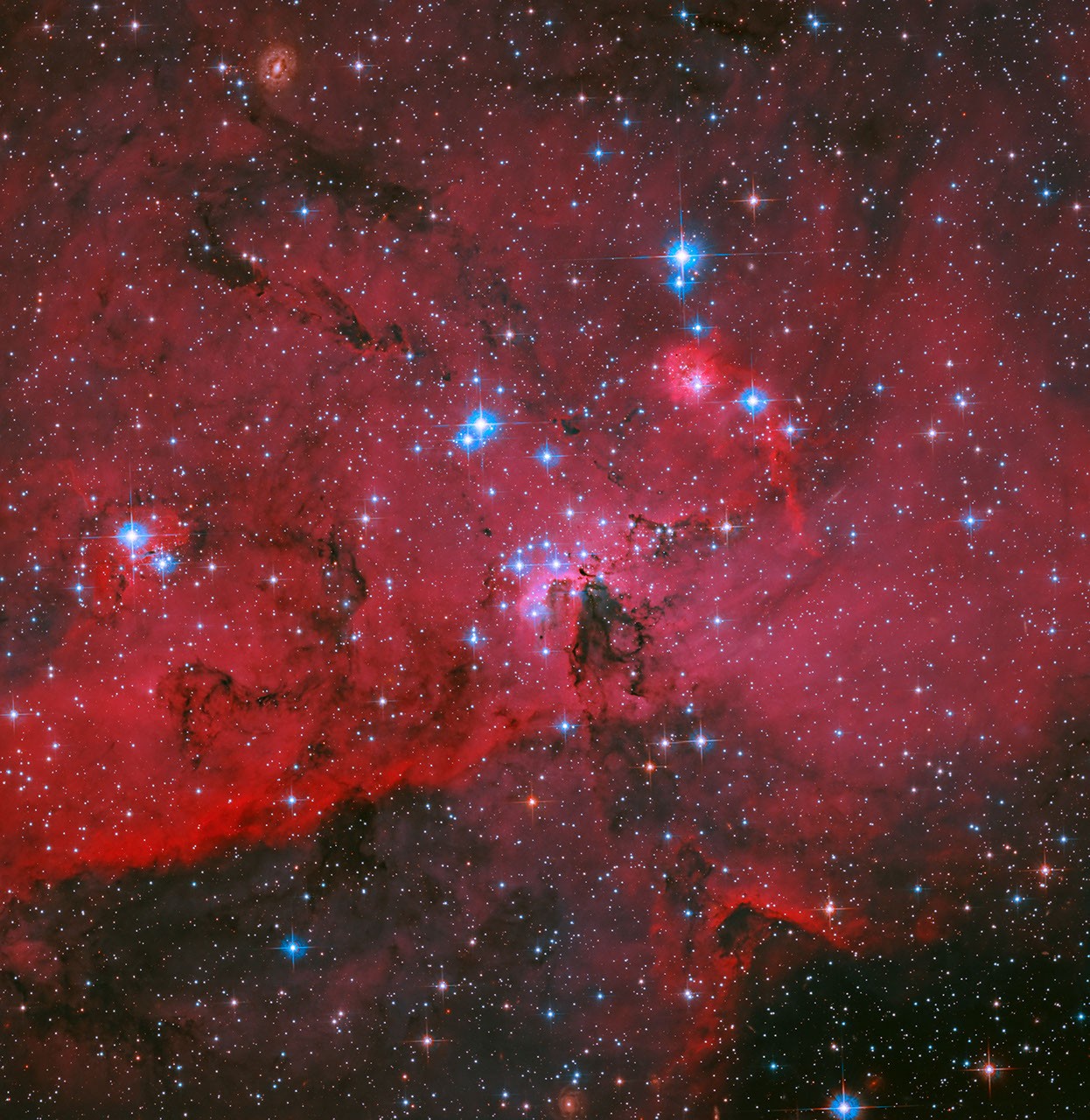
Like fresh fireworks launched against a background of dissipating smoke, blue and white stars shine brilliantly against a crimson background of glowing gas in this image of stellar nursery LH 95 from NASA’s Hubble Space Telescope.
LH 95 is a region in the Large Magellanic Cloud, a dwarf galaxy that orbits the Milky Way. Low-mass infant stars live alongside massive blue giant stars in what is known as a stellar association, one of many in the Large Magellanic Cloud.
The LH 95 region's most massive stars, possessing at least three times the mass of the Sun and visible here as the largest and brightest blue stars, expel ultraviolet radiation and stellar winds that both heat and shape the surrounding hydrogen gas. Dark filaments stand out in sharp contrast against the glowing hydrogen where denser dust lanes resist erosion.
In this image, blue indicates the shorter wavelengths that are visible light, while red depicts the longer wavelengths of visible light, as well as some near-infrared light. Colors in Hubble images are chosen based on standard image processing techniques to best represent the wavelengths of light that pass through the filters used in the observation. The gas of the nebula glows crimson due to hydrogen-alpha emissions.