view more
Osaka, Japan – Cross-coupling reactions have revolutionized the synthesis of complex pharmaceuticals and polymers from simpler, commercially available products. An important first step in these reactions is oxidative addition, which is often facilitated using transition metals such as palladium and nickel. However, achieving the same transformation with more abundant main-group elements, found in groups 1–2 and 13–18 of the periodic table, remains a major challenge for many important substrates, particularly aryl halides.
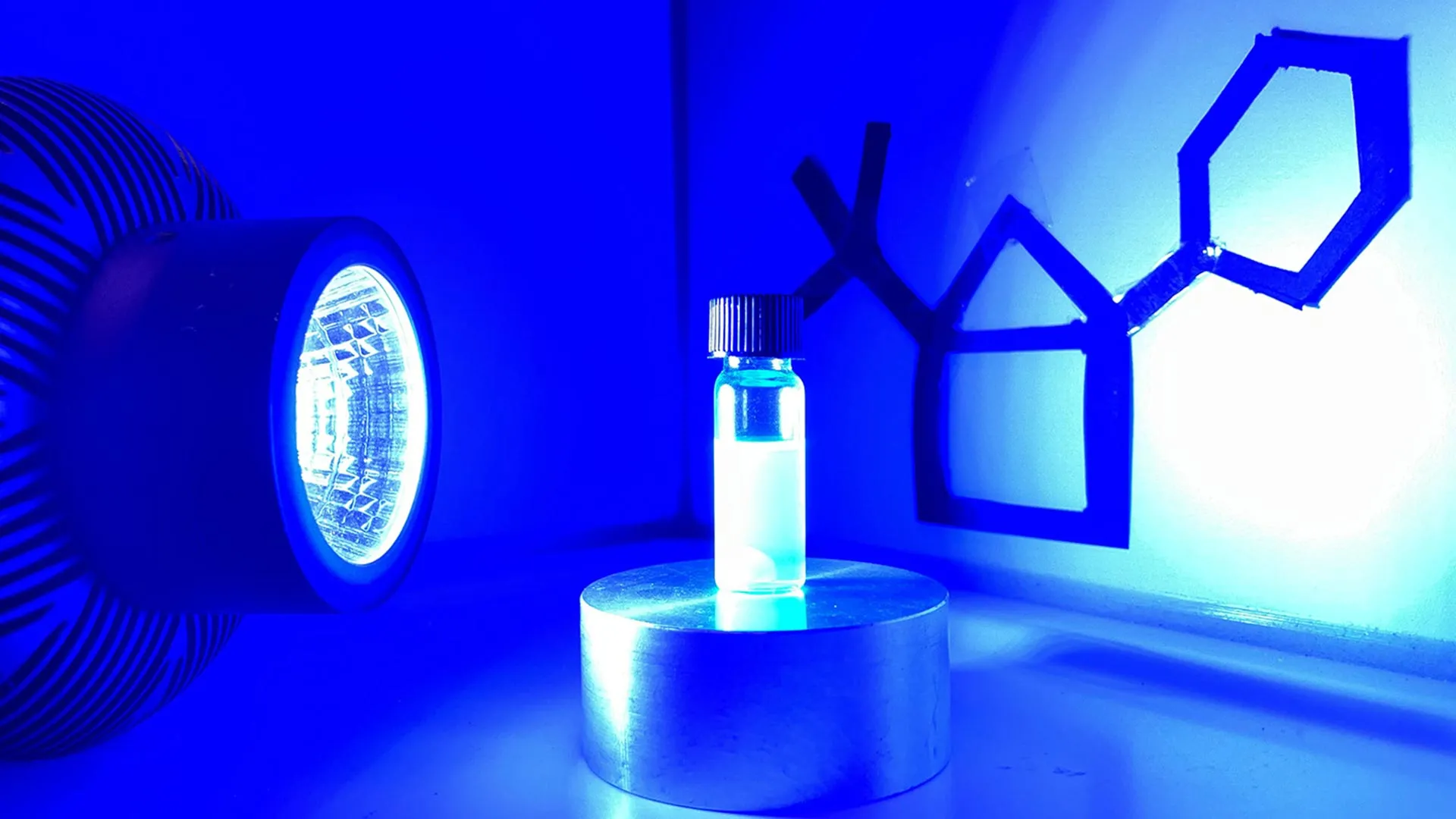
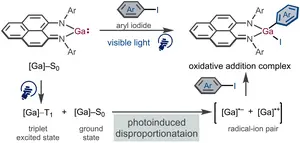
Now, researchers at the University of Osaka have used visible light to enable oxidative addition of aryl halides at a group 13 element, gallium. These findings were published in the Journal of the American Chemical Society.
Oxidative addition is a reaction whereby a metal inserts into a chemical bond and forms two new bonds. Transition metals have traditionally been the metals of choice for this process. However, making use of these metals can be challenging, as they are relatively rare and expensive.
Main-group elements are abundant, but using them as an alternative to transition metals is not always straightforward. Although oxidative addition at main-group centers has advanced rapidly in recent years, reactions involving aryl halides, aromatic organic compounds containing a carbon–halogen bond, remain particularly difficult, especially for group 13 elements.