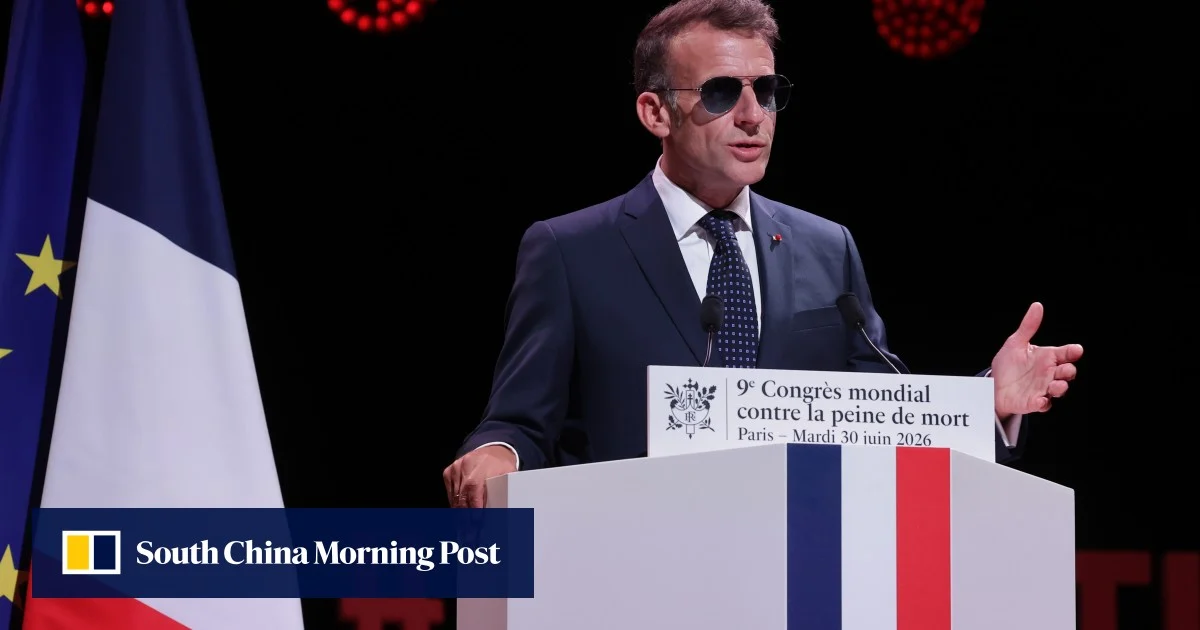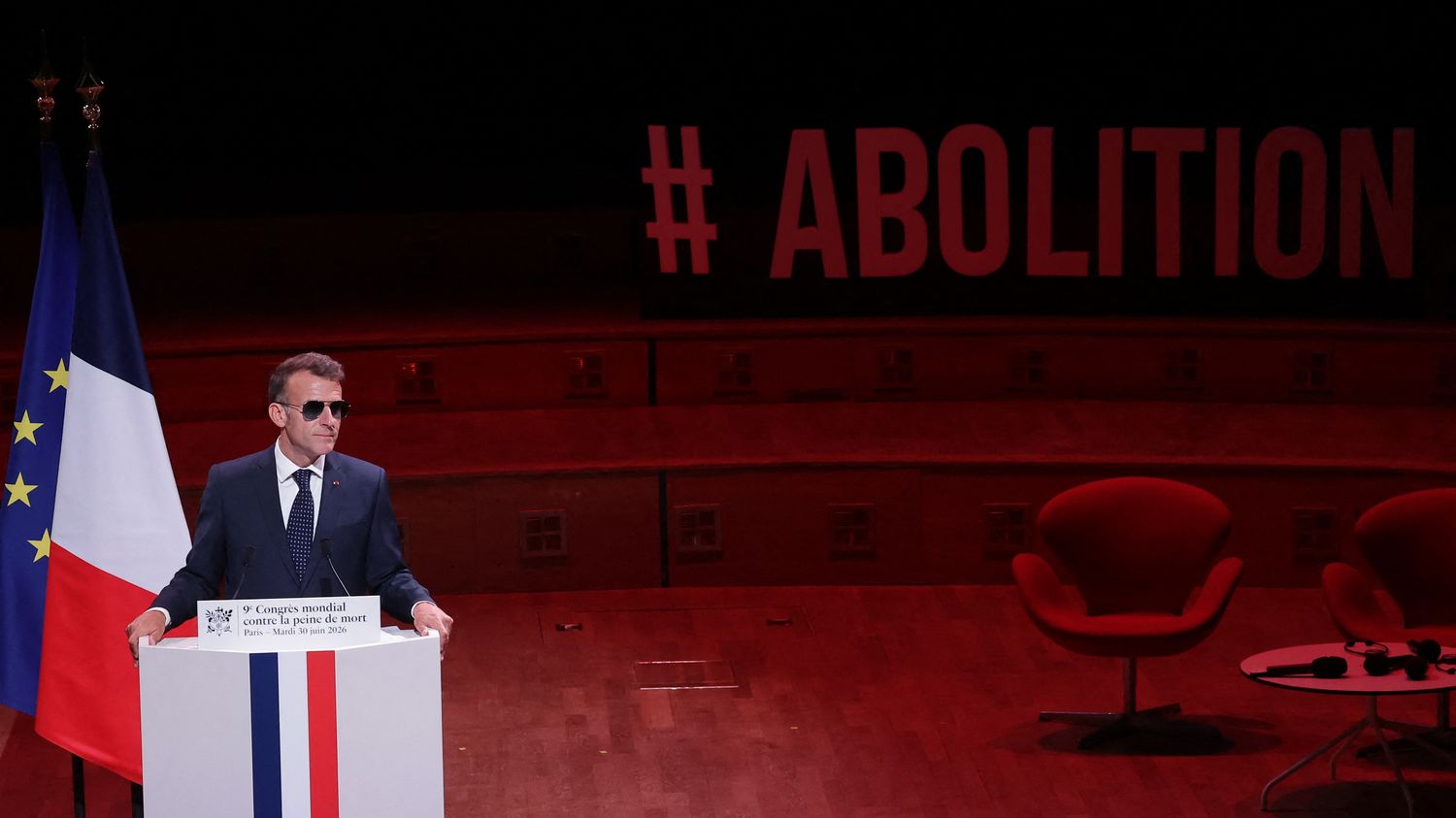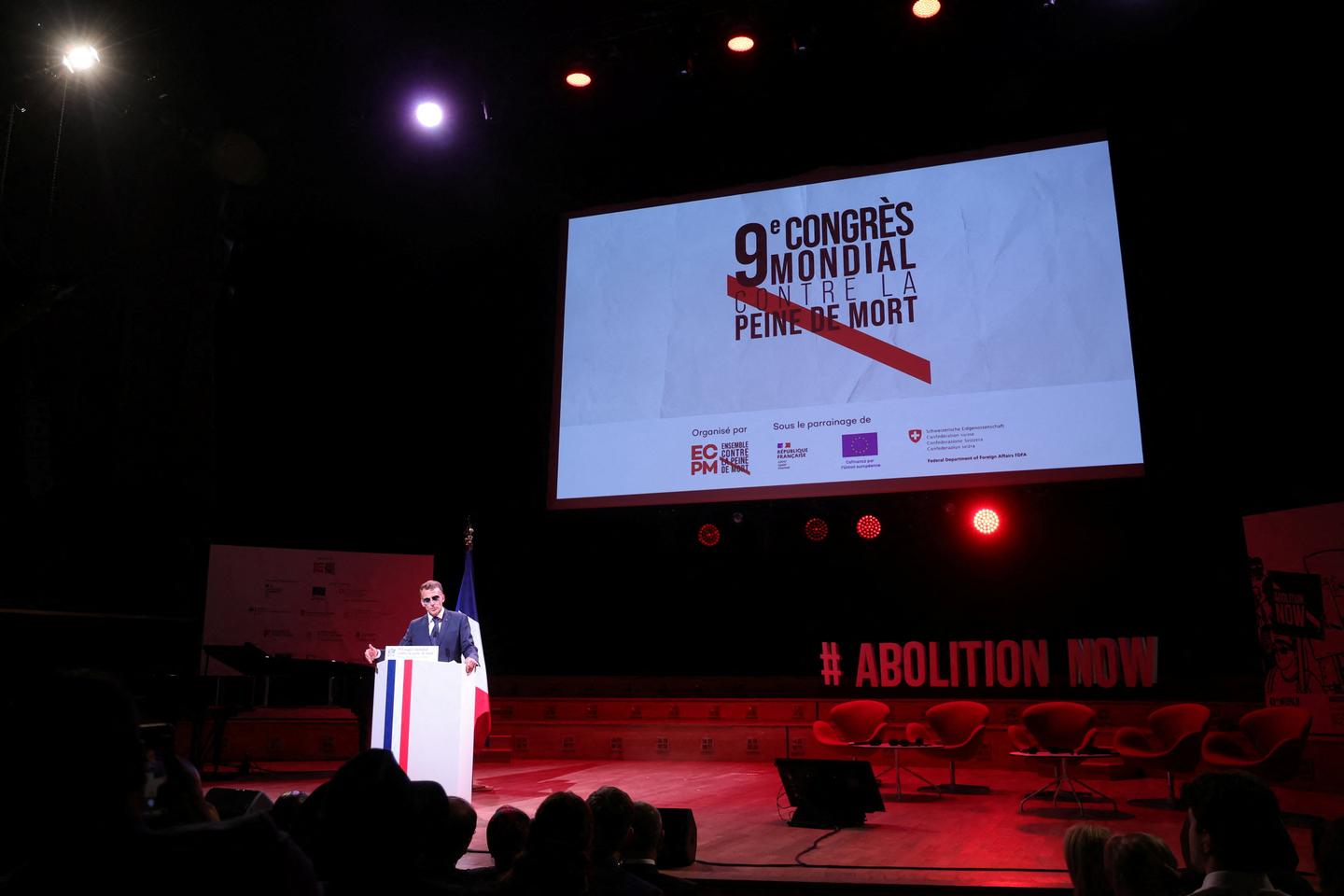
The fight to abolish the death penalty remains "eminently contemporary", French President Emmanuel Macron said as campaigners, judges and former death row prisoners gathered in Paris this week for the World Congress Against the Death Penalty, amid rising executions worldwide and renewed support for capital punishment in some democracies.
Issued on: 02/07/2026 - 11:44
4 min Reading time
Speaking on Tuesday at the ninth World Congress Against the Death Penalty (ECPM) in Paris, Macron said abolition should not be treated as a settled achievement, 45 years after France scrapped capital punishment. "Many people pretend to believe that it is a foregone conclusion," he said. "But the risks remain in many countries – and nothing can be taken for granted." The congress, organised by the NGO Together Against the Death Penalty, is being held from 30 June to 2 July at several venues across Paris and is due to close on Thursday. Macron said the debate was returning "amidst confusion over principles and language", particularly in the wake of crimes that shock public opinion. In a post on X, he wrote: "The existential struggle for the abolition of the death penalty is never a foregone conclusion." In France, calls for a tougher response have followed several recent child murder cases, including that of Lyhanna, aged 11, whose death exposed alleged failings in the handling of earlier rape complaints against the suspect, and Louis, aged 17, killed in an alleged lynching in Narbonne. A CSA poll for right-wing media outlets CNews, Europe 1 and the Journal du Dimanche, published on 14 June, found that 68 percent of French people supported holding a referendum on reinstating the death penalty for crimes against children. "The death penalty has never made a society safer. Never," Macron told the congress. "Because it does not act as a deterrent. That is simply not true. This has been demonstrated, observed and measured." He said capital punishment had "never had the deterrent effect" claimed by its supporters, including "often authoritarian" governments that present it as a tool of order.