The Polymorphic Spaghetti Trap
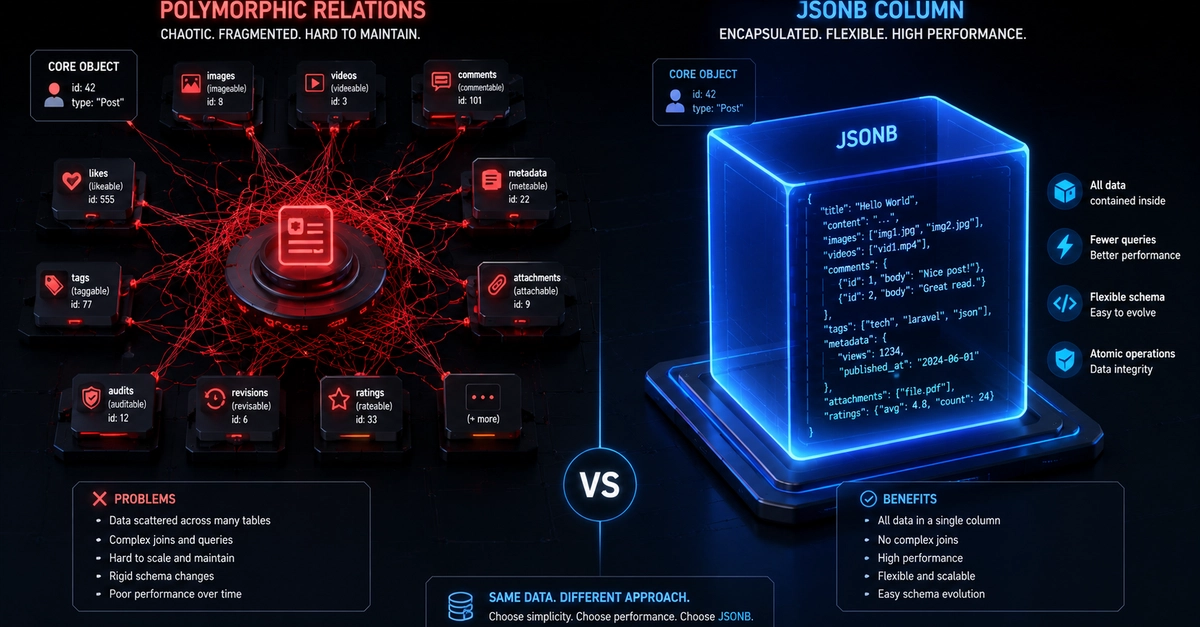
When building enterprise SaaS platforms at Smart Tech Devs, you often need to attach custom metadata or settings to various models. For example, a User, a Company, and an Invoice all need a way to store "Custom Preferences". The standard Laravel reflex is to create a Polymorphic Relationship: a single preferences table with preferenceable_id and preferenceable_type columns.
At a small scale, this is fine. But at enterprise scale, Polymorphic relationships become a severe architectural bottleneck. Querying them requires massive, slow LEFT JOIN operations. If you need to find all Users who have the preference "dark_mode = true", your database has to scan across completely unrelated data (Invoices, Companies) just to filter the Users. Your schema becomes a tangled web of spaghetti, and your read performance plummets. To handle flexible, unstructured data efficiently, you must migrate to PostgreSQL JSONB columns.
The Solution: The JSONB Data Type
PostgreSQL's JSONB (JSON Binary) column allows you to store flexible, schema-less data directly inside the parent table row. It does not require joins. More importantly, PostgreSQL allows you to create GIN Indexes on JSONB columns, meaning querying deep inside the JSON structure is as fast as querying a standard indexed column.