The Single-Node Bottleneck
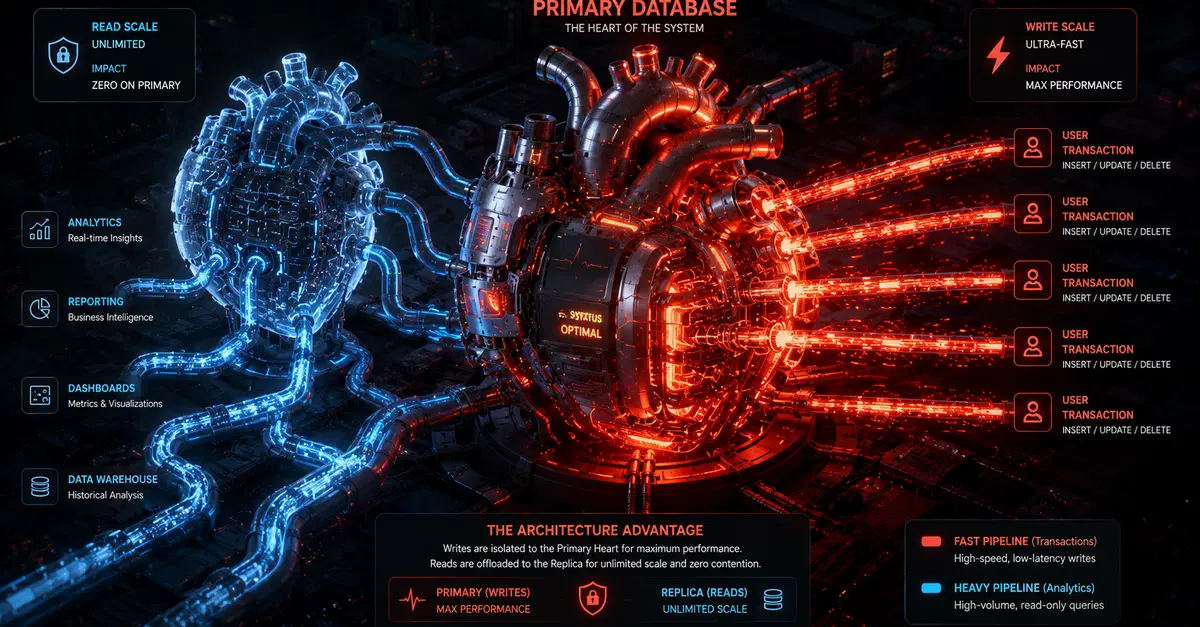
In the early days of a B2B SaaS platform at Smart Tech Devs, a single database instance handles everything. When a user submits an invoice, the database writes the row. When an executive loads their dashboard, the database runs a complex GROUP BY read query.
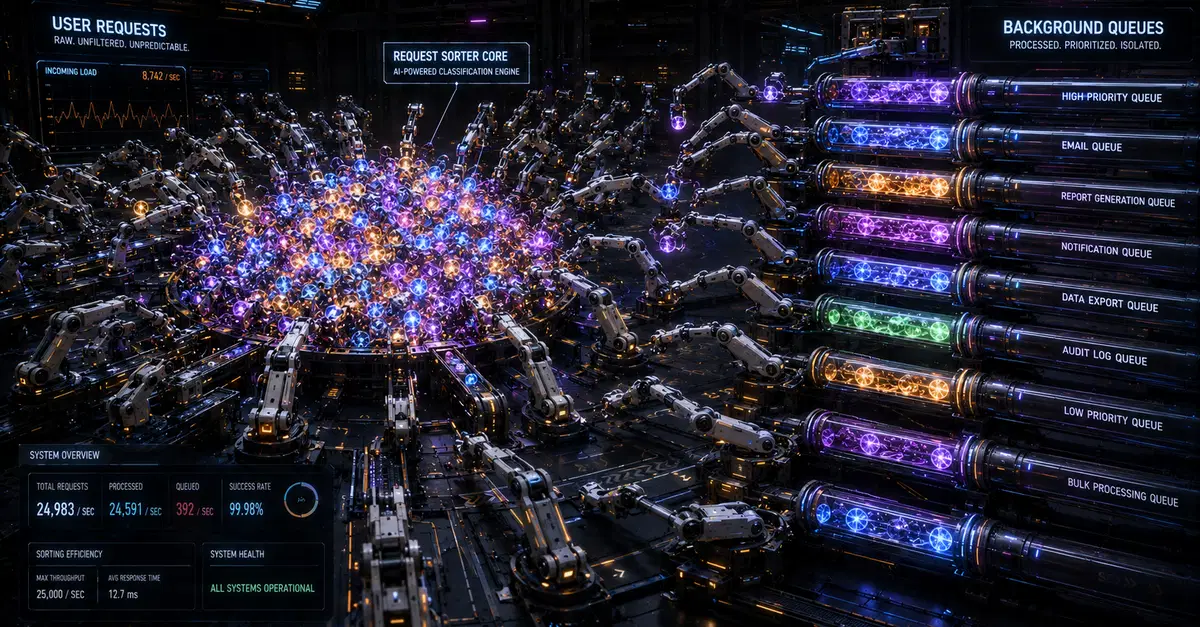
As you scale, this creates a catastrophic resource collision. Heavy analytical read queries require massive amounts of CPU and RAM to sort and aggregate data. If a reporting query takes 3 seconds to run, it locks table rows and starves the database's connection pool. During those 3 seconds, incoming POST requests (like user registrations or payment webhooks) are forced to wait in a queue. If the queue gets too long, your API throws a 500 timeout error. You cannot let read-heavy reporting bring down your write-heavy ingestion. You must separate them using Read/Write Replicas.
The Solution: CQRS via Database Replication
Command Query Responsibility Segregation (CQRS) is an architectural pattern that separates data modification (Writes) from data reading (Reads).