The SaaS Scaling Dilemma
When you transition from building internal company tools to building a Software-as-a-Service (SaaS) platform, the fundamental architecture of your database must evolve. In a standard application, every user accesses the same overarching dataset. However, in a B2B Enterprise SaaS application, you are onboarding entire organizations. Organization A (Tenant A) must never, under any circumstances, see the data belonging to Organization B (Tenant B). A data leak across tenant boundaries is the fastest way to destroy a SaaS company's reputation.
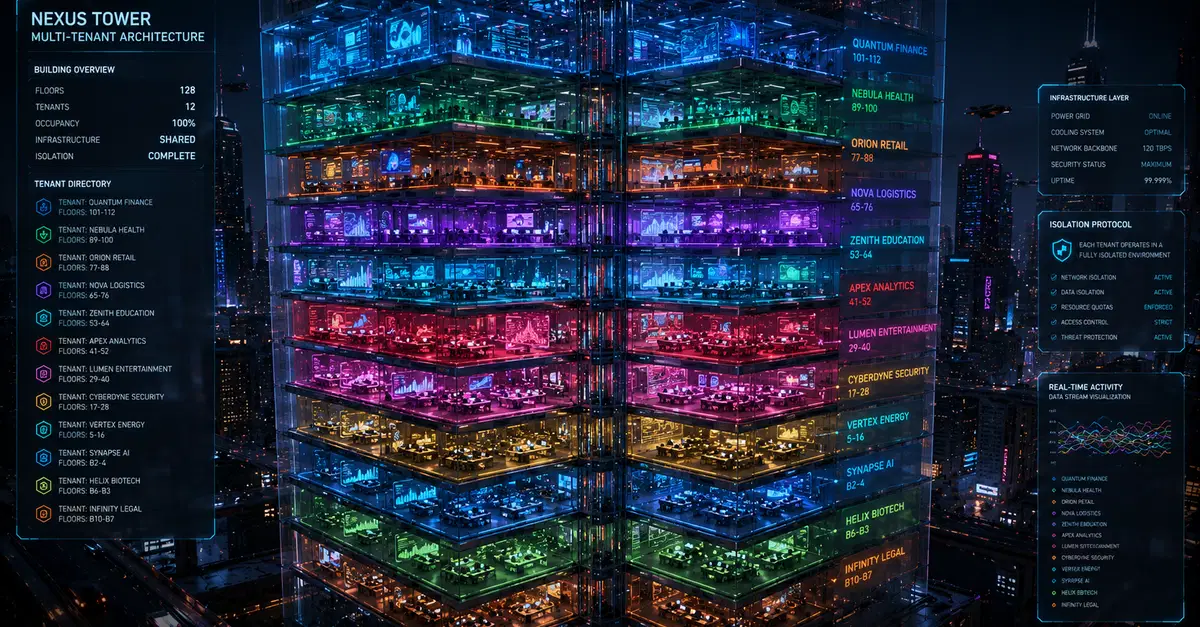
This architectural challenge is known as Multi-Tenancy. There are generally two ways to solve this: a Multi-Database approach (where every tenant gets a physically separate database) or a Single-Database approach (where all tenants share tables, but rows are strictly filtered by a `tenant_id`). While the Multi-Database approach offers ultimate isolation, it creates an infrastructure nightmare when you need to run migrations across 5,000 separate databases.
At Smart Tech Devs, for the vast majority of our enterprise SaaS builds, we utilize a Single-Database Multi-Tenancy Architecture. By leveraging Laravel's powerful Global Scopes and Middleware, we can create a system where data isolation is enforced automatically at the ORM layer, preventing developers from ever accidentally writing a query that leaks data.