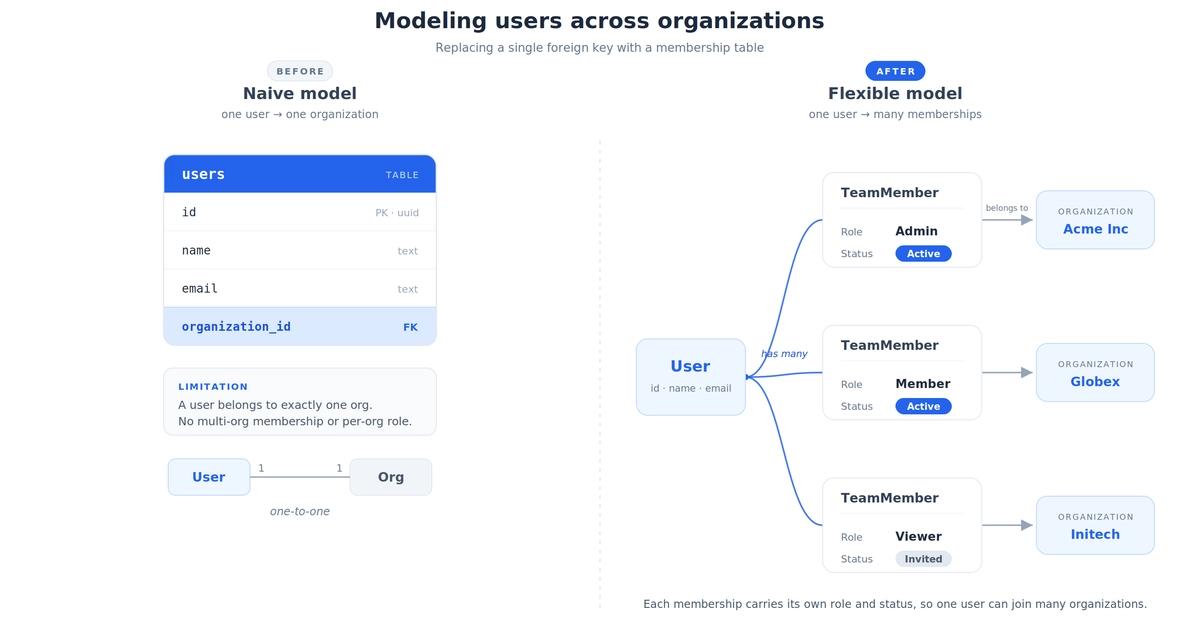
In Organizations, Teams, and Invitations we got people into the right organization: memberships, roles, invite flows, all the plumbing that decides who belongs where. That article assumed the data layer would simply honor an organization_id filter whenever asked. This one is about making that assumption actually true at the database and infrastructure level. Application code that a reviewer has to trust got every query right isn't a good enough guarantee.
This is part of the Full Stack SaaS Masterclass, a build-it-for-real series taking a multi-tenant SaaS from an empty folder to production. Module 3 covers the features that make a SaaS a SaaS, and tenancy is the one architectural decision underneath all of them: get it wrong and every other feature inherits the risk.
I want to set expectations early. There is no single "correct" multi-tenancy architecture. There's a spectrum of isolation models, each with a different cost in operational complexity, and the right one depends on your customer profile, not on which one sounds more impressive in a design doc.
Choosing a tenant isolation model
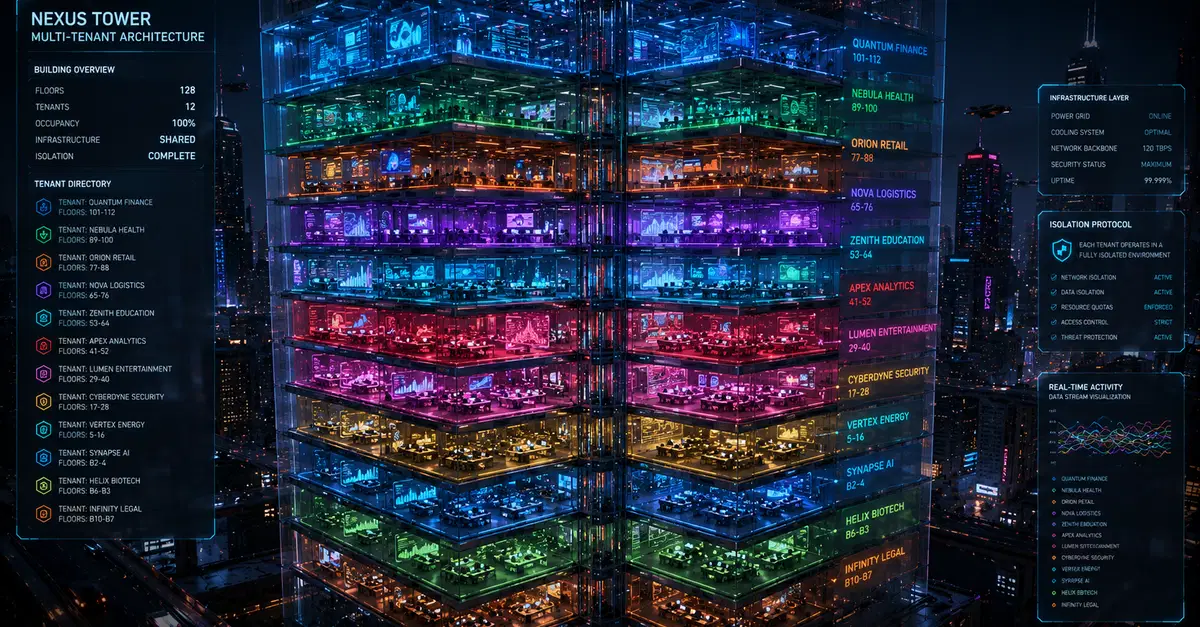
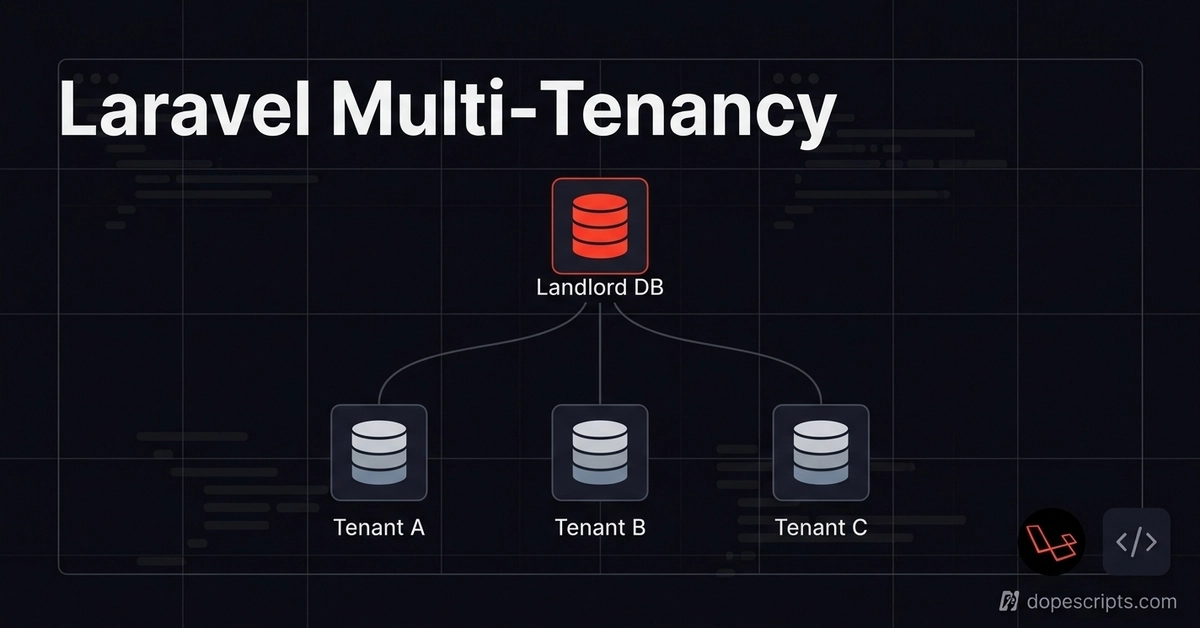
Three models cover almost every real SaaS product, and they differ mainly in where the tenant boundary lives.