The Trap of Framework Coupling
When you start building a Laravel application, the framework provides an incredible set of tools to move quickly. Eloquent ORM makes database interactions feel like magic, and HTTP Controllers make routing a breeze. However, as your enterprise application scales over several years, this tight coupling becomes a massive liability. Your business logic becomes inextricably intertwined with Laravel’s specific implementations.
Consider a standard controller method that handles a complex user registration. It might validate the HTTP request, use Eloquent to save the user, dispatch a Laravel Job to send an email, and format a JSON response. If your business stakeholders suddenly decide they want to trigger this exact same registration logic from a CLI command, a background worker, or a newly acquired third-party system, you are trapped. The logic is locked inside an HTTP controller and strictly relies on Eloquent models. You cannot execute the business rule without faking an HTTP request or duplicating the code.
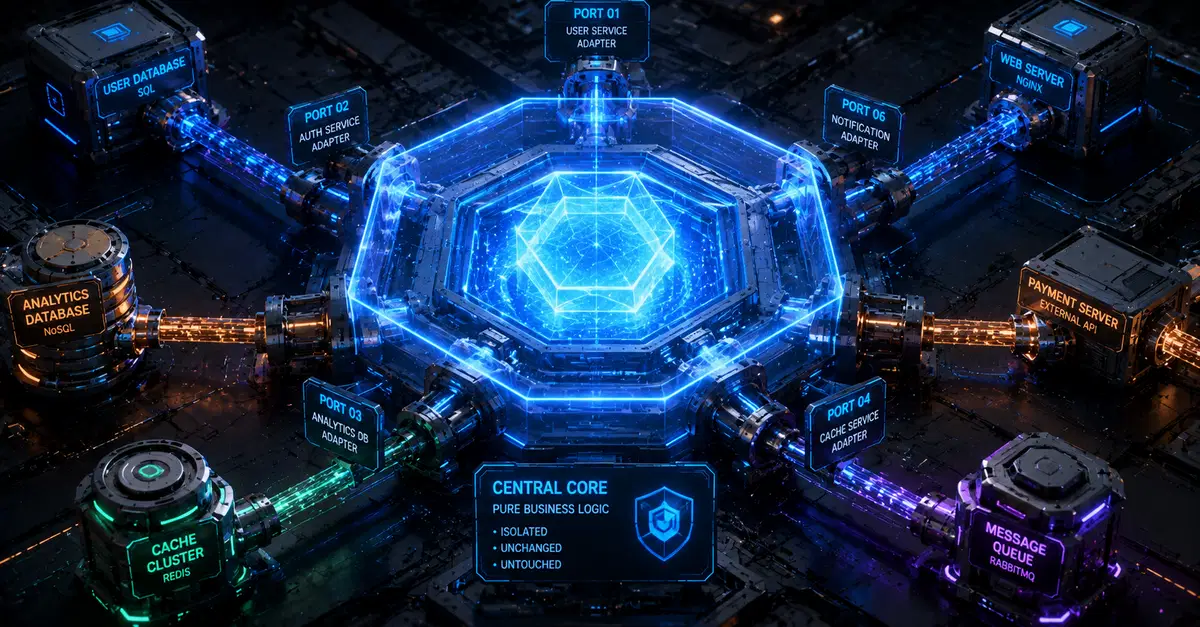
At Smart Tech Devs, we protect our core business logic from framework lock-in by implementing Hexagonal Architecture, also known as Ports and Adapters. Invented by Alistair Cockburn, this architectural pattern dictates that your core domain logic must not know anything about the database, the UI, or the framework. It sits at the center of your application, entirely agnostic and highly testable.