The struggle between democracy and oligarchy in classical Greece was bitter, with oligarchies relying on skillfully designed political institutions to shore up unpopular regimes. As concerns grow over the “rule of the few” in the United States, Americans should consider how their own institutions are doing oligarchs’ work for them.
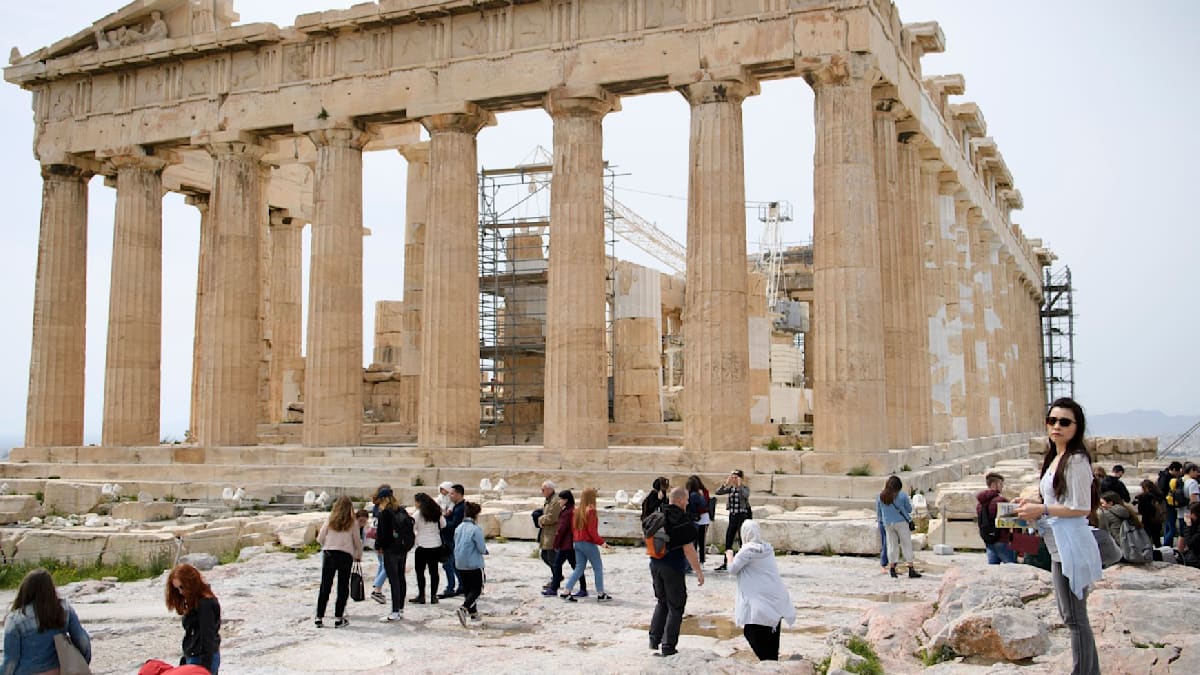
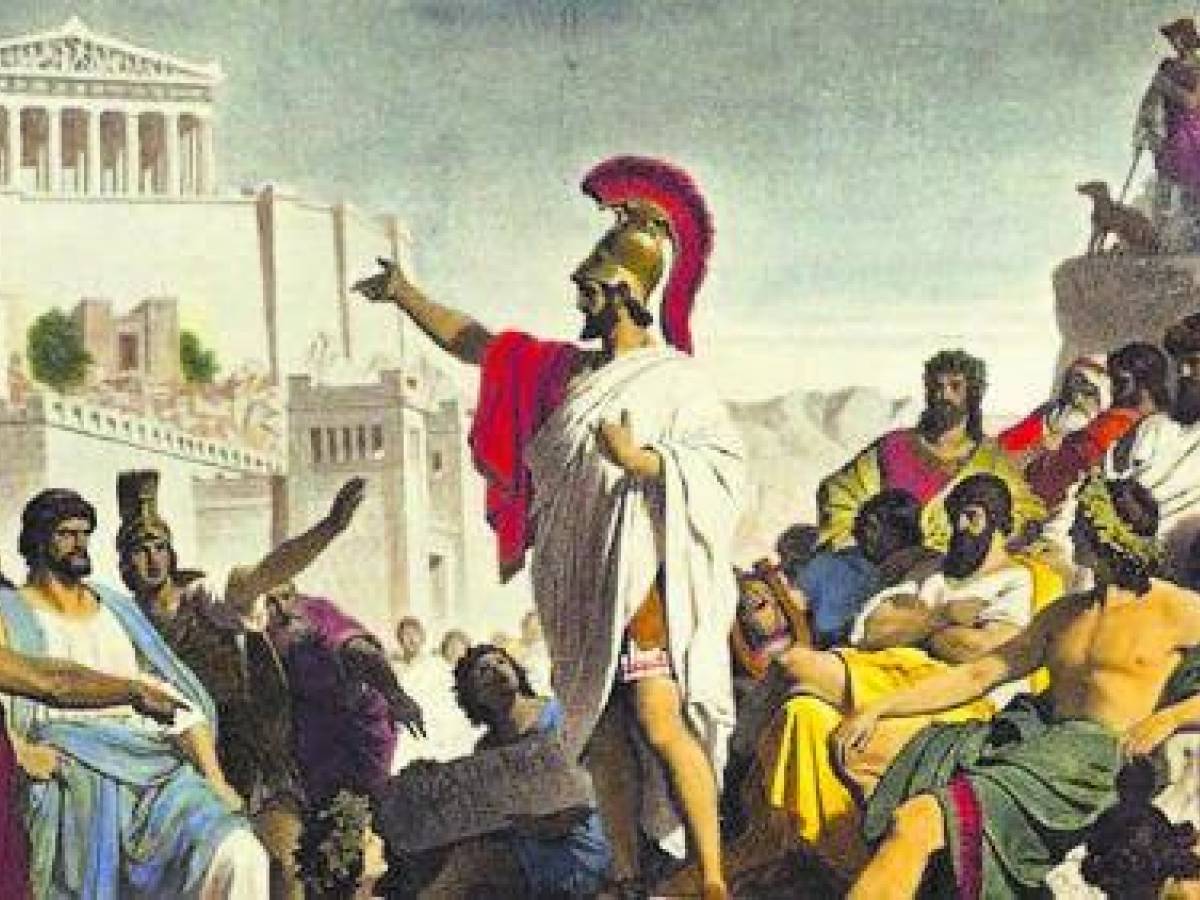
PRINCETON—In the autumn of 403 BCE, democracy triumphed in Athens. It was a hard-fought victory. The 27-year conflict with Sparta known as the Peloponnesian War had ended the previous year with the besieged Athenians capitulating. An authoritarian regime called the Thirty then took control of the city and, despite their claims of “virtue” and “justice,” soon executed more than 1,500 people.This paroxysm of violence inspired a democratic resistance movement, comprised in part of working-class resident foreigners and slaves. After nearly a year of civil war, the rebels had won—a remarkable moment of democratic restoration that still resonates today. To celebrate, they offered a sacrifice on the Acropolis to the city’s patron goddess, Athena.But far from the festivities, a very different kind of commemoration was taking place. Remnants of the Thirty were setting up a monument to their fallen leader, Critias. An older relative of the philosopher Plato, Critias was an intellectual, poet, and political theorist who virulently opposed the city’s democracy. He had spearheaded the Thirty until his death in battle earlier that year.To pay tribute to Critias and the entire anti-democratic movement, his fellow partisans erected an elaborate marble gravestone. A carved relief showed a fierce young woman brandishing a torch and setting another woman on fire, with the epitaph: “This is the memorial of good men, who for a brief time restrained the hubris of the cursed Athenian people.” According to an ancient Greek commentator, the woman holding the torch is Oligarchy personified. Her victim is Democracy.Democracy’s NemesisNo trace of Critias’ gravestone survives, and the only reference to it is in the marginal note of a manuscript. Some scholars have understandably doubted its existence. Surely, they argue, such a subversive object would have been built in secret, raising the question of how anyone could have recorded its content. Perhaps it is a bit of ancient fan fiction.Still, real or invented, the monument encapsulates a major political phenomenon of classical Greece: oligarchy, or “the rule of the few.” Oligarchs viewed themselves as a rarefied minority set apart by their breeding, wealth, manners, and superior education, which rendered them fit to rule. They were, in a word, the “good” of Critias’ epitaph, as opposed to the unwashed majority—the demos—who lacked the training and discernment necessary for politics, and whose misplaced priorities could result only in hubris. It was the duty of every right-thinking member of the elite to hold back the tide of ignorance by whatever means necessary. (In ancient sources, the demos is often compared to a rushing river or inundating wave; the torch imagery of the tombstone, opposing fire to water, may therefore be deliberate.)If the oligarchic sentiment embodied in Critias’ monument seems extreme, that is because it reflects the bitterness of the struggle between democracy and oligarchy in classical Greece. It is well known that, beginning in the fifth century BCE, Greek thinkers devised a simple yet ingenious method for classifying constitutional types based on number. States could be ruled by the one (tyranny), the few (oligarchy), or the many (democracy). What is less understood is that democracy and oligarchy quickly became the two most common—and most violently opposed—forms.Writing in the fourth century BCE, Aristotle observed in The Politics that “most constitutions are either democratic or oligarchic.” It would not be an exaggeration to say that the choice between the two nearly tore the Greek world apart. Columbia University historian John Ma, in his recent history of the ancient Greek polis, refers to the period between about 460 and 360 BCE as a “Hundred Years’ War” between democracy and oligarchy. Much more than tyranny, oligarchy was the great nemesis of popular government.But oligarchy, no matter how ubiquitous, never had widespread appeal. Oligarchs were not a political “party” who alternated with democrats through peaceful transfers of power. Most constitutional changes were the result of a coup d’état. That was true even for the establishment of democracies. But whereas democracies, almost by definition, enjoyed the support of a majority of citizens, oligarchies often managed to persist in spite of their unpopularity.The Rules of the FewAncient Greek oligarchies are a case study in how skillfully designed institutions can preserve even the most authoritarian regimes. On the surface, oligarchy relied on a property requirement to ensure that only a minority of the population, perhaps the wealthiest 10–15% of the male citizen population, had access to political office. But oligarchy had a strong ideological class component, too. As Aristotle rightly observed, oligarchy and democracy refer to number, but actually entail the rule of the rich and the poor, respectively.To maintain power, the oligarchic “gentlemen’s club” employed a classic strategy of divide and rule. Leading lights from the opposition were co-opted into the regime. Publicly posted rewards for informants sowed doubt and division among would-be conspirators. Movement in the central spaces of the polis, where protest could spiral into revolution, was heavily regulated. And if the domestic scene grew turbulent, international allies stepped in to restore “order”: the Spartans in particular were notorious for intervening to help shore up oligarchies.