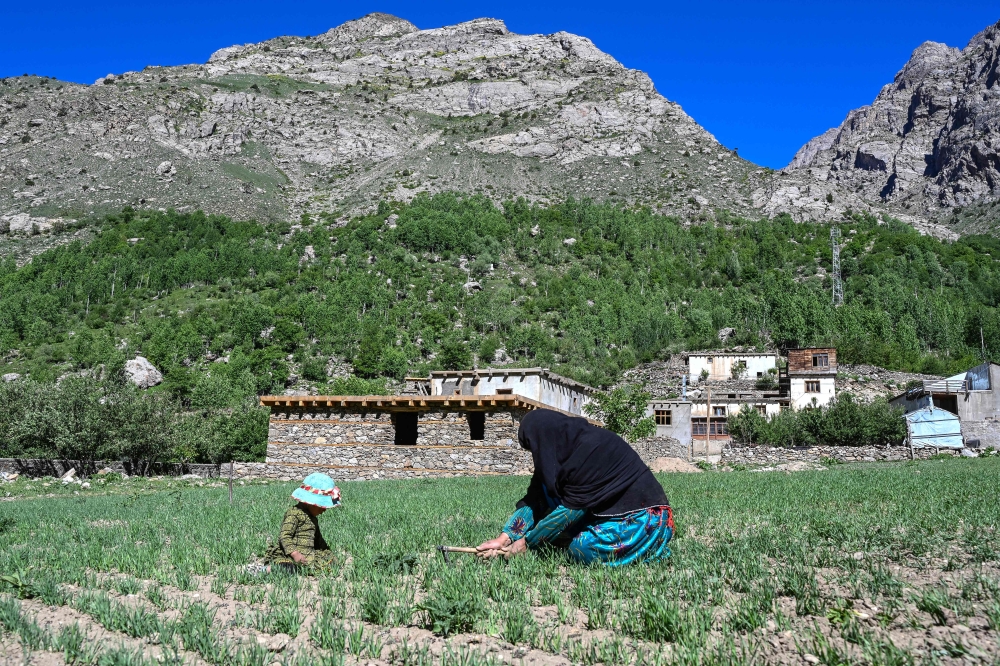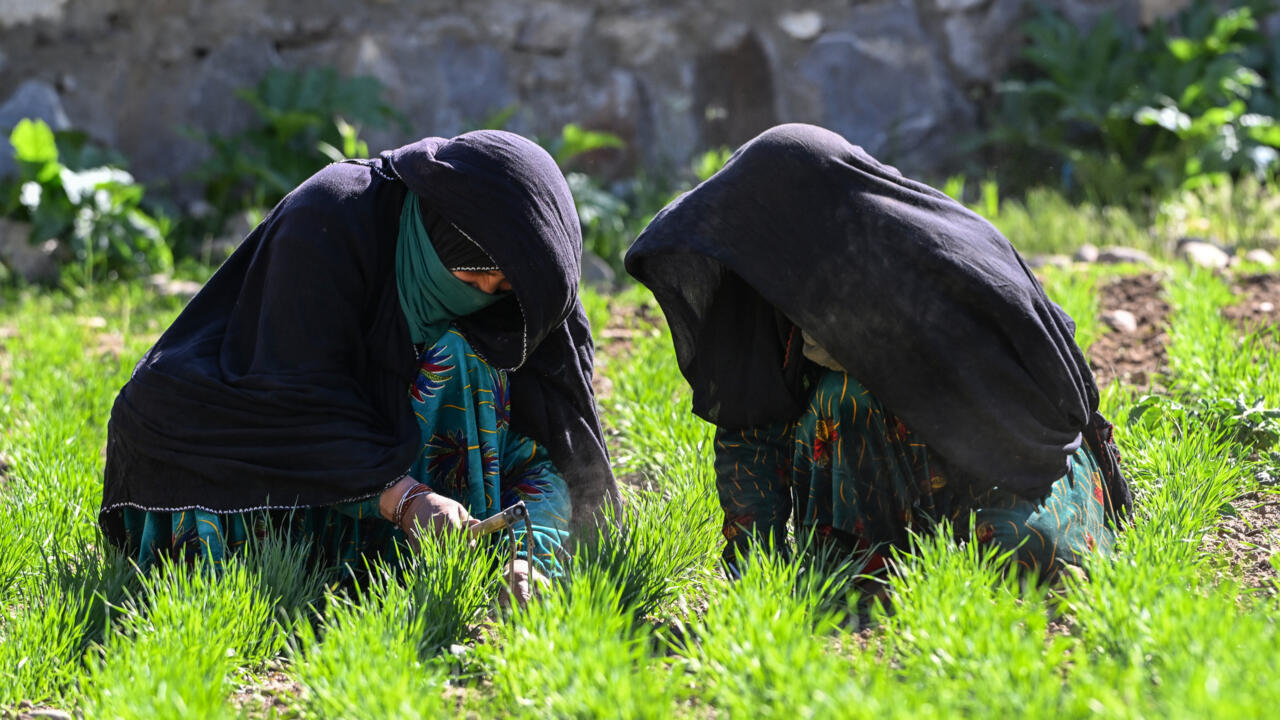
The fields of Eshtiwi show only the first faint signs of growth in June, with small green sprouts emerging around the village.Habiba, who spoke to AFP while busy weeding, is proud to have been farming in Nuristan province for decades."Since I was eight years old, I've been going to the field with my mother," said the 46-year-old, who only has one name."When we harvest wheat, beans, potatoes and corn in the fields in autumn and bring them back home, we feel happy," she added.In Afghanistan, women are generally allowed to farm despite being banned by the Taliban government from most employment.
The river Parun flowing along a hillside on the outskirts of Parun district in Afghanistan's Nuristan province © Wakil KOHSAR / AFP
Mohammad Yahya Faizi, a 34-year-old agriculture graduate, said he respects the women's work."We would not have food anymore in the middle of the winter" without their work, he said.Eshtiwi in summertime is only reachable by a dirt track and, before AFP's visit, it had been years since international media had reached the village.Faizi said "tasks have been divided between men and women" for generations in the Parun Valley, where residents speak their own dialect."Women are busy with agriculture, planting, watering and cooking at home," said Faizi, a village farmer who volunteers with the Food and Agriculture Organization (FAO) of the United Nations.Men help with animal-drawn ploughs, handle livestock, and gather firewood for winter, when snow cuts the village off from the outside world for almost six months.Habiba's day starts at around 4:00 am, when she gets up to pray before preparing breakfast with her daughters on a wood-fired stove.