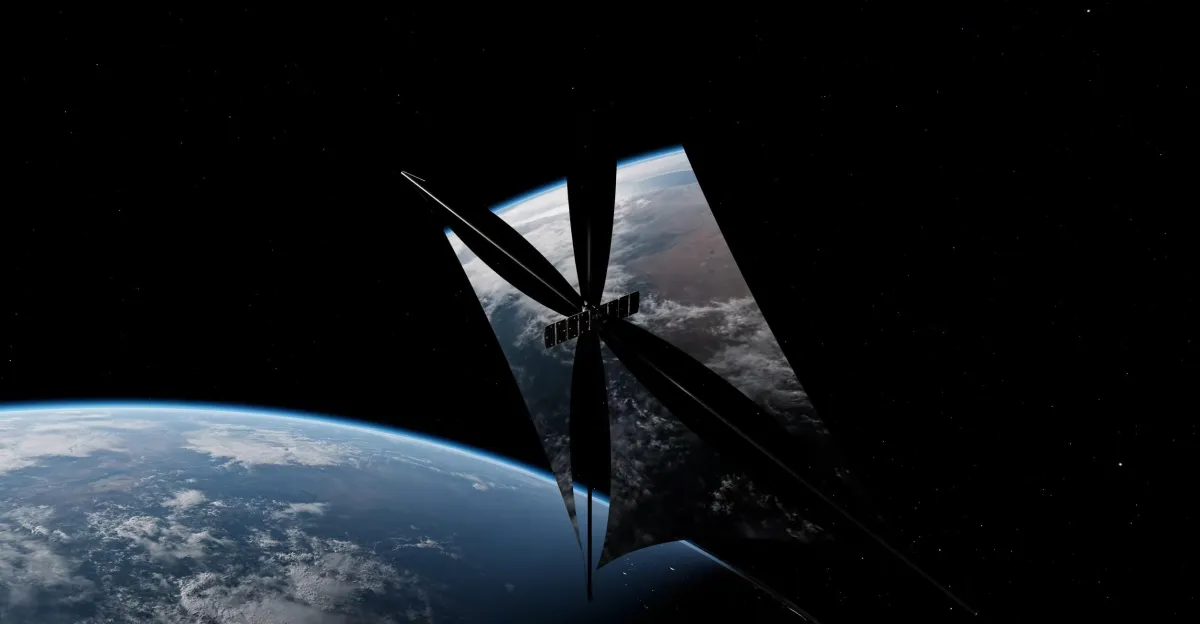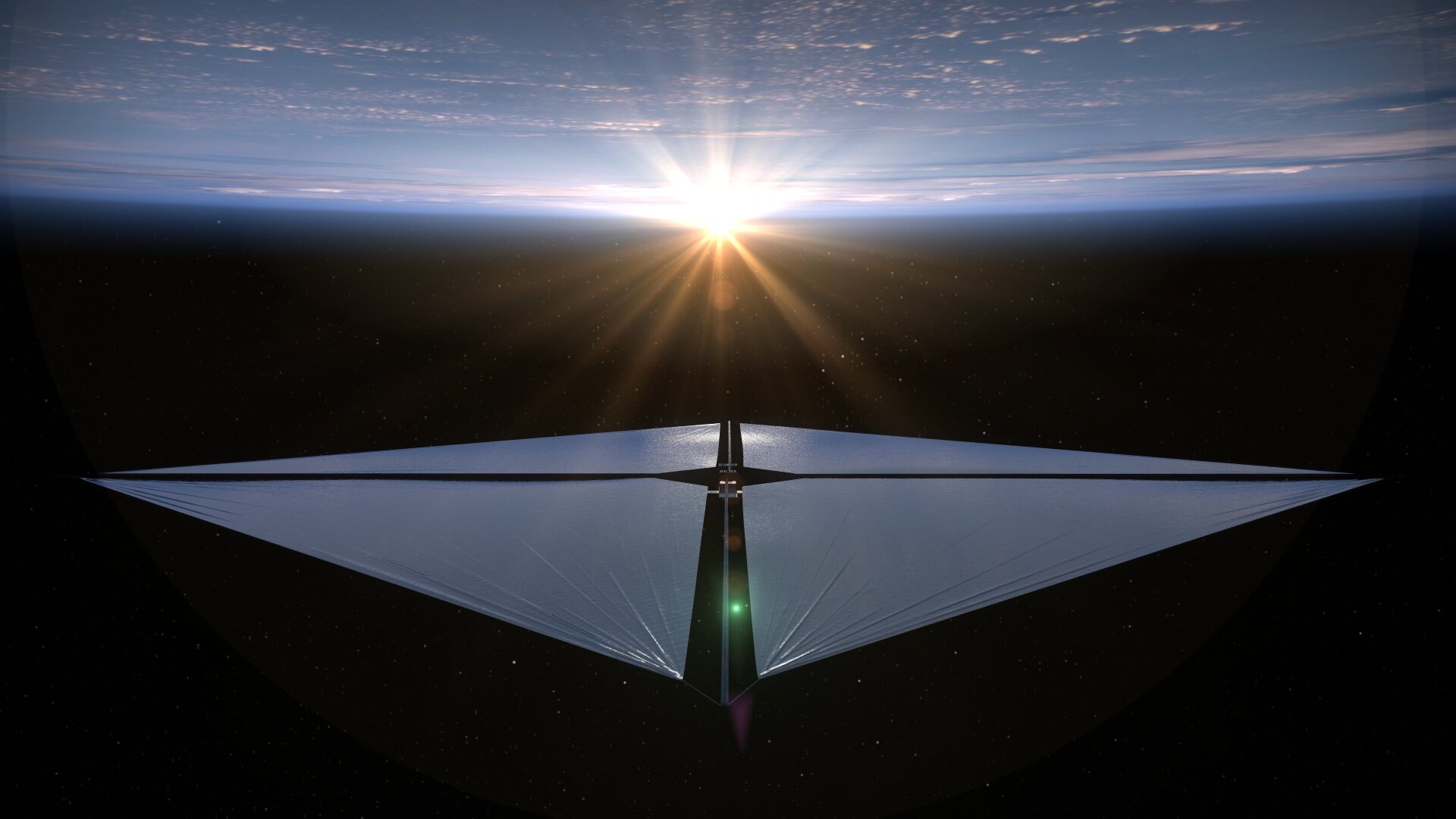
Advanced Composite Sail concept from NASA. Credit: NASA Ames Research Center / NASA / Aero Animation / Ben Schweighart
Giant mirrors in space have been a staple of science fiction for decades. But so far, there's been very little work looking at the actual physics behind the concept—possibly because we're still so far from making them ourselves. Still, they could potentially serve as a passive technosignature if we manage to find one. In order to do that, though, we have to understand what we're looking for. That is the purpose of a new paper, available as a preprint on arXiv, by Shauna Sallmen of the University of Wisconsin–La Crosse and Eric Korpela of UC Berkeley.
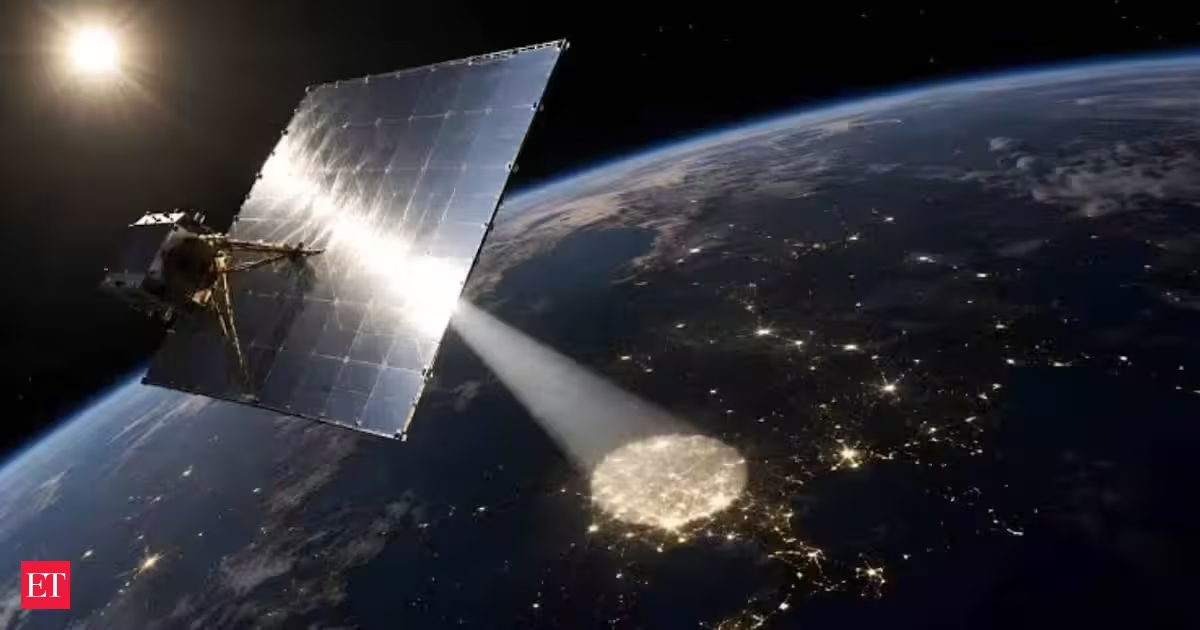
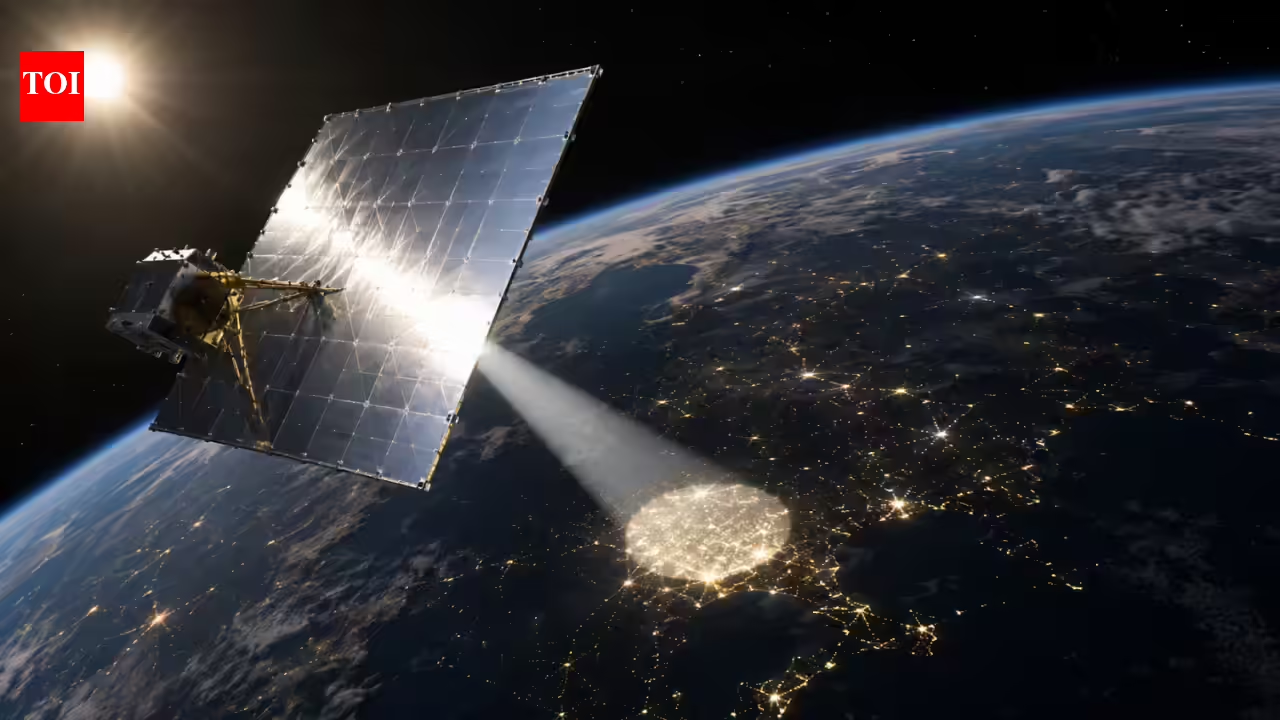
There are plenty of reasons an advanced civilization would place giant mirrors around a planet. Many of the planets in the "habitable zone" of their stars don't actually have a climate that is particularly hospitable to life, and mirrors can be used to fix some of those problems. In particular, planets in the habitable zones of dim red M-dwarfs are likely close enough that they experience tidal locking—meaning one side is constantly facing the star while the other is a frozen wasteland that never sees sunlight.
Mirrors reflecting sunlight back onto such a planet is one obvious solution to that problem. But there's a massive catch—orbital mechanics. Starlight doesn't just reflect perfectly off the mirror and bounce down to the target planet. Some of the energy of the photons hitting the mirror will cause a "push" similar in concept to how a solar sail works. Since these mirrors are designed to be lightweight and have massive surface area, even a small amount of light sailing can push them into orbits completely unsuitable for maintaining the climate of their target planet.