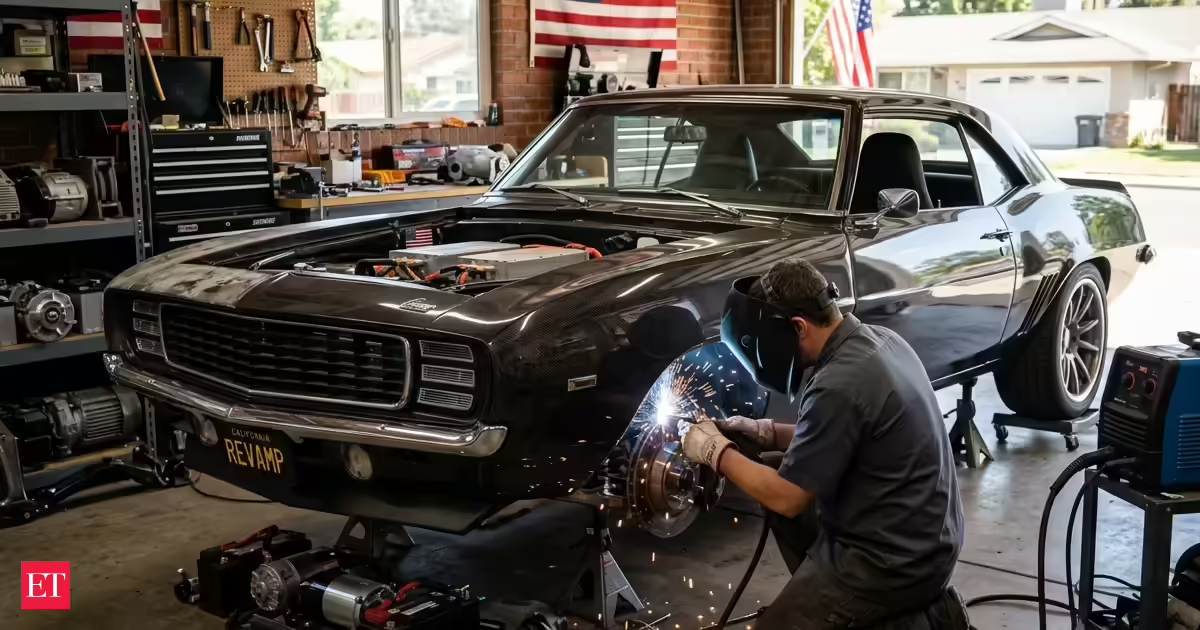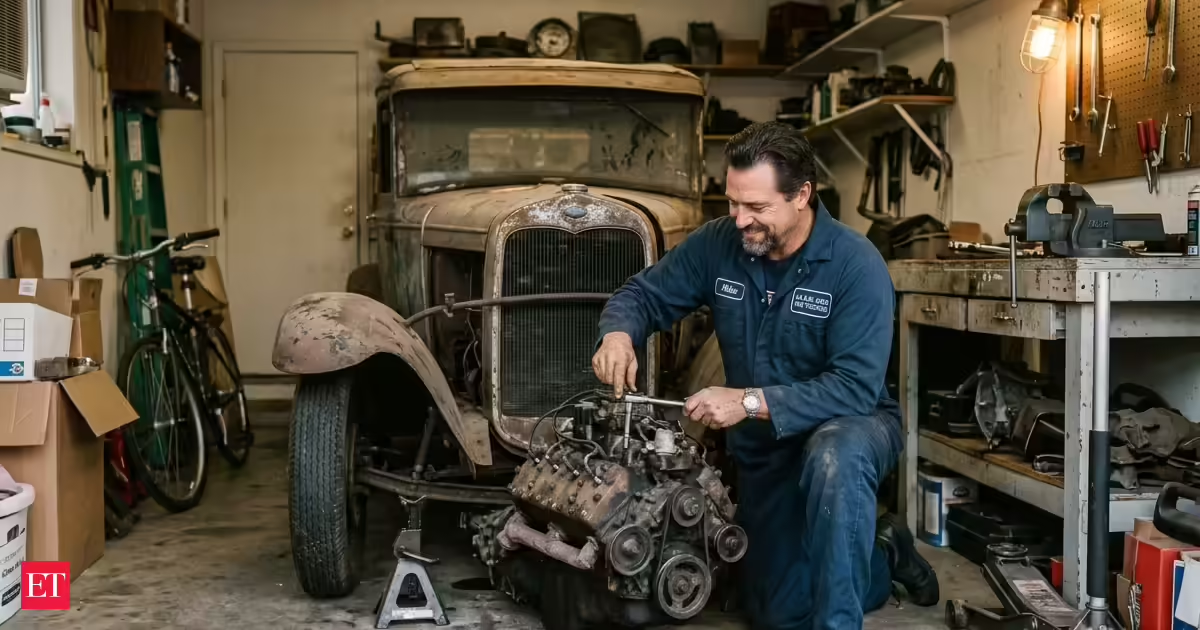
Psychology says people who restore old vehicles aren't merely interested in collecting vintage cars or motorcycles. Many psychologists believe that this activity reflects deeper mental and emotional processes. Restoring an old vehicle requires time, planning, learning, and persistence. It involves solving problems, making careful decisions, and staying committed over long periods. For many people, the process becomes more rewarding than the finished product. Psychology suggests that this type of hobby may support emotional well-being, improve focus, and strengthen a person's sense of purpose while preserving memories and history connected to older vehicles.What psychology says about restoring old vehicles?Psychology suggests that people who enjoy restoring old vehicles are often motivated by more than mechanical interest. They are usually drawn to challenges that require patience and long-term commitment. Instead of seeking quick rewards, they are willing to invest months or even years into completing a project.The process also allows people to see visible progress. Every repaired engine, cleaned part, or restored body panel becomes evidence that effort produces results. This can improve confidence and provide satisfaction.Many psychologists also note that hands-on hobbies help people disconnect from daily stress. Working with tools and focusing on detailed tasks can create a calm mental state where outside worries become less important.What does this mean?Restoring an old vehicle often reflects a person's ability to think beyond immediate results. It shows comfort with delayed gratification. Rather than expecting instant success, these individuals accept setbacks and continue working toward their goal.You Might Also Like:The hobby may also represent a connection with personal memories or family history. Some people restore vehicles owned by parents or grandparents. Others enjoy preserving pieces of automotive history that might otherwise disappear. Psychology suggests that this combination of purpose and emotional connection gives the activity lasting meaning.Why do people restore old vehicles?There are many reasons why people choose to restore classic vehicles. Some enjoy solving mechanical problems. Others appreciate craftsmanship and enjoy learning skills that modern technology rarely requires. For many, restoration provides a creative outlet. Owners make decisions about paint, interiors, engines, and finishing details while respecting the vehicle's original design.The work also creates structure. A large restoration project can be divided into smaller tasks. Completing each stage provides motivation to continue. Many enthusiasts also value the community built around restoration. Clubs, online forums, and local events allow people to exchange advice, share experiences, and celebrate completed projects.You Might Also Like:The psychology theory behind this behaviorSeveral psychological theories help explain why restoring old vehicles can be rewarding.One is Self-Determination Theory, developed by psychologists Edward Deci and Richard Ryan. The theory explains that people feel motivated when three basic psychological needs are met: competence, autonomy, and relatedness.Vehicle restoration supports competence because people learn new skills and solve difficult problems. It supports autonomy because owners make their own decisions throughout the project. It supports relatedness because restorers often connect with others who share similar interests.Another explanation comes from the Concept of Flow, introduced by psychologist Mihaly Csikszentmihalyi. Flow describes a mental state where people become fully absorbed in an activity. Restoring an old vehicle often requires complete concentration, making it easier to experience this state.You Might Also Like:This psychology study saysResearch on hobbies, craftsmanship, and hands-on activities has found several mental health benefits. Studies suggest that engaging in meaningful leisure activities can lower stress, improve mood, and increase life satisfaction. Activities requiring concentration may also reduce repetitive negative thinking by directing attention toward achievable tasks.Research on restoration and repair work also shows that creating or repairing something physical can strengthen a person's sense of accomplishment because progress is visible over time.Psychologists also recognize that hobbies involving learning and problem-solving help keep the brain active. They encourage planning, memory, decision-making, and flexible thinking. Although restoring old vehicles has not been studied as extensively as some other hobbies, research on similar forms of craftsmanship points toward many of the same psychological benefits.Psychology says people who restore old vehicles aren't avoiding realityPeople sometimes assume that restoring classic vehicles is simply nostalgia or an escape from modern life. Psychology offers a different explanation. Many restorers actively engage with difficult tasks rather than avoiding them. Every project presents unexpected challenges. Parts may be missing. Repairs may fail. Budgets may change. Despite these setbacks, restorers continue working until solutions are found. This persistence demonstrates resilience rather than avoidance. The activity teaches people to accept mistakes, learn from them, and keep moving forward.The principle behind this behaviorThe principle behind vehicle restoration is that meaningful effort creates lasting satisfaction. Unlike activities that provide immediate rewards, restoration requires patience. Every completed task builds momentum. Over time, small improvements become major achievements.Psychologists often describe this as mastery through repeated practice. As skills improve, confidence grows naturally. The process also reminds people that progress rarely happens all at once. Large goals become manageable when broken into smaller steps.What can people learn from it?Restoring an old vehicle teaches lessons that extend beyond the garage.It encourages patience when results take time.It develops problem-solving abilities by requiring creative solutions.It improves persistence by showing that setbacks are part of progress.It builds confidence because each completed repair proves that learning is possible.The hobby also demonstrates the value of preserving history instead of replacing everything with something new.These lessons can be applied to careers, education, relationships, and personal growth.Life lessons from restoring old vehiclesOne of the biggest lessons is that imperfect things can become valuable again with care and effort. The process also shows that failure is often temporary. Many restoration projects include mistakes that eventually lead to better solutions.Another lesson is that meaningful achievements usually require consistency rather than speed. Finally, restoring old vehicles reminds people that patience, learning, and persistence often produce the greatest rewards. The finished vehicle becomes more than a machine. It represents the time, knowledge, and determination invested throughout the journey.
Psychology says people who restore old vehicles aren't stuck in the past: What the habit reveals
Psychology says people who restore old vehicles aren't simply spending time on an old hobby. Psychology suggests this behavior reflects patience, problem-solving, emotional connection, creativity, and a desire to preserve history. Restoring classic vehicles can improve focus, reduce stress, build confidence, and provide a sense of achievement through steady progress and hands-on work.
964 words~4 min read