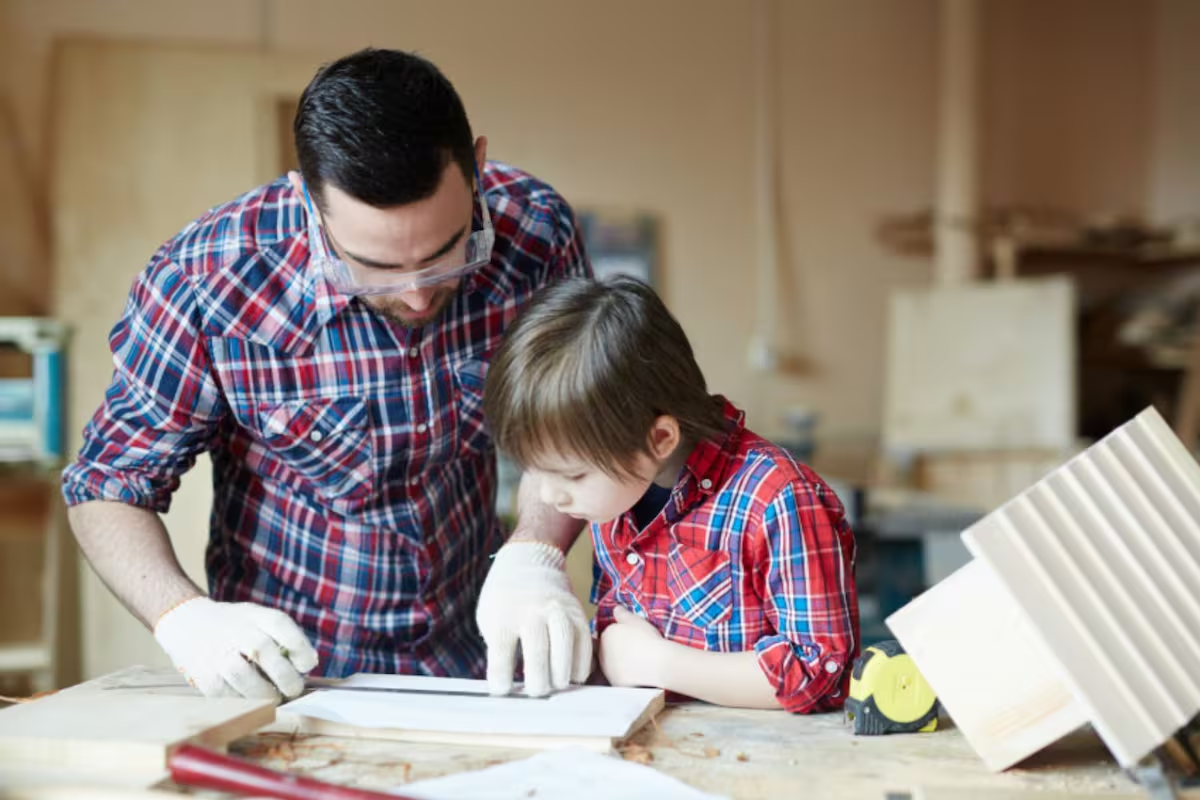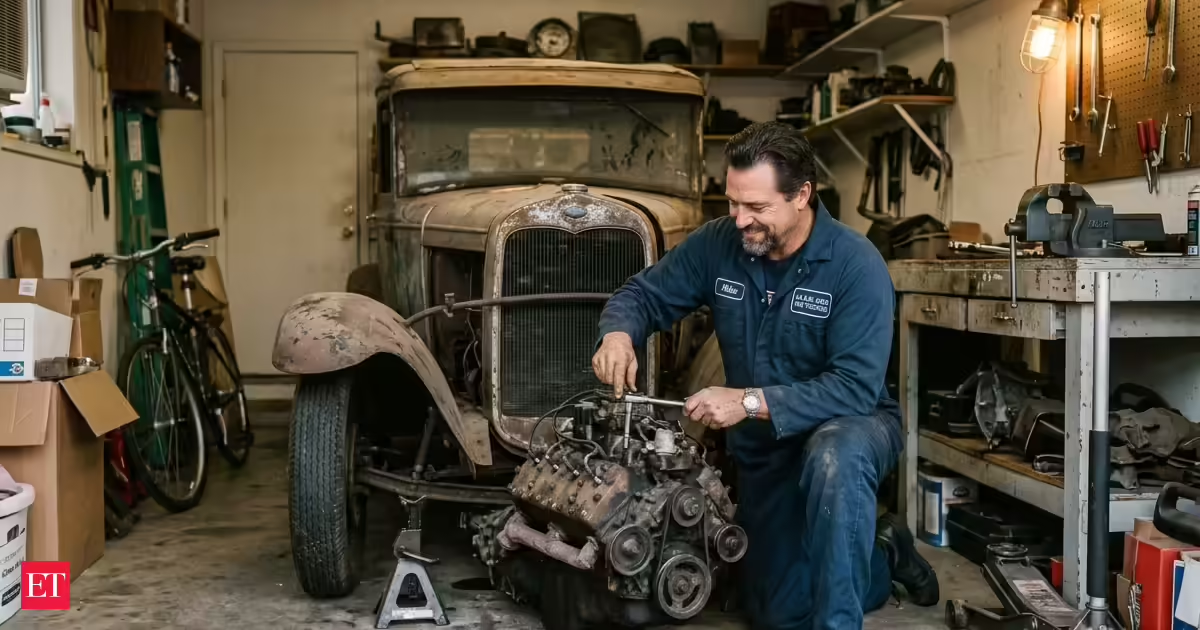
Almost every family knows this father. The chair is wobbling. The remote control no longer works properly. The fan makes strange noises. Instead of buying a new one, he reaches for a screwdriver. He studies the problem, opens the object, and spends the next hour trying to repair it. Sometimes he succeeds. Sometimes he doesn't. But he almost always tries. To younger generations, this habit can seem confusing. Why spend an hour fixing something that could be replaced in minutes? Psychology suggests this behavior is rarely just about money. For many fathers, repairing things becomes a deeply ingrained way of expressing responsibility, identity, and care. In many ways, fixing objects becomes a language of love.Why Fathers Often Associate Repairing With Their Sense Of PurposeOne explanation comes from Identity Theory. Humans build their identities around meaningful roles. For many fathers, one important role throughout life has been "the protector" or "the problem solver."Years of providing for a family reinforce this identity. The brain begins associating value with usefulness. Repairing a broken object is not simply completing a task. It is fulfilling a role that has been practiced for decades.The act quietly says:"I can still help.""I can still solve problems.""I can still contribute."Why Repairing Things Feels Emotionally RewardingPsychologists also point to Self-Determination Theory, developed by psychologists Edward Deci and Richard Ryan. The theory explains that humans thrive when three needs are met:CompetenceAutonomyConnectionRepairing things activates all three. Competence comes from solving the problem. Autonomy comes from doing it independently. Connection comes from helping loved ones. The experience gives the brain a powerful sense of satisfaction. This is one reason some fathers genuinely enjoy repairing things. The reward is psychological as much as practical.Why Older Generations Often See Value DifferentlyPsychologists also discuss Scarcity Mindset. Many fathers grew up during periods where wasting resources was discouraged. They often heard phrases like:"If it still works, don't throw it away.""Use what you already have.""Take care of your belongings."These lessons become deeply embedded over time. Even when financial situations improve, the mindset often remains. The brain learns that preservation is responsible behavior.Why Objects Often Carry MemoriesPsychologists also point to The Endowment Effect, a concept developed by Daniel Kahneman, Jack Knetsch, and Richard Thaler. Humans naturally place greater value on things they already own. A dining chair is not just furniture. It may hold memories of family dinners. An old clock may remind someone of a parent.A worn-out toolbox may symbolize decades of hard work. The object itself becomes emotionally significant. Repairing it feels like preserving a small part of family history.Why Fathers Often Express Love Through ActionsPsychologists also discuss Instrumental Support Theory. Some people communicate affection through actions instead of words. Many fathers belong to generations that were encouraged to demonstrate care through doing rather than talking. Instead of saying:"I love you." They may repair a bicycle. Fix a door handle. Adjust a shelf. Or quietly repair a broken appliance before anyone notices. The action itself becomes the emotional message.Why Modern Culture Has Created A DivideToday's world prioritizes convenience. Broken headphones are replaced immediately. Phones are upgraded every few years. Furniture is often treated as temporary. However, many fathers developed their habits in an era centered around durability. This generational difference sometimes creates misunderstandings.For example, a child may see a broken lamp as disposable. A father may see it as a solvable challenge. Neither perspective is wrong. They simply reflect different relationships with ownership.Why Repairing Things Can Reduce StressPsychologists also connect repair work to Flow Theory, developed by psychologist Mihaly Csikszentmihalyi. Flow happens when people become deeply absorbed in an activity. Repairing objects naturally creates this state.It requires:FocusProblem-solvingHand coordinationPatienceFor many fathers, the garage or toolbox becomes a quiet mental escape. The activity can feel calming after a stressful day.The Bigger Psychological TruthPsychology suggests fathers who fix broken items instead of replacing them are rarely being cheap or stubborn. More often, they are protecting something much larger than the object itself. They are protecting memories. Protecting usefulness. Protecting identity. The most important insight is that fathers are often not repairing broken things. They are repairing their connection to purpose.Perhaps that is why so many families eventually understand this habit later in life. The repaired chair was never just a chair. The fixed lamp was never just a lamp. Sometimes, those tiny repairs become a father's quiet way of saying: "If something important breaks, I will always try to make it whole again."FAQsWhy do many fathers prefer fixing things instead of replacing them?Psychology suggests repairing things gives them a sense of purpose, competence, and contribution.Is this behavior about saving money?Not always. In many cases, it is connected to identity, memories, and emotional value.
Psychology says fathers who fix broken things instead of replacing them are not being cheap: Why repairing objects becomes their way of protecting memories, purpose and family
Psychology suggests that fathers who repair broken items instead of replacing them are rarely being cheap or stubborn. More often, they are preserving something far greater than the object itself. In many cases, they are protecting memories, honoring familiarity, and holding on to the emotional meaning attached to the things that have been part of their lives for years.
773 words~4 min read