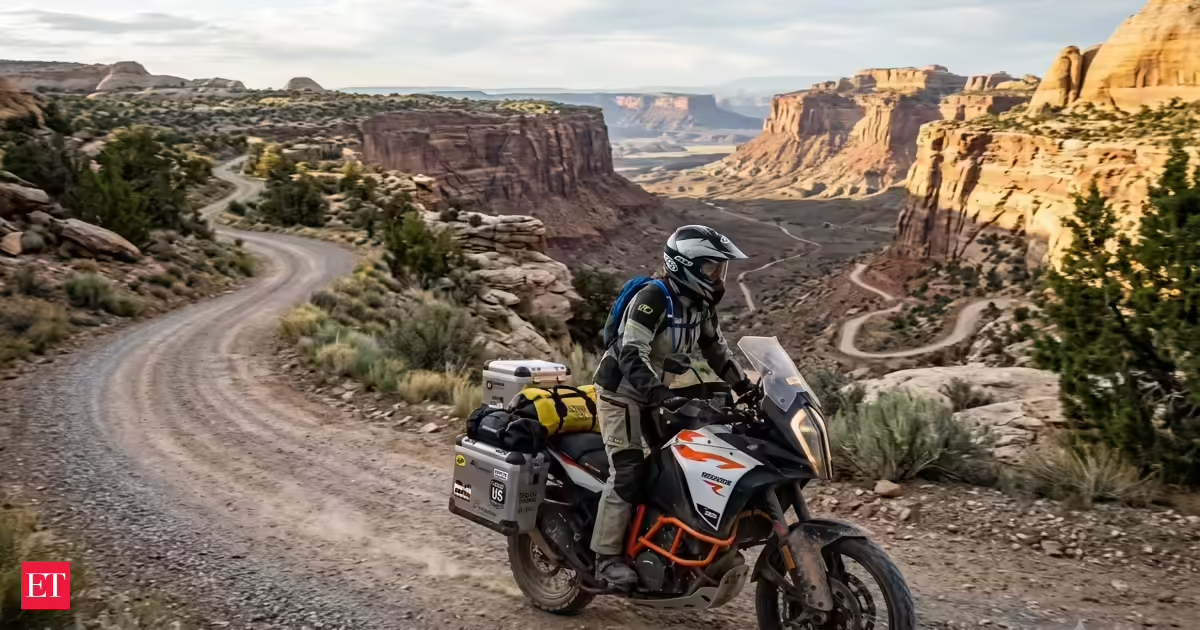
Psychology says people who travel on high end bikes to check out unexplored places aren't always running away from responsibilities or searching only for excitement. Human behavior often has deeper reasons. Many people enjoy discovering places that are less visited because it satisfies their curiosity and helps them experience something new. Riding a motorcycle also creates a sense of control over the journey. The rider decides the route, the stops, and the pace. Psychology suggests that exploring unfamiliar places can improve confidence, support learning, and provide experiences that help people understand themselves and the world around them in different ways.Why riders often choose roads less travelled?Many people believe that those who ride expensive motorcycles to remote places are only interested in showing their lifestyle. Psychology offers another explanation. The desire to explore new roads often comes from natural curiosity.Humans have always searched for places they have never seen before. This behavior helped people learn, survive, and discover resources throughout history. Today, the same curiosity encourages some people to travel to villages, mountains, forests, deserts, and coastal roads that receive fewer visitors.High end bikes make long-distance travel easier. They are built for comfort, stability, and carrying equipment over long journeys. Because of this, riders often choose routes that take them beyond crowded tourist destinations. The destination is only one part of the experience. The journey itself becomes equally meaningful.Psychology explains that curiosity is one of the strongest human motivations. Curiosity pushes people to gather information, solve problems, and experience something different. When riders enter places they have never visited before, their brains receive new sights, sounds, smells, and experiences. These fresh experiences stimulate thinking and improve learning.You Might Also Like:Many riders enjoy planning routes, understanding maps, speaking with local communities, and adapting to changing conditions. These activities require attention and decision-making. Instead of chasing danger, many motorcycle travelers are searching for experiences that make life more meaningful.What psychology says about this behavior?Psychologists often describe exploration as a healthy form of intrinsic motivation. Intrinsic motivation means doing something because the activity itself is satisfying rather than because of external rewards. People who enjoy exploring usually find happiness in learning rather than in collecting recognition.Travel also introduces uncertainty. Riders may encounter changing weather, unexpected roads, or unfamiliar cultures. Successfully handling these situations builds confidence. Research in psychology has also shown that new experiences support cognitive flexibility. This allows people to think from different perspectives and become more adaptable. Exploration also creates memories that often remain stronger than material possessions.You Might Also Like:What does this mean?The behavior shows that many people value experiences over routines. Travelling through unexplored places often reflects an interest in learning rather than escaping. Riders may want to understand different cultures, landscapes, food, traditions, and lifestyles.The journey also gives them opportunities to solve real-life problems. They may have to repair equipment, adjust travel plans, or communicate with strangers. Each challenge becomes a learning experience. Psychology suggests that people often grow when they move outside familiar surroundings.Why do people do this?There are several psychological reasons behind this behaviour. Some riders enjoy complete independence. They decide where to stop, how far to travel, and what route to follow. Others enjoy testing their abilities. Long rides require planning, concentration, patience, and physical endurance.You Might Also Like:Many riders also enjoy peaceful environments where they can spend time away from busy cities. Some people travel to collect experiences instead of objects. They value memories, conversations, photographs, and stories that remain with them for years. For many, travelling becomes part of their identity.Which psychology theory explains this behaviour?Several psychological theories help explain why people enjoy exploring unfamiliar places on motorcycles.Self-Determination TheoryThis theory states that people feel motivated when three needs are fulfilled: autonomy, competence, and connection. Motorcycle travel supports autonomy because riders make their own choices. Competence grows as they learn navigation, planning, and riding skills. Connection develops through interactions with local communities and fellow travelers.Sensation Seeking TheorySome riders enjoy moderate levels of novelty and challenge. This does not mean they are reckless. Many simply enjoy experiences that break routine while remaining within acceptable levels of safety.Maslow's Hierarchy of NeedsOnce basic needs are met, many people seek personal growth, self-discovery, and meaningful experiences. Exploring new places can support these higher psychological needs.The principle behind this behaviourThe human brain enjoys learning through novelty. When people experience unfamiliar environments, the brain processes new information and creates fresh memories. Exploration also increases awareness. People observe landscapes, weather, local customs, wildlife, architecture, and cultural differences.This continuous learning keeps the mind active and engaged. The principle behind the behavior is simple. People naturally seek growth through experiences that expand their understanding of life.What can we learn from this behaviour?The biggest lesson is that personal growth often begins outside familiar surroundings. People do not always need expensive adventures to experience discovery. Even visiting nearby places can encourage learning.Being curious helps people become more open to different opinions and lifestyles. Exploration also teaches patience because not every journey goes according to plan. Unexpected situations often become valuable lessons. People who stay curious usually continue learning throughout life.Life lessons from this behaviourTravelling to unexplored places offers lessons that apply beyond motorcycle riding.It teaches preparation before action.It encourages confidence while facing uncertainty.It shows the importance of adapting to changing situations.It reminds people that experiences often create stronger memories than possessions.The journey also demonstrates that growth comes from trying something unfamiliar.Psychology suggests that curiosity, learning, resilience, and openness help people develop throughout life.Whether someone rides across a country or simply explores a nearby destination, the willingness to discover something new can improve understanding of both the world and themselves.You Might Also Like:
Psychology says people who travel on high end bikes to check out unexplored places aren't always escaping life – They may be driven by curiosity and personal growth. What this behavior reveals?
Psychology says people who travel on high end bikes to check out unexplored places aren't always trying to escape their daily routine. Psychology explains that many riders look for discovery, learning, freedom, and personal meaning. Riding to new places often reflects curiosity, confidence, and a desire to understand the world. This behavior can improve problem-solving, emotional balance, and self-awareness while creating experiences that remain valuable throughout life.
936 words~4 min read