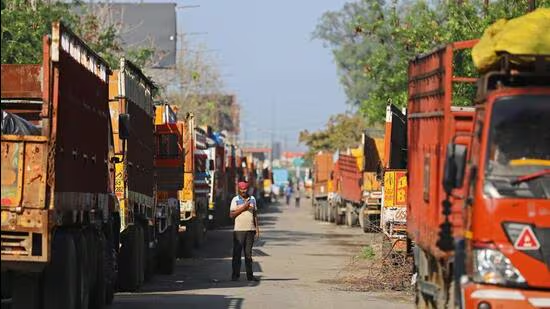
The report, made public on Monday, finds that 92% of heavy-duty trucks entering Delhi report the Capital as their destination, while only 8% identify themselves as “bypass” or transit traffic.
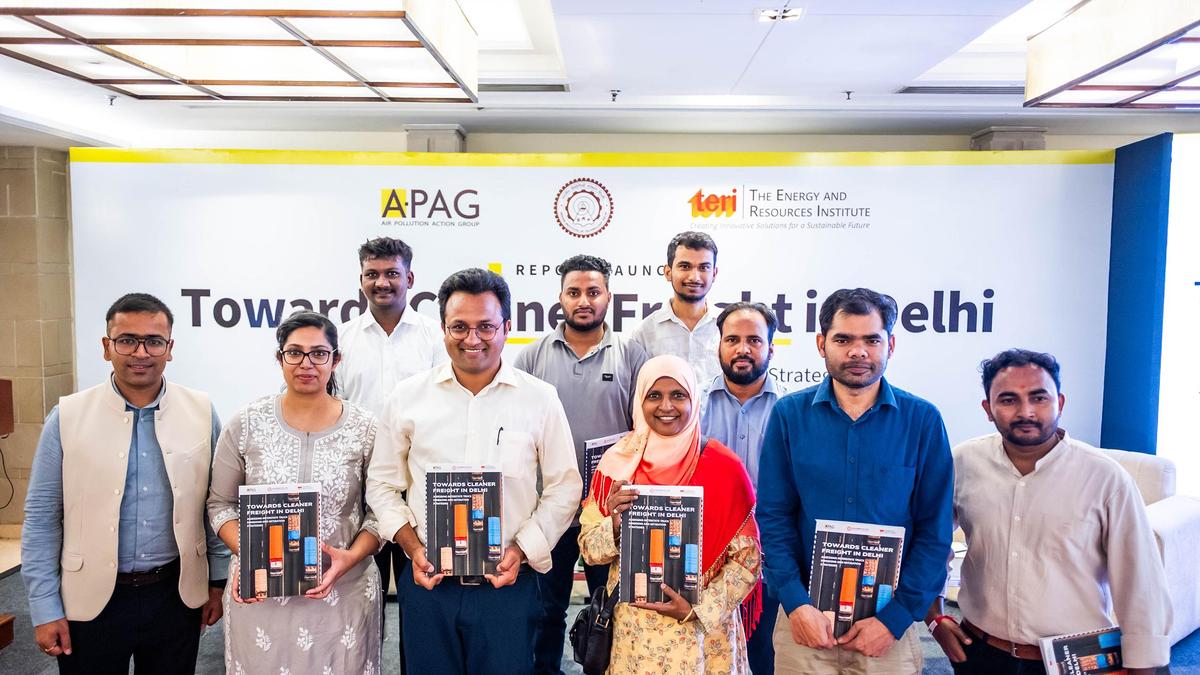
| Photo Credit: Special arrangement
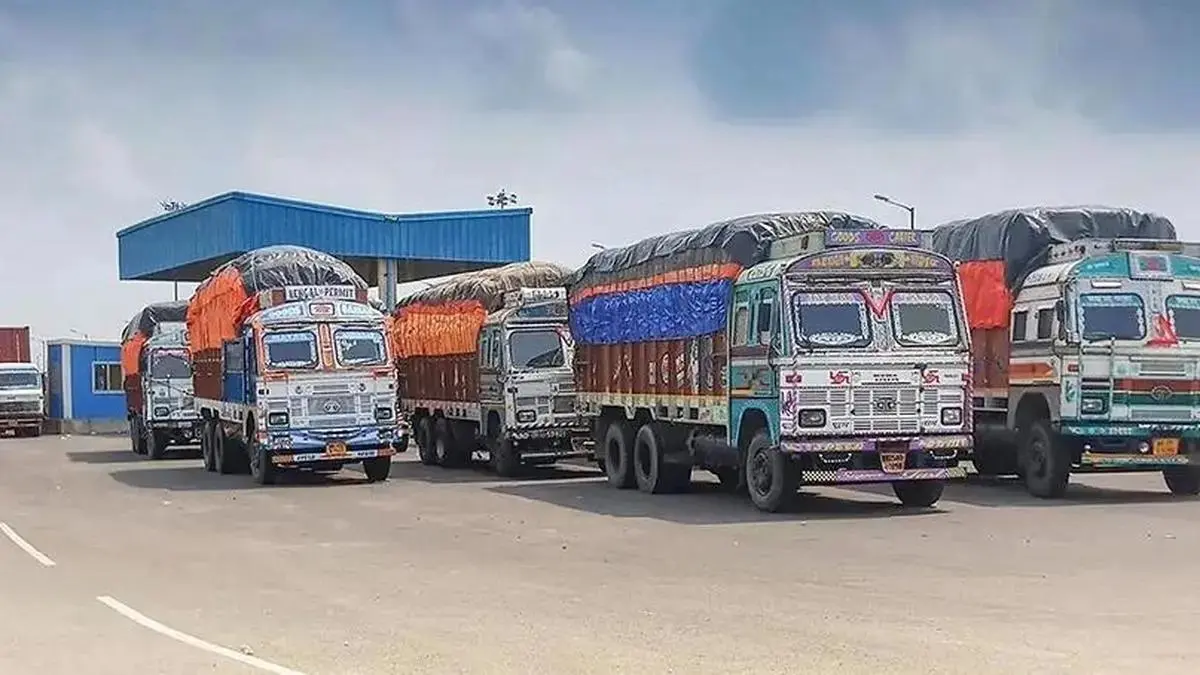
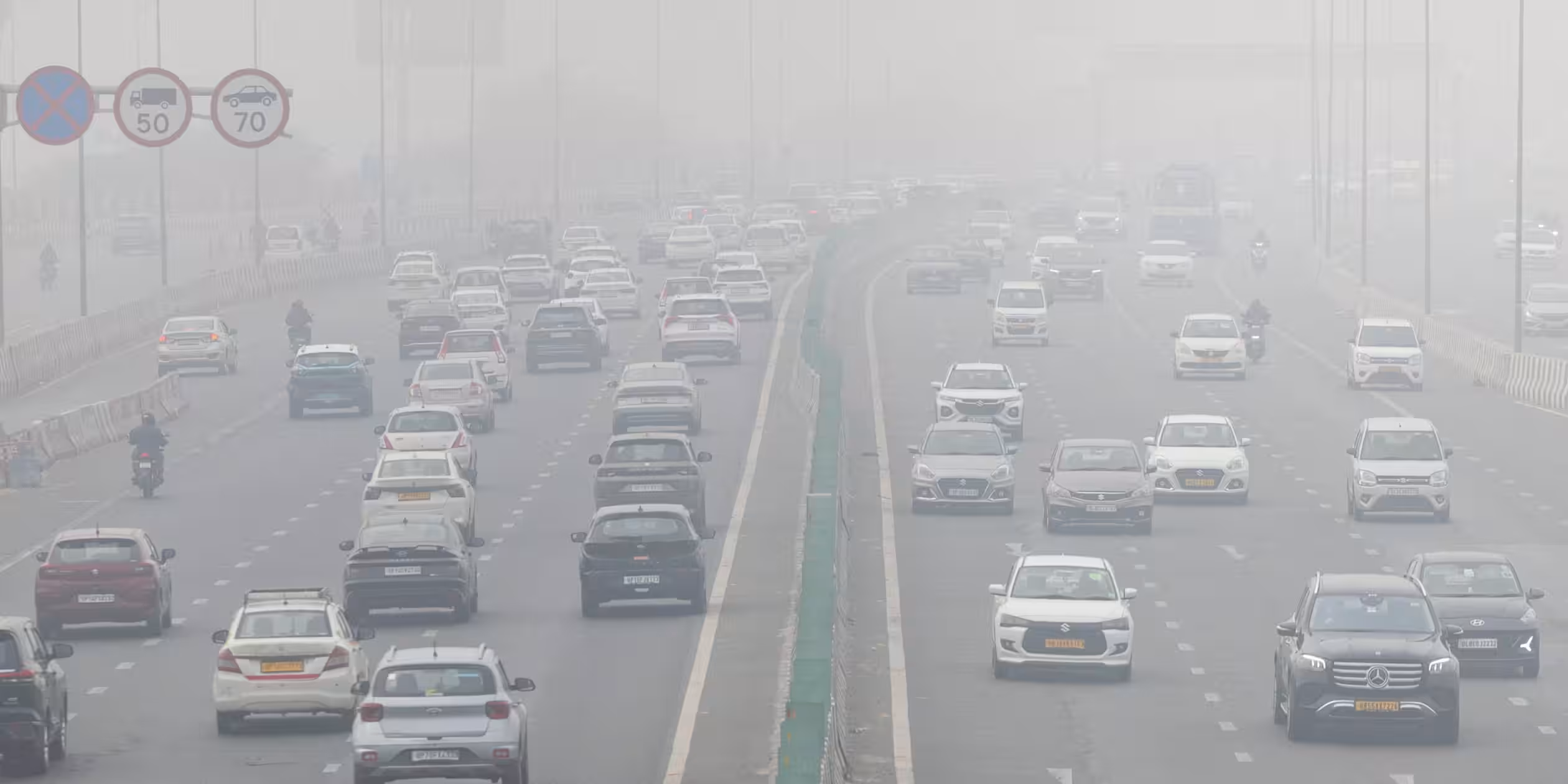
Delhi’s truck pollution problem is no longer driven primarily by ageing diesel vehicles merely passing through the city, but by an increasingly regional freight network, according to a joint study by the Air Pollution Action Group (A-PAG), IIT Delhi, and The Energy and Resources Institute (TERI).The report, made public on Monday, finds that 92% of heavy-duty trucks entering Delhi report the Capital as their destination, while only 8% identify themselves as “bypass” or transit traffic. Even among these, the overwhelming majority both originate from and are destined for the National Capital Region (NCR) States.The findings challenge a long-held assumption that much of Delhi’s truck pollution is caused by vehicles merely passing through the city. “The majority of trucks entering Delhi originate from and return to NCR States, meaning Delhi alone cannot solve this problem,” said Anju Goel, associate director at TERI, in a statement. “The strategies identified in this report — from Low Emission Zone (LEZ) implementation to electric vehicle fleet transition — require coordinated action across the NCR. Policymakers at both the Central and State levels need to align on a common, data-backed road map.”The findings reinforce the conclusions of the latest assessment by the Commission for Air Quality Management (CAQM), which identifies transport as the single largest local source of Delhi’s PM2.5 pollution, contributing about 23%, alongside major contributions from secondary particulate formation and dust. The CAQM notes that while crop residue burning can sharply worsen pollution during parts of winter, the city’s year-round air quality burden is driven largely by local sources such as transport, industry, dust, and residential fuel use, underscoring the need for sustained emissions reductions rather than seasonal interventions.The study estimates that around 16,900 heavy-duty trucks enter Delhi every day, making freight a disproportionately large source of transport-related pollution. Inter-State trucks account for 23% of Delhi’s transport sector PM2.5 emissions. However, their contribution rises sharply to 61% at night and early morning, when nearly three-quarters of truck traffic enters the city. The researchers estimate that these trucks emit around 52 kg of PM2.5, three tonnes of nitrogen oxides (NOx), and 2.5 tonnes of carbon monoxide daily.Questioning policyThe report also calls into question two approaches that have dominated recent policy discussions in Delhi.Amid the recent controversy over the enforcement of end-of-life vehicle rules, the researchers argue that vehicles should not be phased out solely based on age. Instead, they recommend identifying high-emitting trucks through direct measurement of particulate matter and NOx emissions, using expanded automated testing stations and on-board diagnostics.The study is also sceptical of retrofitting older trucks with diesel particulate filters and NOx control devices. Although such retrofits could theoretically reduce emissions, the report concludes that they are “not recommended” due to unresolved issues relating to cost, certification, standards, long-term reliability, and large-scale implementation.Instead, the report recommends a package of complementary measures aimed at reducing emissions while improving freight efficiency.It estimates that individual interventions could each deliver substantial reductions in freight-related PM2.5 emissions — from 21% through optimising empty backhauls, to 23% through urban freight consolidation, and up to 51% by barring pre-BS-VI trucks. The researchers caution that these measures overlap and therefore their individual benefits cannot be simply added together.About 51% of trucks leave Delhi empty after completing deliveries. Reducing such empty return trips, the researchers argue, could therefore be an important air quality intervention by cutting unnecessary freight movement.Dr. Rahul Goel, Associate Professor at IIT Delhi’s Transportation Research and Injury Prevention Centre, said the study was distinctive because it combined RFID toll records, large-scale driver surveys, and real-world emissions measurements using IIT Delhi’s in-house Versatile Source Sampling System (VS3).“It captures what trucks actually emit on Delhi’s roads, not just under test conditions,” he said. Published - June 29, 2026 11:56 pm IST