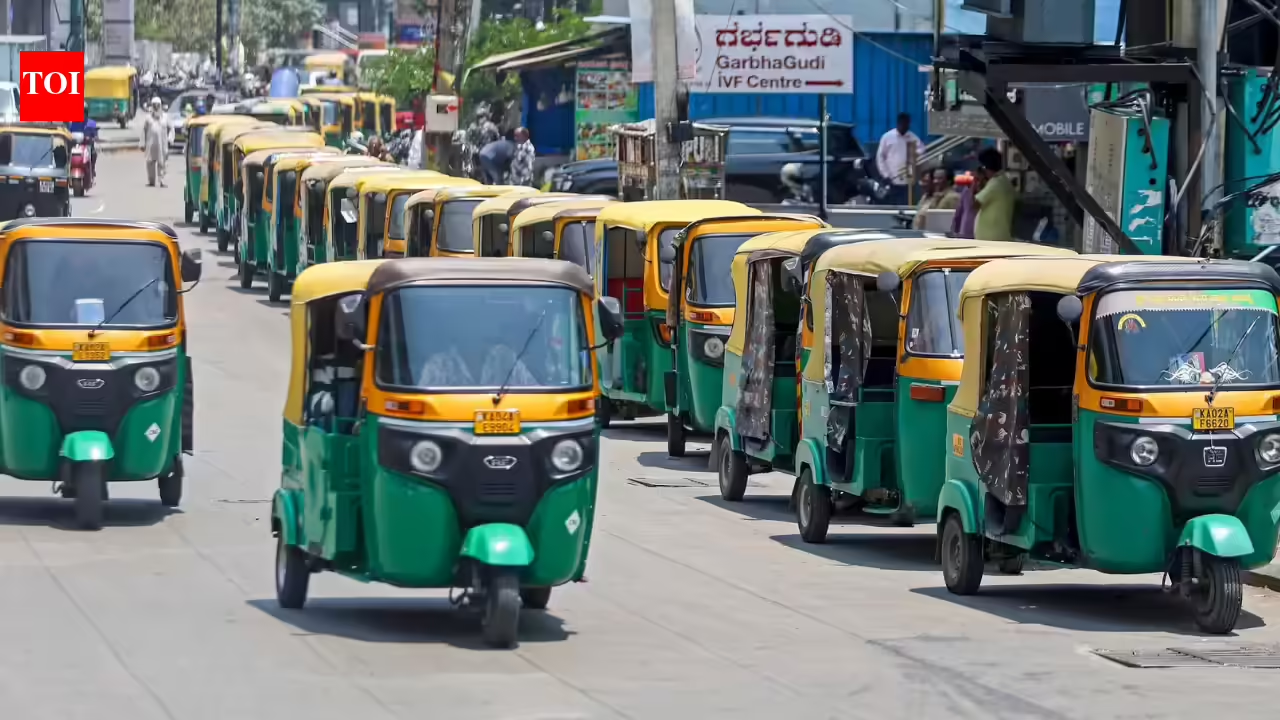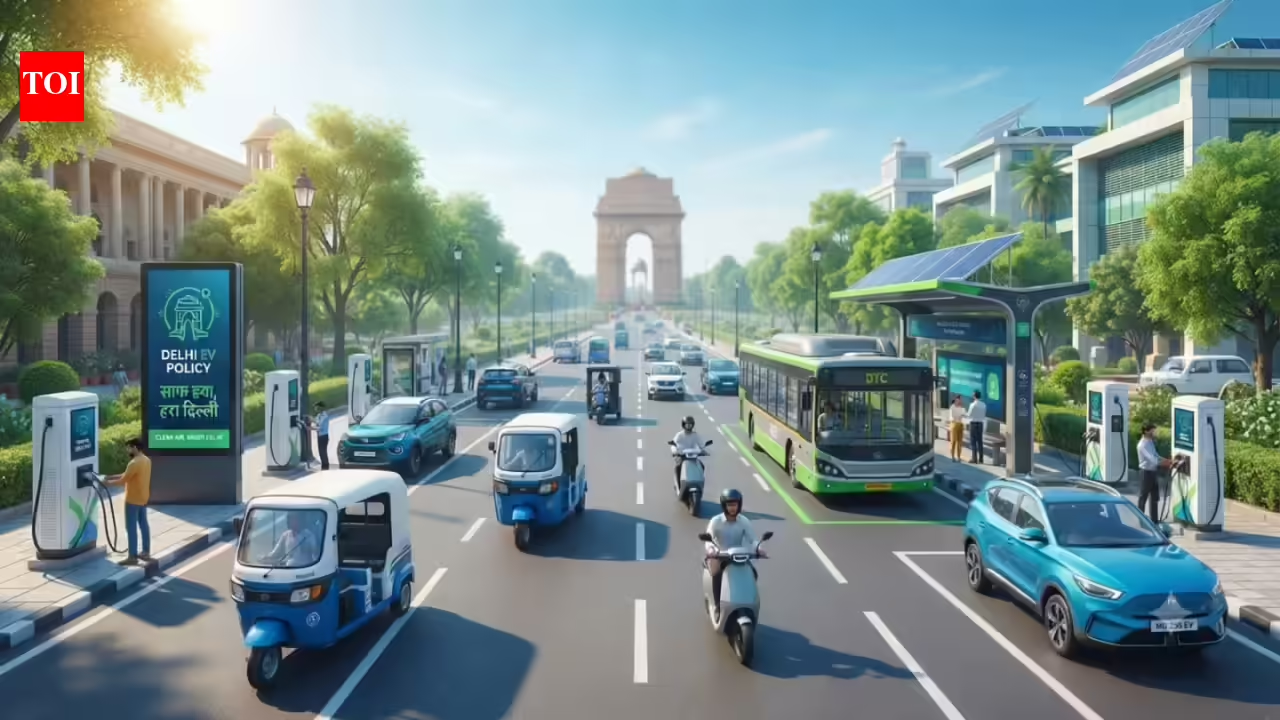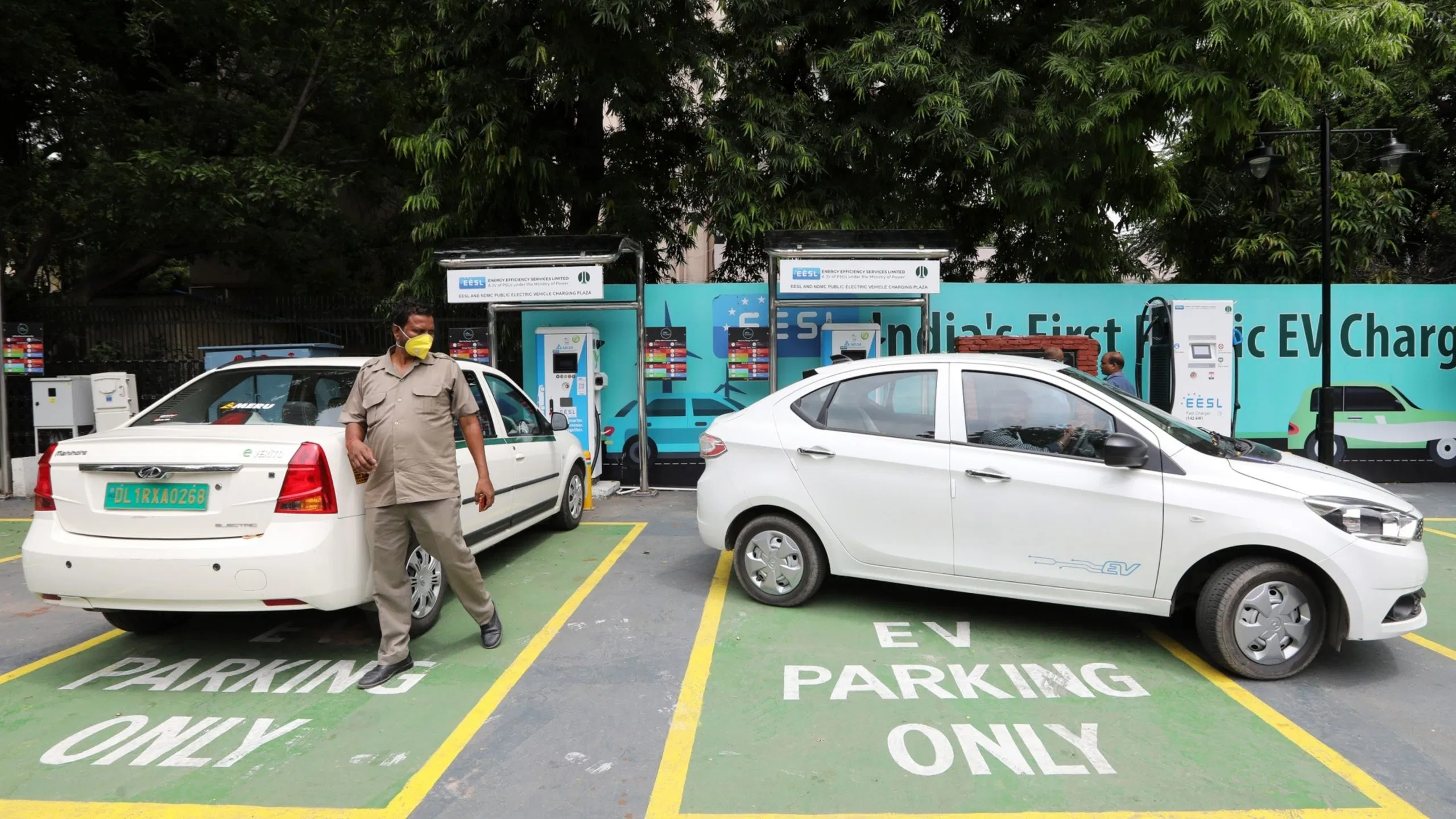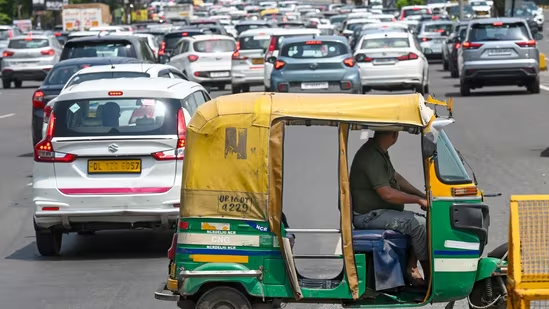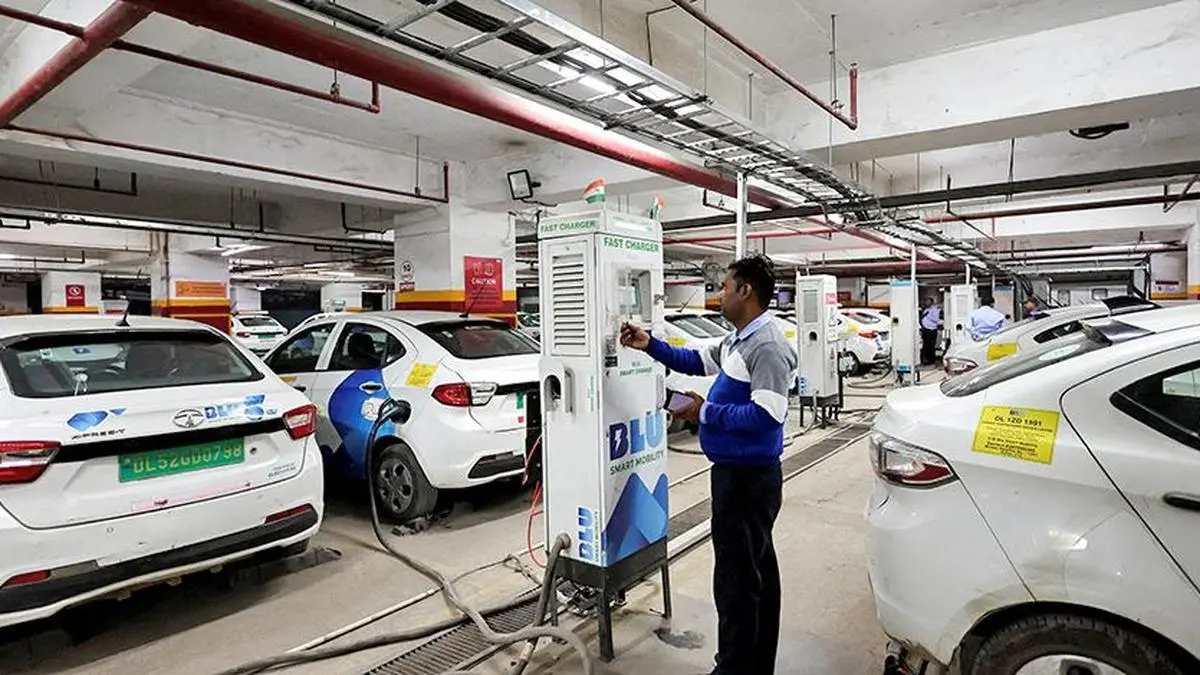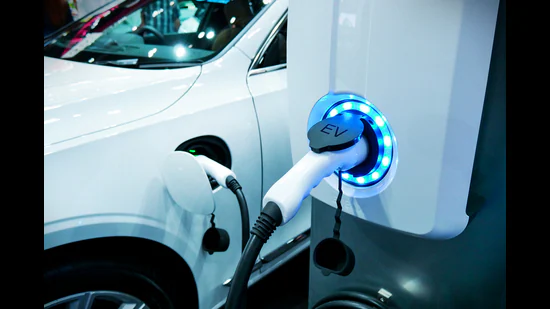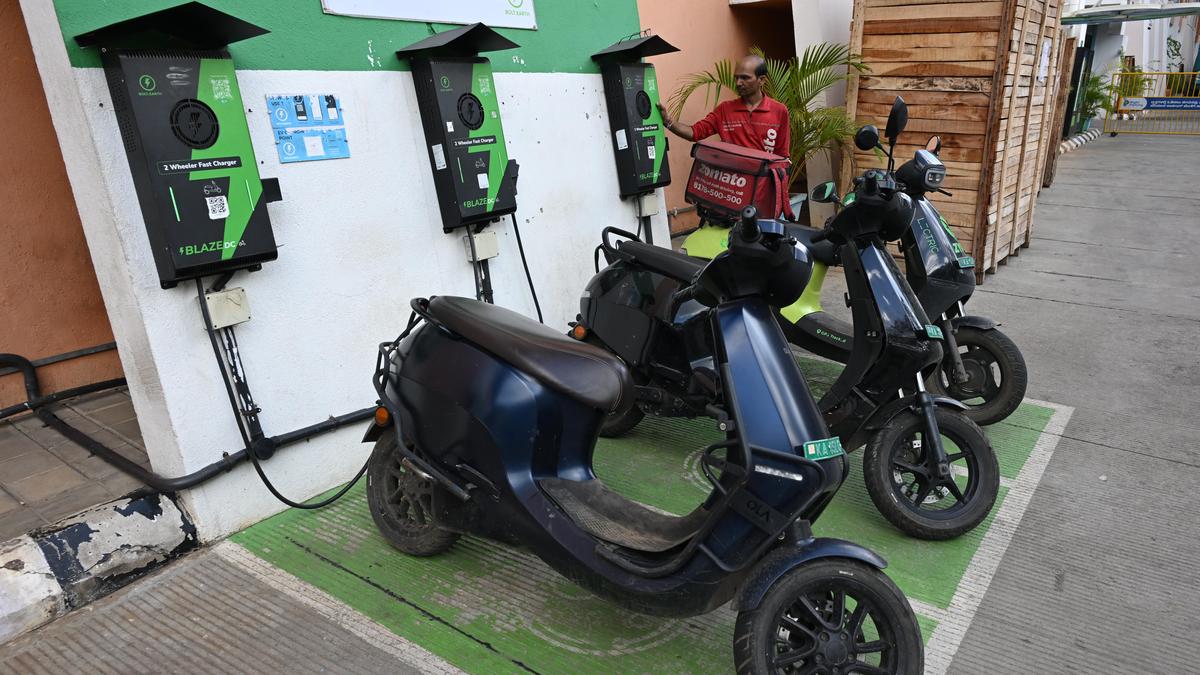
Notifying its new EV policy on Monday (June 29, 2026), the Delhi government said that it would focus entirely on electric vehicles and that no subsidies would be provided for hybrid vehicles. Delhi Chief Minister Rekha Gupta announced that the Cabinet had approved the policy at a ₹7,000 crore budget with an overall investment of ₹15,000 crore, including for development of charging infrastructure, purchase and scrapping incentives.The territorial government has also put into place deadlines for various categories of vehicles to be transitioned to EVs. From January 1, 2027, only electric three wheelers and N1 trucks will be registered. The deadline for two-wheelers to shift to EV is April 1, 2028. School buses would also need to convert at least 10% of their fleet to EV within two years of notification of the policy.Calling the policy ‘transformative and revolutionary’, the CM said that the transition would be instrumental in combatting air pollution in the city. Ms. Gupta said that the new policy was likely to come into effect on July 1, 2026, and would remain effective till March 31, 2030.The transport department will be the nodal agency for the implementation of the policy, with Delhi Transco Ltd. (DTL) responsible for developing charging infrastructure in the city, including collaborating with the power department and distribution companies to provide power for the EV transition.Transport Secretary Niharika Rai said that 33% of air pollution was caused by commercial goods carrier vehicles and 46% by two- and three-wheelers. “The policy focuses on these vehicles specifically. We are trying to convert the entire fleet of these vehicles into EV,” she said.The government has allocated a budget of ₹7,000 crore for implementation of the policy, with an additional ₹3,000 crore as purchase and scrapping incentives. About ₹1,000 crore has been allocated for development of charging infrastructure in the city. Besides, citizens would also be exempted from road tax and registration fee would be waived for all electric vehicles (EVs). The government was expected to lose ₹3,000 crore worth of revenue from these benefits, the officials said.However, the officials specified that the road tax and registration fee exemption would be applicable for cars costing only up to ₹30 lakh, at ex-showroom price.The official said that citizens would get purchase incentives of up to ₹30,000 for two-wheelers: ₹30,000 in the first year of notification of the policy, ₹20,000 in the second year and ₹10,000 in the third year. For three-wheelers, the incentives will be ₹50,000, ₹40,000 and ₹30,000 respectively, for the first, second and third years. Similarly, a subsidy of up to ₹1 lakh would be provided for N1 commercial trucks in the first year of the EV policy.Scrapping incentives for vehicles below BS-IV emission norms categories would be around ₹10,000 for two-wheelers, ₹25,000 for three-wheelers and ₹1 lakh for four-wheelers. Scrapping N1 trucks would beget ₹50,000 as an incentive, and Gramin Seva units completing their lifecycle in the coming years, would also get ₹15,000 subsidy, the officials said.Moreover, electric N2 trucks, i.e., those carrying loads from 3.5-12 tonnes, would be exempted from ‘No Entry’ timings for the next 10 years. However, this is applicable only to the first 1,000 N2 trucks purchased within three months of notification of the policy.The officials also said that no subsidy would be provided for hybrid vehicles. A new dedicated EV portal would keep track of purchased and registered vehicles, for which consumers would have to submit their documents to avail subsidies and incentives.Consumers would be able to apply for the subsidies within 30 days of issuance of registration certificates. The subsidies would be provided within 60 days through DBT.The government also plans to install 32,000 charging points within the next four years, funded by PM e-Drive schemes as well as the Delhi government budget.
Only electric two-wheelers to ply on Delhi roads from 2028
Delhi mandates only electric two-wheelers by 2028, enhancing EV infrastructure and incentives to combat air pollution.
623 words~3 min read