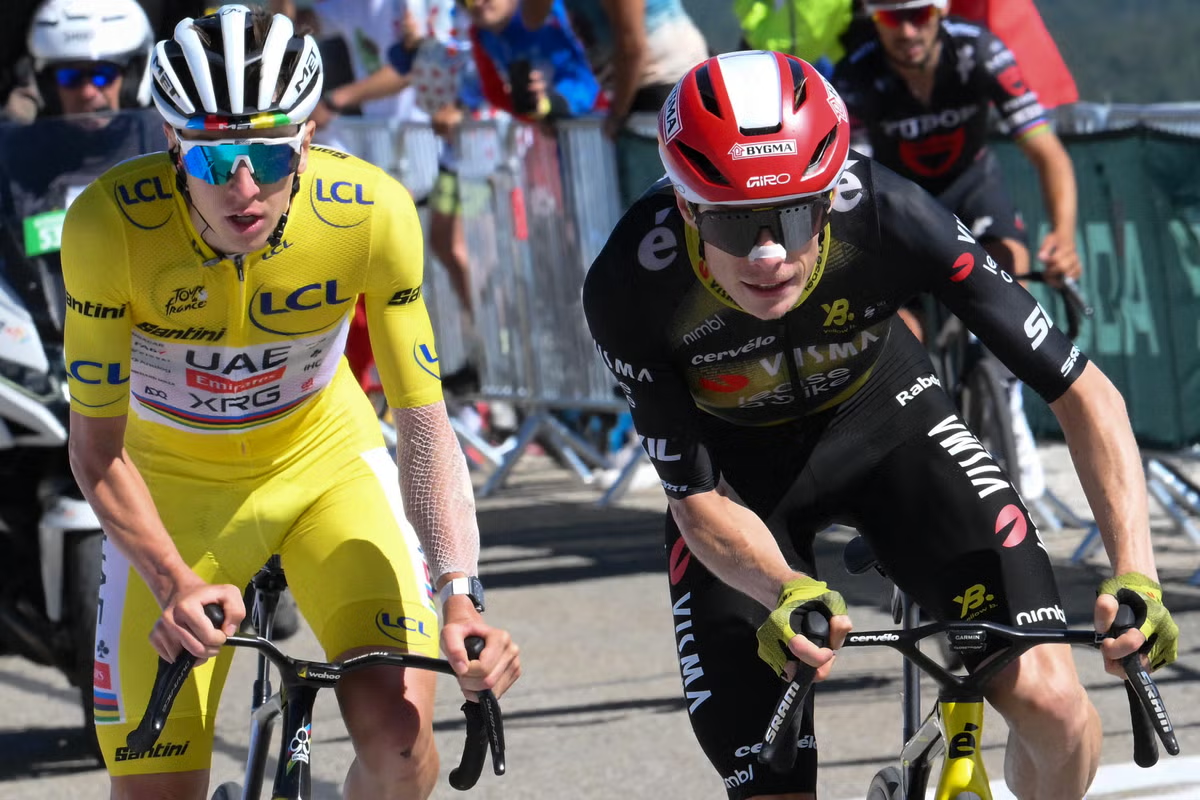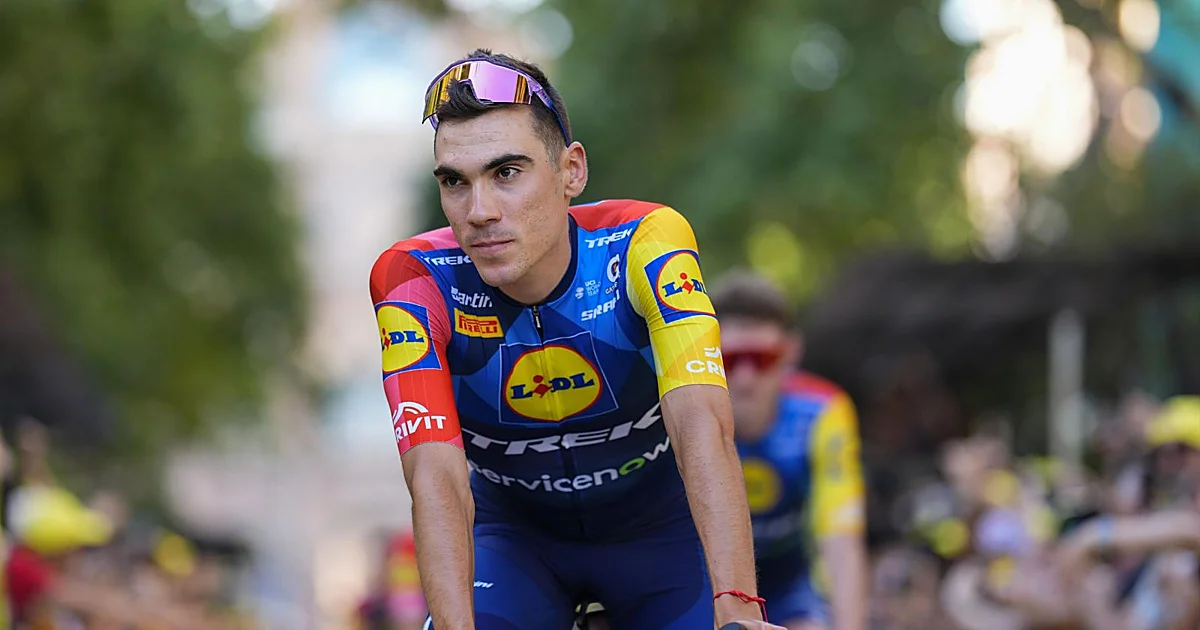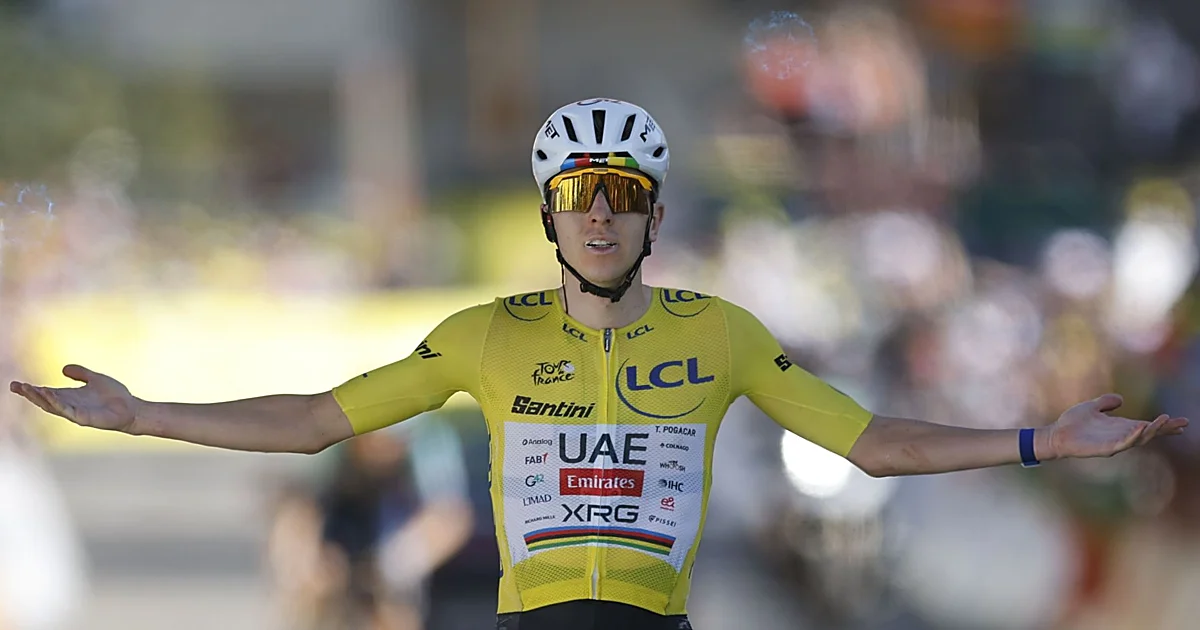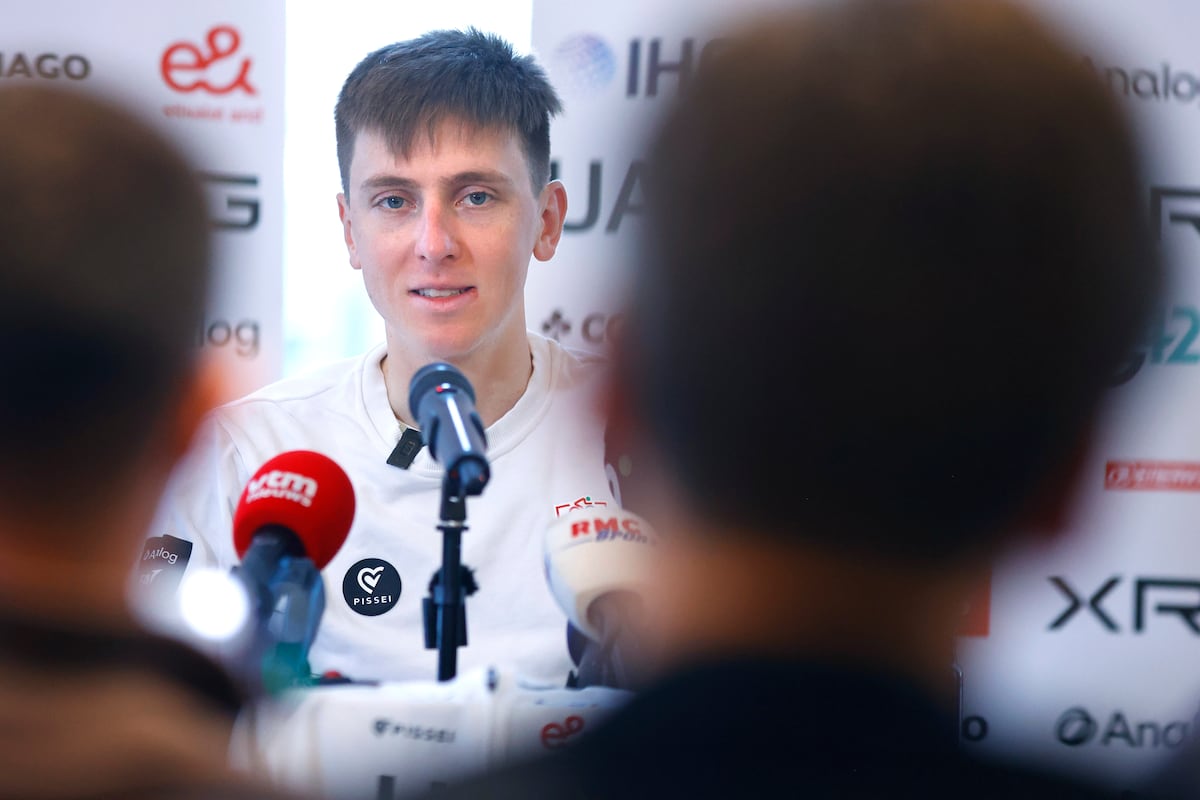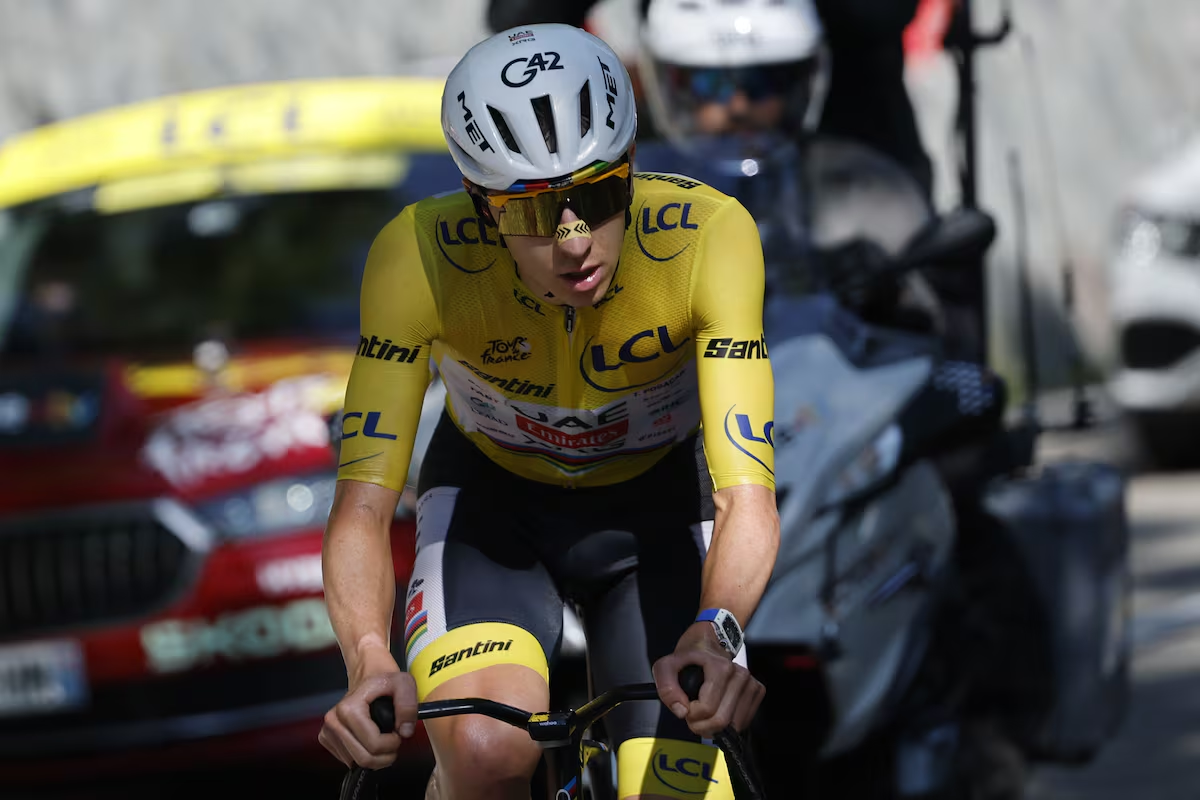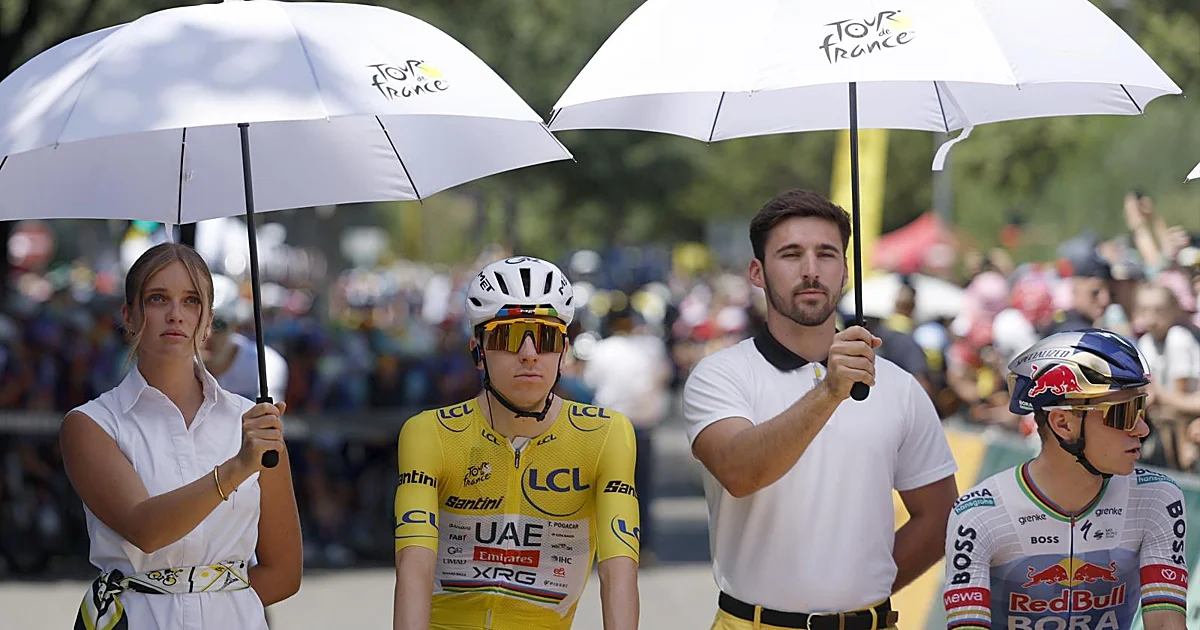
Stepping out of Juan Ayuso’s cosy rented apartment that has been repurposed from a ski chalet into a cyclist’s cabin, the setting sun is casting its last golden rays against Pico Veleta. At 3,398m high, it’s Europe’s highest road, inaccessible beyond 2,900m and blocked by eight-metre snow walls.But figuring out a way to the top of Veleta is not The Athletic’s principal interest right now.Four-time Tour de France champion Tadej Pogačar and his partner, AG Insurance–Soudal rider Urška Žigart, are holding hands like a pair of teenage lovers. Up ahead, 2026 Paris-Roubaix winner Wout van Aert is engrossed in a phone call.Across the road from them at the Sierra Nevada ski station in southern Spain, Paul Seixas and his Decathlon CMA CGM team-mates are absorbed by what appears to be an impromptu game of hide and seek, with four or five of them crowding around the back of a telecommunications box, laughing and joking in French like the school-age child Seixas was just one year ago. They are seemingly oblivious to the five deer that have just skipped straight past them.Scattered along the road are dozens of other WorldTour cyclists, each of them dressed in oversized puffer jackets and woolly hats.It’s an absurd, surreal scene. Like a real-life sitcom of cycling superstars set on what feels like Europe’s most isolated street.At the far end of Calle del Torcal is the high performance CAR centre which at 2,320m above sea level houses the continent’s highest soccer pitch, athletics track and Olympic-sized swimming pool. Not to mention pole vaulting apparatus, boxing rings and other sporting facilities. It’s a playground for the sporting elite.By May the region’s ski season has long passed (Chris Marshall-Bell/The Athletic)Along the rest of the street, apartments and ski lodges are playing host to pretty much the entire Tour de France peloton. Jonas Vingegaard, en route to comfortably winning the Giro d’Italia, is one of the absent few.For several weeks every May, riders who will be fierce adversaries in the month of July come together as neighbours in Sierra Nevada. They live in the same communal blocks, share the same roads, and exchange smiles and the odd wave. But friends they are not — they are here to build the foundations for their next tussle.The plot structure of this bizarre soap opera is mindlessly repetitive, but incredibly effective: every day the cast wakes up, whizzes down towards the beautiful city of Granada to complete a training loop, and then slogs 1,500m of elevation back up to what has been converted from a buzzing and bustling ski resort (with the world’s fourth highest snowfall this past winter) into a mostly abandoned settlement, where just two of the 100+ bars, restaurants and nightclubs are open.A sense of loneliness pervades Sierra Nevada in May (Chris Marshall-Bell/The Athletic)There are no adoring fans, no champagne bottles to be uncorked, and no trophies to be lifted. Professional cycling isn’t too glamorous at the best of times, but a Sierra Nevada altitude training camp in May certainly isn’t.One rider jokingly quips to The Athletic “it’s like being locked in a prison”. A part-obligatory, part-voluntary sentence it is, though.To be at one’s best at the biggest bike race in the world, altitude training is a necessity.“If you are not doing an altitude camp it’s very difficult to perform well in a Grand Tour,” says Lidl-Trek veteran Carlos Verona. “You see all the Tour de France is here now preparing for the race because it’s something we all need to do. In the past it was something extra; now it’s a basic part of training.”Verona will be riding at the Tour in support of his 23-year-old compatriot Ayuso, who, along with Pogačar, Seixas and Remco Evenepoel, each request extra days and weeks to soak up the oxygen-boosting benefits of living at altitude before hopefully reaping them at the Tour.Life in remote confinement in Europe’s southernmost winter resort is where Tour de France winners are built. So The Athletic heads along to experience what it’s like to live (for a few days, thankfully, not weeks) on cycling’s peculiar answer to Days of Our Lives.Training at altitude was first popularised for endurance athletes after the 1968 Olympic Games in Mexico City which were held at an elevation of around 2,200m. Those who had prepared in high-altitude environments performed significantly better than those who did not, proving a turning point in sports science.Since the Mexico Games, studies have highlighted that spending two to three weeks at an altitude between 2,000m and 2,500m increases the production of red blood cells and natural erythropoietin (EPO) levels, which in turn allows athletes to perform longer and more difficult efforts.A common misconception is that there’s less oxygen at altitude. Oxygen levels remain at 21 per cent. But there is less oxygen pressure — essentially the air is thinner — forcing the athlete to work harder to adapt to a less oxygen-friendly environment.It wasn’t until the 1990s that cyclists started embracing altitude — or sleeping in hypoxic altitude tents at home which simulates high-altitude environments — but that was mostly limited to the top riders.Team Sky (now known as Netcompany-INEOS) changed the game in the early 2010s when they started taking all their riders to altitude — usually to Tenerife in the Canary Islands, and since post-Covid it’s become the norm for climbers and GC specialists to spend more time training at altitude than racing.“I’ve done one altitude trip every one of my 16 years as a pro, but in the past few years I’ve done three a year. In 2023 I spent more than 100 nights at altitude,” Verona says. Most WorldTour pros don’t ride more than 75 race days per year.“I remember coming to Sierra Nevada in 2017 with Astana and we were alone,” says Aritz Arberas, a coach at Lidl-Trek. “Nowadays Teide is full, Andorra too, Livigno and Isola as well. Find any altitude location and you’ll find athletes.”The reason is simple: not only does science extol the benefits, but results — the most influential form of evidence — do, too. “I’ve worked with maybe 500 different riders, and I only know three for whom altitude doesn’t work for them,” Arberas says.One of those riders is Lidl-Trek’s Mads Pedersen. “It doesn’t help him, and he can achieve very good values and his perfect performance without altitude but there are very, very few riders who are like that,” Arberas adds.Mads Pedersen is one of the few WorldTour pros who doesn’t derive any benefit from altitude training (NICO VEREECKEN / BELGA MAG / Belga / AFP via Getty Images)The first thing that strikes any May visitor to Sierra Nevada — which means the snowy mountain range in Spanish — is how soulless it feels.Lonely chairlifts rock back and forth in the wind, nightclubs are shut, and car parks lay empty. The resort has slipped into hibernation, leaving behind a concrete skeleton of hotels and apartment blocks that on the busiest winter weekends can accommodate 20,000 visitors.
The art of the pre-Tour de France altitude training camp
Every May, many of the world's top cyclists decamp to a lonely mountain range in southern Spain. The Athletic went along to observe
3,529 words~16 min read