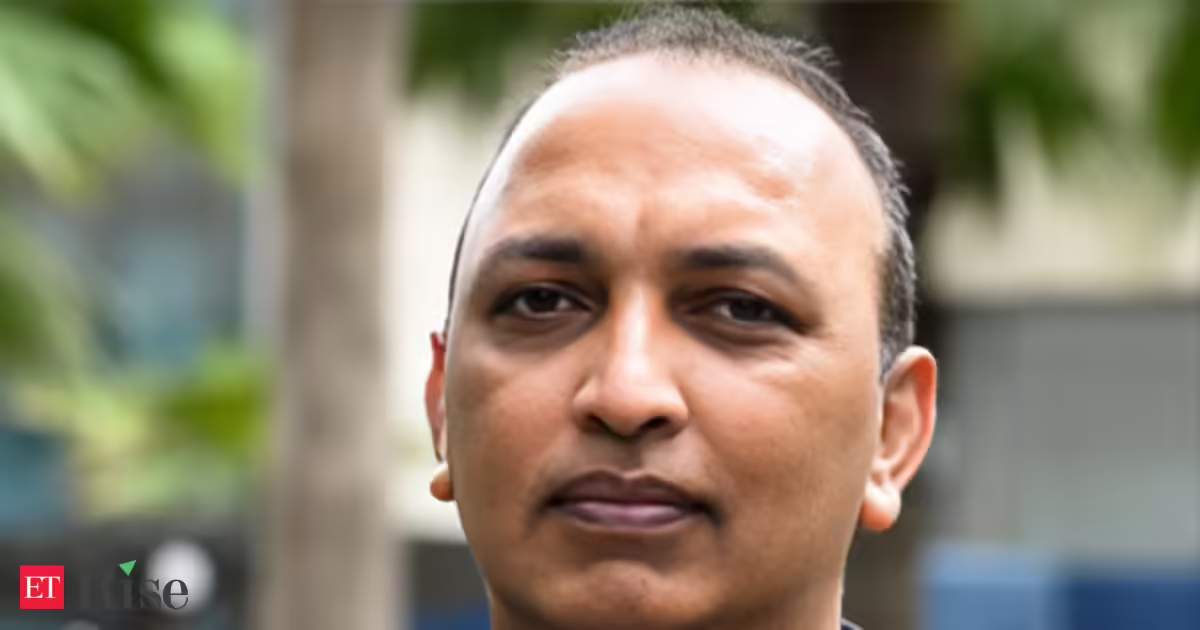
Technological independence is now a key focus for countries navigating changing global politics, making sovereign technologies vital for economic strength and national safety. India's deep-tech sector is accelerating, covering areas like defense, semiconductors, space, and secure communications, thanks to policy backing, entrepreneurial drive, and strategic investments.In a conversation with ET Digital. Raj Sethia, Founder and Managing Partner of MountTech Growth Fund – Kavachh, delves into the reasons behind the growing importance of sovereign technologies for nations, the investment prospects arising in India's key industries, and the difficulties and potential for fostering world-class deep-tech companies originating from India. Edited excerpts.Economic Times (ET): Nations across the world are increasingly viewing critical technologies as strategic assets. Why has ownership and control of sovereign technologies become a national imperative, and where does India currently stand in this race?Raj Sethia (RS): Two forces converged after the Covid-era supply chain shocks and the new-age wars we witnessed in recent years.First, the geopolitical order shifted. Export controls became weaponised, supply chains fractured, and every nation had to ask: what happens if the technology we depend on is suddenly cut off? In defence, communications, space, and energy security, the answer is clear: you lose strategic leverage. The second shift was the pace of technological change. In AI, autonomy, robotics, cybersecurity, advanced materials, clean energy, biotechnology, and several adjacent fields, falling behind today can become structurally irreversible and economically disastrous for a country like India resolutely aspiring to be “Viksit” by 2047. You cannot always buy next-generation technology when it is ring-fenced behind closed, limited-access architectures, with gates and riders attached.India's position is strong: deep engineering talent, world-class digital infrastructure, a growing private defence, space, and deep-tech ecosystem, credible policy intent, and a geopolitical posture as a trusted partner that opens doors globally. What we need to do faster is close the gap between “potential” and industry-scale sovereign capability.ET: Through MountTech Growth Fund – Kavachh, you have backed companies across defence and aerospace, space, secure communications and other deep-tech domains. What are the key themes and sectors that define your investment thesis, and how do you evaluate opportunities in such long-gestation businesses?RS: Our thesis is simple: India's economic prosperity depends on its sovereignty and geopolitical leverage, which in turn depend on owning and exporting the frontier technologies that underpin them. Every investment we make has to serve that agenda and it has to be commercially durable and globally marketable, while remaining strategically relevant. Emerging from this rather horizontal thought and our north-star vision of “Stronger India, Safer World”, our current focus is on Defence and Aerospace, Space Tech, Critical Communications, Semiconductors, Critical Minerals, Cybersecurity, and other similar opportunities, all necessarily filtered through the lens of sovereign relevance.Within these areas, we prefer IP-driven companies, businesses where the moat is a patent, a proprietary manufacturing process, a hard-won systems capability, or early access to a difficult but sticky procurement path. We underwrite the team and true market size as much as the technology. We look for founders with genuine technical depth solving hard, clearly identified & sufficiently large problems, while also understanding their commercial pathway. We look for a long-term multi-industry, multi-geography applicability to avoid risk concentration. Finally, we look at sustainable policy tailwinds and global potential as India's greatest untapped edge is that many of these technologies are in global demand from allies and trusted partners seeking to diversify away from concentrated suppliers.As an additional inward-looking filter, we also assess our ability to help the potential investee accelerate its journey through our platform-based engagement. With our hands-on DNA, we prefer staying away from investments whose journeys we cannot positively impact and accelerate.ET: Some of your portfolio companies, including GalaxEye, Inspecity, EON Space Labs, and Coratia Technologies, have demonstrated significant progress in areas such as space-tech and defence-tech. What common characteristics do you see among these successful ventures, and what lessons can India's deep-tech founders draw from them?RS: Three things stand out. First, audacity, these founders made bold bets on genuinely hard problems. GalaxEye is building the world's first satellite constellation that fuses SAR and optical imaging in real time. EON Space Labs is miniaturising cameras with 24x7 AI-enabled surveillance and observation capabilities, on the ground, in the air, and from space. Inspecity is building capabilities that can extend the lifespan of expensive satellites and, if needed, neutralise adversary assets in space. You do not take on problems like these without being completely obsessed and borderline mad.Second, resourcefulness. Coratia won a Rs 70-crore Navy order, Inspecity secured a prized ISRO contract, and DeepLase won a Rs 25-crore ADITI grant without the capital cushion that their Silicon Valley counterparts or multi-generational entrepreneurs often enjoy. They learned to move fast with what they had and use every available instrument, government programmes, grants, friends and family support, alumni networks, personal savings and loans, strategic partnerships, co-development arrangements, and more.Third, and this is underappreciated, is the ability to sell. Deep-tech in strategic sectors is complex, geeky and nerdish and often difficult to explain to investors, customers, and decision-makers. Founders who combine real technical credibility with the ability to take a funding or procurement conversation to closure are rare. We are fortunate to have this across our founding teams.ET: Unlike consumer-tech startups, companies operating in defence, aerospace and semiconductors often face long development cycles, high capital requirements and regulatory complexities. How can private capital bridge these gaps and help these businesses scale sustainably?RS: The translation-from lab to field, at scale, is where private capital and the right institutional support system can make a real difference.India’s early-stage VC ecosystem, as currently structured, is not built for this sector and understandably so. On a lighter note, a seed cheque, two workstations, a few email introductions, and a lot of moral support are not enough for a company building a military-grade laser system or an in-orbit asset that can neutralise a non-cooperative satellite to take off. These companies need capital bundled with genuine sector-specific support: government procurement navigation, access to test facilities, introductions to defence primes, and international market development.This is exactly why we have been building BASE (Business Acceleration and Support Ecosystem) and iPACT as integral parts of MGF-Kavachh. These platforms are designed to provide structured operational and business development support, while opening global corridors. As a side note, iPACT is live on the India-US corridor today and will expand to India-Israel, India-EU, and India-AME over the next 8–12 quarters. For the right company, a warm introduction can be worth more than the next cheque a full year of effort.The gap that remains most acute is Series B and beyond. India now has reasonable early-stage capital and non-dilutive support for deep-tech. What is conspicuously missing is growth capital — patient, sector-literate money for the Rs 200–500 crore growth phase. Closing that gap by the time more than 60% of our portfolio reaches maturity is one of our AIF’s long-term objectives as well.ET: India has made significant strides in indigenous defence manufacturing, but commercialisation remains a challenge. What are the biggest hurdles in taking frontier technologies from the laboratory to large-scale commercial deployment?RS: The single biggest bottleneck is the aggregation and predictability of demand. A company can clear technical trials, demonstrate operational readiness, and still wait years for procurement decisions to translate into meaningful recurring revenue. The valley of death between a successful PoC contract and a scale order is real, and it is where many deep-tech companyies stall.The second challenge is that many of these founders are the first in India to solve a particular problem, so the evaluation frameworks and approval pathways have to be built in parallel with the product. That is an invisible cost — in time and management bandwidth — that outside observers rarely account for.The good news is that the momentum is genuinely positive. The companies in our portfolio are winning contracts, growing revenues, and securing partnerships with global primes at a pace that would be impressive in any sector. The system is working; it just needs to work faster.ET: There is often a perception that strategic sectors offer limited commercial returns. How do you balance national priorities with investor expectations, and can sovereign technologies emerge as a commercially attractive asset class in India?RS: I want to push back on this directly. It is a false choice, and a perception problem rooted largely in history, pessimism and legacy. That needs to change because the reality on the ground has changed remarkably. Strong policy tailwinds, favourable global meta-trends, relatively high entry barriers, sticky high-margin contracts, and a large captive domestic market with export opportunities layered on top create a genuinely attractive investment profile. Yes, there are challenges, but they are shrinking with every passing quarter.From MGF’s perspective, the condition for this to compete as an asset class-to sit in an LP’s portfolio, is that founders need a global outlook from day one. They must build a library of IP through continuous R&D, and diversify applications across multiple industries. GalaxEye has global demand. EON Space Labs operates in a capability category only a handful of nations possess. Coratia Technologies’ marine robots are commercially relevant on every continent.For investors, this requires patience and sector literacy. These are not three-year businesses. But the companies that breakthrough have defensible moats, long-cycle, sticky and high margin institutional contracts, and revenue visibility. We believe this will be recognised as a distinct and compelling asset class in India within this decade.ET: Looking ahead, which critical technology segments, whether in AI, photonics, semiconductors, secure communications or space — do you believe will produce India's next globally competitive champions over the next decade?RS: All the categories you have named have real potential and will produce multiple champions with a global footprint over the next decade or two. But if you are asking where the early globally competitive champions among our sectors of focus are most likely to emerge — companies cited in the same conversation as the world’s best within ten years — my answer is Space and Semiconductors.Space is already producing evidence. India’s private space ecosystem has evolved from interesting to genuinely impressive. The companies we have backed are solving problems the entire global space economy faces, using Indian IP and Indian engineering, and in several cases, technology that does not exist anywhere else. The ISRO foundation, the talent pipeline, and the IN-SPACe policy environment have aligned in a way that creates a real launchpad.Semiconductors, specifically the design layer, s the second area. The design talent is already there; India produces a significant share of the world’s chip-design engineering capability. What was missing was a domestic ecosystem to commercialise it. That is now changing, with mega-sized downstream investments, strategically supported by an aggressive policy framework, already underway.Defence and Aerospace, Secure Communications, and Cybersecurity will all produce significant companies. But the first names to achieve global recognition will, we at MGF believe, come from Space and Semiconductors.
Entrepreneurship and innovation: Scaling India's strategic technology ecosystem
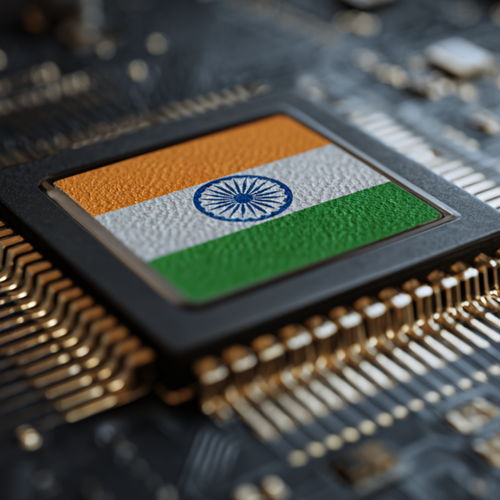
India's pursuit of technological self-reliance is gathering pace as sovereign capabilities in defence, space, semiconductors, and secure communications become central to national security and economic resilience.
1,804 words~8 min read