For much of the past decade, India's startup story has been told through numbers. The rise of unicorns, record funding rounds, and the steady growth of entrepreneurial ventures became visible markers of a country discovering new confidence in its ability to build. Those milestones deserved attention because they reflected a significant shift in mindset. Entrepreneurship was no longer viewed as a risky alternative to a conventional career path. It has become part of India's growth story.The startup policy, which came into effect on April 29, was introduced nearly seven years behind schedule (iStock)But what happens after a country proves that it can build startups at scale?It is a question worth asking as India's startup ecosystem enters a more mature phase. According to government data, more than 55,000 startups were recognised during FY 2025-26, taking the total number of recognised startups in India to over 2.23 lakh and generating more than 23 lakh direct jobs. Those figures speak to the remarkable growth of the ecosystem. Beyond the numbers, they point to a cultural shift. More young Indians today are willing to experiment, take risks, and build solutions to problems they encounter around them. In many ways, that change in attitude may be the startup movement's greatest achievement.For years, India was known for its talent pool. Indian engineers, scientists, researchers, and professionals earned global recognition, often contributing to innovations developed elsewhere. Increasingly, there is a belief that India can do more than provide talent. It can create technologies, products, and ideas that originate here and find relevance across the world. The confidence to think that way did not emerge overnight. It has been built gradually through the successes and failures of thousands of entrepreneurs who challenged the assumption that world-class innovation had to come from somewhere else. The more interesting question now is where that confidence leads.After all, the countries that leave a lasting mark on history are rarely remembered only for the companies they created. They are remembered for breakthroughs that changed the way people live, work, communicate, heal, travel, and learn. The internet, semiconductor technology, advances in biotechnology, and modern computing were not the result of a single startup success story. They emerged from environments that encouraged research, rewarded curiosity, and were willing to invest in ideas long before their commercial potential became obvious.There are already signs of such a shift. Across the country, the nature of entrepreneurship itself is beginning to evolve. A growing number of founders are now working in areas such as Artificial Intelligence (AI), climate technology, healthcare innovation, advanced manufacturing, semiconductors, and space technology. These are not sectors that promise quick returns or instant visibility. They often require years of experimentation, technical expertise, and patient capital. Yet they are precisely the areas where long-term technological leadership is forged.The country's digital public infrastructure, whether in identity, payments, or service delivery, has demonstrated how technology can be deployed at enormous scale while remaining accessible and affordable. In doing so, they offered a reminder that progress does not always have to follow established global templates. Sometimes it can create new ones.A quieter transformation is unfolding beyond the major technology hubs. Better connectivity, wider access to information, and stronger support networks have expanded opportunities far beyond traditional centres of entrepreneurship. Ambitious founders, researchers, and problem-solvers are emerging from places that rarely featured in conversations about technology a decade ago. When a wider range of people participate in creating solutions, the range of problems being addressed naturally becomes broader as well.The distinction is important because many of the challenges India faces over the coming decades cannot be addressed through business innovation alone. Questions around health care access, climate resilience, food security, urbanisation, energy transition, and productivity will require scientific and technological advances alongside entrepreneurial energy. They will demand collaboration between universities, research institutions, industry, and government. More importantly, they will require patience. Some of the most important discoveries take years to mature and even longer to reveal their full impact.India's rise to 38th place in the Global Innovation Index 2025 suggests that progress is already underway. Similarly, India's position among the world's leading AI ecosystems reflects growing capabilities in frontier technologies. Rankings, of course, do not tell the entire story. They are useful indicators, not destinations. The real measure of success will be whether India can create an environment in which original thinking, scientific inquiry, and research-led problem-solving become as widely celebrated as entrepreneurship is today.That may be the most important opportunity created by the startup movement. The country has already shown that it can nurture ambitious founders and build companies that compete globally. The challenge now is not to move beyond entrepreneurship but to build upon it. Can the same confidence that created a thriving startup ecosystem help create world-class research institutions, breakthrough technologies, and globally influential ideas?How India responds will shape the character of its next decade of growth. The startup movement changed how the country viewed its own potential. The next chapter could determine how the world views India's capacity to innovate. If that happens, India's most important contribution will not be measured only in the number of startups it creates, but in the ideas and discoveries that emerge from them and from the broader ecosystem that supports them.(The views expressed are personal)This article is authored by Geetika Dayal, director general, TiE Delhi-NCR.
From startup nation to innovation nation
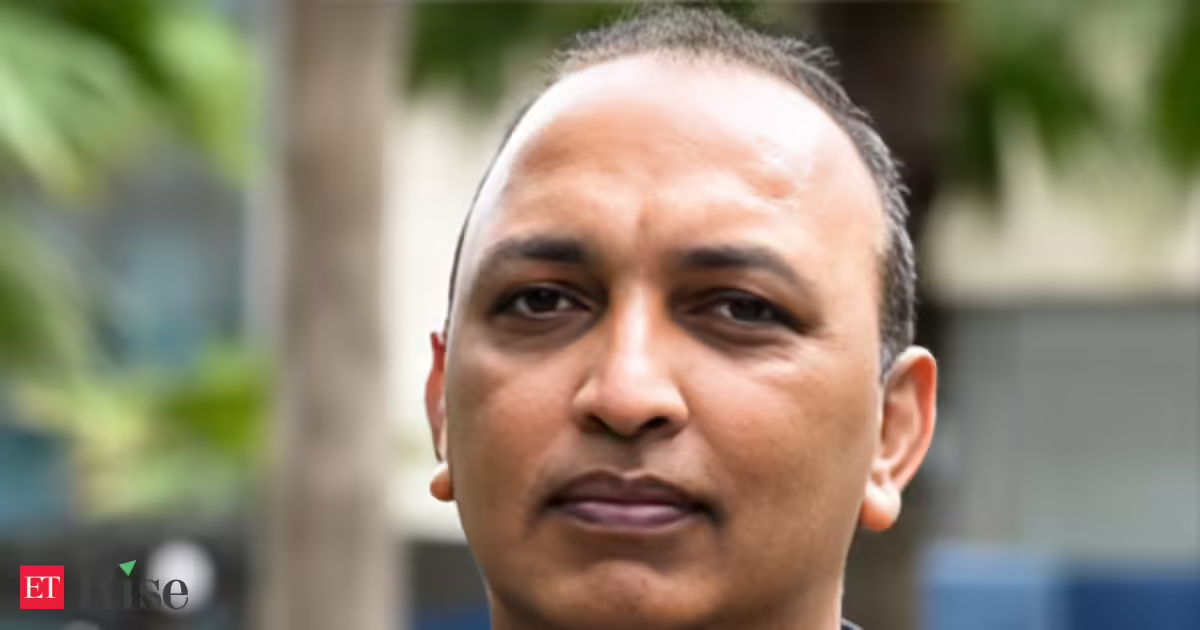
This article is authored by Geetika Dayal, director general, TiE Delhi-NCR.
885 words~4 min read