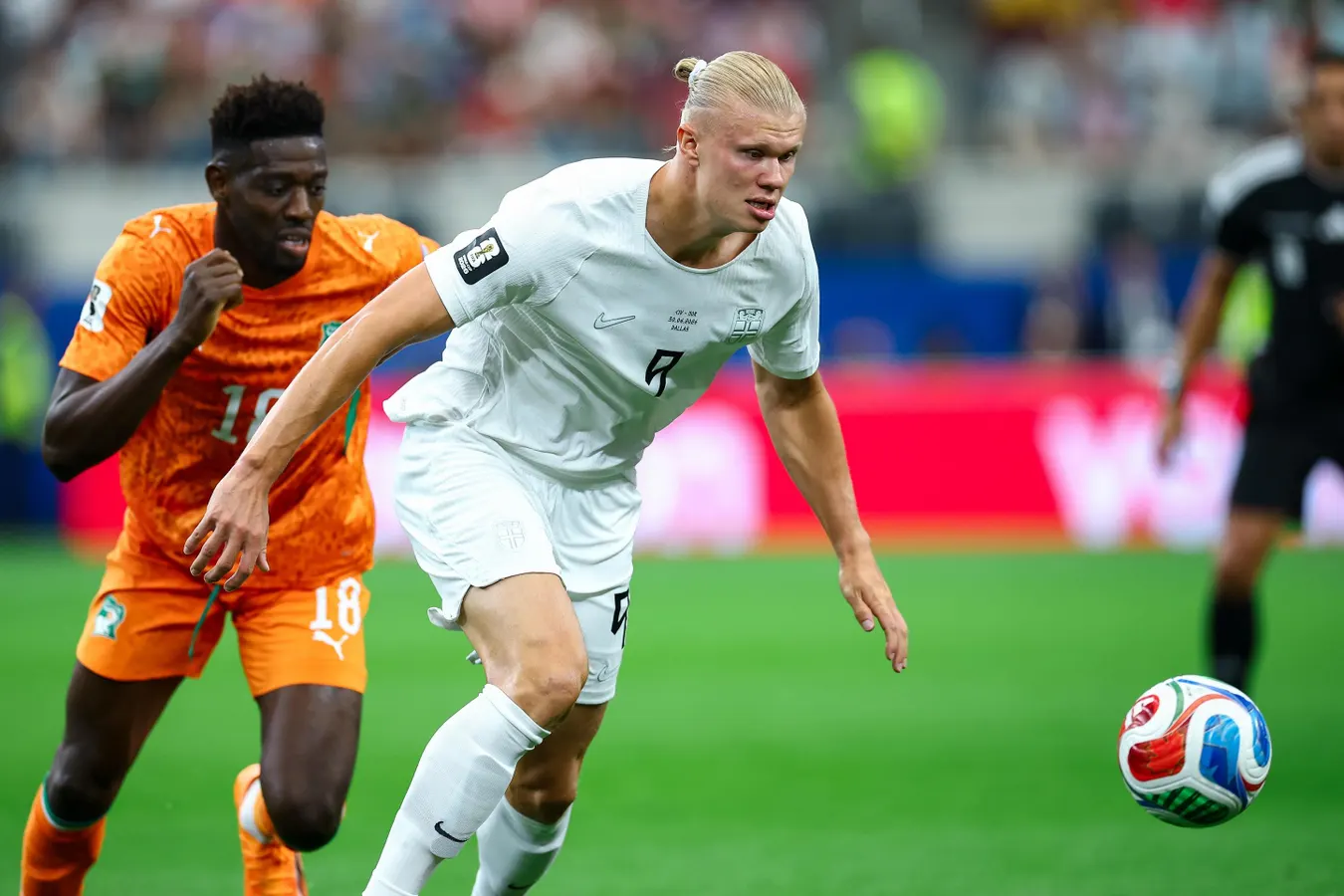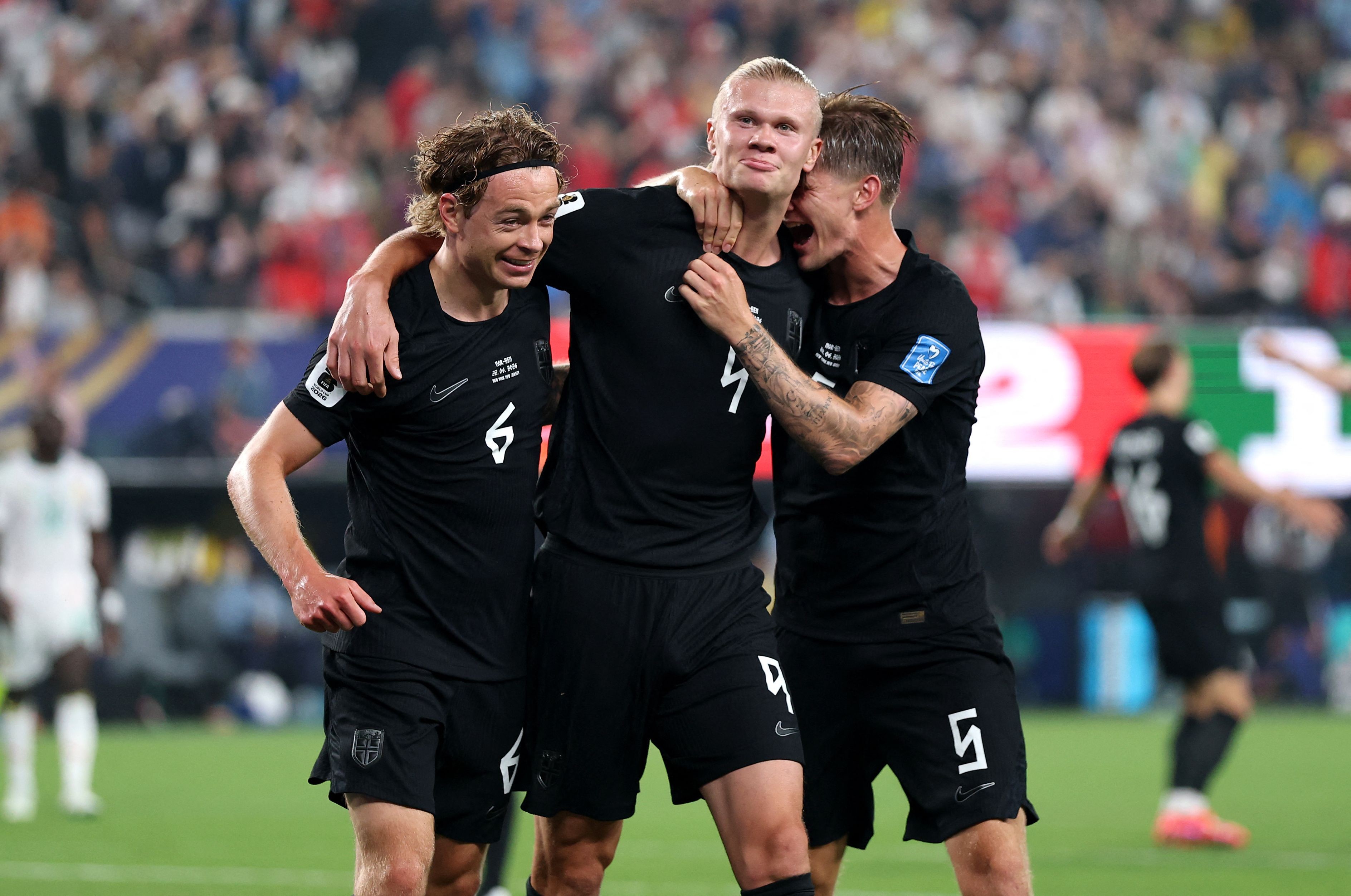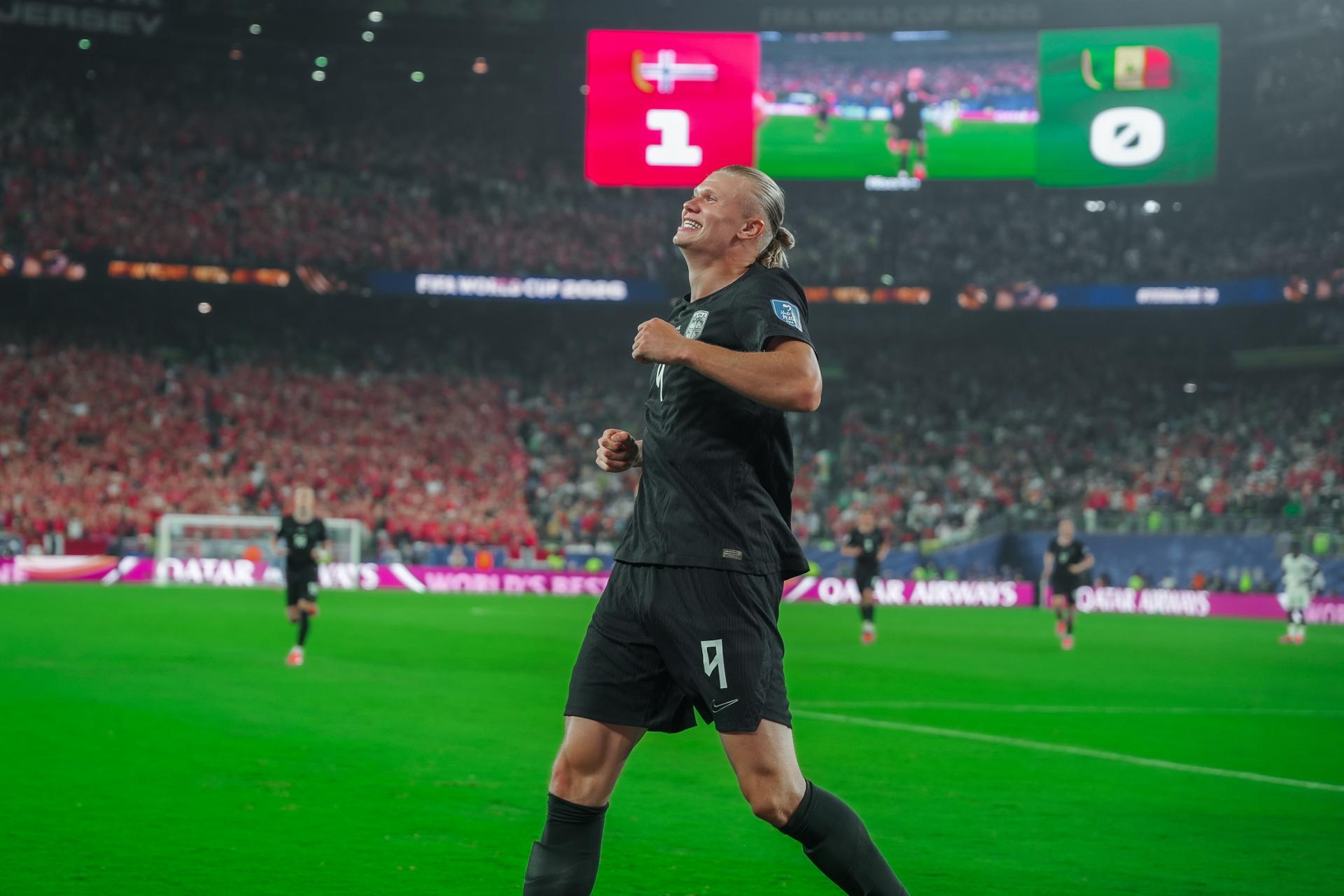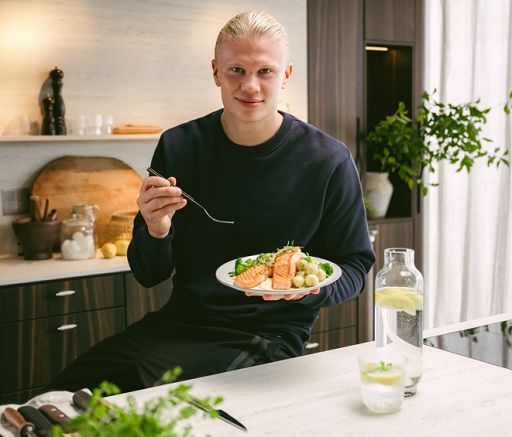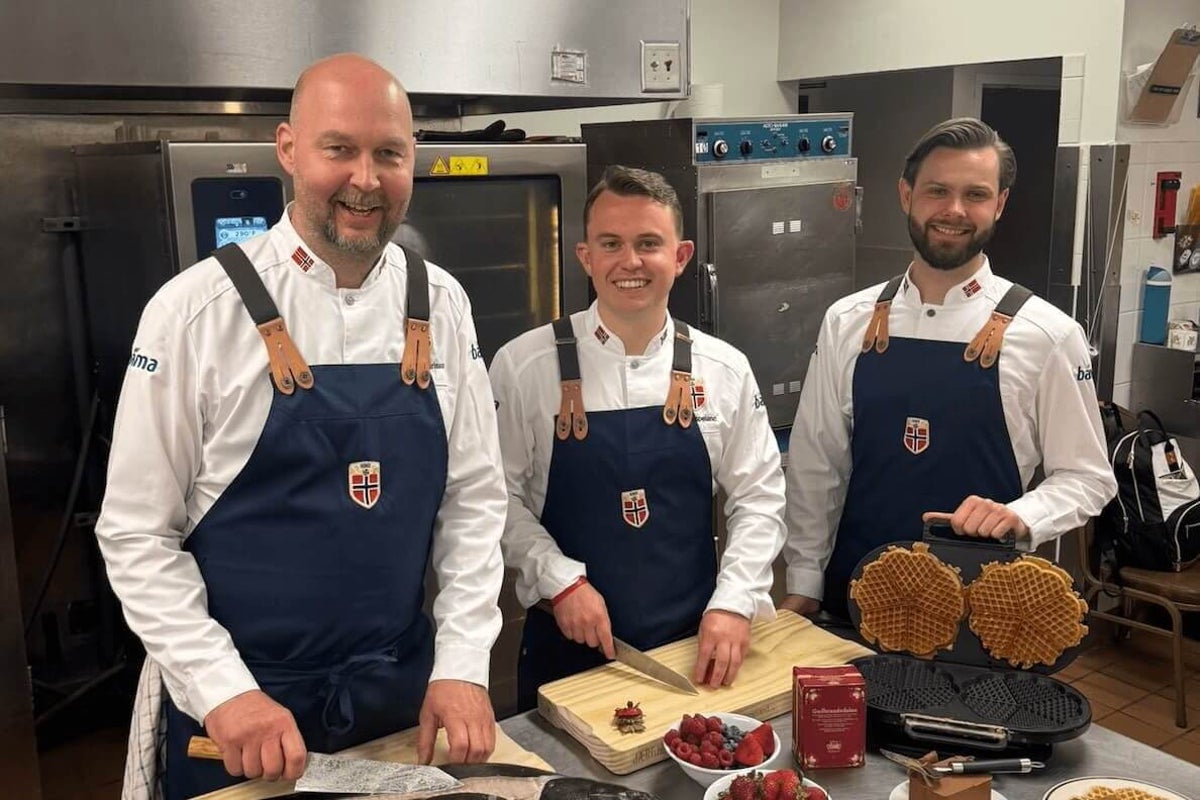
On the second floor of The Westin Copley Place in the Back Bay district of Boston, Norway’s trio of chefs are preparing lunch on the eve of their final World Cup group game against France.It is day 29 of camp. Four meals a day, and 61 mouths to feed. The arrival of the Norwegian football federation president and other officials has pushed that number closer to 70.With a round-of-32 game against Ivory Coast on Tuesday secured, Norway are dreaming of a run to the final on July 19. That would mean a total of 54 days and 216 meals.There is no need for a panicked dash around the nearest supermarket, however. The Scandinavians came to the United States with plenty of supplies.“We brought approximately 300kg of salmon, arctic char, halibut and trout from Norway,” head chef Aron Espeland tells The Athletic. “100kg of Jarlsberg cheese to add to our 80kg of Norwegian brown cheese.”Now that they are into the knockout stage, a new shipment of Norwegian fish is due to be ordered.The remaining stock also has to be transported on Sunday from their original base camp in Greensboro, North Carolina, on a four-hour flight to Dallas. Special freezers will be brought on board to maintain the fish and meat at temperatures between -4C (25F) and -15C (5F).The reason for desiring home produce is clear. Norwegian salmon is known as the ‘Wagyu of the ocean’. Months of planning went into how they would source fresh batches in the U.S. and, as the second-largest seafood exporter in the world, which contributes around 10 per cent of the nation’s economy, logistics have not been an issue.“We have a lot of good contacts. Norwegians send seafood all around the world every day, so we know people to make sure the shipments go in exactly the way we want it,” says Espeland.“It hasn’t been a big problem for us, so it’s been really nice to work with our local, fresh seafood. We’ve spent a lot of time making sure we start off with the best produce, as the players like to eat clean.”Espeland, Eirik Tufte and Christian Karlsson are the trio of chefs fuelling Norway and Erling Haaland’s World Cup ambitions.This is Espeland and Tufte’s first experience with a football team. Espeland won gold for Norway at the 2022 Global Young Chefs Challenge and Tufte has worked in some of Norway’s top Michelin-starred restaurants.Karlsson, however, knows the tastes of the dressing room. He has been part of the national team staff since autumn 1998, missing that summer’s World Cup by a matter of months. Having arrived from Finland in 1996, a scheduled six-month stay has turned into a lifetime.He did not expect it would take this long to be cooking at his first World Cup. Nor that players would become so conscious of what they put into their bodies.“It used to be, ‘Give me a burger or pizza and I’m happy’,” says Karlsson. “Now they all know they’re using their body for work and need to take care of themselves.”Benfica players Fredrik Aursnes is one player who takes a keen interest.“He knows things, he just wants to ask us to confirm he’s right,” laughs Tufte.“Patrick Berg is also very interested in food and what the sources contain. He’s keeping quite a strict diet. He has learned that his body works good if he eats certain things so he has continued with that. He stays away from gluten and lactose.”Haaland is especially fond of his food. The Manchester City striker’s YouTube channel has given an insight into his eating habits. Six thousand calories a day, rain-soaked barbecues in his back garden and trips to the local butcher to buy an array of meat: tomahawk steaks, ribeyes, short ribs, fillets, cow heart, and liver. Then there is the less mainstream stuff: the raw honey and raw milk.Feeding Erling Haaland is no mean feat (Justin Setterfield/Getty Images)“No raw milk here as it is not allowed in the USA because of the bacteria,” laughs Espeland.“We’re using lactose-free milk when some players try to stay away from it as their body feels better.”Haaland’s girlfriend Isabel Haugseng Johansen jokes in one episode that Haaland is only ever thinking about his next meal. Is that true?“He does love his food — he needs the energy to be running around with people on his back,” says Karlsson. “Erling and some other players really like that we’re making honest, easy food techniques. They’ve asked for recipes.”Karlsson may have known Haaland since he was a teenager, coming through the youth national teams, but Espeland can go one step further. They both hail from the same town in Bryne, south-west Norway.Espeland is four years older than Haaland but also played for Bryne’s youth sides. “There are only 15,000 people, so we would see each other a lot,” he says.“I wasn’t a good player but I didn’t know I was going to become a chef and end up cooking for him one day. I chose cauliflower instead of football.”Espeland left for Oslo at the age of 14. Although he would often bump into Haaland when back home during the festive period, it was not until last year when the pair recorded a TV commercial that they joined forces.For lunch on Thursday, they have rustled up dazzlingly coloured pots to be taken to the New England Revolution training centre in Foxboro. Salmon with ponzu sauce, mango, fava beans, avocado, sesame seeds, chilli mayo, spring onion and white rice is the fuel for the afternoon.The chefs liaise with the team’s medical and performance staff to ensure the balance of each meal is appropriate. Every plate contains high-quality protein to support muscle repair and recovery, carbohydrates to replenish energy stores, as well as omega-3 fatty acids, vitamin D, calcium, iron and magnesium. Fruit and vegetables provide the vitamins, minerals and antioxidants.“The goal isn’t to chase individual nutrients, but to create complete meals that help players perform and recover well,” says Espeland.“We also pay close attention to timing. What the players eat before training or matches is different from what they eat afterwards, when the focus shifts more towards recovery.”Some of the Norway players’ favourite foods (Courtesy Norwegian FA)Several of Norway’s players struggled with cramps in their second game against Senegal. Manager Stale Solbakken and his medical staff conducted urine tests to determine hydration levels.“Hydration is another key priority, particularly during a tournament where players are training and competing in warm conditions,” says Espeland.“We’re adding some extra salt to the food to encourage players to drink even more water than usual.”But once a week, Norway still carve out a ‘fast food’ meal. Tacos, pizza and homemade burgers have been the options so far. FIFA provide the post-match meal in the dressing room via their sponsors, which, let’s say, does not have nutrition at its heart.“You need a break, though, otherwise you get tired of the food,” Espeland said. “It’s like when you’re on an all-inclusive vacation. It’s nice the first couple of days and then you say, ‘OK, now we need to change’.”The chefs consulted the team captains to understand their needs. Cognisant of how long they could be in their bubble, they wanted to ensure that they “fancy” the food.“We try to make the food with a little bit more love, and with Christian’s experience at the base of everything we do,” says Espeland.One of Karlsson’s tips has been to recognise that the majority of this squad play and therefore live outside of Norway. Most have done so from a young age.“When they come to meet up with the national team. It’s like coming home,” says Karlsson. “The ‘My grandmother used to make me this’ kind of feeling.“Christian Karlsson carves meat while Martin Odegaard looks on (Courtesy of the Norwegian FA)That is why they have brought some reminders of Norwegian childhood. They brought their own waffle iron and have made their own brown cheese to accompany it.There is raspberry and strawberry jam, tomato sauce, Mills Polar Kaviar and Nugatti, the Norwegian version of Nutella. They have also made brown sauce and fish gratin.Perhaps the homeliest dish is Karlsson’s ‘genius’ oatmeal porridge. Boiled in milk for an hour, it can be topped with bananas, nuts, berries, honey, cinnamon and sugar. It is the players’ favourite and has been the staple breakfast of the camp, providing long-lasting carbohydrates.One non-negotiable of the modern footballer is good coffee. So Norway’s chefs brought their own coffee beans and grind every morning. They also brought four machines with them: two espresso machines and two filters. Right-back Julian Ryerson even brought his own.The chefs were aware that eating together four times a day is intense. It could become a chore. They sought to make the dining experience informal. No catch-all dishes, served on individual plates. Too impersonal. Too prescriptive.Instead, they have put in place two long banquet tables to promote conversation. One for the players and one for the staff. Rather than uniform dishes, they have several buffet stations. Two types of fish and meat, plus rice and pasta, are the main components. Then three different kinds of vegetables, potatoes and a salad bar.“We tried to make it a time you can leave your phone and spend time with your friends and chat,” says Espeland.“We’re carving and filling up, so we get the chance to talk to the players and get the feedback. You can tell if it’s good or not. Usually, they’ve been very happy with everything.“There’s a lot of pressure on them, so if one waffle and cheese can make you relax, we have accomplished a little bit.”In their quest for the best produce, the trio searched around each location for the best butchers and bakeries to acquire fresh meat and bread each day. They have four different types of sourdough.Norway have been based in Greensboro, but with games in Boston and New Jersey, it means the chefs have been cooking out of multiple different kitchens across the trip.At the team hotel in Boston, they are sharing a kitchen that caters 700 rooms. The collaboration has been positive, although they did have to communicate that they would prefer their fish less well-done than the previous team. Norway had replaced Scotland as residents.“We said, ‘No, no, no, too much’. They said, ‘But the Scottish guys wanted it dead — dead and a bit more dead’,” laughs Karlsson.Espeland offers a technical explanation. “When you bake a piece of salmon and it turns white, it’s because the proteins have gone out of the fish. You want the juice inside the fish,” he says.Espeland zests the salmon (Courtesy of the Norwegian FA)“Usually we want our fish to be about 40 degrees at the core centre.”Got that, Scotland? Good.Norway’s chefs are thinking about food from 7am each day. On matchdays, the first sittings begin around five hours before kick-off, with the last one taking place around three hours before, usually taken by the substitutes who prefer to eat later.“Erling enjoys pasta. Especially before games, they all like to carb up,” says Tufte.“Some of them fancy the oatmeal porridge before the game but some are pasta, lasagne and a lot of bread with yellow cheese and salami. Some have chicken or salmon with spaghetti bolognese. Very simple, usually.”They have made traditional Sunday dinners, cooking oven-roasted pig with a honey-mustard glaze and peeled potatoes.But the favourite dish of the squad so far was salmon tataki with brown butter vinaigrette, white soy, yuzu and honey. For the chefs, it felt like a victory.“We were kind of in a hurry,” says Espeland. “Christian and me grilled a whole salmon and cut it into slices. We needed a sauce. Eirik just pulled up this magnificent sauce. I asked him what on earth he put in it, and he just said, ‘Lots of good stuff’.”If any of the players have a birthday, they make a personalised cake, but they are also involved in the creation of the menus.“Some say, ‘Hey, we fancy this and that’, so we buy in some stuff and try to listen. Everyone is different. We try to take care of all the players,” says Tufte.After a month on the road, they have to be extra creative to keep the offerings different. It is unlikely but, if they ever begin to run out of ideas, they hope it is because they have fuelled the players to prolong their stay beyond what anyone imagined was realistic.
How do you feed a hungry Erling Haaland? Meet the chefs fuelling Norway at the World Cup
The Athletic joins Norway's three chefs in the kitchen to find out how they source and prepare food for the team
2,062 words~9 min read