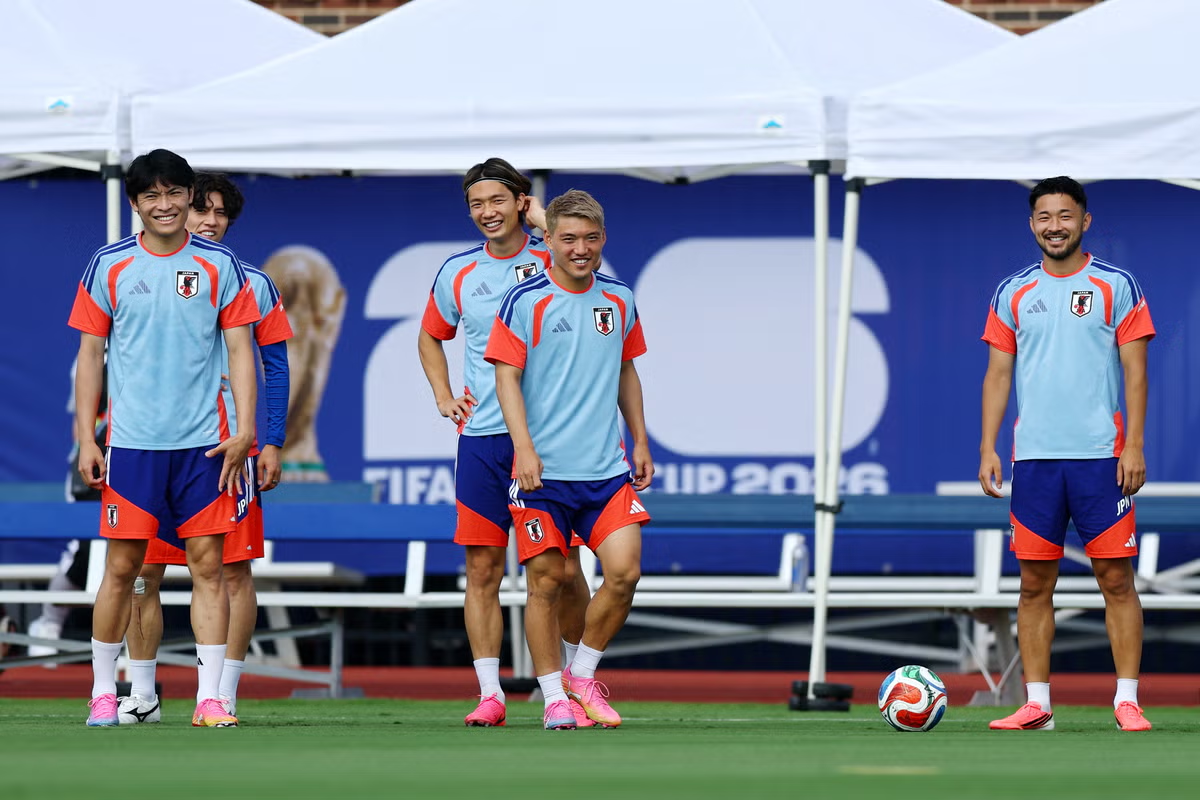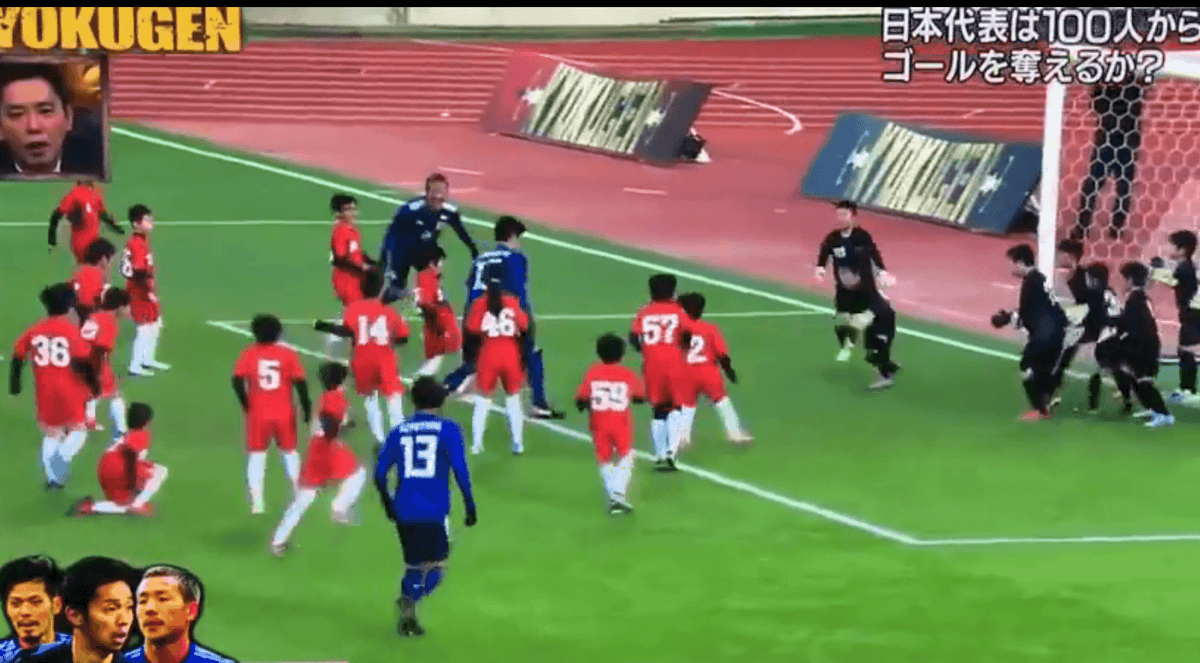
If you’ve ever spent any time on social media, there’s a good chance you’ve seen the famous clip from several years ago of three Japan internationals — Hotaru Yamaguchi, Hiroshi Kiyotake, and Yosuke Ideguchi — taking on 100 schoolchildren on a full-sized football pitch.The premise is farcical, but the footage is curiously mesmeric, and it’s actually fascinating to see how the three internationals actually manage to pass the ball to one another in space, overcoming the sheer probability that one of their opponents will get in their way, even if accidentally.The key to their passing is, essentially, that the school kids always get dragged towards the ball over on one side, and the internationals can constantly switch the play to the opposite flank, where one of the trio is unmarked.The youngsters are positionally naive, it must be said. That’s probably enough tactical analysis for now.But sometimes, when watching the current Japan side compete against a mere 10 (albeit fully-grown) outfielders, you can’t help but detect the same approach play. This is what Japan are all about. Their 3-4-3 system forms a front five in possession, and eternally causes opponents problems by finding a spare player — the bonus back, if you like — running into the box unmarked, on the blind side of the opposition defence, and available for a switch of play. And if it can beat 100 opponents, maybe this is only 10 per cent of the challenge…The interesting thing about Japan’s wing-backs is that they aren’t pure “arriving” wing-backs — they’re not Daniel Munoz or Denzel Dumfries, solely late runners who pop up at the far post. They can do that. But right-sided Ritsu Doan is left-footed, and left-sided Keito Nakamura is right-footed.
How Japan’s strategy for overcoming 100 schoolkids might help to eliminate Brazil
Hotaru Yamaguchi, Hiroshi Kiyotake and Yosuke Ideguchi taking on 100 schoolchildren on a full-sized football pitch may be in evidence today
764 words~3 min read